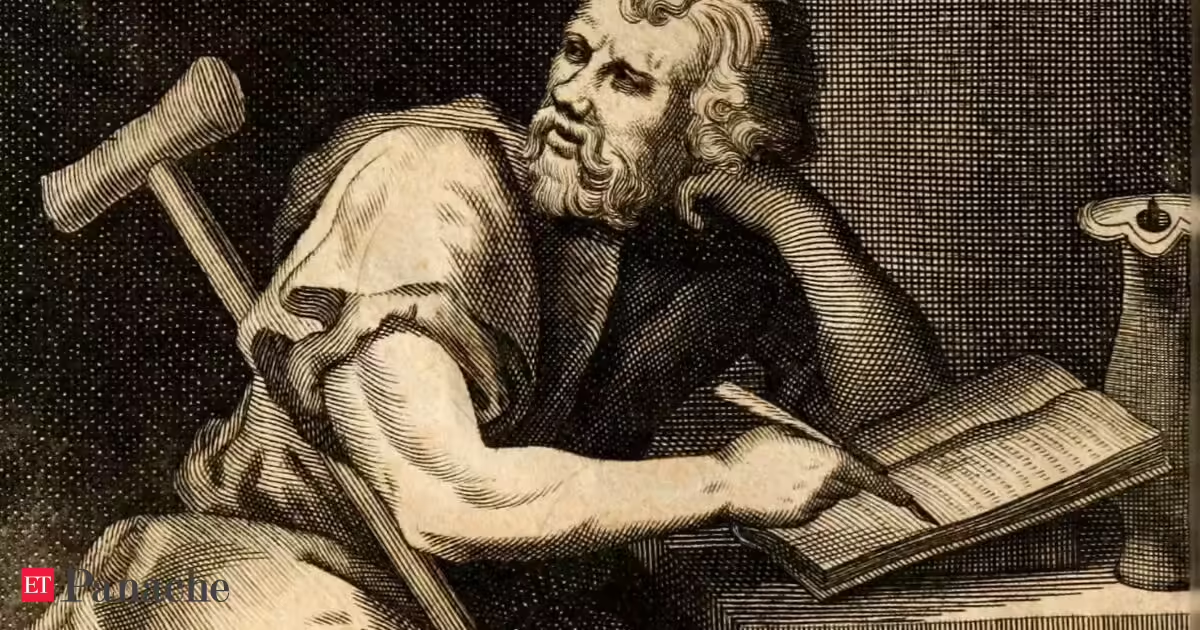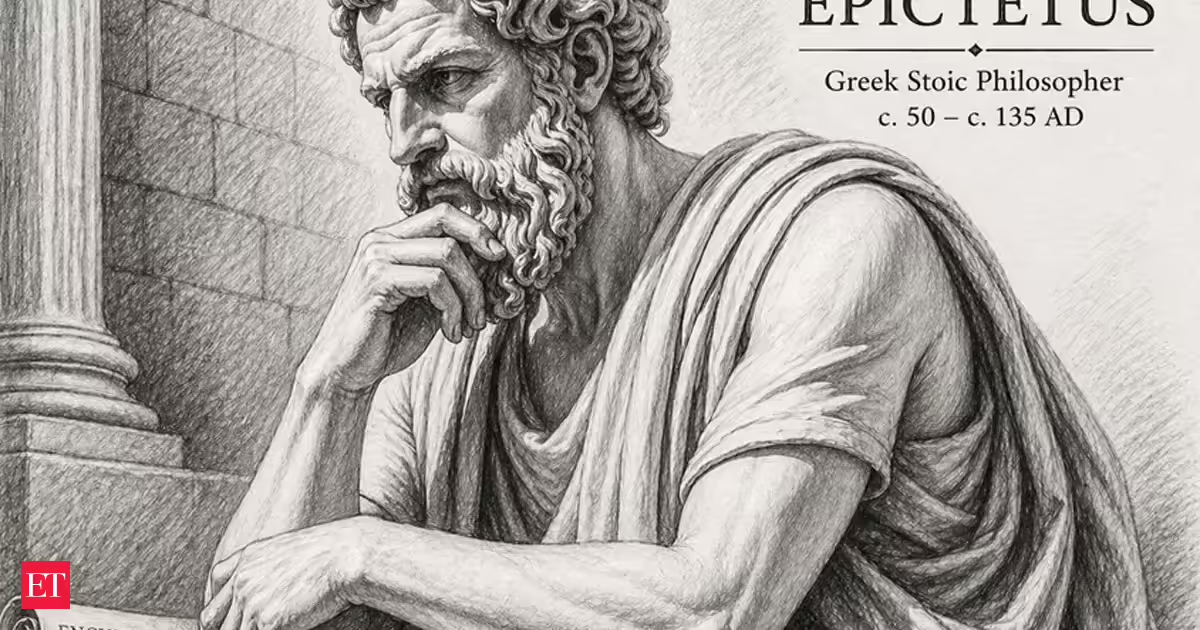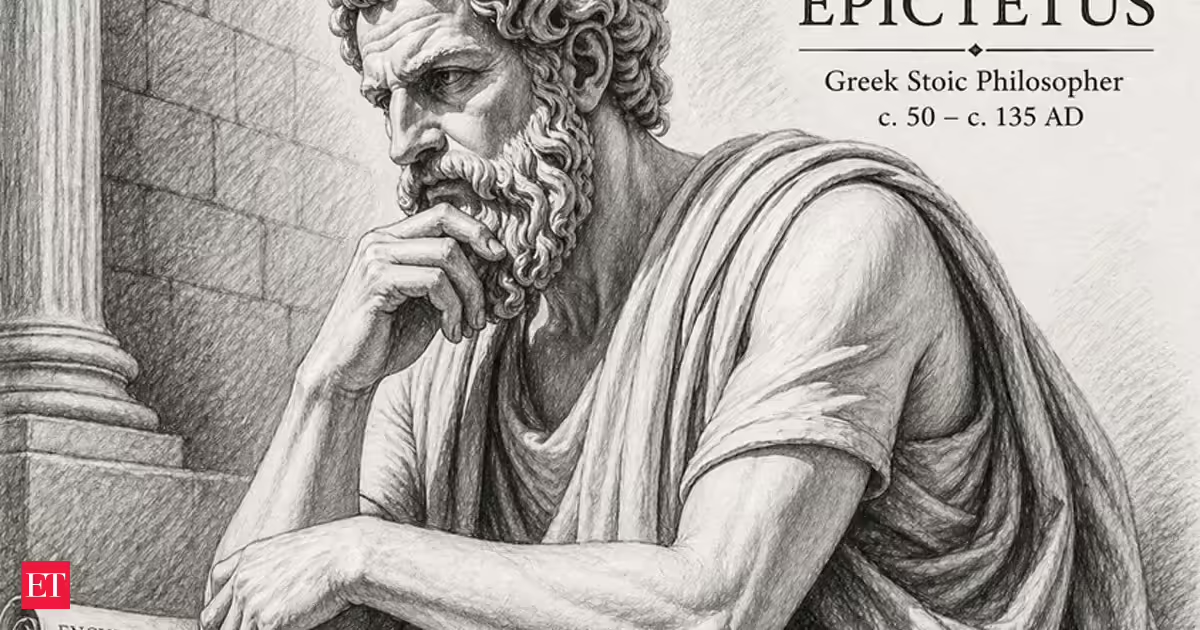
Few quotes capture the essence of Stoic philosophy as clearly as this one from Epictetus, the Greek Stoic philosopher whose teachings have influenced thinkers for nearly two millennia. Rather than blaming external events for human suffering, Epictetus argued that it is often our interpretation of those events that determines how we feel. The quote remains one of Stoicism's most enduring lessons, reminding people that while they cannot always control what happens, they can learn to control how they respond.What Epictetus' quote meansAt first glance, the quote may seem to suggest that problems are imaginary. That is not what Epictetus meant.Instead, he distinguished between events themselves and the judgments people make about those events. An unexpected setback, criticism or failure may be unpleasant, but the emotional distress that follows is often shaped by how an individual interprets the situation.Two people can experience the same event and react in completely different ways. One may see it as a disaster, while the other views it as an opportunity to learn. According to Epictetus, it is this difference in perspective that shapes emotional wellbeing.A life lesson on perspectiveThe quote teaches that peace of mind begins with mastering one's own thoughts rather than trying to control every external circumstance.People often spend enormous amounts of energy worrying about things beyond their control, including other people's opinions, unexpected setbacks or uncertain outcomes. Stoicism encourages the opposite approach by focusing attention on what can actually be controlled: one's own actions, choices and attitudes.This shift in perspective does not eliminate challenges, but it can reduce unnecessary suffering and help people respond more thoughtfully.Why the quote remains relevant todayIn an age of constant news, social media and daily pressures, it has become easy to feel overwhelmed by events that lie outside personal control.Epictetus' words offer a timeless reminder that while the world may remain unpredictable, individuals still possess the ability to choose how they interpret and respond to it.This lesson has influenced not only philosophers but also modern psychology. Many principles found in cognitive behavioural therapy echo the Stoic idea that thoughts and interpretations play a significant role in shaping emotions.Who was Epictetus?Epictetus was born into slavery in the first century AD and later gained his freedom before becoming one of the leading teachers of Stoicism in ancient Greece. Unlike many philosophers, he left behind no written works of his own. His teachings were recorded by his student Arrian in the Discourses and the Enchiridion, texts that continue to be studied around the world.His philosophy focused less on abstract theories and more on practical guidance for living a virtuous and resilient life. He believed that lasting happiness comes not from wealth, status or external success, but from mastering one's own character and accepting what lies beyond one's control.A timeless takeaway"Men are disturbed not by things, but by the views which they take of them" remains one of the clearest expressions of Stoic wisdom. It reminds us that while we cannot always change our circumstances, we can change our perspective.By learning to question our assumptions, manage our reactions and focus on what we can control, we often discover that many of life's greatest burdens become lighter. More than 1,900 years after Epictetus taught this principle, it continues to offer a practical lesson in resilience, self-awareness and inner peace.
Best quote of the day by Epictetus: “Men are disturbed not by things, but by the views which they take of them.” A life lesson on controlling your thoughts
Ancient Greek philosopher Epictetus taught that our suffering stems not from events themselves, but from our interpretations. He emphasized that while external circumstances are often beyond our control, we can master our thoughts and reactions. This timeless wisdom, still relevant today, encourages focusing on what we can influence – our attitudes and choices – to achieve inner peace and resilience amidst life's challenges.
547 words~2 min read