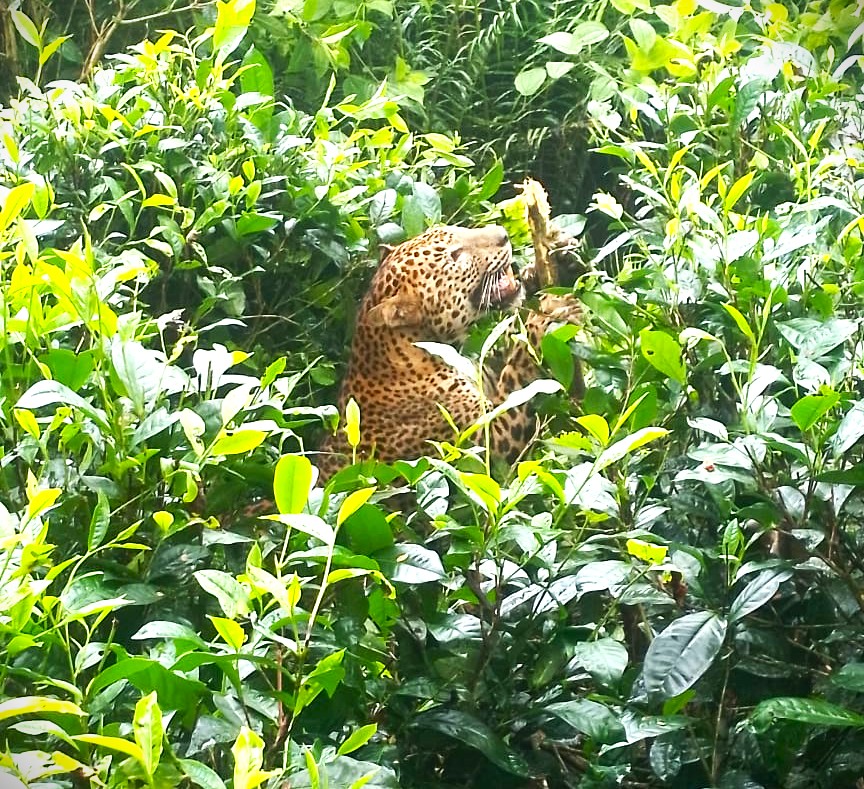
A recent analysis of 164 leopard deaths recorded between 2008 and 2024 shows that nearly 40% of deaths occurred in the central Nuwara Eliya district, which represents only 4.4% of the species’ estimated range in Sri Lanka.Wire snares accounted for more than 60% of known leopard deaths, with most incidents occurring in plantation landscapes in the Central Highlands.A separate study found that leopards living in Sri Lanka’s tea country rely primarily on wild prey rather than livestock, indicating these human-modified landscapes remain important habitat for the leopards.As Sri Lanka joins the International Big Cat Alliance, scientists say conservation efforts must extend beyond national parks and address growing threats in plantation landscapes where many leopards now live and die.
COLOMBO — The mist-covered tea estates, forest patches and mountain valleys of Sri Lanka’s hill country support some of the country’s most important leopard populations outside protected areas. Yet the same landscapes have emerged as the deadliest places for the threatened big cats of Sri Lanka.
A new study analyzing 17 years of leopard mortality records has found that nearly 40% of recorded leopard deaths occurred within a single district of Sri Lanka’s Central Highlands, the tea-growing Nuwara Eliya, which accounts for only 4.4% of the species’ estimated range.