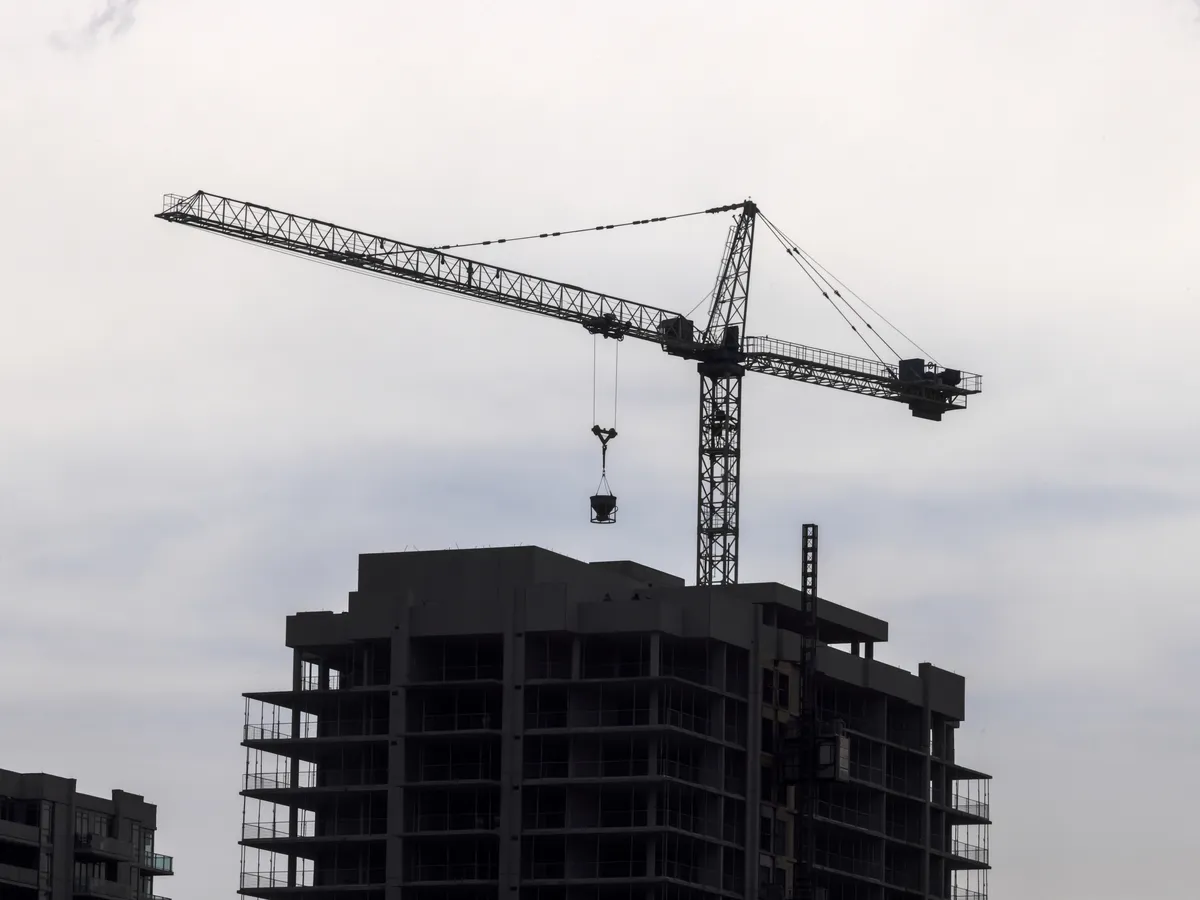
Skip to Content News Archives Economy Energy Oil & Gas Renewables Electric Vehicles Mining Commodities Agriculture Real Estate Mortgages Mortgage Rates Finance Banking Insurance Fintech Cryptocurrency Work Wealth Smart Money Wealth Management Investor Personal Finance Family Finance Retirement Taxes High Net Worth FP Comment Executive Women Puzzmo Newsletters Financial Times Business Essentials More Innovation Information Technology FP500 Podcasts Small Business Lives Told Tails Told Shopping Financial Post Store Obituaries Place a Notice Advertising Advertising With Us Advertising Solutions Postmedia Ad Manager Sponsorship Requests Classifieds Place a Classifieds ad Working Profile Settings My Subscriptions Saved Articles My Offers Newsletters Customer Service FAQ News Economy Energy Mining Real Estate Finance Work Wealth Investor FP Comment Executive Women Puzzmo Newsletters Financial Times Business Essentials HomeFP CommentOpinion: Ontario shouldn't bail out condo developersThe Ford government plans to buy $300-million worth of unsold condos for conversion to rentals, rewarding bad decision-making and executionLast updated 3 hours ago You can save this article by registering for free here. Or sign-in if you have an account.A construction crane atop a condo being built in Mississauga, Ont. Photo by Peter J. Thompson/National Post filesAccording to a recent poll, housing costs and the overall cost of living weigh heavily on the minds of many Ontarians. As part of its strategy to increase affordability in the province, the Ford government plans to “invest” $300 million to purchase 2,200 vacant Toronto condos and convert them into rentals. In the end, however, the purchase may reward poor-performing developers for their own bad decisions and help keep condo prices out of reach for would-be buyers.Subscribe now to read the latest news in your city and across Canada.Exclusive articles from Barbara Shecter, Joe O'Connor, Gabriel Friedman, and others.Daily content from Financial Times, the world's leading global business publication.Unlimited online access to read articles from Financial Post, National Post and 15 news sites across Canada with one account.National Post ePaper, an electronic replica of the print edition to view on any device, share and comment on.Daily puzzles, including the New York Times Crossword.Subscribe now to read the latest news in your city and across Canada.Exclusive articles from Barbara Shecter, Joe O'Connor, Gabriel Friedman and others.Daily content from Financial Times, the world's leading global business publication.Unlimited online access to read articles from Financial Post, National Post and 15 news sites across Canada with one account.National Post ePaper, an electronic replica of the print edition to view on any device, share and comment on.Daily puzzles, including the New York Times Crossword.Create an account or sign in to continue with your reading experience.Access articles from across Canada with one account.Share your thoughts and join the conversation in the comments.Enjoy additional articles per month.Get email updates from your favourite authors.Create an account or sign in to continue with your reading experience.Access articles from across Canada with one accountShare your thoughts and join the conversation in the commentsEnjoy additional articles per monthGet email updates from your favourite authorsSign In or Create an AccountorThough Toronto’s condo market has long been volatile, the current situation is unique. There are 4,295 newly built condos on the market, a record high, and another 8,629 unsold units are under construction and expected to hit the market in the coming years. That’s a real problem for developers trying to sell or rent these condos. But it should not be turned into a problem for Ontario taxpayers.Get the latest headlines, breaking news and columns.By signing up you consent to receive the above newsletter from Postmedia Network Inc.A welcome email is on its way. If you don't see it, please check your junk folder.The next issue of Top Stories will soon be in your inbox.We encountered an issue signing you up. Please try againThe more unsold condos there are on the market, the more developers must compete with one another to attract buyers and renters. That competition drives down condo prices, which were already five per cent lower, year-over-year, in the first quarter of 2026 (on a per-square-foot basis). And some developers are already converting condos intended for ownership into rental apartments without any handouts from government.Enter the Ford government’s $300-million “investment” to buy vacant condos that, evidently, were not selling at their current price. Not only does the government risk overpaying for them and weakening condo-price competition, it may also shield developers from the consequences of their poor decisions.A developer who builds the wrong homes, for the wrong price, should bear the financial consequences. Not only is that fair, it’s the foundation of competition in the housing market. A developer who takes a loss on a bad project has less money to pursue other homebuilding opportunities. But that’s not an outright loss to the overall housing market: it frees up more land, construction labour and financing for other developers who may be better able to deliver homes that Ontarians want at prices they can afford. Over time, that’s how more homes get built by the best-performing developers — which is to the long-run advantage of homebuyers and renters.Under the Ford government’s plan, however, developers who built unwanted condos may get to sell them to the government instead of having to price them low enough to attract homebuyers or renters. That makes the government’s “investment” a taxpayer-funded subsidy for poor-performing developers.For its part, the government says its plan will “increase access to affordable housing” because 550 of the 2,200 vacant condos will be rent-controlled. That’s clearly a direct benefit for the families who will rent those homes. But a benefit for 550 households does not make this a prudent use of taxpayer dollars — especially if the policy ultimately weakens competition in the condo market. Since Queen’s Park has not yet released key details, such as the expected return on its $300-million “investment,” taxpayers have no clear way to assess whether this is a cost-effective way to improve affordability. And turning condos into rent-controlled apartments is not a sustainable affordability policy: rent controls suppress the supply of new rental homes, leaving renters competing for fewer places to live.Meanwhile, the Ford government could undertake multiple reforms to improve housing affordability, at little or no cost to taxpayers, including several recommendations from its own Housing Affordability Task Force. For example, although the task force advised the government to rein in municipal red tape on new homes, Ontario cities remain free to restrict building height, floor space and where homes can sit on lots. The government also stopped short of the recommendation to automatically allow homes, shops and services to mix along transit corridors. And it’s dithered for years on building code reform that would allow small apartments buildings with a single staircase, despite evidence they are no less safe. These reforms would allow more homes to be built at more affordable prices and all they require is political gumption — not taxpayer dollars.The Ford government should not pour taxpayer dollars into the condo market. Instead, developers should be left to compete with each other and reduce prices for vacant condos until they attract buyers or renters. At a time when the cost of living remains top of mind for millions of Ontarians, the last thing the government should do is help sustain housing prices for the benefit of developers.Austin Thompson is an analyst at the Fraser Institute. Join the Conversation This website uses cookies to personalize your content (including ads), and allows us to analyze our traffic. Read more about cookies here. By continuing to use our site, you agree to our Terms of Use and Privacy Policy.
Opinion: Ontario shouldn't bail out condo developers
Ontario plans to buy $300-million worth of unsold condos for conversion to rentals, rewarding bad decision-making and execution. Read more.
TL;DRAI
Ontario government earmarked $300M to buy 2,200 unsold condos for rental conversion to increase affordable housing supply. The subsidy incentivizes poor decision-making by developers and suppresses price competition, delaying natural market clearing.
1,248 words~6 min read