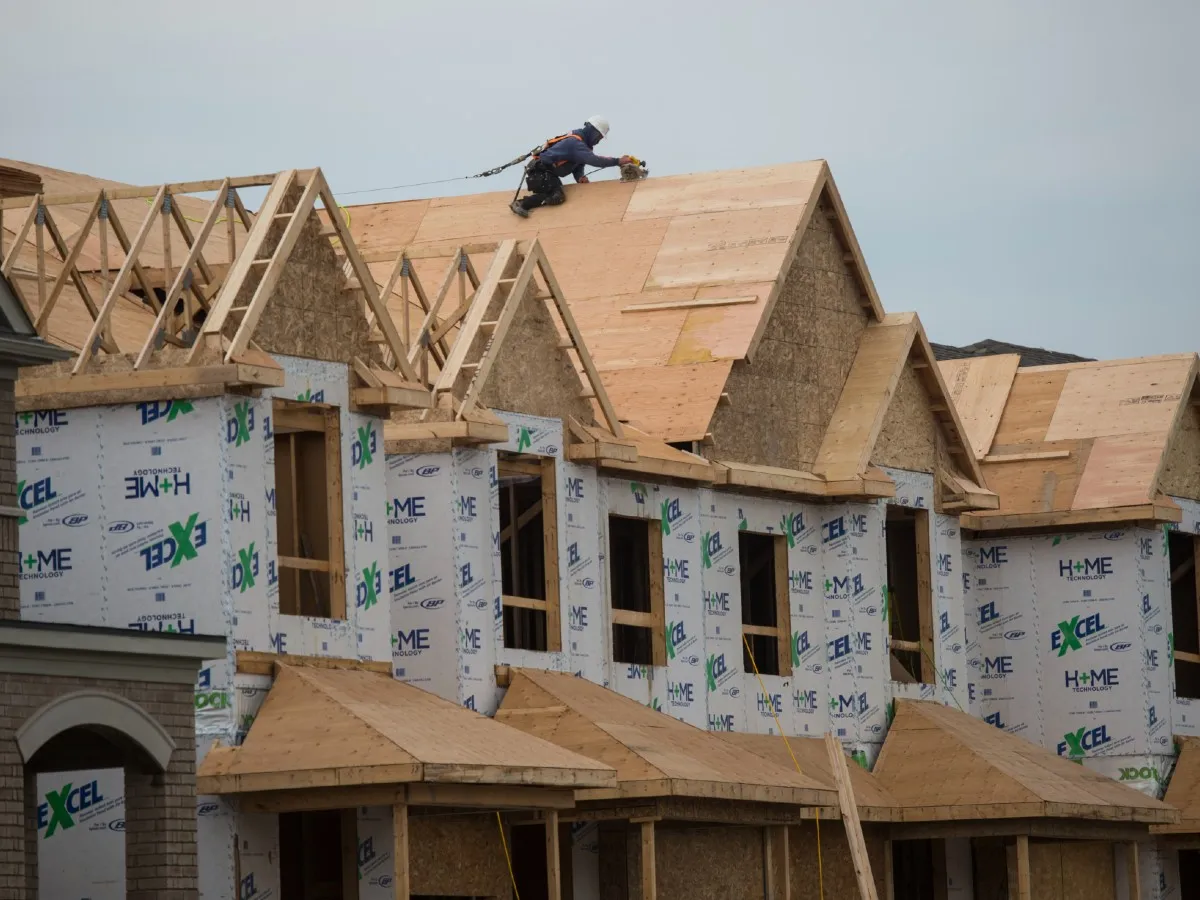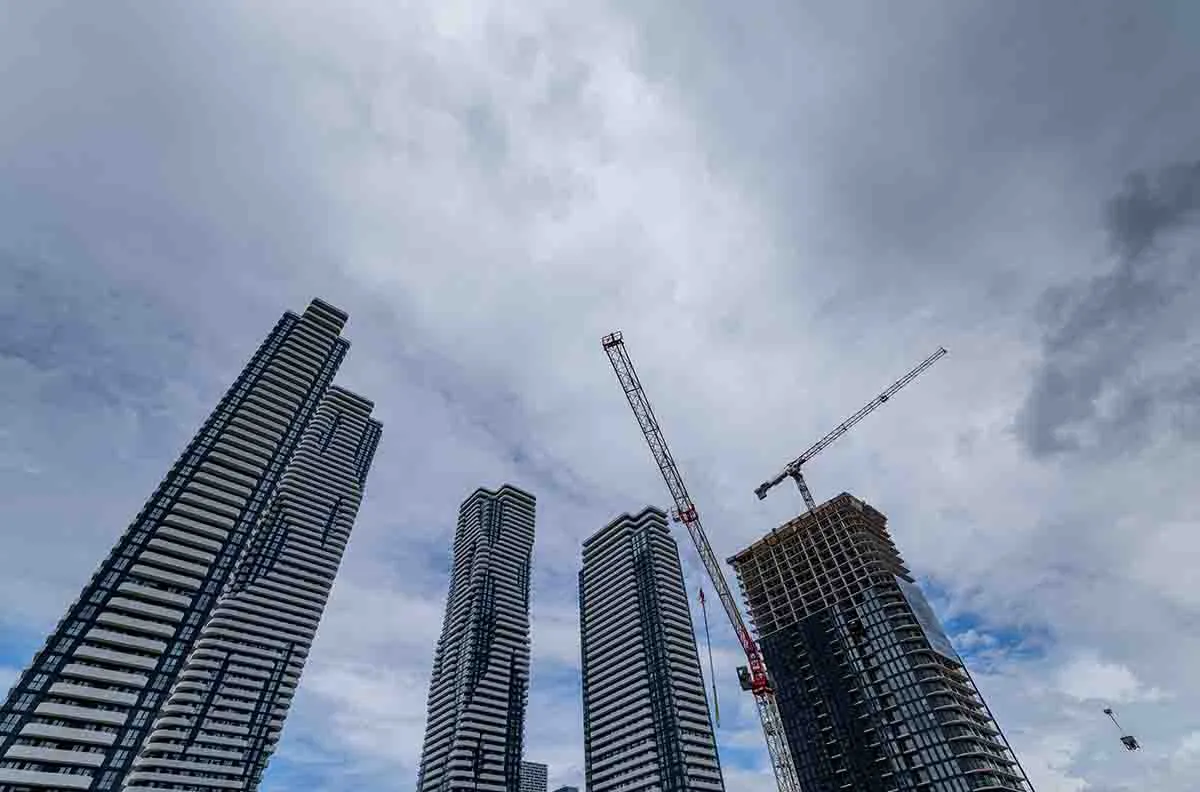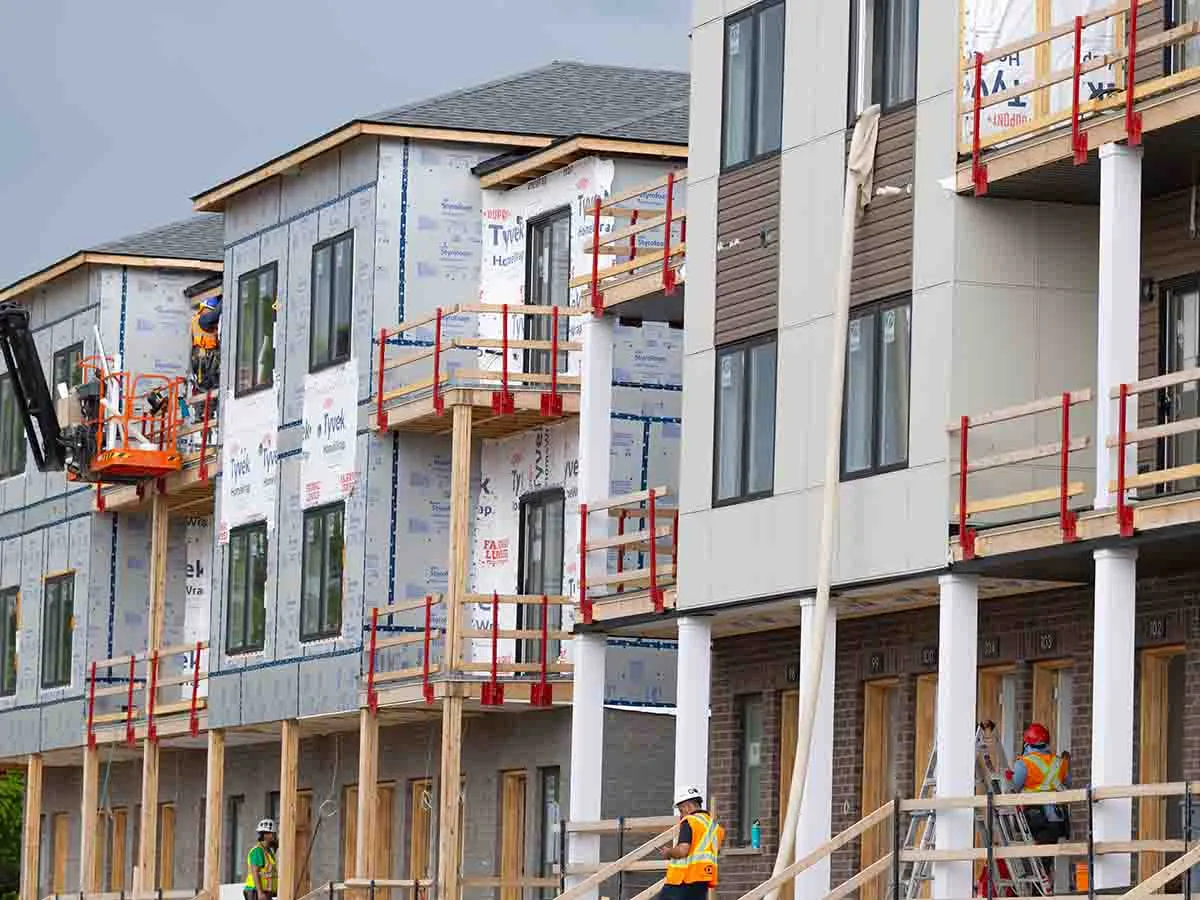
Skip to Content News Archives Economy Energy Oil & Gas Renewables Electric Vehicles Mining Commodities Agriculture Real Estate Mortgages Mortgage Rates Finance Banking Insurance Fintech Cryptocurrency Work Wealth Smart Money Wealth Management Investor Personal Finance Family Finance Retirement Taxes High Net Worth FP Comment Executive Women Puzzmo Newsletters Financial Times Business Essentials More Innovation Information Technology FP500 Podcasts Small Business Lives Told Tails Told Shopping Financial Post Store Obituaries Place a Notice Advertising Advertising With Us Advertising Solutions Postmedia Ad Manager Sponsorship Requests Classifieds Place a Classifieds ad Working Profile Settings My Subscriptions Saved Articles My Offers Newsletters Customer Service FAQ News Economy Energy Mining Real Estate Finance Work Wealth Investor FP Comment Executive Women Puzzmo Newsletters Financial Times Business Essentials HomeReal EstateAre Ontario’s homebuyer rebates reviving demand? Yes, but not where you’d expectA steady stream of buyers has been showing up for pre-construction stacked townhomes. Condominiums, however, continue to lagLast updated 1 hour ago You can save this article by registering for free here. Or sign-in if you have an account.A condo tower under construction reflected in water on Wellesley Street West in Toronto, Ont. Photo by Peter J Thompson/National Post filesLast month, at Minto Communities’ Heights of Harmony development in Oshawa, a steady stream of buyers turned up to see the pre-construction stacked townhomes.Subscribe now to read the latest news in your city and across Canada.Exclusive articles from Barbara Shecter, Joe O'Connor, Gabriel Friedman, and others.Daily content from Financial Times, the world's leading global business publication.Unlimited online access to read articles from Financial Post, National Post and 15 news sites across Canada with one account.National Post ePaper, an electronic replica of the print edition to view on any device, share and comment on.Daily puzzles, including the New York Times Crossword.Subscribe now to read the latest news in your city and across Canada.Exclusive articles from Barbara Shecter, Joe O'Connor, Gabriel Friedman and others.Daily content from Financial Times, the world's leading global business publication.Unlimited online access to read articles from Financial Post, National Post and 15 news sites across Canada with one account.National Post ePaper, an electronic replica of the print edition to view on any device, share and comment on.Daily puzzles, including the New York Times Crossword.Create an account or sign in to continue with your reading experience.Access articles from across Canada with one account.Share your thoughts and join the conversation in the comments.Enjoy additional articles per month.Get email updates from your favourite authors.Create an account or sign in to continue with your reading experience.Access articles from across Canada with one accountShare your thoughts and join the conversation in the commentsEnjoy additional articles per monthGet email updates from your favourite authorsSign In or Create an AccountorSome compared floorplans, examined finishing samples and ran the numbers on the government’s temporary HST rebate, weighing whether the tax break, which can reduce the cost of a new home by up to $130,000, was enough to make the purchase possible.In this corner of the real estate market, the answer appears to be, “yes.”SUBSCRIBER EXCLUSIVE: FP West: Energy Insider brings you behind the oilpatch’s closed doors with exclusive insights from insiders every Wednesday morning.By signing up you consent to receive the above newsletter from Postmedia Network Inc.A welcome email is on its way. If you don't see it, please check your junk folder.The next issue of FP West: Energy Insider will soon be in your inbox.We encountered an issue signing you up. Please try againUnlike the previous HST rebate that was available to first-time homebuyers only, the new year-long tax measure — the cost of which will be shared between the federal and provincial governments — offers all homebuyers a maximum rebate of $130,000 for eligible properties priced up to $1.5 million. The rebate then phases down, falling to $24,000 for homes priced at $1.85 million.Minto began selling its Heights of Harmony townhomes at a starting price of $399,999. It sold 50 per cent of the 100 units in just a week and a half, surpassing company expectations.Minto’s successful launch squares with findings in a report by the Building Industry and Land Development Association (BILD) and Altus group, which said the new low-rise home market outperformed its 10-year average for two consecutive months in April and May — a turnaround the industry largely attributes to the HST discount.Condominiums, however, continue to lag.According to BILD/Altus, new condo sales totalled 193 units — 89 per cent below their 10-year historical average. Only one pre-construction condo project has launched in the GTA so far this year.If the rebate is working, why aren’t more condo towers getting off the ground?Part of the answer lies in the type of sales the rebate appears to be generating.“New condos” refers to properties still being sold by the builder, whether they’re in pre-construction, under construction or completed but unsold.“(The HST rebate) is absolutely clearing out standing inventory more than pre-con,” said Justin Sherwood, BILD’s chief operating officer.Those sales have different implications for future housing supply.Selling standing inventory — newly built units owned by the builder that are completed or nearing completion — helps developers clear the oversupply of condos that piled up during the region’s weakest period of sales in decades.But it does not necessarily lead to new projects getting built.Launching a new high-rise condo tower typically requires a developer to pre-sell 70 per cent of the units before construction takes place — allowing them to secure financing and move on to the next phase.Without enough buyers financially committing before shovels go in the ground, projects won’t get built.Another reason developers are struggling to revive the high-rise condo market is because they have little wiggle room left to lower prices.Sherwood said many condos currently sitting on the market were conceived when construction costs, development charges and financing were significantly higher than their resale counterparts. Condo developers argue that because of this “legacy pricing,” steeper discounts are limited.Meanwhile, resale condos have become substantially cheaper.BILD/Altus said that the benchmark home price for new condos in the GTA was about $1.03 million in May, holding steady despite the market slowdown.The resale benchmark condo price, tracked by the Toronto Regional Real Estate Board (TRREB), came in at $630,200, down 6.4 per cent from May 2025 and 20 per cent from their peak in 2022.Alexander Yolevski, who specializes in the midtown Toronto condo market, said resale prices have become difficult for buyers to ignore.“In this market, nobody wants to feel like they’re overpaying.”Yolevski said new condos in midtown Toronto are selling for roughly $1,500 per square foot while resale condos in the same neighbourhood trade for $900 per square foot. “Even with the rebate, many conclude the math still favours resale.”But the challenge for new builds extends beyond pricing, says Yolevski, since “the image of new condos in Toronto has been tainted.”“Years of project delays, cancellations and investor losses have been factors in the erosion of confidence in the pre-construction market,” he said, adding that today’s buyers are increasingly gravitating towards older buildings with larger floor plans over the “shoebox” condos that dominated the investor-driven condo boom. “Very rarely does someone come to me saying, ‘we want to look at brand new condos.”The rollout of the government rebate, which took two months, also created uncertainty for buyers.Although Prime Minister Mark Carney and Ontario Premier Doug Ford announced the temporary extension of the HST rebate at the end of March, it wasn’t until June 22 that Ottawa finally released its guidelines. In the meantime, buyers, lenders and lawyers were still trying to understand exactly how the incentive program would work.Cannect mortgage broker Phil Edwards said clients have been seeking clarity on the rebate ever since it was announced. “Even lawyers we’re working with were complaining about not understanding what paperwork they needed to file,” he said. “For me, trying to explain it to the borrower was a bit complicated.”Eligible buyers can now fill out the required CRA forms assigning the rebate — of up to $130,000 — to the builder. Depending on how the builder marketed the rebate, the purchaser may receive the discount at closing, thus reducing the final purchase price, or it may already be reflected in the listing.Still, according to Edwards, the delay caused confusion that was evident in the market.He said some buyers who were initially considering pre-construction opted for resale properties instead, unwilling to navigate unanswered questions about eligibility requirements, completion timelines and whether projects would or wouldn’t ultimately qualify for the rebate.Concerns also emerged around the required completion dates. According to the rebate guidelines, buyers must sign a purchase agreement between April 1, 2026, and May 31, 2027. Projects must begin construction by December 31, 2028 and be substantially completed by December 31, 2031.“Because of the very tight completion timelines in the regulations, it will be a challenge for high-rise condos to benefit from the program,” Sherwood said.He estimates that a single high-rise condo tower of 400 units can take roughly four to six years to move from sales launch to completion. Factoring in GTA planning approvals, land acquisition and other pre-development work, the timeline can stretch to roughly 10 years.Chief operating officer Brent Strachan of Minto Communities said low-rise projects like Heights of Harmony, which is set to close late 2027, can be delivered within the allotted window because wood-frame developments typically have a shorter construction timeline than concrete high-rises.Even if demand for high-rise condos returns, developers say the limited eligibility timeline leaves much of the market’s weakest segment unable to benefit from the program.BILD says 18,763 unabsorbed new homes remained on the market in the GTA in May, 13,138 of them condos. And although remaining inventory fell below 20,000 for the first time in two years — a step in the right direction — restrictive rebate timelines along with uncompetitive pricing on existing inventory likely mean condos will make up the bulk of unsold new homes for the foreseeable future. Join the Conversation This website uses cookies to personalize your content (including ads), and allows us to analyze our traffic. Read more about cookies here. By continuing to use our site, you agree to our Terms of Use and Privacy Policy.
Are Ontario’s homebuyer rebates reviving demand? Yes, but not where you’d expect
A steady stream of buyers has been showing up for pre-construction stacked townhomes. Condominiums, however, continue to lag. Read more.
1,681 words~8 min read