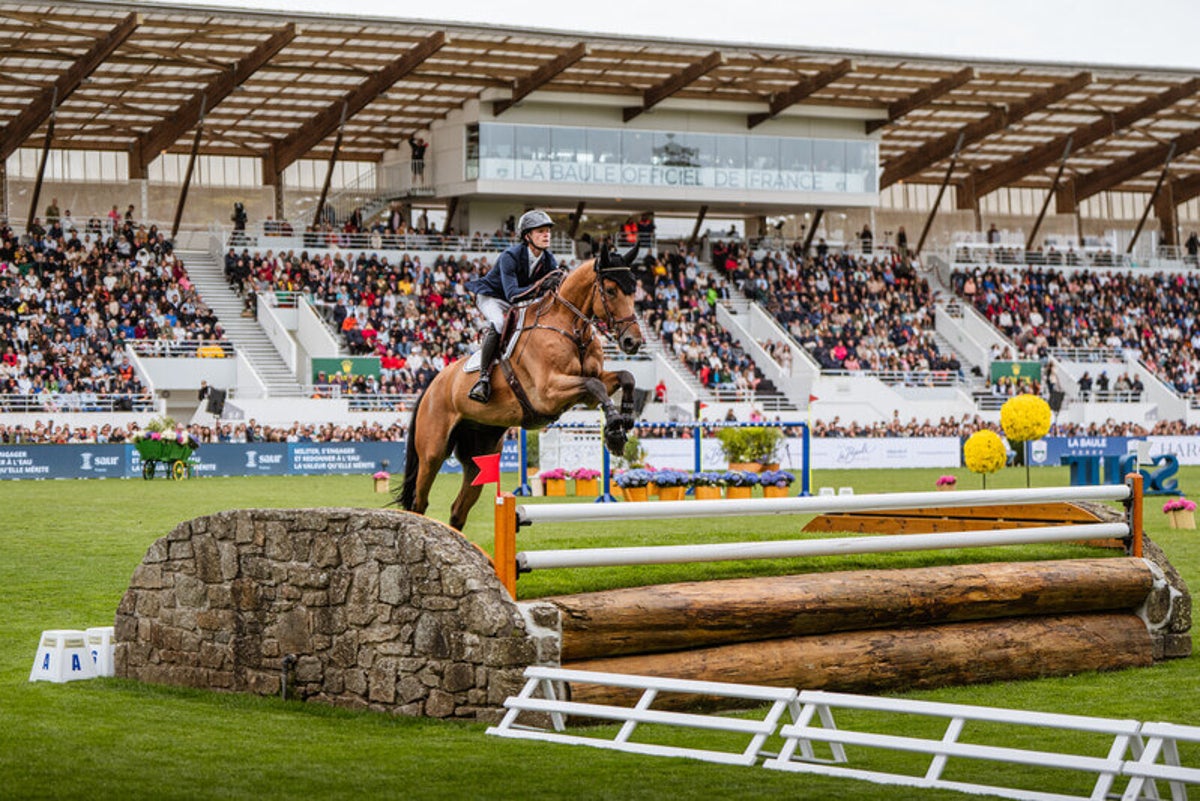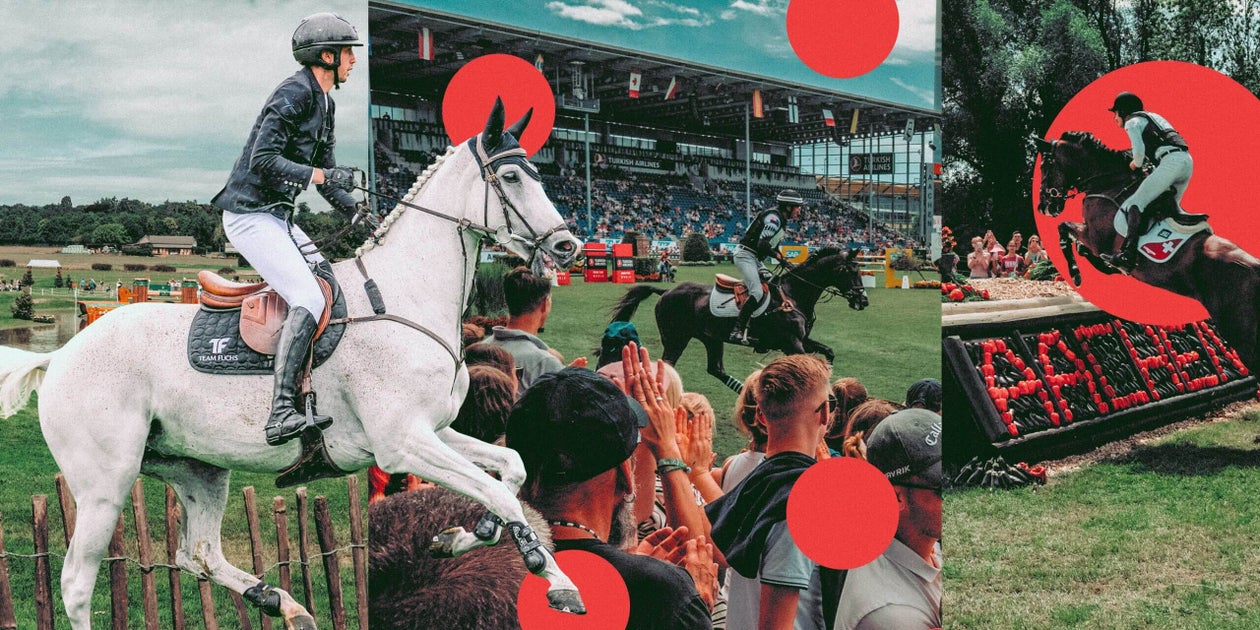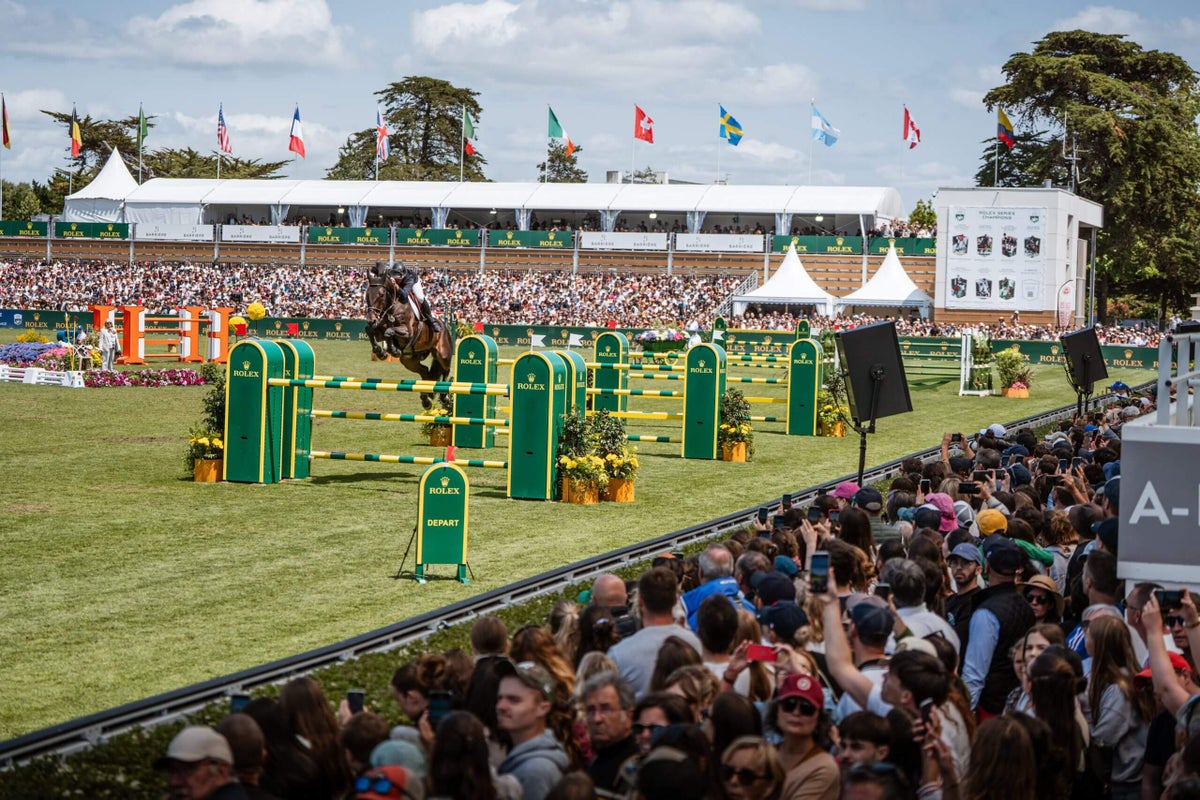
If you were to tune in to a major show jumping competition at this juncture of the summer season, you’d be forgiven for thinking the sport follows something of a theme. This month, like last, features a predominance of courses built on grass arenas, with a wealth of space in which the competition can play out.But while grass arenas were once de rigueur they now represent just 26 of the world’s 94 CSI5*-ranked competitions (the top tier), making them something of a holdover from old-school equestrian sport — one that those in the know are determined to keep alive.There is something almost pastoral about watching modern show jumping on grass. Squint while ringside at Piazza di Siena in Rome and it could be the 1950s all over again; at Aachen, Germany even less imagination is required to fling you back to the World Championships there in 2006 or even 1955, its first go at hosting.But underneath the visual simplicity is a vast network of research.Much as tennis’ different surfaces encourage the development of better all-round players, show jumping’s movement between spacious grass and smaller, engineered sand-and-fibre arenas is crucial to producing a modern equine that can dominate at championship level.“The sport has developed a lot over the last 10 or 20 years,” Irish show jumper Shane Breen told The Athletic. Breen won the prestigious Hickstead Derby in 2022 — one of the world’s toughest jumping classes and one that marries the sport’s rustic origins with modern-day innovations.“Years ago, people would say ‘this horse is better suited to grass,’ or ‘this horse is best in a small sand arena.’ But that’s not really a factor anymore because the breeding of jumping horses has gotten so much better, the sport is so much more professionalized, and horses are so much more versatile as a result.”Breen points to Richard Vogel’s United Touch S as the perfect example.“He won the Rolex Grand Prix in s’Hertogenbosch in March, and then goes to Aachen and wins the Rolex Grand Prix there,” Breen said. “The first show is indoors on sand, the second is outdoors on grass. But he’s bred to be a superstar and the training and maintenance of these horses is so elevated now that they’re ready to adapt to anything. Nothing is a surprise to them.”Richard Vogel has won the last two majors. (Uwe Anspach / picture alliance via Getty Images)Some of the biggest show jumping competitions in the world retain grass arenas. The Piazza di Siena returned to turf a decade ago. Canada’s Spruce Meadows hosts a leg of the Rolex Grand Slam in its verdant international arena. And CHIO Aachen, most notably, has geotextile surfaces in several of its fringe stadiums but maintains grass underfoot in its 40,000-seat main arena, the biggest in the world.Aachen will play host to this year’s FEI World Championships, but is unlikely to be the first sojourn on grass for the elite competitors who will pad out the starting list in August. The savvy among them will be well underway on a pre-Championships season trajectory that sees them ride on grass as often as possible.Jos Lansink’s greatest victory came in a grass arena in 2006 when the Dutch rider was crowned World Champion at Aachen.“I train all my young horses on grass much more often than I do on sand surfaces,” Lansink told The Athletic.Lansink said the experience in this unique type of arena can boost a horse from exciting prospect to confirmed contender.“The first time a horse comes into a big grass arena like Aachen, it’s often more difficult than riding them in a sand ring,” Lansink said. “They can be much spookier [more reactive], but it’s an important part of their training to have that experience. When they get used to it, they find it so natural.”The experience of competing on a grass arena can be worlds away from jumping a similar course on a surface. Surfaces, with their custom blends of sand, wax, and microfibres, are intrinsically designed to stay consistent regardless of the conditions.Grass will always wear the weather as an additional challenge no matter how deftly it’s been engineered. Light rain can create a slick top layer and a skid risk. A downpour can change the trajectory of a competition, creating deeper, stickier patches on well-trodden lines, potentially forcing competitors late in the draw to find untrodden ground on wider or tighter angles of approach, similar to the way in which snow degradation and rutting forces late-drawn competitive skiers to adjust their lines.Where surfaced arenas are often clinically leveled-out, grass arenas feature undulations and slopes that might be invisible to the eye but underfoot can influence the lengthening or shortening of a horse’s stride by centimetres, which is enough to impact how many steps of canter might occur between two fences.“The gradients are pretty unique,” said Breen. “At Hickstead, there’s about a three-metre fall-off in the ground [across the arena]. You wouldn’t ever think it to look at it, but if you put a laser to it, that’s what it is. So when you put that into perspective, of turning to ride to a line of fences down the slope, it absolutely does change how you ride to it and change the balance. Vice versa, when you ride up the slope, a jump that might not look that big when you’re standing by it suddenly looks a lot bigger. It can be a major factor.”These intricacies need to be accounted for by riders in their course walk, an essential but startlingly small window of opportunity that sees them descend en masse to the track to learn the route and pace out the distances.Though the arenas themselves remain the same, the courses change at every competition. While prior experience at a competition might lend a rider some inside knowledge on how to manage the nuances of the ground, the questions asked by the course designer can only be met and determined in this 20-minute period.Aachen is widely considered to be the Wimbledon of show jumping. (Jasmin Metzner / CHIO Aachen)There’s also equipment to consider. On grass, horses will wear screw-in studs in their shoes to aid grip, but the possibilities are endless: inch-long points; shorter, squarer bullets; different configurations on the inside or outside of the hoof or from back to front.There is no studding guideline on any given day — the choice comes down to experience and expectation and, as with any decision, it can be the wrong one. Or it can be right, but something can go wrong: a shoe might fly off mid-round, or the thread that screws the stud into the shoe can fail, leaving shrapnel on the course and suddenly changing the way the hooves interact with the ground.“There’s no set rule to how you stud,” said Breen. “It’s about the weather conditions, whether the ground is a bit slippery or has texture changes — there’s a lot to consider.”It is here that the unique camaraderie of equestrian sport can be a major boon.“If you’re not familiar with an arena and how it might ride, you look at your friends and colleagues around you — the people who have been there before — and you ask them, ‘What’s the lay of the land? What’s your idea about this?,’” Breen explained.“You try to gather that little bit of knowledge from their experiences, and then you have to process that information and think about how you can apply it to your own horse’s specific needs and strengths.”Despite the bottom line of creating all-round athletes, there can be some marginal gains to be had on sand or grass.“Grass arenas are far larger, so to win on them, are you going faster? Possibly you are,” said Breen. “Are you doing fewer strides? That’s an interesting one.“In a smaller sand arena, when you get down to the jump-off, a naturally fast horse with a shorter stride length will have the advantage because it can move swiftly through tight turns.“In a larger space and on grass, it could be beaten by a slower-moving horse that has a longer natural stride length, because that slower horse can get away with doing fewer strides around the track, and it can end up pretty nip and tuck as to which one will ultimately be the winner.“If a horse can cut six or seven strides out in total around a course, that could win it.”In maintaining a competition arena of any kind, getting the balance right is a fine art. Studies on footing ramped up in intensity after the 2004 Athens Olympics, a Games that was quickly defined by concerns around the intensity of the heat and the resultant firmness of the going at the grassed Markopoulo Arena.The first step in the aftermath of Athens? The formation of an independent review body. The committee recommended more stringent veterinary examinations throughout competitions — and, in a major step forward, the introduction of footing experts and advisors.With safer surfaces, and less resultant wear-and-tear, course designers could rethink how they designed their tracks — and riders could broaden their approach to jumping them.It is never quite so simple as just placing jumps in a field.“That’s really why so many shows have surfaces,” said Lansink, calling from horseback in the training arena of La Baule. The CSI5* competition will play out over yet another of the sport’s much-loved grass stages.“To have a grass arena, you need to have great drainage. When you have hundreds of competitors, it’s much easier to maintain a surface. Good grass takes a huge effort.“I hope that all these big shows will always be on grass. It is the best thing for the horses — and nothing looks better.”
Why show jumping isn’t giving up on grass just yet: ‘Nothing looks better’
Going from spacious grass venues and smaller, sand-and-fibre arenas is crucial to developing a modern show jumping horse.
1,611 words~7 min read