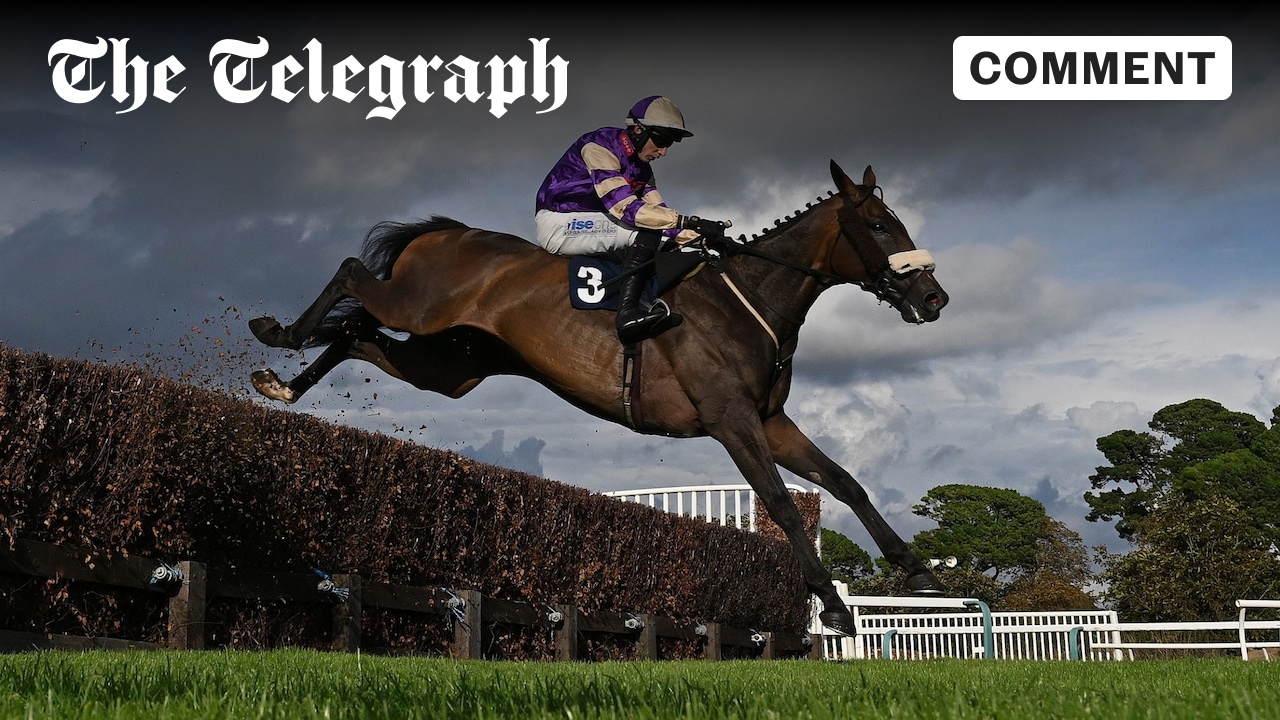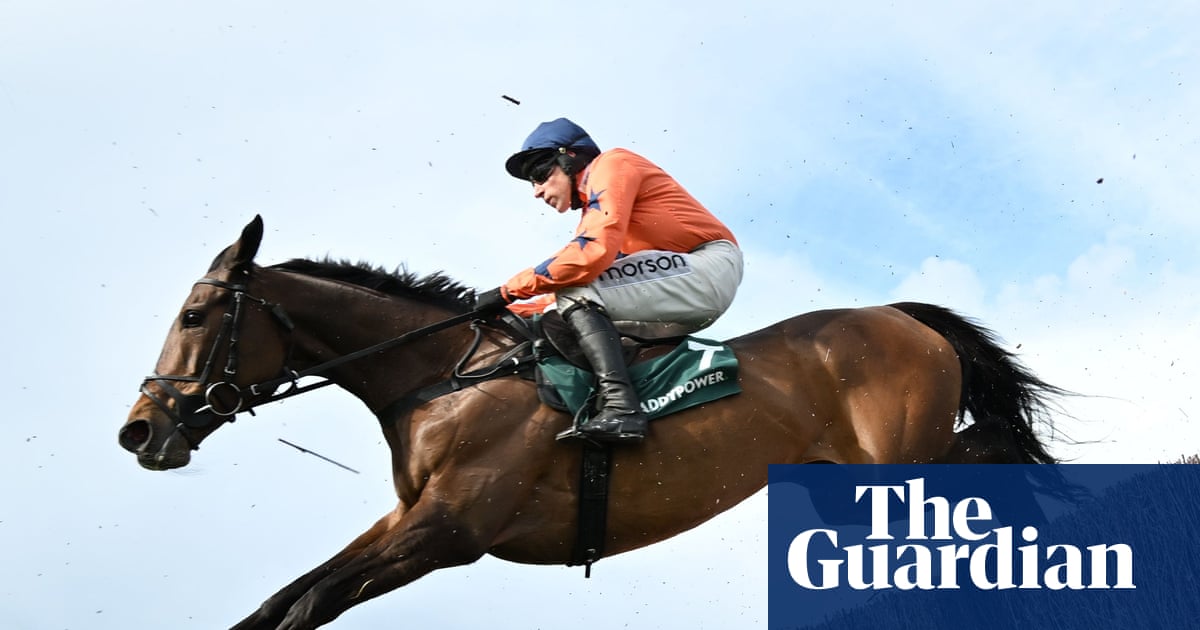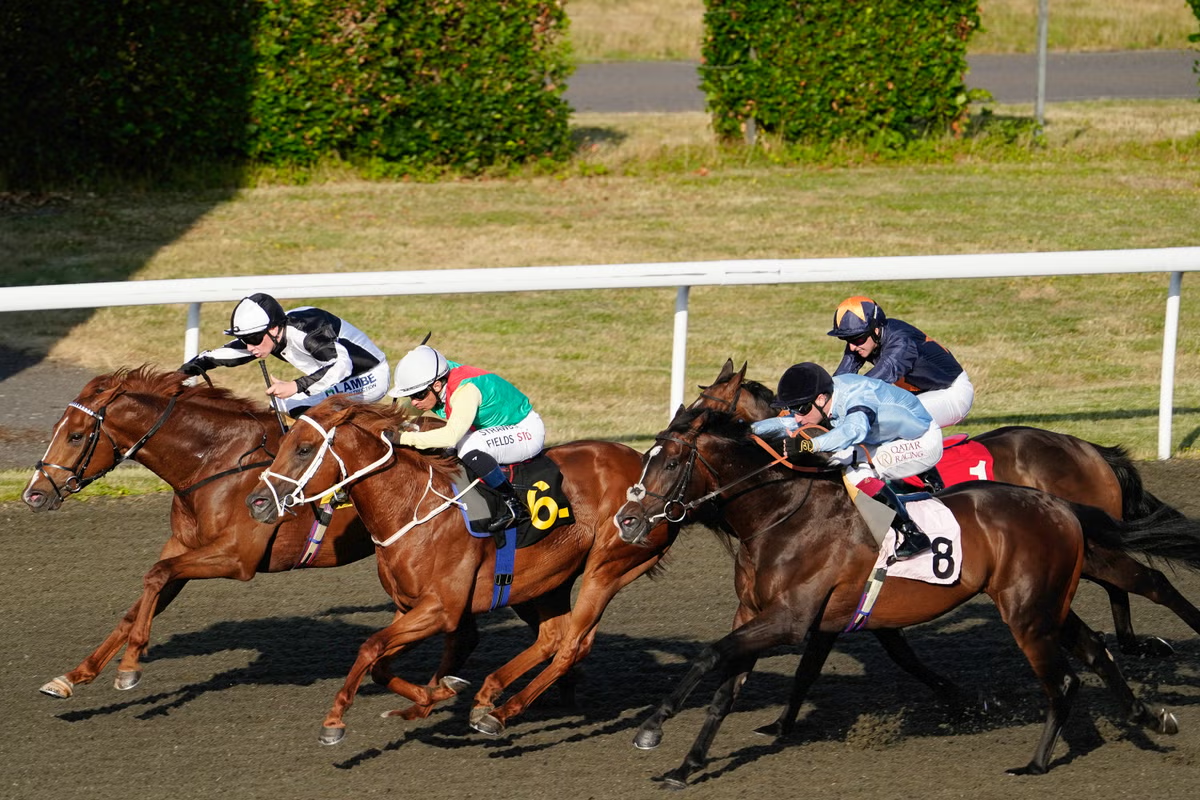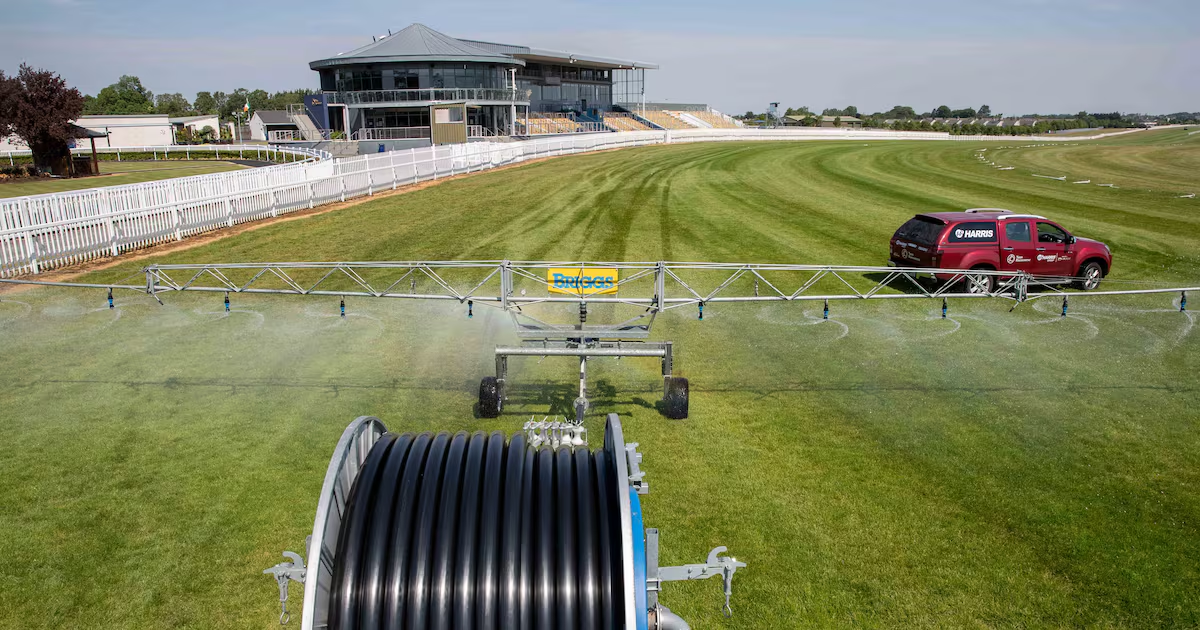
It might be hard to credit, but we’re in summer, which means that at some point between now and the end of August a tense balancing act is in prospect to provide suitable ground conditions for National Hunt racing. The fact that the sun is forecast to shine soon makes for a particularly ‘jumpy’ outlook.There are 38 National Hunt fixtures between now and the end of the summer. That’s only 16 less than on the flat. The Galway Festival continues to be a nod to the past in staging mixed cards. However, ensuring suitable going for summer jumps action is only going to be become more of an issue into the future. Talk of climate change might be a buzz kill, but its impact is already a real factor when it comes to racecourses. Jump racing’s popularity means it’s continuous here, even at the height of the summer game. Traditionally, it has also been the time when lesser lights get a shot at winning a race while winter stars enjoy a holiday in the sun.The reality of how major operations, such as Willie Mullins, Gordon Elliott and Henry de Bromhead, work nowadays is that their own lesser lights tend to dominate. Between them the trio have won nearly 50 races already in the fledgling National Hunt season. Nevertheless, the summer still represents a greater opportunity for others to make some hay.Quicker ground conditions represent a problem for both horse and rider. Hitting harder ground is obviously riskier. Pressure on equine joints is accentuated. Some talented horses thrive on it, but the reality is that it is often less financially valuable animals that are risked on summer going. There was a time when that barely seemed to matter. Daredevil tales abound of whizzing around tight tracks at breakneck speed. The toll in terms of injuries and worse barely registered beyond the loss to connections. It was the price of keeping the show on the road. It’s a price the sport can’t afford any more.Last Friday’s three chases at Clonmel were cancelled a fortnight beforehand due to a prolonged period of dry weather. Typically, it has barely stopped bucketing since. But it’s a dozen years almost to the day since five horses sustained fatal injuries at the same Friday evening meeting. That took place on ground officially adjudged “good to firm.” Punters at last year's Galway Festival, which features both flat and jumps action. Photograph: Morgan Treacy/Inpho A subsequent regulatory verdict was that none of the fatalities could be linked to the track or the ground, but it didn’t prevent a reputational cost. The welfare reality is considerably different now. Any attempt at framing such a rate of attrition in terms of simple misfortune won’t cut it any more.The quickest ground the Cheltenham Festival is allowed begin on is “good to soft.” At the Punchestown Festival, the Irish equivalent of “yielding” is the aim. That’s for the best horses on the biggest stages. In a sport increasingly under a welfare spotlight, racing is wide open to criticism if similar parameters don’t apply for all runners everywhere. During a lengthy summer dry spell there are pressures on watering systems. Turning on the taps is increasingly necessary. That’s one side of the climate change reality. Another is the difficulty of anticipating what to do when weather conditions are mixed, which is hardly a novel concept in Ireland.Just how tricky a juggle act watering is has got underlined in recent weeks. Horses have been taken out because some feel not enough has been done. Others have been angry because they think too much watering took place. Trainer Shark Hanlon was fined €250 for verbal abuse towards Listowel’s course clerk after claiming the track was overwatered. Just how heated the issue can get was obvious at Cheltenham, where Willie Mullins and JP McManus were unhappy about what they felt to be insufficient watering. Mullins said good ground wasn’t suitable for top National Hunt horses, that sounds like an inference that it’s OK for less talented horses.Track watering is a difficult balancing act, as shown in recent weeks. Photograph: Morgan Treacy/Inpho Anyone looking out the window recently can see that the weather is weird. A new word for showers is necessary because the ferocity of some of them is startling. Trying to predict what falls and where is turning into even more of an exercise in meteorological juju. Looking for some sort of perfection in ground descriptions means looking forever.The usual each way move is to demand ‘safe’ ground, a subjective and conveniently non-specific term that’s even less precise than some believe official ground descriptions to be. Then there’s the view that less is more when it comes to watering – leave it natural, as in days gone by. But those days are just that, gone.Jump racing must be able to stand over what it presents as being a fair challenge. It’s clear how quick ground increases the risk of injury, that is preventable through watering. Gauging it to perfection is impossible, even if the climate wasn’t going tonto. But in such circumstances erring on the side of too much rather than too little is a prudent tack to take.Any kind of more flippant alternative ultimately threatens to have the sport soaked in a lot more than rain. Something for the WeekendFriday’s Sandown feature is the Listed Scurry Stakes and Lady Youmzain (2.42pm) can overcome her comparative inexperience to win. Kevin Ryan’s filly has had just three starts and showed greenness when losing her unbeaten record at Haydock a couple of weeks ago, hanging right in the closing stages. With that run under her belt, she can shake up some more battle-hardened rivals.Tabletalk disappointed in last month’s Sagaro Stakes but a repeat of his effort when runner-up to Sons And Lovers in Saudi Arabia in February can see him go close in York’s Listed feature (3pm).
Jump racing open to criticism if ground conditions allowed to get too fast
Perfect watering balance is impossible, but erring on the side of too much is prudent
979 words~4 min read