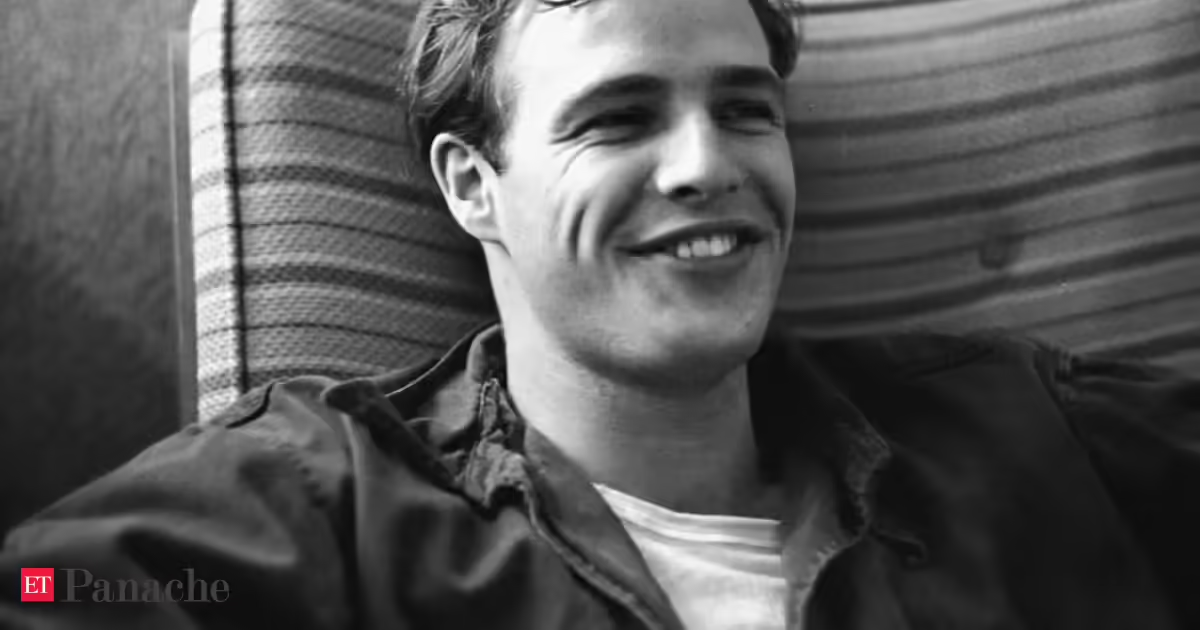
Long before he became one of Hollywood's most celebrated actors, Marlon Brando was a lonely child searching for comfort in unexpected places. While millions remember him as the unforgettable Vito Corleone in The Godfather, one of his most revealing reflections takes us back to a much quieter chapter of his life. In a deeply personal recollection, Brando spoke about finding hope, kindness and a sense of belonging through photographs in magazines—an experience that would eventually shape the course of his life in remarkable ways.The quote of the day is, "I had a lot of loneliness. I spent most of my time, up in the library reading the National Geographic Magazine about Tahiti. I was entranced by the expressions on their faces. They had unmanaged faces. No manicured expressions. A kindness. That's where I want to go. That's where I want to be."The quote comes from Marlon Brando's personal audio recordings that were later featured in the 2015 documentary Listen to Me Marlon. The film is built around tapes recorded by the actor himself over several decades, offering a rare glimpse into his thoughts, memories and emotions.In this particular thought, The Godfather actor looked back on his childhood and the loneliness that defined much of it. Rather than speaking about fame or success, he focused on a young boy who often felt isolated and disconnected from the people around him.How books and magazines became his escapeAs a child, Marlon Brando found refuge in reading. He spent long hours in the library, away from the difficulties of everyday life, immersing himself in stories and photographs from distant places. Among the publications that captured his imagination, National Geographic held a special place.The magazine introduced him to cultures and landscapes far beyond his immediate surroundings. But it was not just the exotic locations that fascinated him. Brando was drawn to the faces of the people he saw in photographs from Tahiti and other Polynesian islands.Looking at those images, he felt he was seeing something rare and genuine. The people seemed peaceful, open and comfortable in their own skin. For a lonely child yearning for connection, those photographs represented a different world—one that felt warmer and more welcoming than the one he knew.What did Brando mean by 'unmanaged faces'?One of the most striking parts of the quote is Brando's description of the islanders' expressions as "unmanaged faces" with "no manicured expressions."He was not talking about physical appearance. Instead, he was describing authenticity. Brando felt that many people hide their true emotions behind carefully constructed expressions. In social situations, people often smile when they are unhappy, pretend to be confident when they are insecure, or say what others want to hear rather than what they truly feel.The faces he saw in the photographs appeared different to him. They seemed free from those social masks. He saw honesty instead of performance, sincerity instead of pretence, and kindness instead of calculation.That authenticity left a lasting impression on him. It represented something he deeply wanted in his own life.A lesson about loneliness and belongingAt its heart, the quote is about more than Tahiti. It is about the universal experience of loneliness and the search for a place where we feel understood.Brando's words show how loneliness can shape our dreams. When people feel disconnected, they often imagine places, communities or relationships where they can finally belong. For Brando, Tahiti became that symbol.His fascination with the islands was not simply about geography. It was about what they represented—peace, acceptance and genuine human connection. The quote also reminds us that people often find comfort in unexpected places. For Brando, a magazine became a window into a world that offered hope during a difficult period of his life.Why kindness stood out to himAnother important theme in the quote is kindness. Among all the qualities he noticed in the photographs, kindness was the one that stayed with him. He did not talk about beauty, wealth or status. Instead, he remembered the warmth he believed he saw in people's expressions.His observation suggests that compassion and humanity can leave a deeper impact than outward appearances. Even through photographs, Brando felt drawn to what he perceived as genuine warmth.It is a reminder that people are often attracted to sincerity and kindness far more than perfection.When Marlon Brando's dream became realityWhat makes this quote even more remarkable is how closely it mirrored the future. Years after spending time reading about Tahiti, Brando finally visited the islands while filming Mutiny on the Bounty. The experience had a profound effect on him. The place he had dreamed about as a lonely child was now real.His connection to the region grew so strong that he eventually purchased Tetiaroa, a stunning atoll in French Polynesia. In many ways, the dream that began in a library came full circle.The destination he had imagined from the pages of a magazine became an important part of his life story.Why the quote still resonates todayBrando's reflection continues to resonate because it speaks to something timeless. Most people know what it feels like to search for acceptance, authenticity and peace. His words capture that longing in a simple yet powerful way.The quote teaches that genuine people and sincere relationships matter more than appearances. It talks about our desire to be around those who are honest, kind and comfortable being themselves. Above all, it reminds us that the places we dream about are often connected to deeper emotional needs, the need to feel seen, understood and at home.
Quote of the day by Marlon Brando: 'I had a lot of loneliness. I spent most of my time up in the library reading, entranced by the expressions on their faces. They had unmanaged faces' - What The Godfather actor's words reveal about finding peace
Marlon Brando found solace from childhood loneliness in National Geographic, particularly images of Tahiti. He was captivated by the "unmanaged faces" of islanders, seeing authenticity and kindness. This dream of genuine connection led him to eventually purchase an atoll in French Polynesia, fulfilling a lifelong yearning. Read on!
TL;DRAI
Brando found solace in National Geographic photos of Tahitian islanders as a child, drawn to their "unmanaged" authentic faces—later buying an atoll there. For tech leaders: authentic culture and psychological safety drive retention more than curated personas.
910 words~4 min read