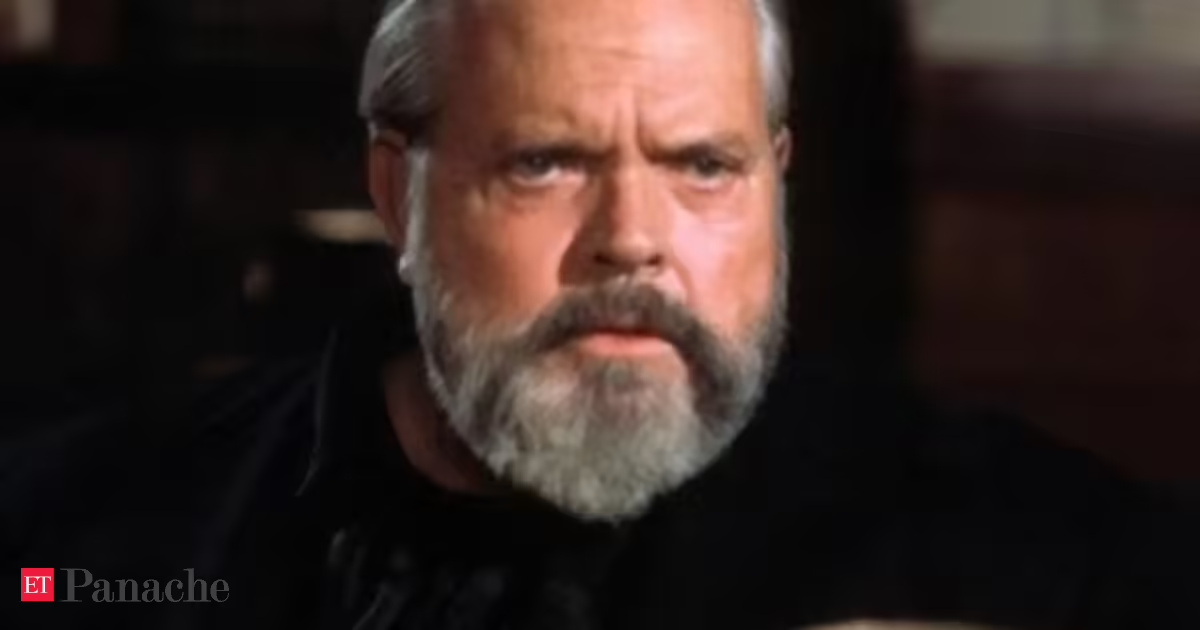
In an era where people can connect with thousands of others through a single screen, loneliness remains one of the most common human experiences. That is why a decades-old quote by Orson Welles continues to strike a chord with readers today. The legendary filmmaker, actor and writer captured a difficult truth about life in just a few words. His thoughts on loneliness, friendship and love offer a powerful reminder of why meaningful human connections matter more than ever in a fast-moving and increasingly disconnected world."We're born alone, we live alone, we die alone. Only through our love and friendship can we create the illusion for the moment that we're not alone." - Orson WellesAt first reading, the quote may sound pessimistic. After all, Orson Welles begins by pointing out that human beings enter the world alone, move through life as individuals and eventually face death alone. Yet the deeper message is not one of despair. Instead, it is a thoughtful reflection on the human condition and the role that relationships play in making life meaningful.Welles was highlighting a reality that philosophers have discussed for centuries: every person experiences life from within their own mind. No matter how close two people become, one person can never completely step inside another person's thoughts, memories, emotions or consciousness. Each individual carries a private inner world that remains uniquely their own.Why love and friendship matter so muchThe second half of the quote is what transforms it from a statement about loneliness into a celebration of human connection.You Might Also Like:When Orson Welles says that love and friendship create the "illusion" that we are not alone, he is not suggesting that relationships are fake or meaningless. Rather, he is acknowledging that while people can never fully merge their experiences, they can build bonds that make life feel shared.Love allows people to feel seen, understood and supported. Friendship offers companionship during difficult moments and joy during good ones. Together, these relationships help people navigate the uncertainties of life.The quote suggests that companionship is one of the most valuable gifts people can give one another. Even if every individual ultimately walks their own path, having someone beside us along the journey changes how that journey feels.This idea remains especially relevant today. Modern technology has made communication easier than ever before. People can exchange messages instantly, join online communities and remain connected around the clock. Yet many still struggle with feelings of isolation and loneliness.That contrast helps explain why Welles' words continue to resonate. His quote reminds readers that genuine connection is different from constant communication. Real companionship is built on trust, understanding, empathy and shared experiences.What Orson Welles was really talking aboutAt its core, the quote explores an existential truth about life. Existential thinkers often argue that every human being must confront the reality of individual existence. People make their own choices, experience their own emotions and carry their own responsibilities. In that sense, everyone is fundamentally alone.However, Orson Welles did not appear interested in dwelling on loneliness itself. Instead, he focused on humanity's response to it.His message is that relationships give people a sense of belonging in a world that can often feel uncertain and isolating. Love and friendship become bridges between separate lives. They cannot erase human individuality, but they can make people feel connected despite it.That perspective is what makes the quote so enduring. Rather than encouraging people to accept loneliness passively, it encourages them to actively invest in meaningful relationships.The lesson is simple yet profound: if isolation is a natural part of existence, then companionship becomes even more precious.The remarkable mind behind the quoteThe words carry additional weight because they come from one of the most influential creative figures of the twentieth century.Orson Welles was a legendary American actor, director, producer and writer whose work transformed theatre, radio and cinema. Known for his bold artistic vision, booming voice and innovative storytelling techniques, he became one of the defining figures of Hollywood's Golden Age.One of his earliest achievements came in 1938 when he delivered a radio adaptation of H.G. Wells' The War of the Worlds. Presented in the style of a live news broadcast, the programme convinced many listeners that a real Martian invasion was taking place, creating widespread panic and making Welles a national sensation.His greatest cinematic achievement arrived just a few years later with Citizen Kane. Released in 1941 shortly before his 26th birthday, the film was directed, produced, co-written by and starred Welles himself.Today, Citizen Kane is frequently ranked among the greatest films ever made. Critics and historians continue to praise its groundbreaking narrative structure, innovative camera work, dramatic lighting and sophisticated storytelling techniques. The film changed how movies could be made and influenced generations of filmmakers who followed.Welles was also known for fiercely protecting his creative independence. Throughout his career, he often battled studio executives and sought ways to maintain artistic control over his projects. Whether working in theatre, radio or film, he consistently pushed creative boundaries and challenged conventional ideas.His fascination with complex human emotions, personal struggles and the nature of existence frequently appeared in his work. That is one reason his quote about loneliness and companionship feels so authentic.
Quote of the day by Orson Welles: 'We're born alone, we live alone, we die alone. Only through our love and friendship can we create the illusion for the moment that we're not alone' - A powerful lesson on companionship in a lonely world by Citizen Kane actor
Orson Welles' enduring quote highlights the inherent solitude of human existence, emphasizing that only through love and friendship can we create a shared experience. In an increasingly disconnected world, these meaningful connections offer a vital antidote to loneliness, reminding us of their profound importance.
861 words~4 min read