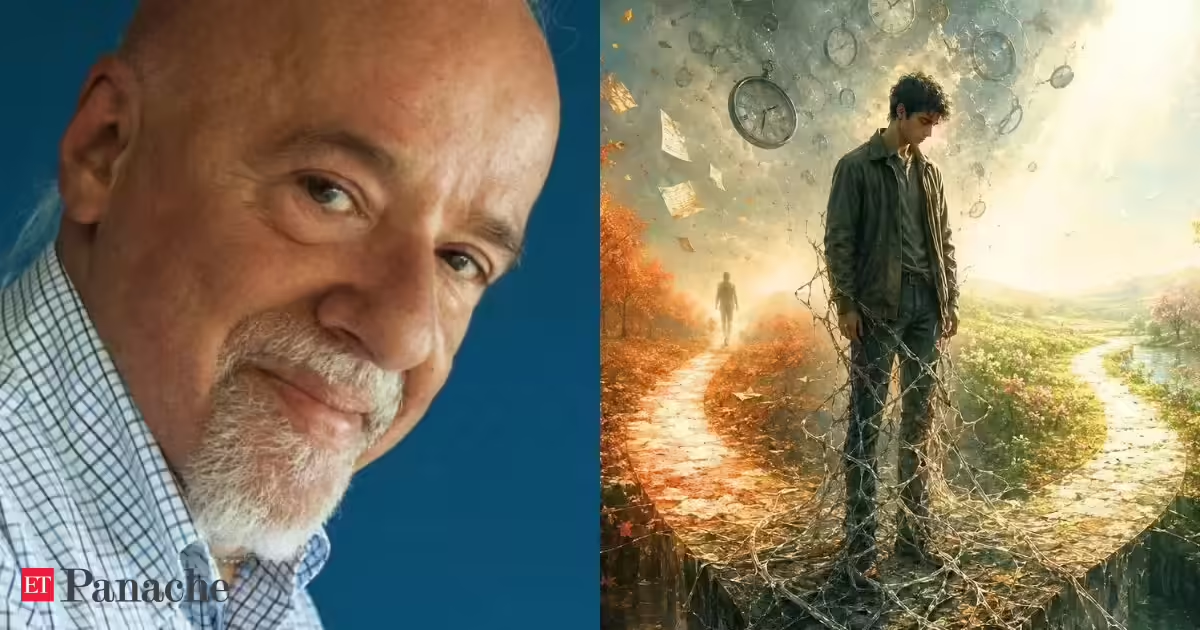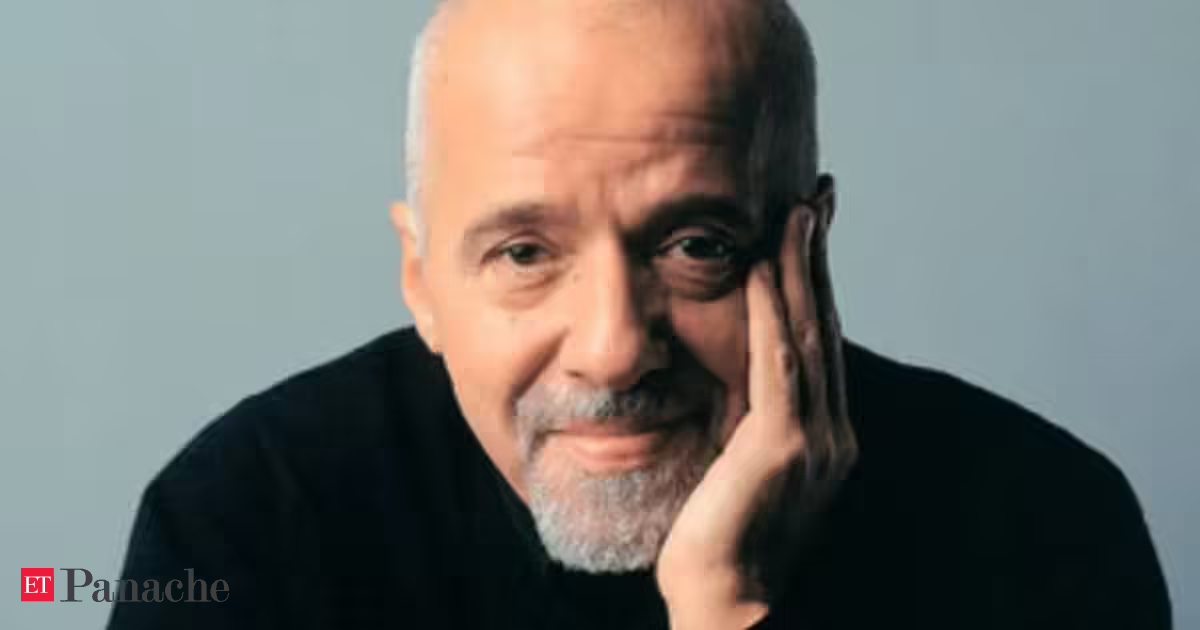
In a world where people are more connected than ever through technology, loneliness continues to be one of the most common human experiences. Messages arrive instantly, social media never sleeps, and yet many people still struggle with feelings of isolation. Few writers have captured this emotional paradox as powerfully as Paulo Coelho. One of his most thought-provoking observations comes from Eleven Minutes, where he reflects on the pain of loneliness and why emotional connection may be even more important than many of life's physical necessities.The quote of the day is: "Human beings can withstand a week without water, two weeks without food, many years of homelessness, but not loneliness. It is the worst of all tortures, the worst of all sufferings."Originally appearing in Paulo Coelho's 2003 novel Eleven Minutes, the statement goes beyond physical survival and focuses on emotional survival. The bestselling author suggests that while the human body can endure tremendous physical hardship, the mind and spirit struggle when deprived of meaningful human connection.The quote does not literally compare loneliness to hunger or thirst. Instead, it talks about the importance of belonging, companionship and emotional support. According to the idea expressed in the novel, people can adapt to difficult living conditions, but prolonged isolation can leave deep psychological scars.Moreover, the quote argues that loneliness is not simply about being alone. It is about feeling disconnected, unseen and emotionally distant from others. That experience, Coelho suggests, can become one of the most painful forms of suffering a person faces.Why the message feels so relatable in today's eraThe popularity of this quote has only grown over time because it shows a reality many people understand. Modern life often encourages constant productivity, digital interaction and individual achievement. Yet none of these things automatically create meaningful relationships.Coelho's observation reminds readers that emotional well-being depends heavily on human connection. People need friendships, family bonds, supportive communities and genuine conversations. Without them, even material success can feel empty.The quote also explains why loneliness affects people from all walks of life. It can impact students, professionals, celebrities, older adults and even individuals surrounded by large groups of people. Being physically present among others does not always eliminate feelings of isolation.Lesson 1: Connection is not a luxuryOne of the most important lessons from the quote is that relationships should not be treated as optional extras in life.Food, water and shelter are obvious necessities. Coelho's words encourage readers to view emotional connection in a similar way. Healthy relationships contribute to mental and emotional stability. They provide comfort during difficult moments and make joyful experiences more meaningful.In a culture that often celebrates independence, the quote is sort of a reminder that humans are social beings. Asking for support, maintaining friendships and spending time with loved ones are not signs of weakness. They are essential parts of living a balanced life.Lesson 2: Empathy matters as much as assistanceAnother powerful message behind the quote is the importance of empathy. When helping someone in need, people often focus on practical support. While food, money, shelter and resources are important, Coelho's words suggest that emotional care is equally valuable.A person experiencing hardship may also need compassion, conversation and human dignity. Feeling heard and understood can sometimes be just as important as receiving material assistance.The quote therefore encourages readers to look beyond surface-level problems and recognise the emotional struggles others may be carrying. A simple act of kindness or a meaningful conversation can help reduce the sense of isolation someone is experiencing.Lesson 3: Relationships need protectionThe third lesson is about actively maintaining relationships. Strong friendships, family bonds and community connections rarely happen by accident. They require effort, communication and time.Coelho's quote encourages people to check in on loved ones, reach out to old friends and prioritise meaningful interactions over endless distractions. Protecting relationships is not only beneficial for others but also for personal well-being.The message becomes especially relevant in an era where many interactions take place through screens. Technology can help people stay connected, but it cannot always replace genuine emotional closeness.Understanding Eleven MinutesFor the unversed, the quote comes from Eleven Minutes, one of Paulo Coelho's most discussed novels. Published in 2003, the book explores themes of sex, love, loneliness and self-discovery. Through its protagonist's journey, the novel examines how people search for meaning, intimacy and emotional fulfilment.The remarkable life of Paulo CoelhoUnderstanding Coelho's life helps explain why many of his quotes resonate so deeply.Born on August 24, 1947, in Rio de Janeiro, Brazil, Paulo Coelho de Souza experienced a difficult and unconventional path before becoming one of the world's most famous authors. As a teenager, he dreamed of becoming a writer, but his parents disagreed with his ambitions. At the age of 17, he was committed to a mental institution and reportedly escaped multiple times before eventually being released.Following his parents' wishes, he briefly enrolled in law school. However, he soon left and spent years travelling through South America, North Africa, Mexico and Europe, embracing a countercultural lifestyle.Before becoming a novelist, Coelho worked in several creative fields. He wrote song lyrics for Brazilian artists including Elis Regina, Rita Lee and Raul Seixas. He also worked as a journalist, actor and theatre director. In 1974, he was arrested for what authorities described as subversive activities and was reportedly tortured while in custody. These experiences would later influence his worldview and writing.From rejection to global successCoelho's literary journey was far from easy. His first book, Hell Archives, published in 1982, did not achieve significant success. A few years later, a spiritual journey along Spain's Camino de Santiago became a turning point in his life. The experience inspired The Pilgrimage, published in 1987.The following year, he wrote The Alchemist. Initially, the novel struggled to find an audience. Its first publisher printed only a small number of copies and chose not to continue publication.However, the book eventually found a larger publisher and slowly gained momentum. Over time, The Alchemist became one of the most successful novels in modern publishing history, reaching readers across the globe and establishing Coelho as an international literary figure.He later wrote several other notable works, including Brida, The Zahir, Aleph, The Valkyries, Hippie, Maktub and The Manual of the Warrior of Light.In 2016, basketball legend Kobe Bryant approached Coelho about collaborating on a children's book. The two began working on the project, but following Bryant's death in a helicopter crash in 2020, Coelho decided not to continue the book.Beyond books: Coelho's humanitarian workAccording to the official United Nations website, Paulo Coelho has long combined his literary career with social activism. The UN notes that the Brazilian author's works, including The Alchemist and The Pilgrimage, have been translated into more than 65 languages and have earned numerous international awards.Through the Paulo Coelho Institute, he supports efforts to combat poverty and assist underprivileged communities in Brazil. The United Nations also highlights his work with UNESCO as a Special Counsellor for Intercultural Dialogues and Spiritual Convergences.Since 2009, Coelho has been part of former UN Secretary-General Ban Ki-moon's "Network of Men Leaders," a group dedicated to supporting the UNiTE to End Violence against Women campaign. As a United Nations Messenger of Peace, he has also worked to raise awareness about the Sustainable Development Goals.These efforts reveal that Coelho's interest in human connection extends beyond literature. Whether through novels, public service or humanitarian work, he has consistently focused on themes of compassion, understanding and shared humanity.
Quote of the day by The Alchemist writer Paulo Coelho: 'Human beings can withstand a week without water, two weeks without food, many years of homelessness, but not loneliness. It is the worst of all tortures.' What the author of Eleven Minutes and Wept teaches us about emotional cost of isolation
Paulo Coelho's quote from Eleven Minutes states that loneliness is a more profound suffering than physical deprivation. He argues that while the body can endure hardship, the mind and spirit require emotional connection for well-being. This message resonates today, emphasising that relationships are essential, not optional, for a balanced and fulfilling life. Read on!
1,228 words~6 min read