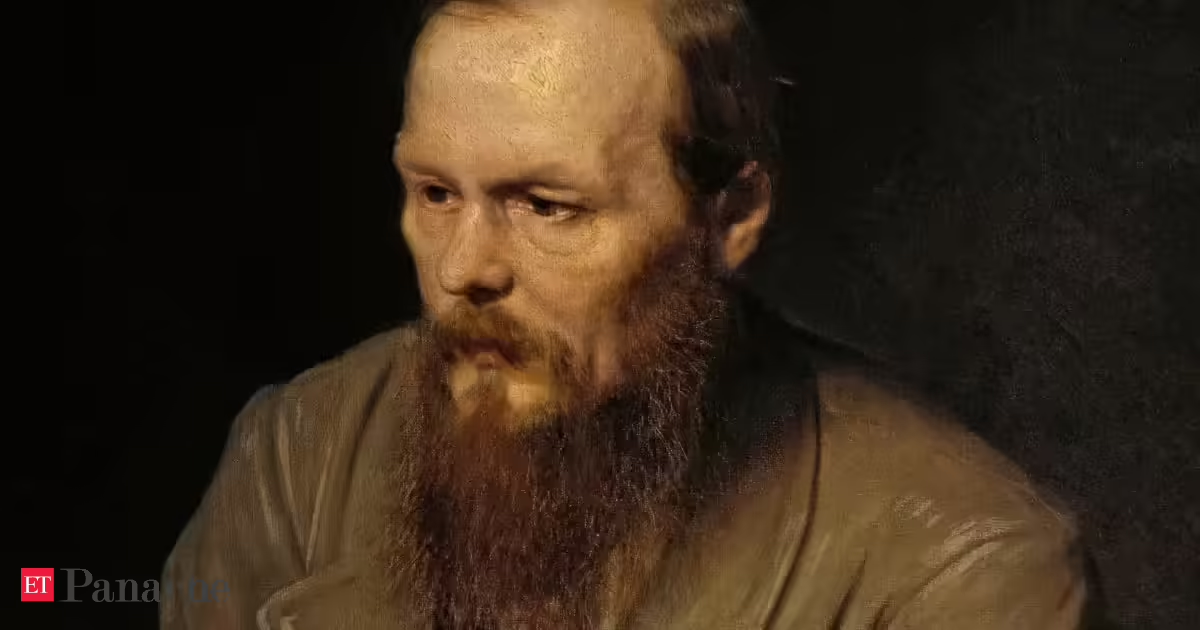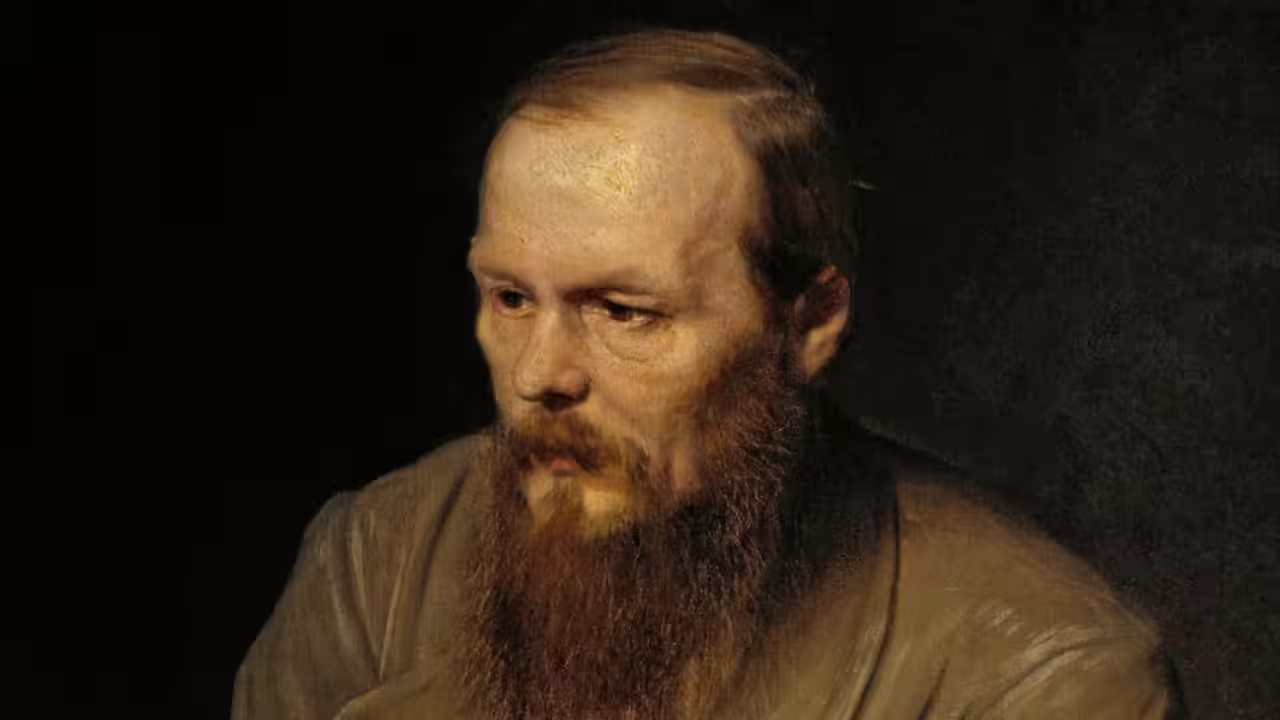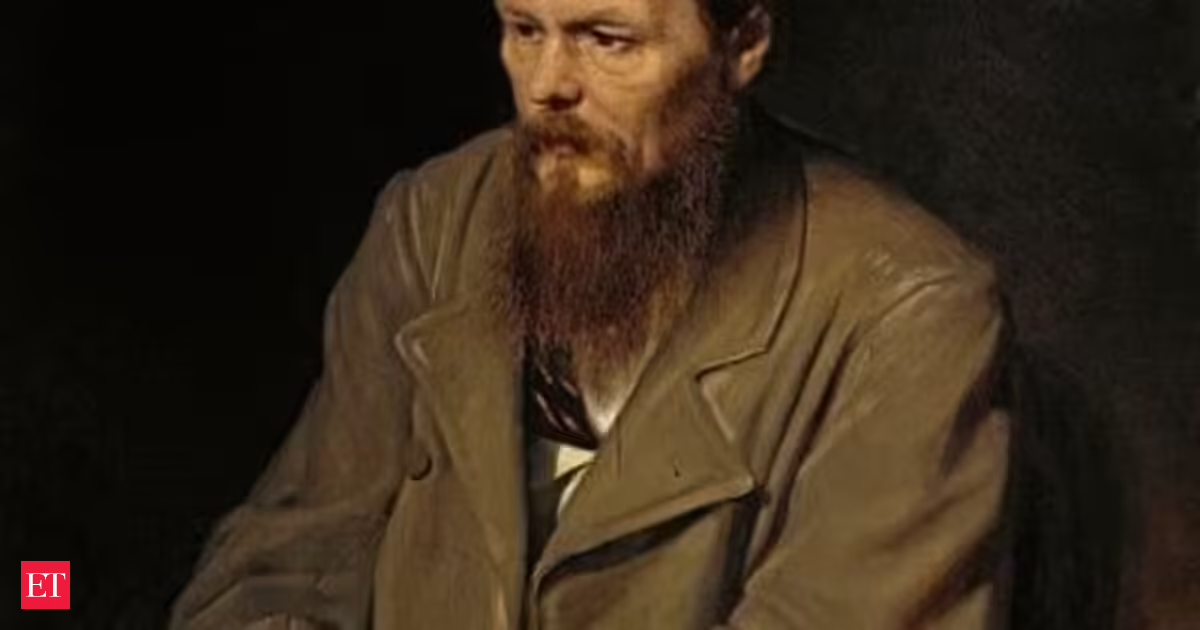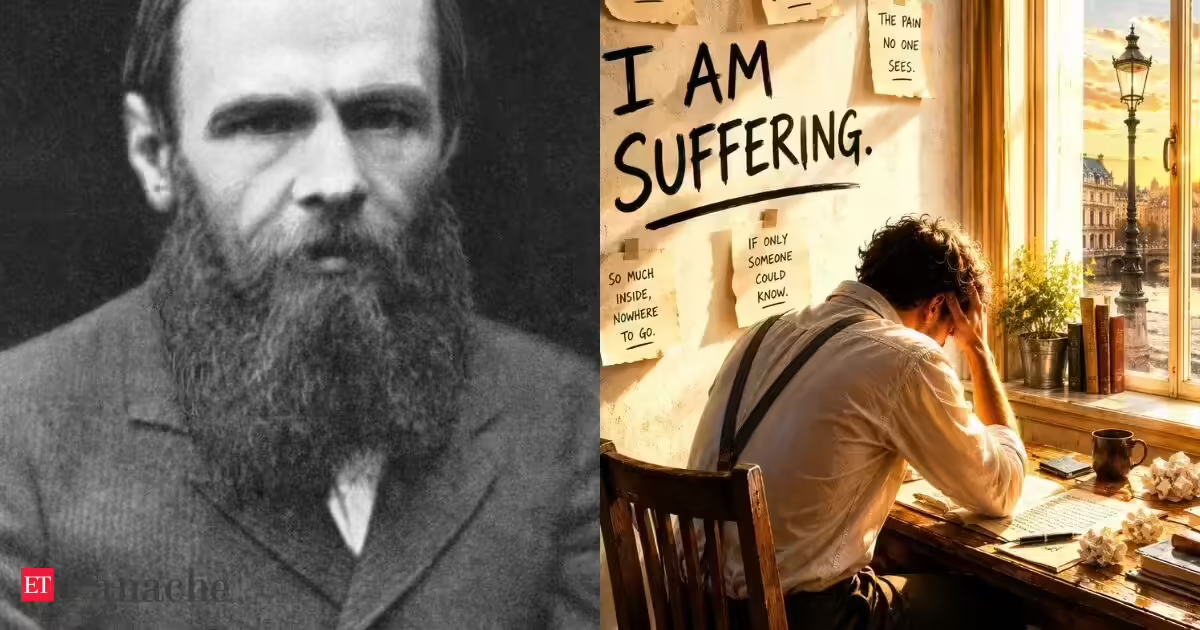
Some quotes stay with readers not because they are complicated but because they describe a feeling many people have experienced. One such line comes from Russian writer Fyodor Dostoevsky, who wrote, "Do you know, Nastenka, what it means to have no one to whom one could say: 'I am suffering'?" Though written in the nineteenth century, the words continue to strike a chord with modern readers. The quote appears in White Nights (1848), where the unnamed narrator, often called the Dreamer, opens up to Nastenka about the loneliness that has shaped his life."Do you know, Nastenka, what it means to have no one to whom one could say: 'I am suffering'?"At its heart, the quote is about emotional isolation. Physical loneliness is difficult, but feeling that there is no one who will truly listen when life becomes painful can be even harder. The narrator is not only talking about sadness. He is speaking about the need every person has to share their burdens with someone who understands. Keeping pain locked inside for too long can make a person feel disconnected from the world around them.The quote also reminds readers that human connection often matters more than solutions. Sometimes people do not expect others to fix their problems. They simply want someone willing to hear them without judgment. Through this single sentence, Dostoevsky highlights how silence can deepen suffering, while even one meaningful conversation can make a difficult moment feel less lonely. That emotional honesty is one reason the line continues to resonate with readers across generations.The story behind the quoteThe quote comes from White Nights, a short story first published in 1848. Set in St. Petersburg during the city's famous White Nights season, when the sky remains bright late into the night, the novella follows a lonely young man known only as the Dreamer. He spends much of his life alone, creating a rich inner world because he struggles to build real relationships.His life changes when he meets a young woman named Nastenka, who is crying by a canal. Over four nights, the two strangers begin sharing their lives with each other. Nastenka is also lonely, waiting for the return of a man she loves. Their conversations allow both of them to express feelings they have kept hidden for a long time.As the nights pass, the Dreamer falls deeply in love with Nastenka. For a brief period, he believes he has finally found the companionship he has long imagined. However, reality takes a different turn when the man Nastenka has been waiting for returns. She reunites with him, leaving the Dreamer heartbroken.Despite the painful ending, White Nights is remembered for its thoughtful look at loneliness, hope, imagination, love, and the brief moments of happiness that can leave a lasting impact. Even after losing the person he loves, the Dreamer chooses to remember those few nights with gratitude rather than bitterness.Fyodor Dostoevsky's life and literary journeyFyodor Dostoevsky was born in Moscow on November 11, 1821. He grew up near the Mariinsky Hospital for the Poor, where his father worked as a physician. From an early age, he saw poverty and hardship around him, experiences that later influenced many of the characters in his fiction.Although he studied engineering in St. Petersburg, literature remained his real passion. After graduating, he left military service and devoted himself to writing. His first novel, Poor Folk (1846), received praise from leading literary critics and quickly established him as an important new voice in Russian literature.His life changed dramatically in 1849 when he was arrested for taking part in discussions with the Petrashevsky Circle, a group that debated social and political ideas. Dostoevsky and others were sentenced to death and taken before a firing squad. At the last moment, the execution was cancelled and replaced with four years of hard labour in Siberia, followed by compulsory military service.The experience left a permanent mark on him. During his years in prison, he reflected deeply on faith, guilt, freedom, suffering, and the human mind. These themes would later become central to his novels.Personal struggles shaped his writingAfter returning from exile, Dostoevsky rebuilt his literary career but continued to face personal hardships. He struggled with gambling, accumulated large debts, and suffered from epilepsy. Financial pressure often forced him to write under strict deadlines.One of the most remarkable examples came in 1866 when he completed The Gambler in just 26 days with the help of stenographer Anna Grigoryevna Snitkina. The two later married, and Anna played a major role in helping him manage his finances and publishing career. Her support allowed Dostoevsky to complete many of the works that are now considered masterpieces.The works that defined his legacyDostoevsky became known for exploring the inner lives of his characters instead of simply telling dramatic stories. His novels ask difficult questions about morality, crime, justice, faith, free will, redemption, and personal responsibility.Among his best-known books are Crime and Punishment (1866), The Idiot (1869), Demons (1872), The Adolescent (1875), and The Brothers Karamazov (1880). His shorter works, including White Nights, Notes from Underground, The Dream of a Ridiculous Man, and A Gentle Creature, continue to be widely read for their psychological depth and emotional honesty.His style has often been described as psychological realism because he focused on the thoughts, conflicts, fears, and contradictions that exist within ordinary people rather than presenting simple heroes or villains.
Quote of the day on loneliness by Fyodor Dostoevsky: 'Do you know what it means to have no one to whom one could say: I am suffering' The heartbreaking truth about suffering in silence explored in his novella White Nights
Fyodor Dostoevsky's quote from White Nights explores the deep pain of emotional isolation, expressing how difficult it is to have no one with whom to share one's suffering. Spoken by the lonely Dreamer to Nastenka, the line reflects the universal human need for understanding and connection rather than solutions. The novella, first published in 1848, remains a timeless meditation on loneliness, hope, love, and fleeting happiness.
891 words~4 min read