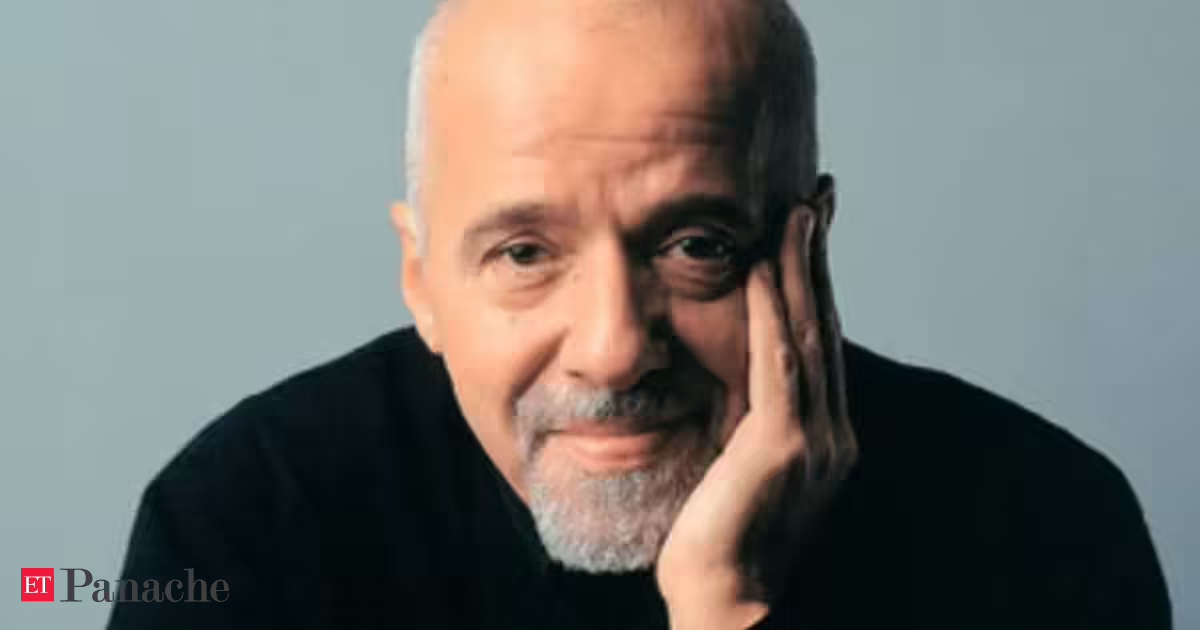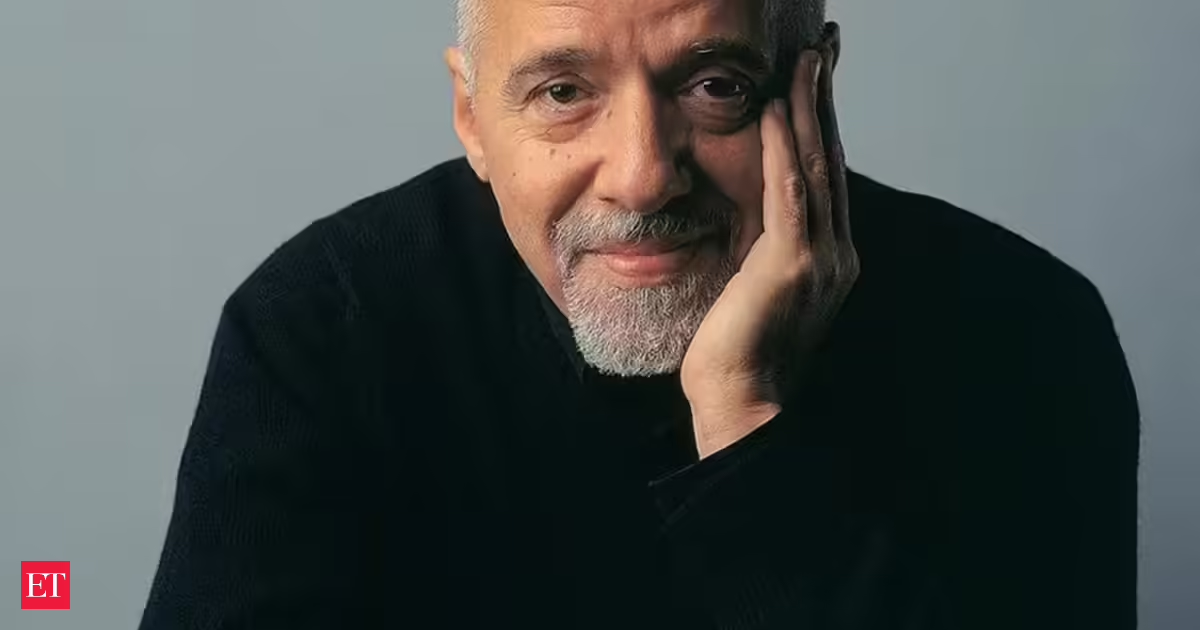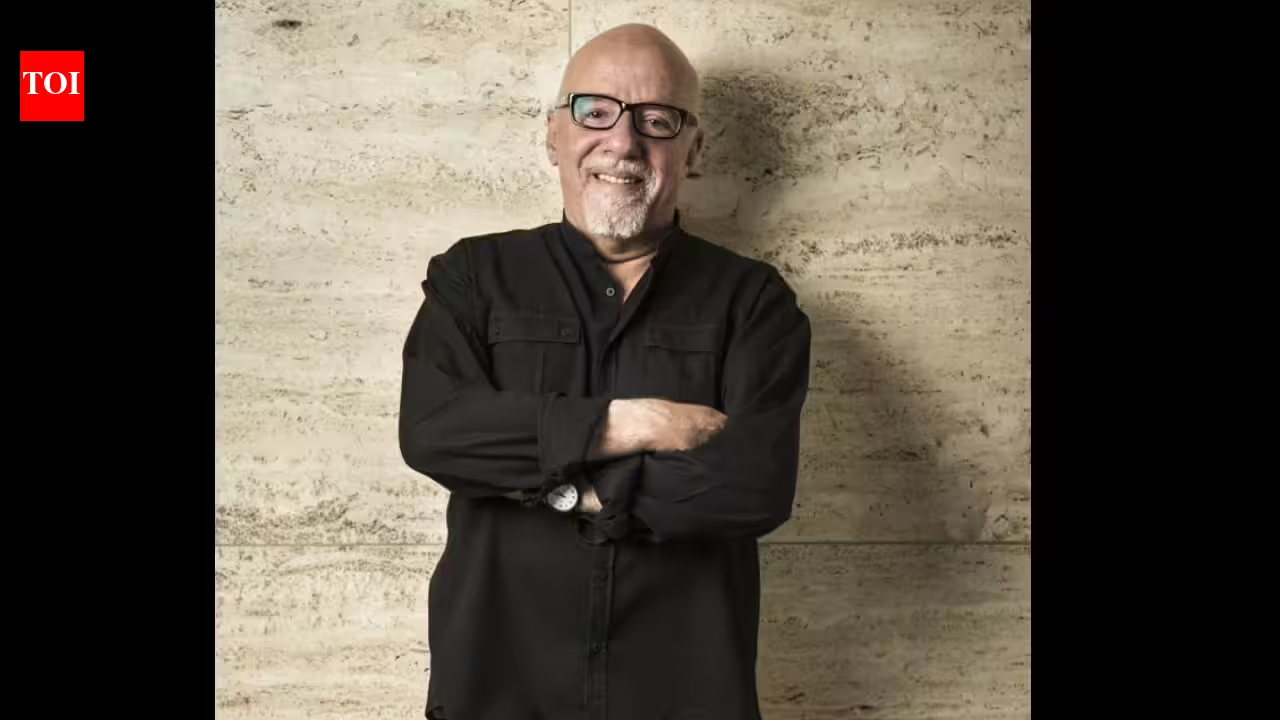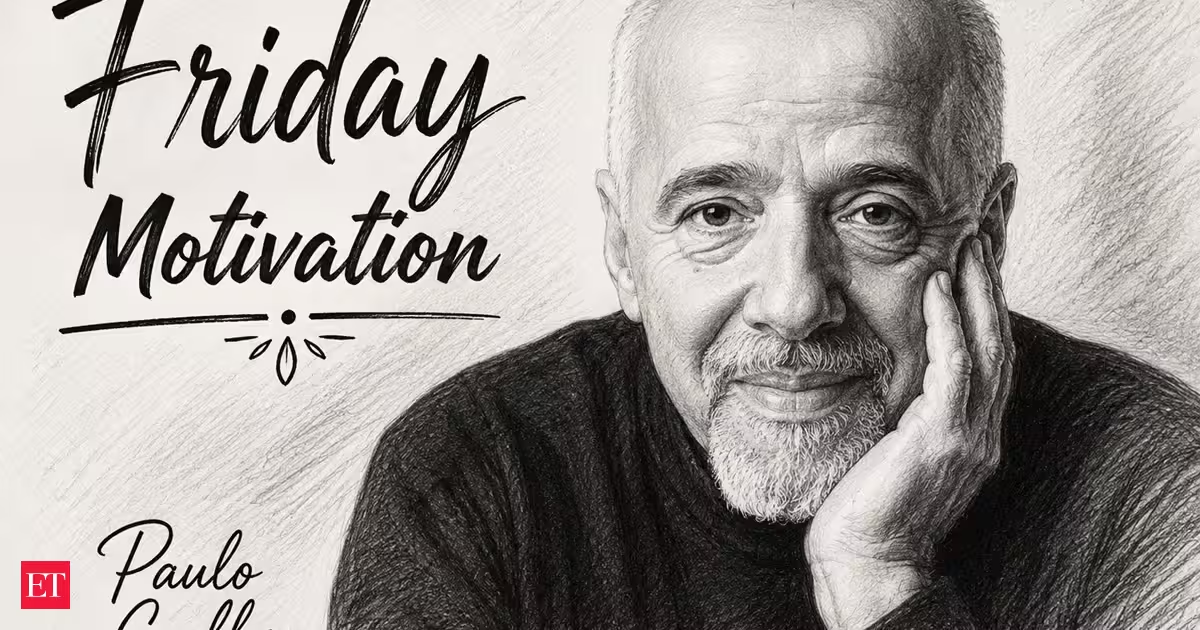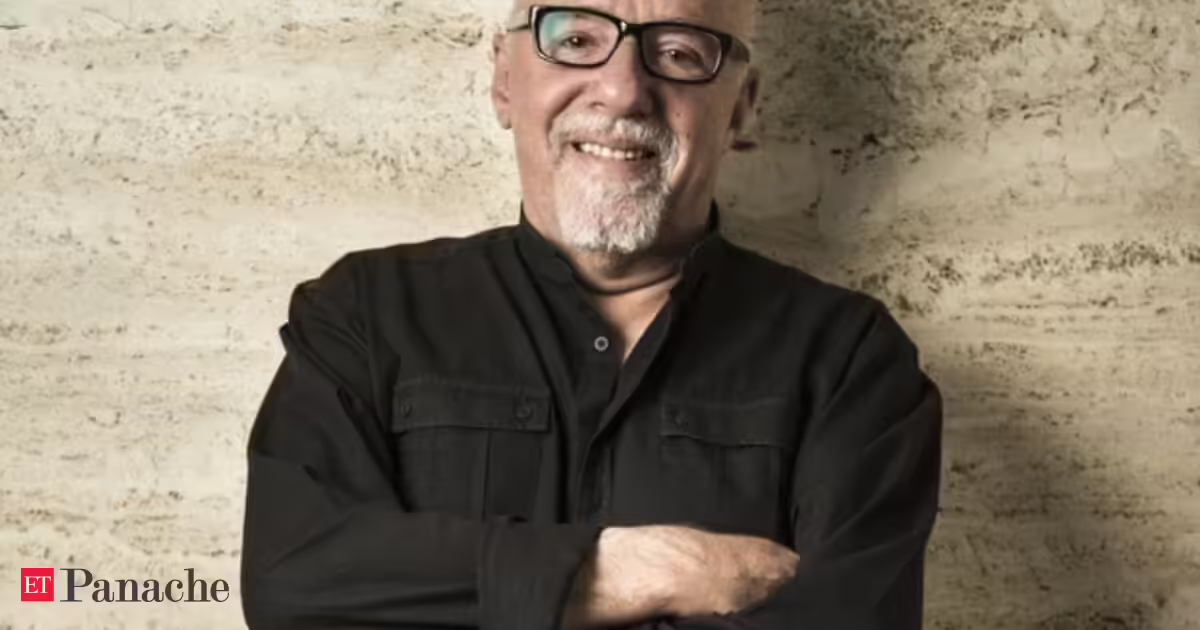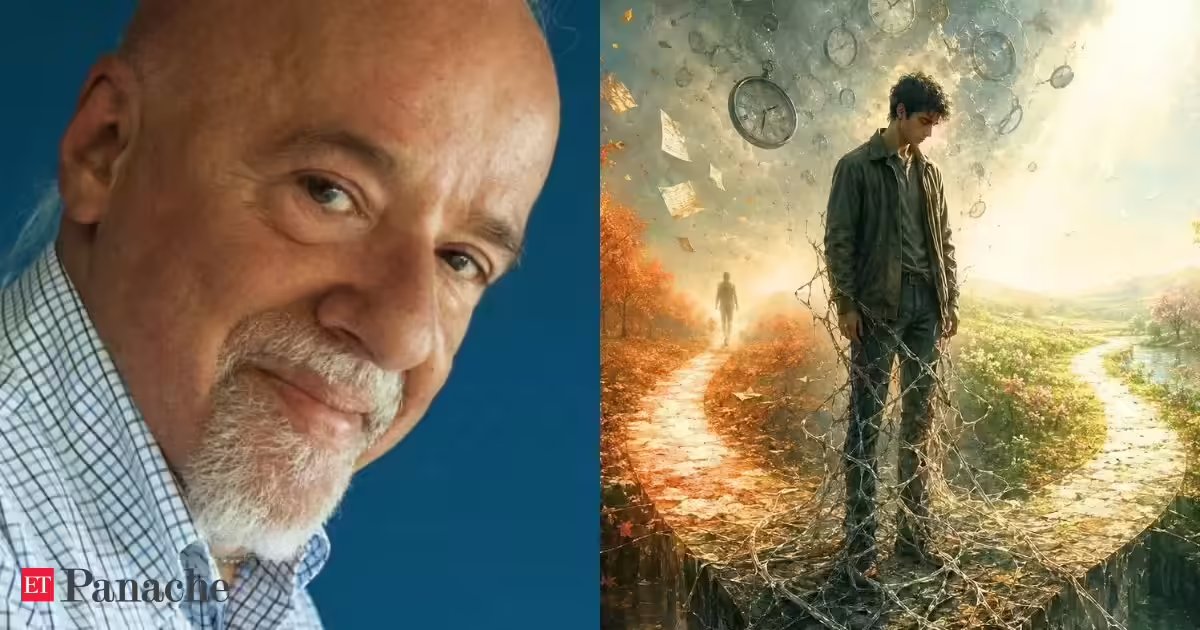
Some quotes remain relevant year after year because they capture emotions that people experience in different stages of life. The quote of the day comes from Brazilian novelist Paulo Coelho, a writer whose books have inspired millions of readers around the world. Known for exploring themes such as love, faith, destiny, and self-discovery, Coelho has built a lasting reputation through works including The Alchemist, Veronika Decides to Die, and By the River Piedra I Sat Down and Wept. One of the most remembered lines from the latter novel resonates with readers because of its honest reflection on uncertainty and emotional conflict."Waiting is painful. Forgetting is painful. But not knowing which to do is the worst kind of suffering."The quote highlights a situation many people know all too well. Waiting for a person, an answer, or a change in circumstances can be difficult. On the other hand, trying to forget someone or move on from a meaningful chapter of life can be equally painful. Both choices involve loss in some form. Yet Paulo Coelho suggests that the deepest suffering comes when a person is unable to decide between the two and remains trapped in uncertainty.The message extends beyond romantic relationships. It applies to friendships, careers, family matters, and important life decisions. Often, people hesitate because they fear making the wrong choice. As a result, they remain stuck between hope and acceptance. Coelho's words remind readers that while pain may be unavoidable, clarity can at least provide direction. Living in constant doubt can become more exhausting than facing the consequences of a difficult decision.The book behind the quoteThe quote comes from By the River Piedra I Sat Down and Wept, a novel published in 1994. The book is one of Paulo Coelho's most widely discussed works and combines elements of romance, spirituality, and personal transformation.The story follows a young woman named Pilar, who reunites with her childhood friend after years apart. During that time, the man has become a respected spiritual teacher with a growing reputation. Their reunion forces Pilar to confront feelings she believed she had left behind. As they travel together through parts of the French Pyrenees, she finds herself facing emotional questions that challenge the safe and predictable life she has built.The novel explores the tension between love and spiritual calling, as well as the choices people must make when life presents them with unexpected opportunities and difficult decisions.The context of the famous lineThe quote appears during a period of emotional struggle for Pilar. After reconnecting with her childhood companion, she learns that he still loves her. However, his spiritual mission requires commitment and sacrifice, creating uncertainty about their future together.At that point in the story, Pilar reflects on her situation and wishes for a clear outcome. In a longer passage, she expresses the desire for a decision to be made quickly so that she can either wait for him or forget him. The famous line follows that reflection and captures her realization that indecision itself has become the greatest source of pain.This is one reason the quote has remained popular long after the book's publication. While the circumstances belong to a fictional character, the emotional experience feels familiar to many readers. Most people have faced moments when uncertainty seemed harder to endure than a disappointing answer.Paulo Coelho's early lifePaulo Coelho was born on August 24, 1947, in Rio de Janeiro, Brazil. He grew up in a middle-class family and attended Jesuit schools during his childhood. From a young age, he wanted to become a writer, but his parents believed he should pursue a more conventional profession.The disagreement created tension within the family. During his teenage years, Coelho spent time in psychiatric institutions, an experience that later influenced parts of his writing. After leaving school, he briefly studied law but soon abandoned the course because it did not match his interests.Instead, he chose a different path. During the 1960s and 1970s, he traveled extensively across Latin America, Europe, and North Africa. Those experiences exposed him to different cultures, beliefs, and ways of life, many of which later appeared in his books.From lyricist to novelistBefore becoming famous as an author, Coelho worked in several creative fields. He wrote song lyrics for well-known Brazilian musicians, including Raul Seixas, and also spent time working in journalism and theatre.During Brazil's military dictatorship, he faced imprisonment and was subjected to harsh treatment because of activities viewed as politically sensitive. Though difficult, those experiences shaped his understanding of freedom, identity, and personal conviction.A major turning point came in 1986 when he completed the Camino de Santiago pilgrimage in Spain. The journey had a profound impact on him and inspired his first major book, The Pilgrimage. More importantly, it convinced him to dedicate himself fully to writing.The success of The AlchemistWhile The Pilgrimage introduced readers to Coelho's spiritual outlook, it was The Alchemist that transformed him into an international literary figure.Published in Portuguese in 1988, the novel tells the story of Santiago, a young shepherd who travels in search of treasure after having a recurring dream. Along the way, he learns lessons about purpose, courage, and following one's dreams.The book initially sold modestly but gained momentum after being translated into other languages. Over time, it became one of the best-selling books in the world and established Coelho as one of the most widely read contemporary authors. The novel has been translated into dozens of languages and continues to attract new readers decades after its release.Over the years, Paulo Coelho has become one of the most recognizable names in modern literature. His books have sold millions of copies worldwide and have been translated into numerous languages. Despite receiving mixed reviews from some literary critics, he has maintained a strong connection with readers who appreciate the simple but thought-provoking ideas found in his work.Beyond writing, Coelho established the Paulo Coelho Institute in 1996, an organization that supports children and elderly people in vulnerable communities. He has also remained active online, regularly sharing reflections and engaging with readers around the world.
Quote of the day by Paulo Coelho: 'Waiting is painful. Forgetting is painful. But not knowing which to do is the worst kind of suffering...' Sometimes fear of making a choice can be much more painful than the decision itself, explained by The Alchemist writer
Paulo Coelho's quote of the day reflects the emotional burden of uncertainty that many people experience in relationships, careers, and major life decisions. Originally appearing in his 1994 novel By the River Piedra I Sat Down and Wept, the line captures how indecision can be more distressing than either waiting or moving on. Coelho's journey has been that of a young aspiring writer in Rio de Janeiro to becoming one of the world's most widely read authors.
1,002 words~5 min read