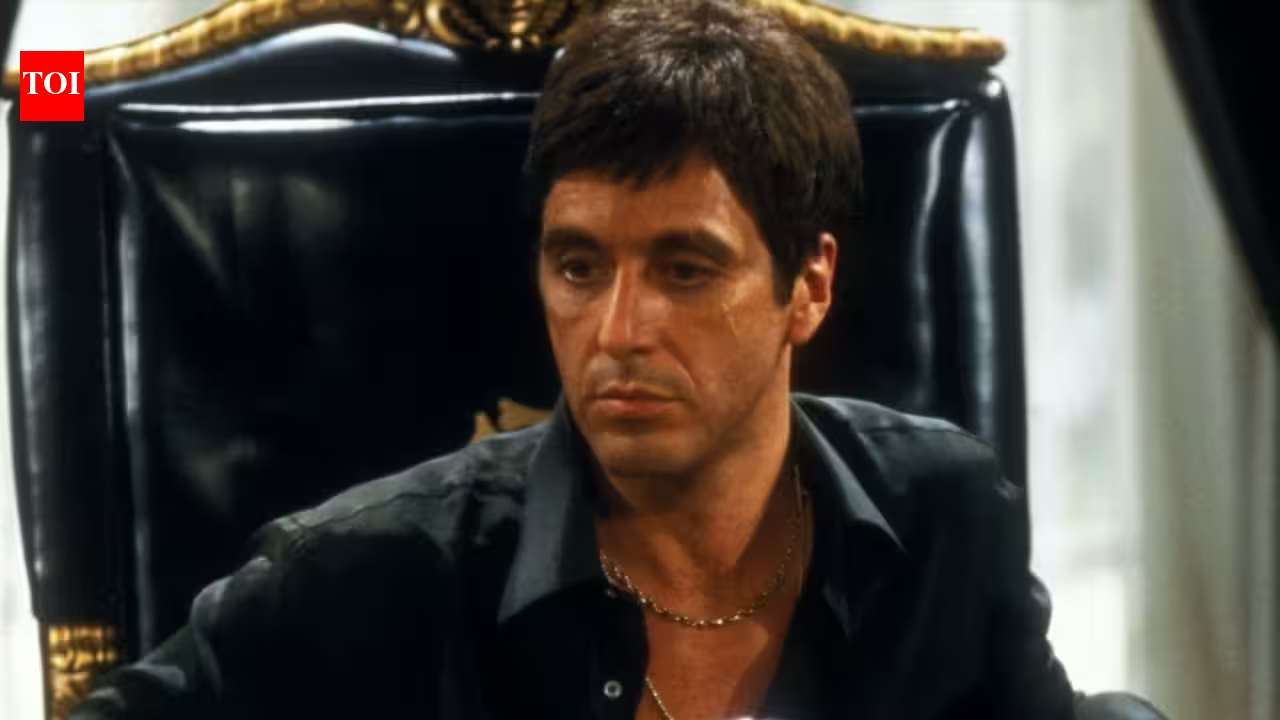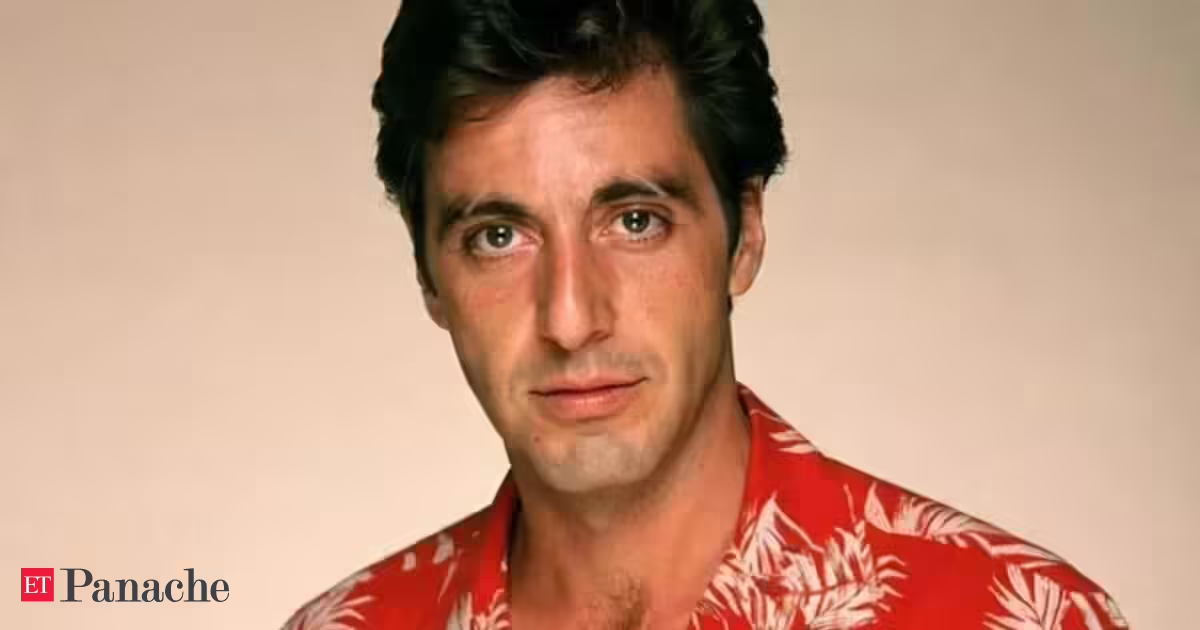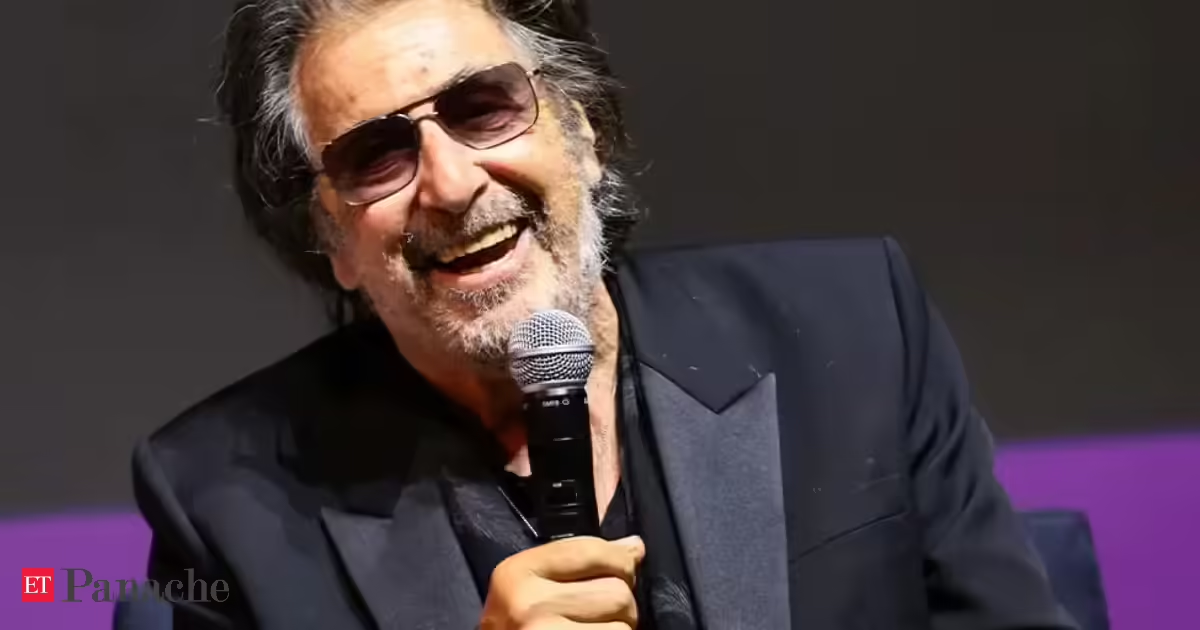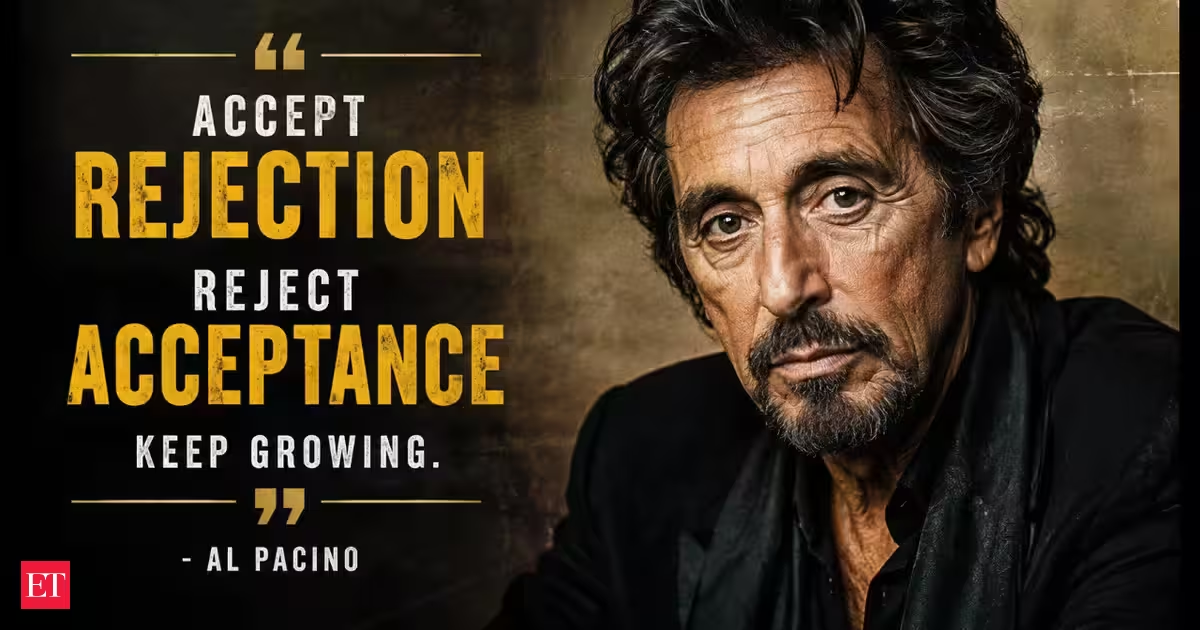
Hollywood is full of stories about overnight success, blockbuster films, and award-winning performances. But sometimes, the most powerful stories happen long before fame arrives. Long before Al Pacino became Michael Corleone in The Godfather, Tony Montana in Scarface, or an Oscar winner for Scent of a Woman, he was a troubled teenager growing up in New York who felt invisible to the adults around him. In a 2014 interview with The New Yorker, the legendary actor opened up about the woman who changed his life forever and taught him the value of being truly seen.The quote that talks about Al Pacino's childhoodLooking at his early years, Pacino said: "The world I came from, we weren’t seen or regarded. The first time ever I had encouragement..."The quote came as he discussed the influence of his junior-high-school drama teacher, Blanche Rothstein, a woman he credits with recognising his talent when few others did.According to the actor, growing up in New York City's South Bronx was not easy. Al Pacino often felt overlooked by adults and authority figures. While he was not completely out of control as a child, he admitted that he frequently found himself in trouble. Speaking to The New Yorker, Pacino recalled that teachers often viewed him as a problem student. In fact, when his mother was called to school, some educators concluded that what he really needed was a father figure rather than encouragement or guidance.You Might Also Like:The teacher who saw something others missedEverything changed when Blanche Rothstein entered his life.Al Pacino remembered that Rothstein noticed him while he was reading Bible passages during a school assembly. He later admitted that he did not fully understand what he was reading at the time, but he felt an emotional connection to the words and performed them with conviction.That spark caught Rothstein's attention. Unlike many others around him, she did not see a troublesome teenager. Instead, she saw talent.Al Pacino recalled that Rothstein climbed five flights of stairs to visit his grandmother and speak about his acting ability. To him, that gesture meant everything.It was not just a teacher praising a student. It was the first time an adult had gone out of their way to tell him that he was good at something.That moment became a turning point in his life.Why the encouragement meant so muchDuring the interview, Pacino explained that encouragement was rare in the world he grew up in.He said that children were not regularly asked about their day, their ambitions, or their feelings. Looking back, he noted that no adult in his life had ever asked him a simple question such as, "How was school today?"To many people, that may sound surprising. But for Pacino, it was simply how life was. That is why Rothstein's support carried so much weight.Her belief gave him something he had never experienced before: confidence.She cast him in school plays and encouraged him to continue performing. Through those opportunities, Pacino began to discover not only his talent but also a sense of purpose. By the time he finished junior high school, his classmates voted him "most likely to succeed".The deeper meaning behind the quoteAl Pacino's words are not really about acting. They are about recognition.When he says that people from his world were not "seen or regarded," he is describing what it feels like to grow up without validation. His quote highlights how deeply people crave acknowledgment and belief from those around them.The lesson is simple but powerful: one person's encouragement can completely alter another person's future. Blanche Rothstein did not make Pacino a movie star. She did not give him awards, wealth, or fame.What she gave him was the confidence to imagine a different life for himself. That confidence became the foundation upon which everything else was built.From overlooked teenager to Hollywood iconAl Pacino's journey after that moment is now part of cinema history.According to The Kennedy Center, the actor was born in East Harlem and raised in the South Bronx. He studied performing arts before dedicating himself to acting and gradually built a reputation on stage through numerous theatrical productions.His talent earned him multiple Off-Broadway Obie Awards and his first Tony Award by 1969. Then came the role that changed everything. In 1972, director Francis Ford Coppola cast Pacino as Michael Corleone in The Godfather. The performance earned him his first Academy Award nomination and launched one of the most celebrated careers in Hollywood history.Over the following decades, Pacino delivered unforgettable performances in films such as Serpico, The Godfather Part II, Dog Day Afternoon, Scarface, Heat, Donnie Brasco, The Insider, and Any Given Sunday.In 1992, he finally won the Academy Award for Best Actor for Scent of a Woman. His achievements also include multiple Golden Globe Awards, Emmy nominations, Tony Awards, the American Film Institute Life Achievement Award, the National Medal of Arts, and numerous other honors.
Quote of the day from Hollywood legend Al Pacino on the woman who changed his life: 'The world I came from, we weren’t seen or regarded. The first time ever I had...' A reminder of the power of being seen by The Godfather actor
Long before Al Pacino became a Hollywood legend, he was a troubled New York teen who felt invisible. His junior-high drama teacher, Blanche Rothstein, changed his life by recognising his talent when others didn't. She visited his grandmother, praising his acting, a gesture that gave him crucial confidence and a sense of purpose. Read to know why it feels relevant to millions of people across the world.
808 words~4 min read