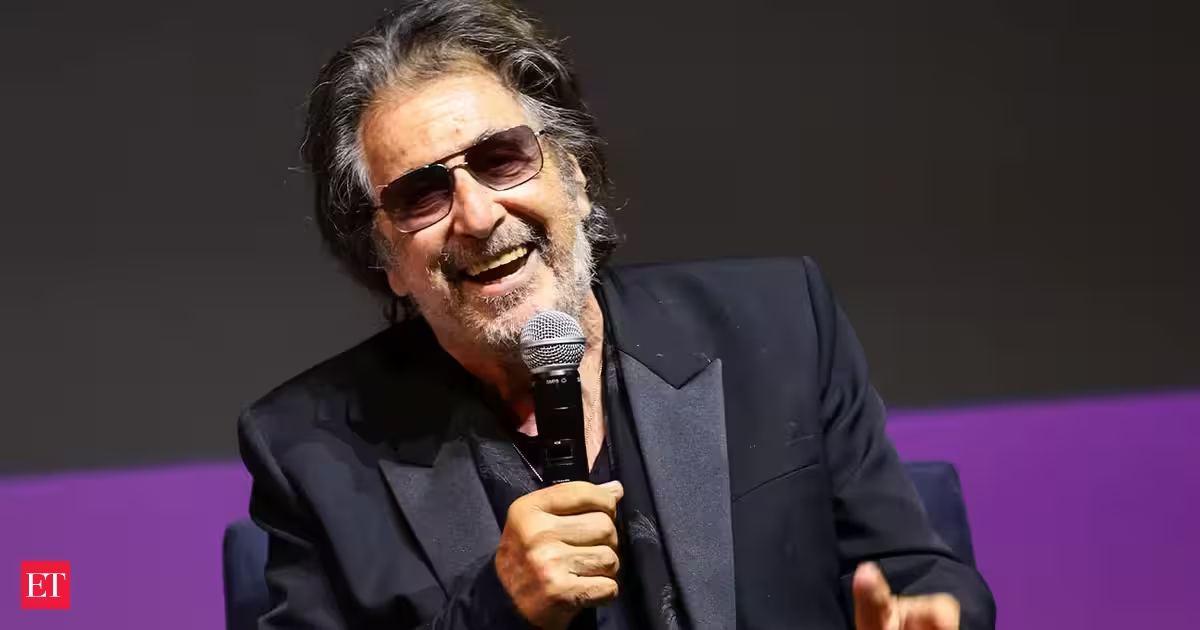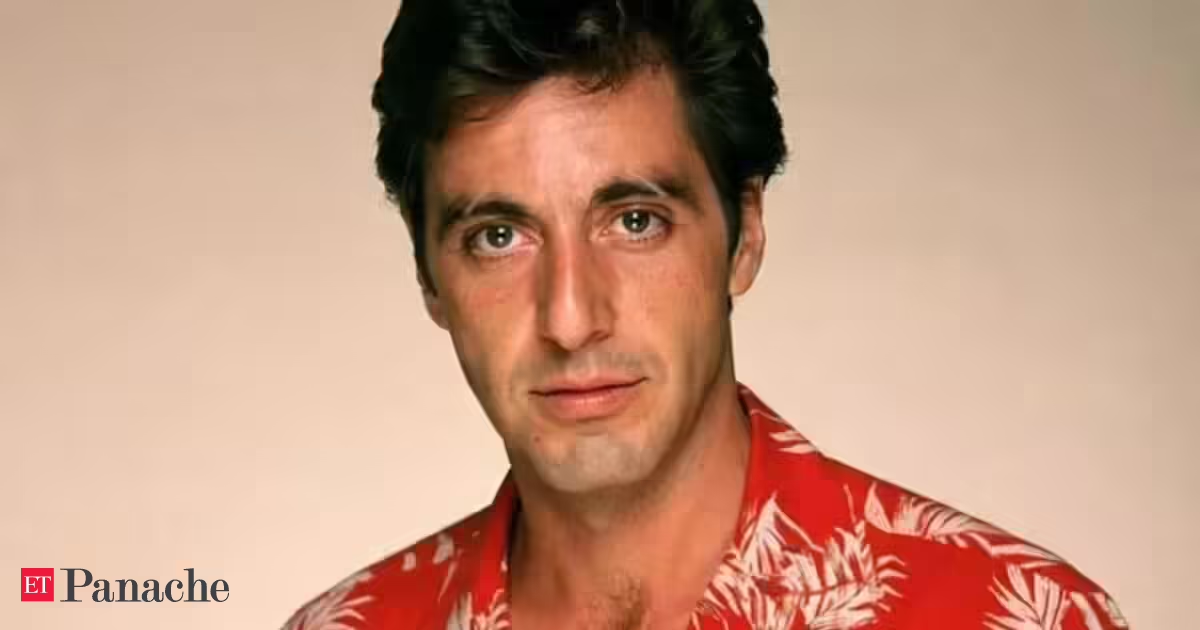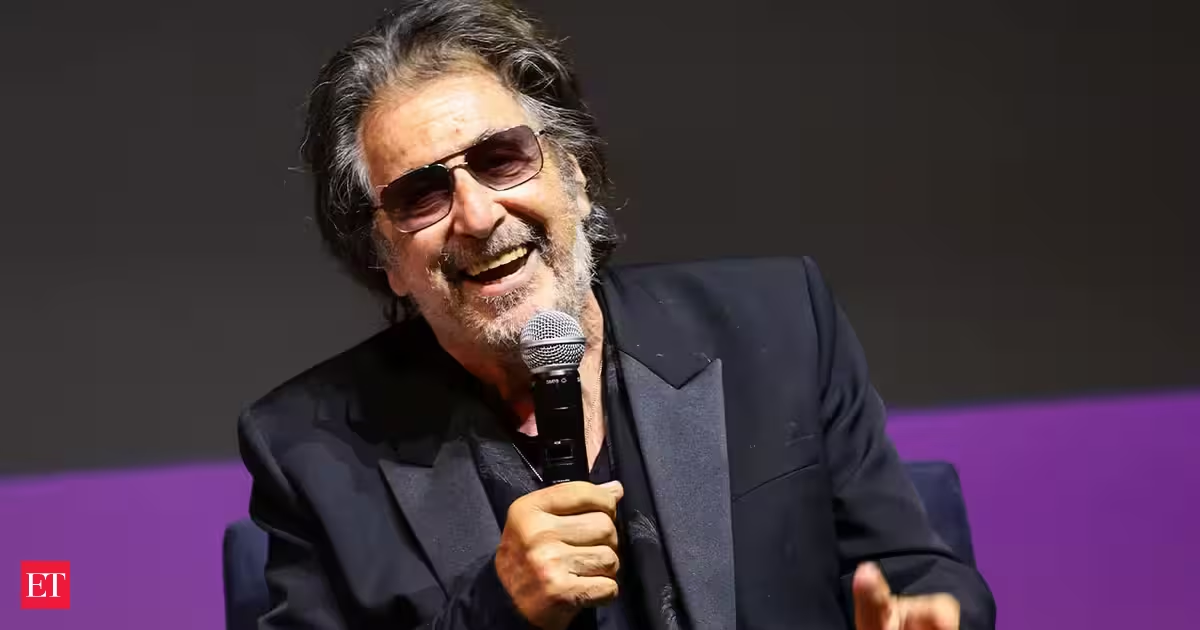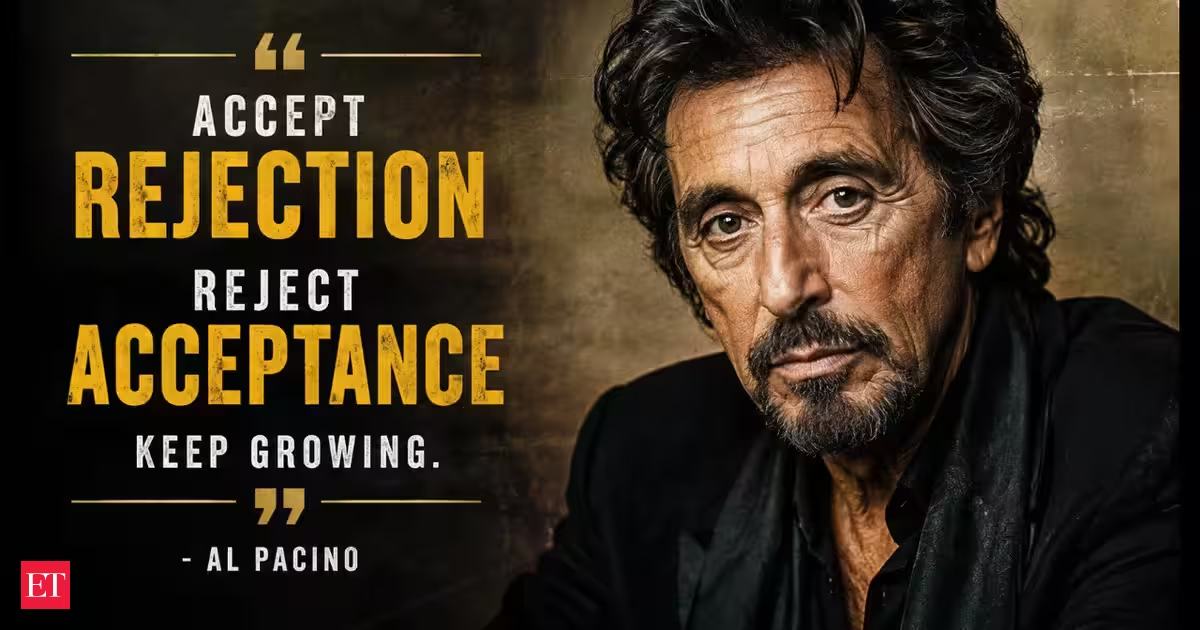
Quote of the day by Al Pacino: Some quotes stay with people because they sound beautiful. Others remain unforgettable because they describe life exactly as it is. This quote from Al Pacino belongs to the second category.The statement appears simple, but it carries a deeper philosophy about ambition, confidence, and self-improvement. As quoted by repositories such as BrainyQuote, Pacino's words encourage people to build a mindset that neither fears rejection nor becomes addicted to approval.Quote of the Day Today: 'Accept Rejection and Reject Acceptance' — Inspiring Life Lessons on Failure, Success, and Personal GrowthQuote of the Day by Al Pacino: "You have to know how to accept rejection and reject acceptance. Accept the lessons that come with failure, but never let success make you comfortable. The moment you stop challenging yourself is the moment you stop growing."Famous Quote of the Day by Al Pacino: 'Accept Rejection and Reject Acceptance' — Inspiring Life Lessons on Resilience, Failure, Growth, Success, Discipline, Perseverance, and How Comfort Stifles Human Potential by the Legendary Oscar-Winning American Actor.In a world obsessed with instant validation, legendary actor Al Pacino offers a counterintuitive blueprint for lasting achievement. His famous words distill decades of artistic endurance into a masterclass on mindset. This quote reminds us that true progress happens when we reframe failure as instruction and treat early victory not as a destination, but as a call to push further.Meaning of Al Pacino's Quote About Rejection and GrowthAl Pacino's quote about rejection and growth cuts directly to the core of human development. This insight presents a profound double-edged dynamic. To "accept rejection" means developing the emotional maturity to process external resistance without letting it dismantle your core self-worth. It asks us to look past the sting of a door closing and search instead for the operational feedback hidden inside the refusal.Famous Quote of the Day by Al PacinoConversely, Pacino’s instruction to "reject acceptance" is a sharp warning against the dangers of complacency. When praise arrives, it is easy to stop experimenting, lower your standards, and rely on past accomplishments. By urging us to reject uncritical acceptance, Al Pacino’s quote emphasizes that public applause can become a golden cage. Growth requires an ongoing refusal to settle into passive comfort, forcing you to remain an active learner regardless of your title or tenure.Why You Should Embrace Rejection and Reject ComfortIn modern corporate careers, creative endeavors, and personal leadership, fear of failure often stalls potential before work even begins. Embracing rejection removes its power to intimidate, transforming every setback into raw material for skill development. When you cease fearing a negative response, you gain the freedom to take calculated risks, pitch bold ideas, and test your boundaries in ways that guarded individuals never attempt.Rejecting comfort is equally vital for long-term career longevity. The moment you decide you have arrived is the precise moment your trajectory levels off. By actively seeking out environments that challenge your existing skill set, you build psychological resilience and adaptability. Treating comfort as a temporary baseline rather than a permanent home keeps your creative and professional engines running at peak performance.Early Life of Al PacinoAlfredo James Pacino was born on April 25, 1940, in the East Harlem neighborhood of Manhattan, New York City. He was the son of Italian-American parents, Rose Gerardi and Salvatore Pacino, who divorced when he was just two years old. Following the separation, his mother moved them to the South Bronx to live with her parents, James and Kate Gerardi—immigrants who originally hailed from Corleone, Sicily.Growing up in a tough, working-class South Bronx neighborhood during the 1940s and 1950s, young Pacino found solace in cinema and neighborhood storytelling. Known to his friends as "Sonny" or "The Actor," he frequently reenacted plots and character voices from films he saw at local picture houses. His early years were shaped by tight financial constraints and streetwise survival instincts, forming the deep emotional reservoir he would later bring to the stage and screen.Education and Acting FoundationsPacino attended Herman Ridder Junior High School before gaining admission to the prestigious High School of Performing Arts in Manhattan. However, academic friction and economic pressures forced him to drop out at age 17 against his mother's wishes. The decision led to a temporary rift with his family, forcing Pacino to leave home and take on a string of low-paying jobs—including messenger, busboy, janitor, and postal clerk—to fund his drama training.His formal artistic education began in earnest at the HB Studio under the mentorship of legendary acting teacher Charlie Laughton, who became a crucial mentor to the young performer. In 1966, after years of grueling auditions and off-Broadway struggles, Pacino achieved a major breakthrough by being accepted into the Actors Studio. There, he trained directly under artistic director Lee Strasberg, mastering the immersive principles of Method Acting that would define his explosive performance style.Rise as an Oscar-Winning ActorAl Pacino’s career rise represents one of the most remarkable artistic runs in modern cinematic history. After earning critical acclaim on stage—winning an Obie Award for The Indian Wants the Bronx and a Tony Award for Does a Tiger Wear a Necktie?—he made his feature film debut in Me, Natalie (1969). His gritty portrayal of a substance-dependent youth in The Panic in Needle Park (1971) caught the eye of director Francis Ford Coppola.Coppola made the controversial decision to cast the relatively unknown Pacino as Michael Corleone in The Godfather (1972), selecting him over studio-preferred superstars like Robert Redford and Warren Beatty. Pacino's understated, chilling transformation from reluctant family outsider to ruthless mafia don earned him an Academy Award nomination and instant global stardom. He followed this success with an astonishing streak of 1970s classics, including Serpico (1973), The Godfather Part II (1974), Dog Day Afternoon (1975), and ...And Justice for All (1979).Fame, Recognition, and Personal PhilosophyThroughout the 1980s and 1990s, Pacino solidified his status as an icon of cinema with larger-than-life performances. His portrayal of Tony Montana in Brian De Palma’s Scarface (1983) became an enduring pop-culture landmark, while his fiery work in Heat (1995), Glengarry Glen Ross (1992), and Carlito's Way (1993) demonstrated his extraordinary dramatic range. In 1992, after eight career Oscar nominations, Pacino won the Academy Award for Best Actor for his role as the blind, overbearing Lieutenant Colonel Frank Slade in Scent of a Woman.Pacino is one of the rare performers to achieve the "Triple Crown of Acting," having earned an Academy Award, two Tony Awards, and two Primetime Emmy Awards. Despite this overwhelming industry acclaim, Pacino’s personal philosophy has always remained anchored in the blue-collar discipline of his theater roots. He views acting not as a search for fame, but as an ongoing investigative process where every project presents a fresh set of artistic problems to solve.Al Pacino’s legacy extends far beyond his award tallies and iconic movie lines. Alongside peers like Robert De Niro, Dustin Hoffman, and Jack Nicholson, he helped spearhead the New Hollywood movement of the 1970s, which placed raw realism, psychological complexity, and character-driven drama at the center of American filmmaking. His distinctive vocal delivery, intense physical presence, and willingness to expose vulnerable human flaws changed how dramatic acting was approached globally.Life Lessons from Al Pacino’s Famous QuoteThe timeless wisdom within Al Pacino’s famous quote offers actionable guidance for anyone seeking long-term professional excellence and personal fulfillment:Treat Rejection as Information, Not Identity: A denial or failure is simply data about your current execution, not a final judgment on your potential. Analyze what went wrong, adapt your strategy, and move forward without personalizing the setback.Beware the Paralysis of Early Success: Complacency is the silent killer of growth. When you receive praise or reach a major milestone, enjoy the moment briefly, but quickly recalibrate your standards to avoid stagnation.Build Confidence From Progress, Not Praise: Compliments feel good.Awards are rewarding. Recognition matters. But lasting confidence comes from knowing you continue improving, even when nobody is watching. That inner confidence is stronger than temporary public approval.Seek Out Uncomfortable Challenges: Real development lives outside your comfort zone. Regularly take on projects, roles, or skills that force you to operate at the edge of your current capabilities.Build an Internal Evaluation System: Do not rely exclusively on external applause or criticism to gauge your worth. Develop an internal standard of craftsmanship so that neither victory nor defeat can derail your long-term focus.Keep Challenging Yourself: The final lesson hidden inside Pacino's quote is perhaps the most important. Never allow comfort to replace ambition. Whether you have just started your journey or already achieved remarkable success, continue asking yourself one simple question:"What can I learn next?" People who keep asking that question rarely stop growing.
Quote of the day by Al Pacino: "You have to know how to accept rejection and reject acceptance. Accept the lessons that..."— Life lessons from an inspiring quote by the legendary Oscar-winning American actor on resilience, self-growth, courage, discipline, confidence, perseverance, and how comfort stifles human potential
Quote of the day by Al Pacino: Al Pacino's famous quote, "Accept rejection and reject acceptance", encourage people to remain humble during success and resilient during failure. Most people fear failure, but comfort is the real trap. Pacinos raw wisdom shows why true growth starts when you look past easy praise. Learn from your setbacks. Never let early success make you lazy. Stay hungry, challenge your limits, and keep evolving every single day.
1,429 words~6 min read