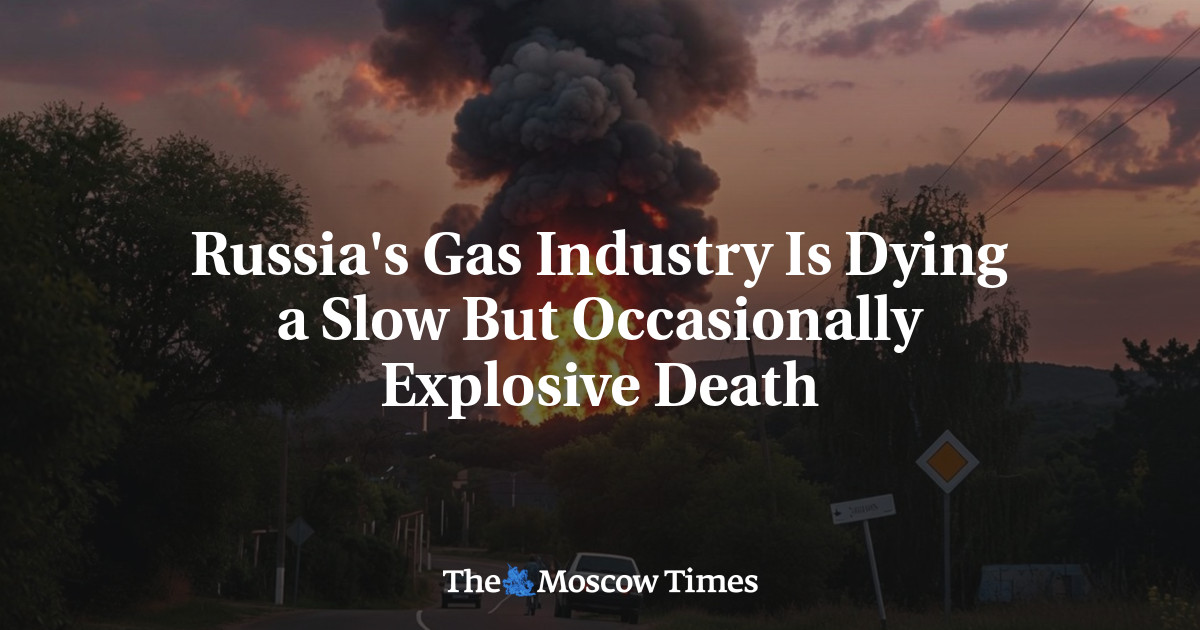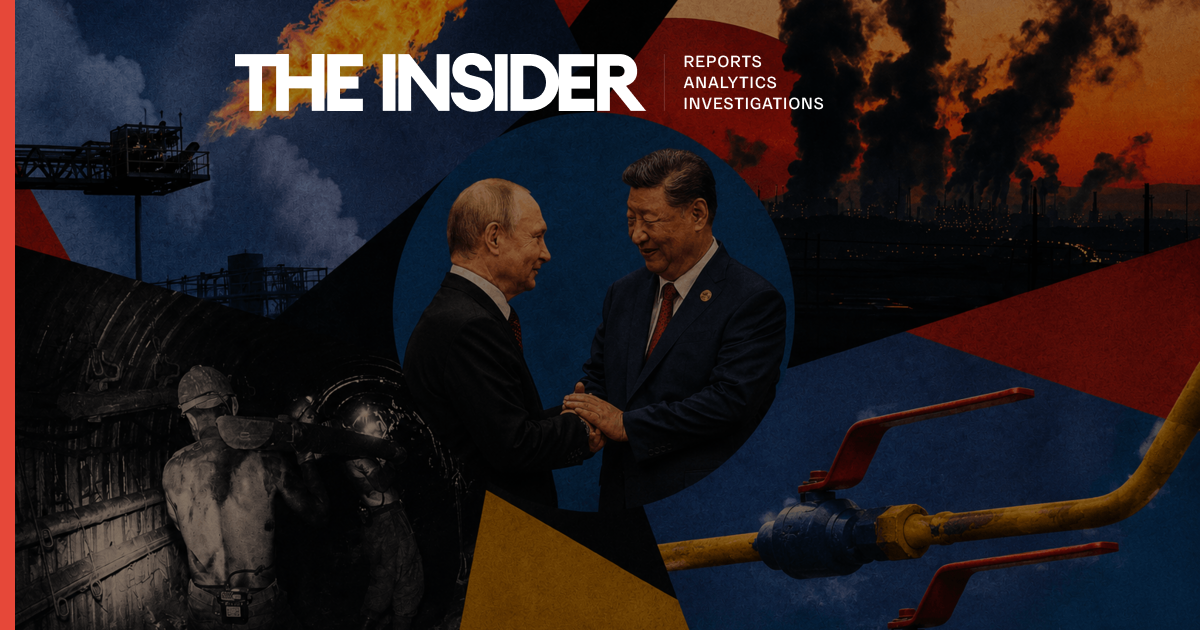
When Europe began moving away from Russian energy in 2022, many expected one of the main pillars of the Russian economy to fall into a deep crisis. Formally, that did not happen. Russia remains one of the world's largest exporters of gas and coal, and production volumes in both sectors remain high.Yet despite the country maintaining high production and export volumes, the profitability of Russia’s gas and coal industries has declined significantly over the years of the full-scale war against Ukraine, a fact confirmed by two recent GreenThinkTank.life studies authored by Russia’s former Deputy Minister of Energy Vladimir Milov, environmental expert Arthur Bakuriani, and coal industry researcher Anton Lementuev. Their review examines how Russia’s gas and coal sectors survived four years of sanctions and the loss of the European market.The analysts concluded that deliveries to China have not and cannot offset the loss of the European market, and that maintaining exports increasingly requires government support, tax breaks, and subsidies. At the same time, the authorities have been gradually loosening environmental oversight and restricting access to information about the two industries’ environmental impact.Natural gas: China has yet to replace Europe in volumeOf all the wartime blows to Russia’s energy sector, the loss of the European gas market has been the most painful. The report’s authors highlight a paradox: gas, which the Kremlin had used for years as a tool of geopolitical pressure on Europe, ultimately backfired on Russia itself. The attempt to trigger an energy crisis in the EU, the invasion of Ukraine, and the subsequent Western sanctions pushed European countries to accelerate their move away from Russian gas. As a result, by 2025 pipeline gas exports to Europe had fallen to a historic low of around 18 billion cubic meters per year.Before that, Europe was buying nearly half of all Russian pipeline gas. For decades European consumers had been the primary source of revenue for Gazprom. After the invasion of Ukraine, however, the situation changed dramatically. According to the study’s authors, EU imports of Russian gas have fallen by more than 80%, and Russia's share of the European market dropped from 45% to 11–12%.The Kremlin had counted on China to replace the lost European market. Exports via the Power of Siberia pipeline grew rapidly — from 10.4 billion cubic meters in 2021 to nearly 39 billion cubic meters in 2025. But it was not enough.First, the volumes are not comparable. Before the war, Russia was supplying Europe and Turkey with around 185 billion cubic meters of gas per year. Even after several years of growth, the Chinese direction offset only a small fraction of those losses. Second, China buys Russian gas at much lower prices. Whereas European customers had for decades been willing to pay a premium for reliable supply, Beijing is exploiting Moscow’s weakened position by dictating its own terms, the report states.There is also a third problem: the gas that used to flow to Europe was produced mainly in Western Siberia. The Power of Siberia pipeline, however, draws on entirely different fields in the east of the country. As a result, a vast portion of the infrastructure built to serve the European market is now underutilized or has lost its original purpose.To address this problem, Russia has for years been promoting the Power of Siberia 2 project, which would link Western Siberian fields to China via Mongolia. But the project's economics are coming under increasing scrutiny, analysts note. Construction costs are estimated in the tens of billions of dollars, while Gazprom’s revenues are falling. According to the study’s authors, the company’s profitability has nearly halved in recent years — from around $9.3 per barrel of oil equivalent in 2021 to $5.3 by 2025.Exports of liquefied natural gas provide some relief. In 2024, Russia shipped a record 33.6 million tons of LNG to foreign markets. But the sector has run into different problems: sanctions against new projects, along with technology shortages. As a result, plans for a sharp increase in LNG exports are now in doubt.Even so, the gas industry remains one of the state’s largest sources of revenue. According to the analysts, Gazprom and Novatek account for one-tenth of federal budget revenues and transfer approximately $50 billion in taxes to the state each year. Furthermore, the researchers calculate that the two companies’ tax contributions are roughly equivalent to a third of Russia's official defense spending.That is why the state continues to support the industry even as profitability declines. Ordinary Russians pay the price, as the authorities have started raising domestic gas prices more rapidly. Whereas tariffs for households and businesses used to grow at roughly the same rate as prices for other goods and services, since 2022 gas prices have been rising noticeably faster.Coal: China has yet to replace Europe in net profitWhile the main blow to Russia’s gas sector was the loss of a key sales market, the coal industry managed to preserve export volumes but lost a significant share of its profits.Before the full-scale war, Europe was among the largest buyers of Russian coal (also accounting for the highest profits) thanks to high prices and relatively short logistics. Having lost that market, companies began shifting en masse to Asia. In 2025, Russia mined roughly 443 million metric tons of coal and exported 211 million tons, retaining its place among the world’s three largest exporters.Yet the industry’s financial performance over the same period deteriorated sharply. In 2025, the cumulative losses of the Russian coal industry reached 408 billion rubles, and according to the authors, the total losses of coal companies since the start of the full-scale war have exceeded 2.5 trillion rubles. The blow was particularly severe for Kuzbass, the country’s main coal-mining region. Corporate income tax revenues to the regional budget stood at 143 billion rubles in 2022, but by 2025 they had fallen to 29.9 billion. Many companies began laying off workers, and regional authorities were forced to cut payments to contract soldiers heading to the war in Ukraine.After the loss of Europe, China became the Russian coal industry’s main hope. The Chinese market did help Russian coal producers avert a catastrophe in 2022–2023. Before long, however, it became clear that China had no intention of serving as the savior of the Russian coal industry. Average export revenue from sales of Russian coal to China was around $142 per ton in 2023; by 2025 it had fallen to $92. At the same time, China introduced import duties on Russian coal and continued to expand its own production.Critically, Russian coal is not indispensable for China. Even in the best years, Russia's share of Chinese imports did not exceed one-quarter of the market. China can easily replace some of those supplies with coal from Australia, Indonesia, or its own production.The analysts also point to another factor. While Russia is trying to entrench itself in the Chinese coal market, China itself is expanding renewables at an accelerating pace. In 2025 alone, the country brought online 452 GW of new solar, wind, and hydroelectric capacity — nearly one and a half times the total installed capacity of Russia’s entire power system.Exports dependent on state supportAnother shared feature of the Russian gas and coal industries is their growing dependence on the state. Coal accounts for less than 1% of Russian GDP, yet it takes up nearly a third of all Russian Railways freight traffic and relies heavily on subsidized rail logistics. Most deposits are located thousands of kilometers from ports, and after the loss of the European market, coal has to travel even further to reach China and other Asian countries. If freight were charged at full cost, a significant portion of exports would become economically unviable. The state therefore effectively sustains the sector through discounted rail tariffs and guaranteed coal freight quotas.According to the report’s authors, Russian Railways’ losses from coal haulage amounted to 127 billion rubles in 2024 alone. Over the past decade, such shipments have cost the rail monopoly 436 billion rubles in damages. In addition, the government grants coal producers tax deferrals and other forms of support.The gas sector depends on the state differently. Having lost a share of export revenues, it is increasingly relying on the domestic market. To offset the losses, the authorities have accelerated increases in domestic gas tariffs, in effect shifting part of the costs onto Russian consumers.Cutting costs at nature’s expenseThe authors note that since the start of the full-scale war, Russian authorities have been consistently weakening environmental requirements for industries. Where the state previously at least attempted to promote investment in reducing environmental damage, its priorities have now shifted toward maintaining production and exports.This is especially visible in the coal sector. More than three-quarters of Russian coal is extracted by open-pit mining — the cheapest and the most destructive method. In 2023, the coal industry produced around 6 billion tons of waste. As an example, the authors cite Kiselyovsk in Kuzbass, where more than half of the residents are exposed to high coal dust pollution.In the gas sector, the problem takes a different form. Here it is primarily a matter of declining transparency. In 2025, Gazprom discontinued publication of its sustainability report, and access to some information on environmental impacts became restricted.Methane and disappearing dataBoth reports place a particular emphasis on methane emissions. This gas traps heat in the atmosphere roughly 80 times as effectively as carbon dioxide in the first 20 years after release, making it one of the main drivers of rapid climate change.According to the GreenThinkTank coal industry report, Russia remains one of the world’s largest emitters of methane. Precise emission estimates, however, differ considerably. Russia’s official reporting puts methane emissions at approximately 9 million tons per year, while the International Energy Agency estimates methane emissions from the oil, gas, and coal sector alone at approximately 14 million tons annually.Coal mining is of particular concern to the authors. Methane is released from coal seams during extraction and frequently escapes into the atmosphere. The highest levels of such emissions are recorded in the Kemerovo Region — the country's coal-mining center — followed by the Komi Republic, Novosibirsk Region, Krasnoyarsk Krai, and Yakutia. According to expert estimates, coal enterprises in Kuzbass release more than 2 billion cubic meters of methane into the atmosphere each year.Independent monitoring of such emissions is becoming increasingly difficult, as parts of the statistical data have been classified since the start of the war. The authors also draw attention to changes in Russia’s climate reporting. In 2024–2025, the authorities introduced a new methodology for calculating greenhouse gas emissions, which caused the official estimate of the country's net emissions to fall by approximately 30%. The report's authors believe that the drop in emissions reported on paper was primarily the result of a revision of the counting formulas rather than of any actual changes in industrial operations.The gas report notes that in 2025, Gazprom discontinued publication of its sustainability report, which had previously contained data on the company’s emissions and environmental impact. Whereas in the early 2020s the debate focused on how much methane Russian companies were emitting, a different question is now increasingly being raised: who can actually verify this data? As statistics are closed off and public reporting is curtailed, international databases and satellite observations are becoming the primary sources of information on emissions.
Sales to China have not made up for Russia’s loss of European natural gas and coal markets, GreenThinkTank analysts report
When Europe began moving away from Russian energy in 2022, many expected one of the main pillars of the Russian economy to fall into a deep crisis. Formally,…
1,879 words~9 min read