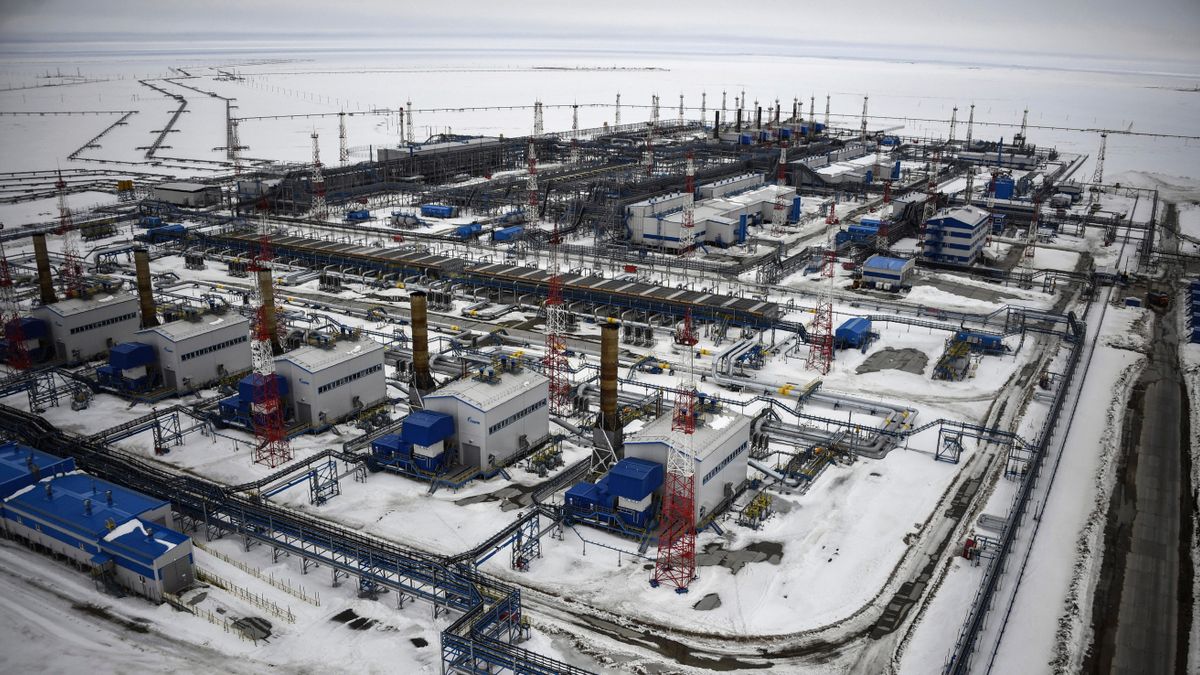
Before 2022, Gazprom’s gas pipelines were an instrument of political influence over Europe, as well as one of the pillars of the federal budget.
Today, according to available estimates, that model has been dismantled irreversibly, while attempts to build a replacement for it in the east and on the liquefied natural gas market are running up against limits Russia does not control.
Before Russia’s full-scale invasion of Ukraine, Gazprom supplied up to 40% of the European Union’s pipeline gas imports, and total gas exports reached around 180 billion cubic meters a year. This commercial tie became a lever that strengthened Russian influence over European politics. Existing LNG projects, above all Yamal LNG and Sakhalin-2, complemented the pipeline model, opening access to the global market without a rigid dependence on fixed infrastructure.
By 2025, Russia’s total gas exports had fallen to 124.7 billion cubic meters, while Russia’s share of the European Union’s pipeline gas imports had dropped from 40% in 2021 to 6% in 2025. Importantly, due to damage to pipeline infrastructure and the destruction of relations wth Russia, this market cannot be expected to reopen any time soon.
Attempts to compensate by rerouting gas exports to China have so far failed to generate a comparable level of revenue. Power of Siberia reached its designed capacity of only 38 billion cubic meters a year.