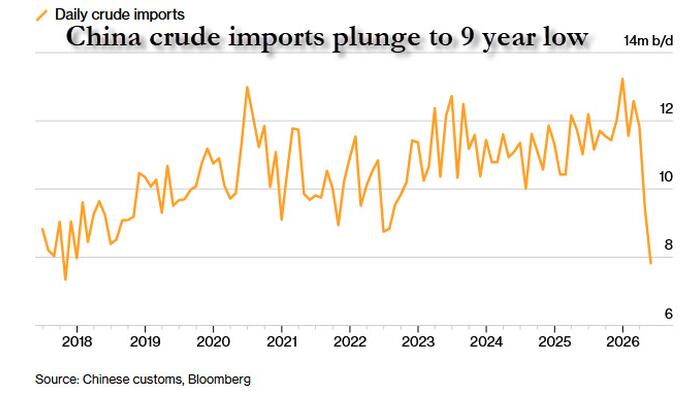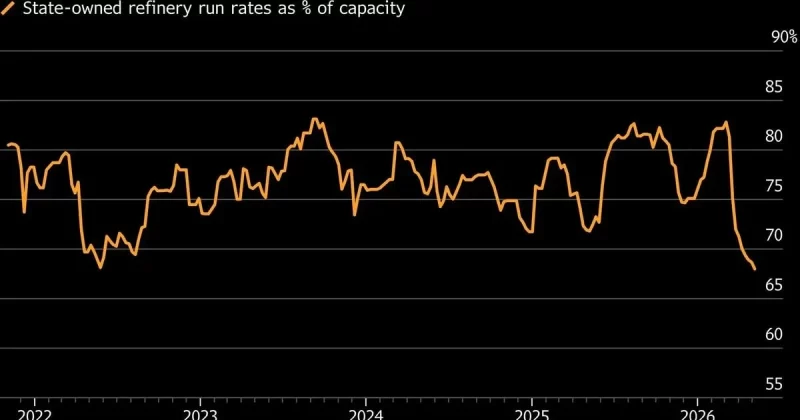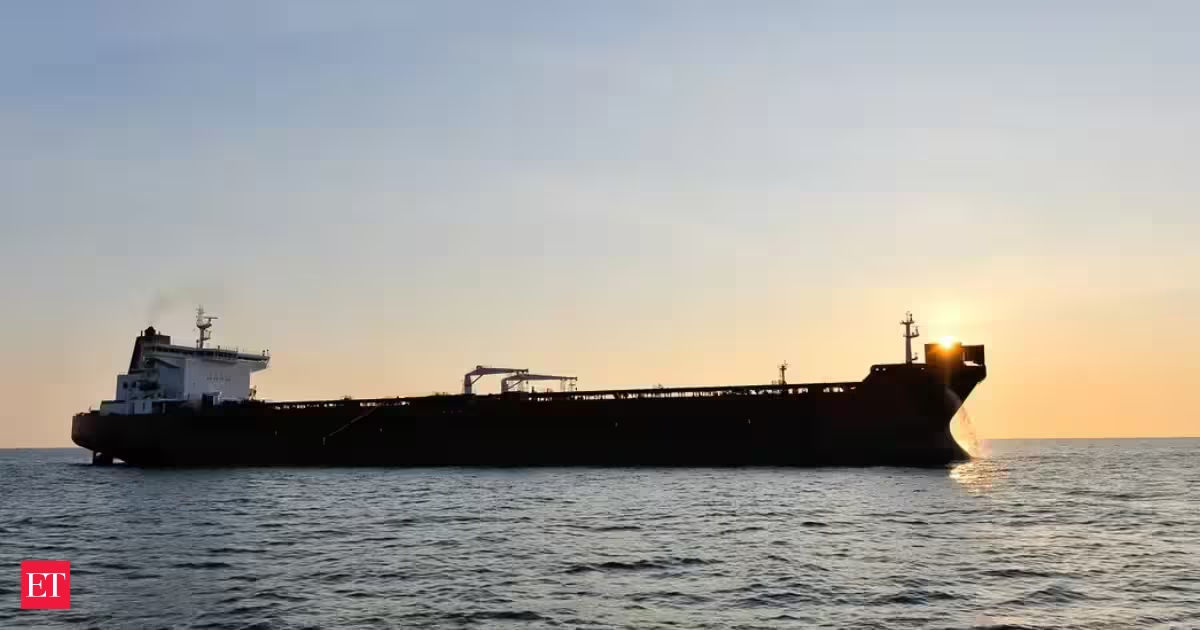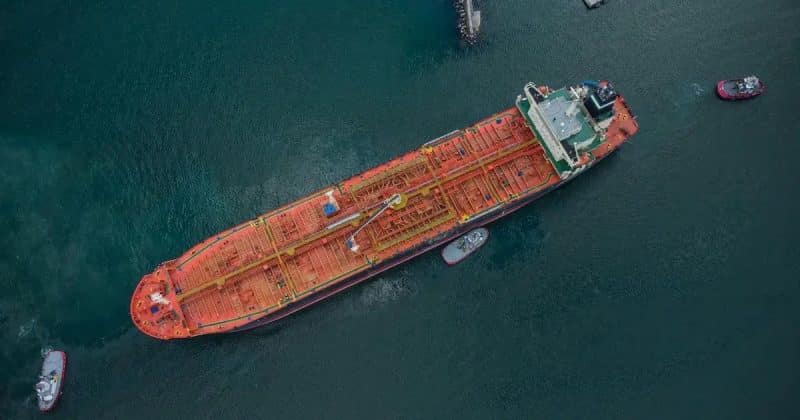
The world’s largest crude oil importer just stepped off the gas. China’s monthly crude imports plummeted to 33.08 million metric tons in May 2026, roughly 7.8 million barrels per day, marking an eight-year low and a 29% year-over-year decline from May 2025 levels.
That pullback, driven by the Iran war and the closure of the Strait of Hormuz beginning in early March, has done something few analysts predicted: it kept global oil prices from spiraling into triple-digit territory during one of the most significant supply disruptions in decades.
How China became the oil market’s pressure valve
Before the conflict escalated, China was importing between 11 and 11.7 million barrels per day. By late May, that figure had dropped below 9 million bpd.
The Strait of Hormuz closure removed roughly 20% of global oil supply flows from the market. J.P. Morgan analysts attributed much of the global adjustment to China’s actions, describing the country as a “pressure valve” that curtailed steep price spikes during the onset of the conflict. Brent crude has been held under the $90 to $100 per barrel range, a remarkable outcome given the scale of the supply shock.