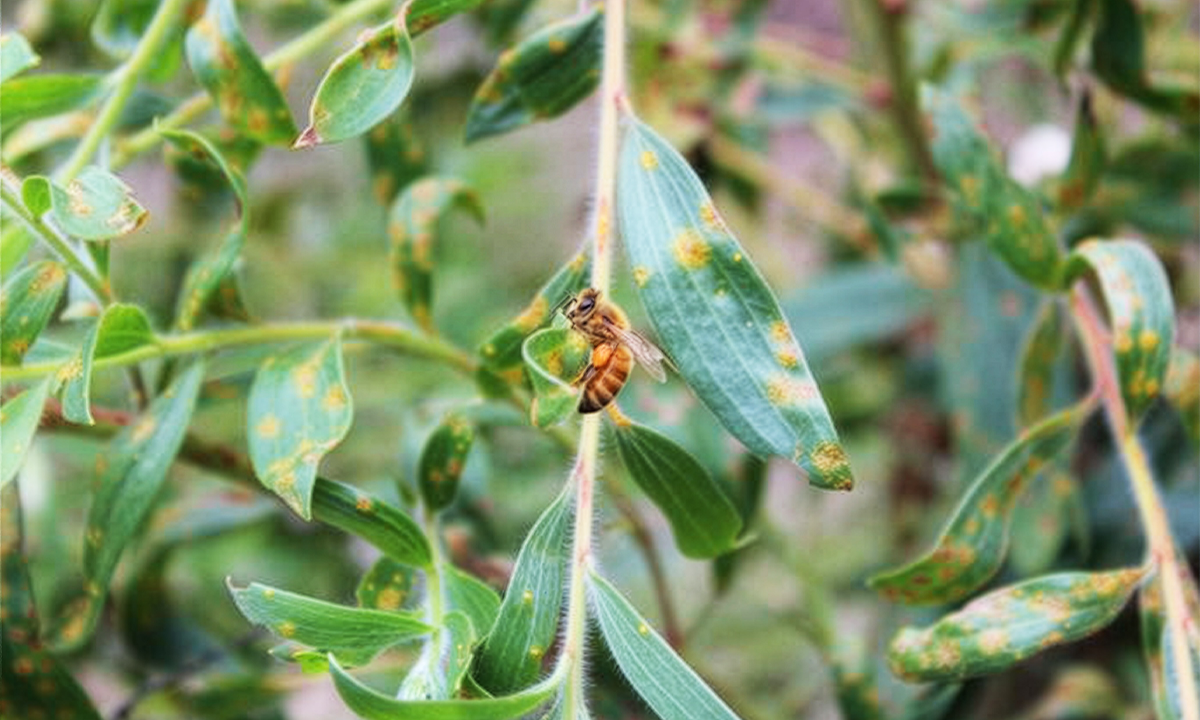
Honey bees have long been regarded as one of agriculture's most valuable allies. Introduced to Australia by European settlers in the early 19th century, the western honey bee has spent more than 200 years helping pollinate crops and native plants across the country. However, new research published in NeoBiota suggests the insect may have formed an unexpected partnership with one of Australia's most destructive plant diseases, potentially helping it spread farther than scientists previously believed.What is myrtle rust and why is it a threat?Myrtle rust is a plant disease caused by the fungus Austropuccinia psidii. It was first detected in Australia in 2010 and has since spread across large parts of the country.Read more: NASA astronaut captures mesmerising view across Earth from SpaceX spacecraftThe disease attacks plants belonging to the Myrtaceae family, including eucalyptus trees, paperbarks, bottlebrushes and other native species that are crucial to Australia's biodiversity.Scientists estimate that hundreds of native plant species are vulnerable to the fungus. With nearly 17 per cent of Australia's endemic vegetation potentially at risk, myrtle rust is considered one of the country's most serious environmental threats.NeoBiota study reveals surprising honey bee behaviourAccording to the study published in NeoBiota, researchers observed western honey bees actively collecting fungal spores from infected plants.Initially, scientists believed the behaviour might be accidental. However, further analysis suggested the bees may actually be gathering the spores as a food source.The discovery surprised researchers because the spores turned out to be highly nutritious.Why are honey bees collecting fungal spores?The study found that rust fungi contain more than 22 per cent protein and provide all ten essential amino acids required for honey bee development.Laboratory experiments showed that bee larvae fed fungal spores developed normally and reached sizes comparable to larvae fed high-quality pollen.Researchers believe this behaviour could become more common when traditional pollen sources are limited.The findings suggest that collecting fungal spores may not simply be an accident. Instead, it could be an alternative feeding strategy used by honey bees during periods when flowers and pollen are scarce.Scientists find spores remain infectious inside hivesOne of the study's most concerning discoveries came when researchers examined what happened after the spores entered bee colonies.They found that myrtle rust spores remained viable inside hives for at least nine days.In simple terms, the fungal pathogen stayed alive and capable of causing infection even after being collected and transported by bees.This raises important questions because commercial honey bee colonies are frequently moved over large distances to pollinate crops.How bees could spread myrtle rust across AustraliaAustralia's agricultural industry regularly transports honey bee colonies between different regions to support crop pollination.Scientists now fear that these movements could unintentionally help spread myrtle rust much farther than natural wind dispersal alone.While wind has long been considered the primary method through which the fungus spreads, the study suggests bees may be acting as additional carriers.If spores remain infectious during transport, they could potentially reach new areas and infect previously unaffected plant populations.Researchers warn of an 'invasional mutualism'The scientists describe the relationship between honey bees and myrtle rust as a possible example of "invasional mutualism".This occurs when two introduced species benefit from one another in ways that increase their impact on the environment.As myrtle rust damages native trees and reduces floral resources, honey bees may be pushed to seek alternative protein sources such as fungal spores.In turn, the bees transport those spores back to their colonies and potentially into new environments.Researchers believe this could create a worrying cycle that further accelerates the spread of the disease.Could this affect forest regeneration?Scientists warn that the interaction between honey bees and myrtle rust may have wider ecological consequences.As more Myrtaceae plants become infected, the availability of flowers and pollen may decline.This could encourage bees to rely even more heavily on fungal spores as a food source, increasing opportunities for disease spread.Researchers suggest that such a feedback loop could disrupt plant-pollinator relationships and potentially affect forest regeneration in vulnerable ecosystems.Why this research matters beyond AustraliaAlthough the study focuses on Australia, its findings may have global significance.The western honey bee is one of the world's most widely distributed pollinators and is used commercially across Europe, North America and Asia.The research suggests that pollinating insects may play a much larger role in spreading plant diseases than previously recognised.Scientists believe future biosecurity policies should not focus solely on infected plants and environmental conditions. They argue that greater attention should also be paid to the movement of pollinators and other animals that may transport pathogens.Reminder about the risks of invasive speciesThe findings highlight how complex and unpredictable ecological relationships can become when non-native species are introduced into new environments.For more than 200 years, western honey bees have been an important part of Australian agriculture. Yet this new research suggests they may also be unintentionally helping an invasive fungal disease spread.Importantly, researchers are not suggesting that honey bees themselves are becoming harmful. Instead, the study serves as a reminder of how delicate ecological balances can be and how human activity can sometimes create unexpected environmental challenges.As scientists continue investigating the relationship between honey bees and myrtle rust, the study published in NeoBiota could reshape how experts think about disease spread, pollinator movements and biosecurity strategies in the years ahead.
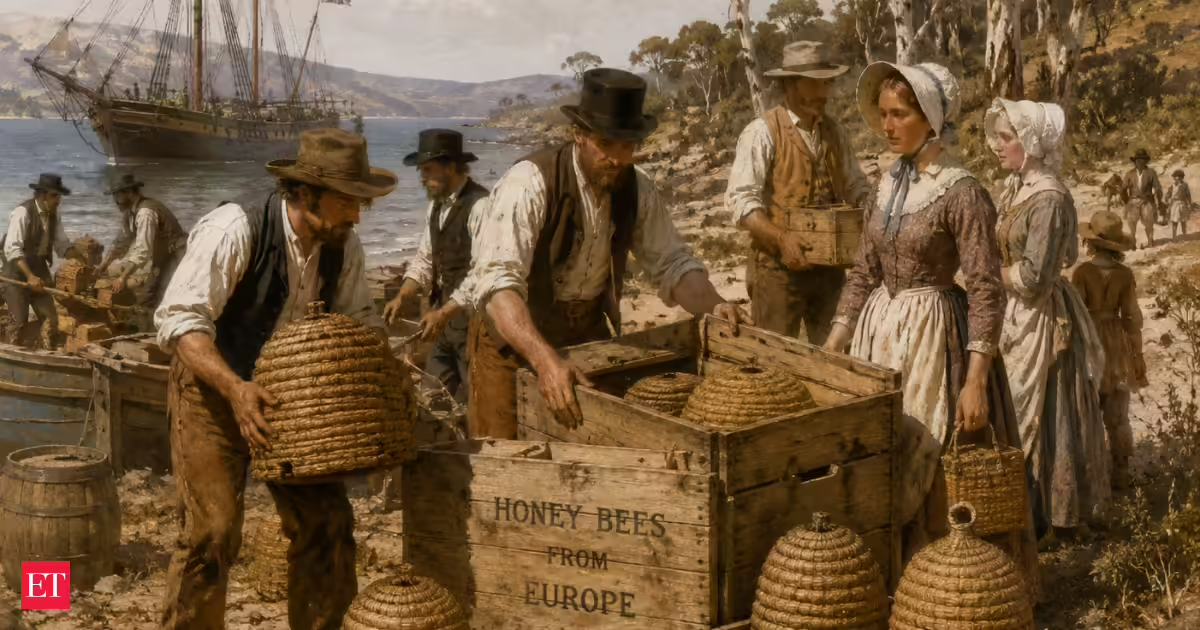
In 1822, Europeans brought honey bees to Australia as agricultural heroes; 200 years later, researchers found they were helping tree death spread faster than wind
New research published in NeoBiota suggests western honey bees may be helping spread myrtle rust, a destructive fungal disease threatening Australia's native plants. Scientists found that bees collect and transport infectious fungal spores, which can survive inside hives for days. Researchers warn this could accelerate the fungus's spread as commercial bee colonies are moved across the country, with potential implications for biodiversity and global biosecurity.
867 words~4 min read