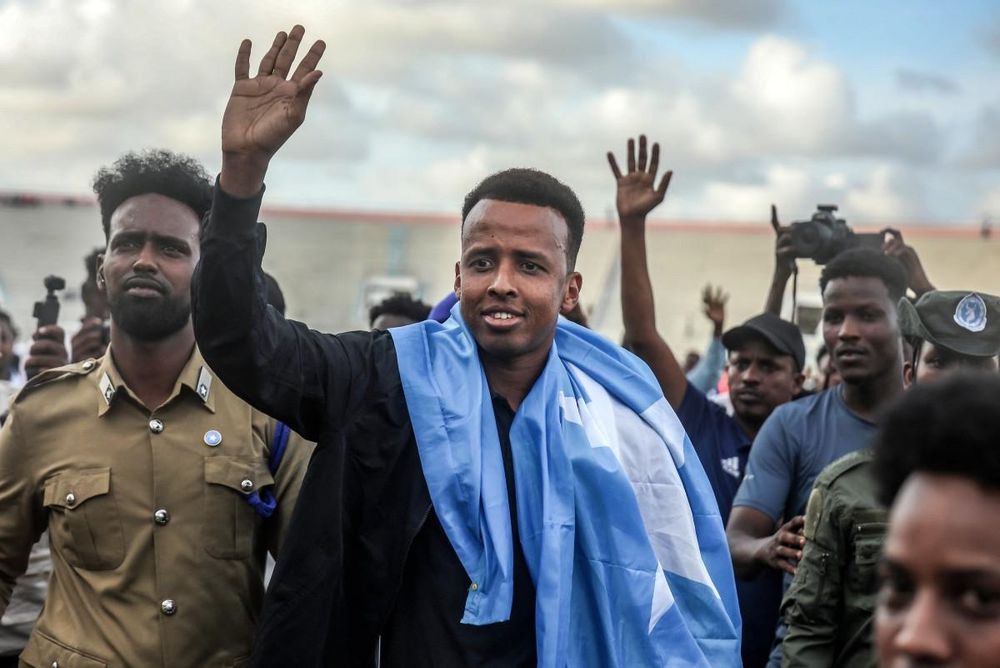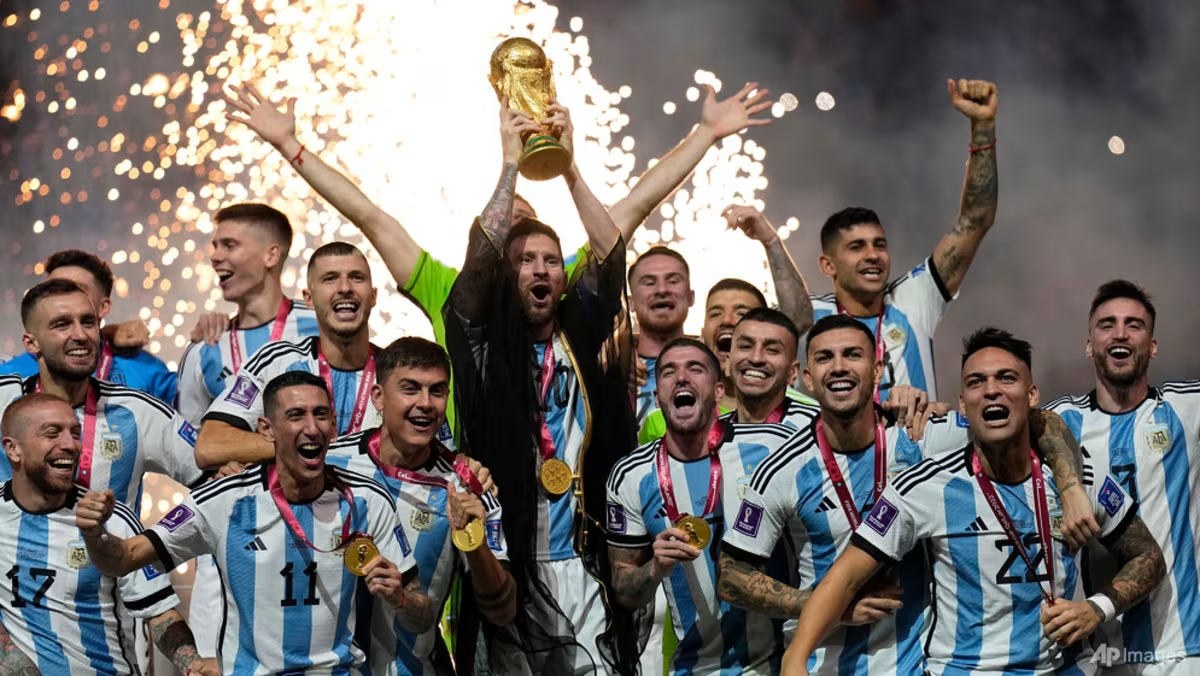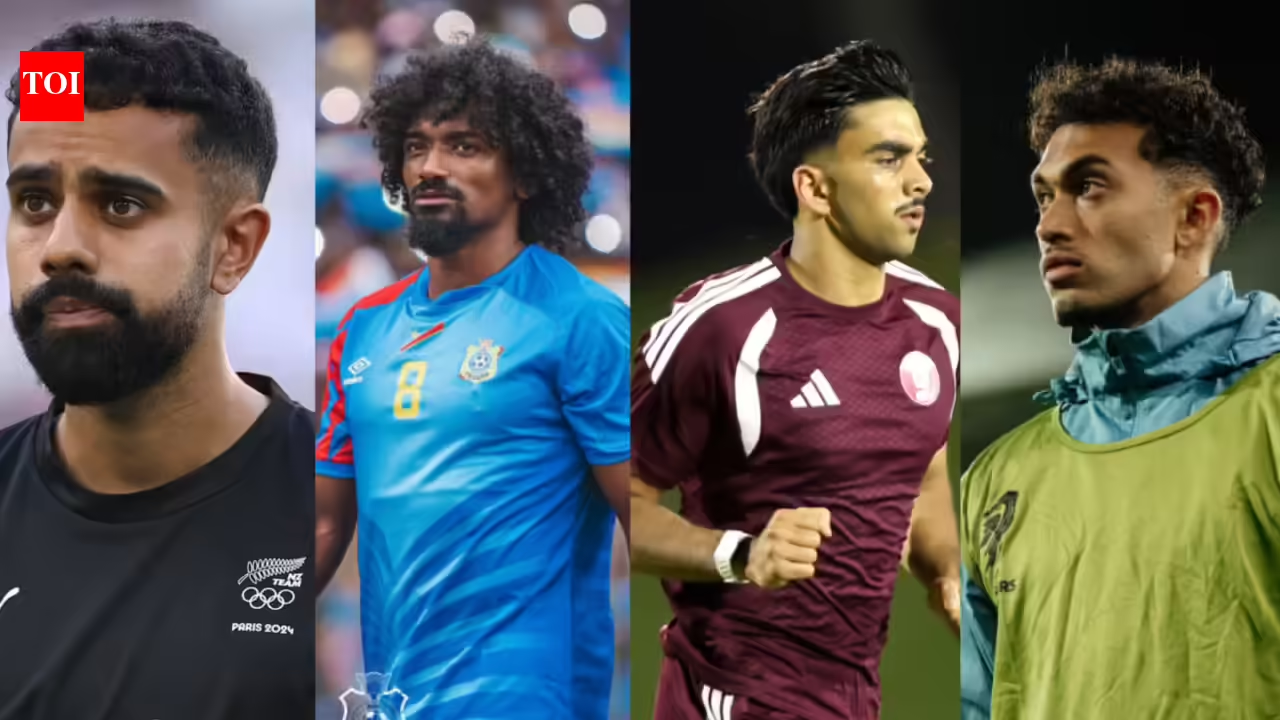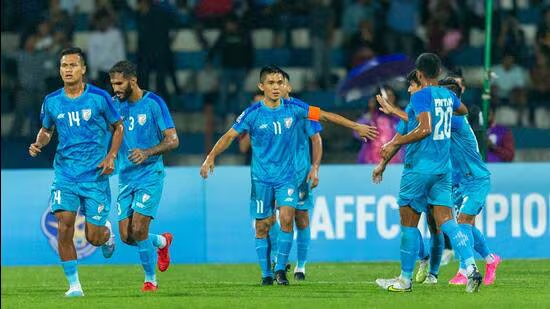
It's not without irony that the most inclusive World Cup in the history of the tournament is being co-hosted by the US, the most exclusionary host ever. Already among those denied entry, along with scores of fans, journalists and team officials from participating countries that the US government does not like, is Africa's 2025 referee of the year Omar Artan, who was set to become the first Somali referee at the World Cup finals.A few days before that, the official photographer travelling with the Iraqi team was turned back from Chicago's O'Hare airport, and the team's talismanic striker Aymen Hussein, who scored the goal that brought Iraq back to the World Cup after 40 yrs, was detained and questioned for 7 hrs.If the great footballing nations bring glory and on-field magic to the World Cup, debutants and nations who make a comeback after a long hiatus bring the most compelling, human storylines, the thrill of the underdog, the delicious possibility that anything can happen.Seen in that spirit, the expanded 48-team tournament this year - up from the traditional 32 - is cause for celebration. The extra slots, divided among the various confederations around the world, has led to the rise of small or struggling footballing nations to the sport's greatest stage, via journeys full of grit, adventure and a sense of romance.Hussein and his Iraqi teammates exemplify that. Hussein was born and raised in Kirkuk in northern Iraq, a historically restive region, which faced mass expulsions during Saddam Hussein's rule, was bombed during the US invasion of Iraq, attacked by Isis, and has been riven with internal conflict since.Hussein's father was killed in an al-Qaeda attack in 2008. His brother disappeared in 2014 during an Isis attack, and Hussein and the rest of his family had to flee the city. Hussein, like the rest of the Iraqi team - in fact, the rest of Iraq - has overcome decades of horrors and deprivation to reach the World Cup. Hussein is a striker in the classic mould, and was prolific through Iraq's gruelling qualification process - 21 matches in 28 mths - with nine goals.Expect Hussein to score, putting that 7-hr airport ordeal behind him, and send a country that has gone through the worst of human experiences into rapture.When Iraq made their only previous World Cup appearance in 1986, one of the four nations making their debuts at this World Cup, Curacao, was not even their own political entity. The tiny island nation in the Caribbean was a Dutch colony for centuries, and became an autonomous country - within the kingdom of Netherlands - only in 2010. What you need to know about Curacao is that it's very small, wildly beautiful, and its entire population (a little over 1.5 lakh) can be packed into the Narendra Modi Stadium in Motera. How does a country like this make the World Cup?One word - diaspora. None of the players on the Curacao squad were born on the island. Being a European colony means that people from Curacao have long been migrating to Europe and the US, and you can find pockets of Curacao in all these places. All citizens of Curacao also hold a Dutch passport and enjoy the same rights as inhabitants of the EU. Which means that footballers from Curacao, or its diaspora populations, can play in any football league within the EU without restrictions.What remained to be done was for Curacao Football Federation to embark on an inspired and patient recruitment drive around the world, and create an atmosphere that would attract talented players from its diaspora population to come join the national team. Put a legendary Dutch coach like Dick Advocaat in charge, and then watch the miracle take shape.Fellow debutants Cape Verde, which gained independence from Portugal in 1975, followed the same route for the same miracle. This tiny nation, comprising 10 volcanic islands off the coast of West Africa, features players born in Cape Verde, but also those born in Portugal, France, Ireland and the Netherlands. The 25 players play for clubs in 15 different countries. Centreback Roberto Lopes, who captains the most successful club in Ireland, Shamrock Rovers, was famously invited to play for Cape Verde via a LinkedIn message.If the diaspora has helped strengthen football in these tiny countries, immigrants and children of immigrants have helped other minnows. New Zealand, who will be making their third World Cup appearance after 1982 and 2010, will feature 27-yr-old Sarpreet Singh as their creative midfielder, making him one of only three players of Indian origin at the 2026 World Cup. (The other two are 19-yr-old Tahsin Mohammed Jamshid for Qatar, and 25-yr-old Nishan Velupillay for Australia.) The last time an Indian-origin player took the field at a World Cup was in 2006, when Vikash Dhorasoo was part of a legendary French team.Sarpreet, who was born in Auckland and whose parents are from Jalandhar, has long been one of New Zealand's best footballers, having gone through Bayern Munich's youth system and played in the Bundesliga.These are all teams that have been, in the recent past, ranked way below India, scraping the barrel at the 150s and lower, before serious policy shifts saw them rise slowly, but consistently, up the footballing ladder.Indian football, forever in decline, eternally languishing, is missing a trick. Decades of talking about improving the grassroots of football has barely made a dent in ground realities. Perhaps it's time to look at the problem from above, tap into the vast Indian diaspora to fast-track the national team's progress. Imagine if the Indian team started winning a few matches, making some inroads into Asian competitions. What that can do for the popularity of Indian football.Maybe it's time for All India Football Federation to send out LinkedIn invites.The writer is a Delhi-based journalist and author.(Disclaimer: The opinions expressed in this column are that of the writer. The facts and opinions expressed here do not reflect the views of www.economictimes.com.)
A World Cup of miracles, migrations and a lesson for Indian football - The Economic Times
The 2026 World Cup celebrates new teams and inspiring journeys. Nations like Iraq and debutants Curacao and Cape Verde showcase grit and romance. Diaspora plays a key role in building these teams. Indian origin players represent Qatar and Australia. India can learn from these successes, especially by tapping into its diaspora to improve its football standing.
991 words~5 min read