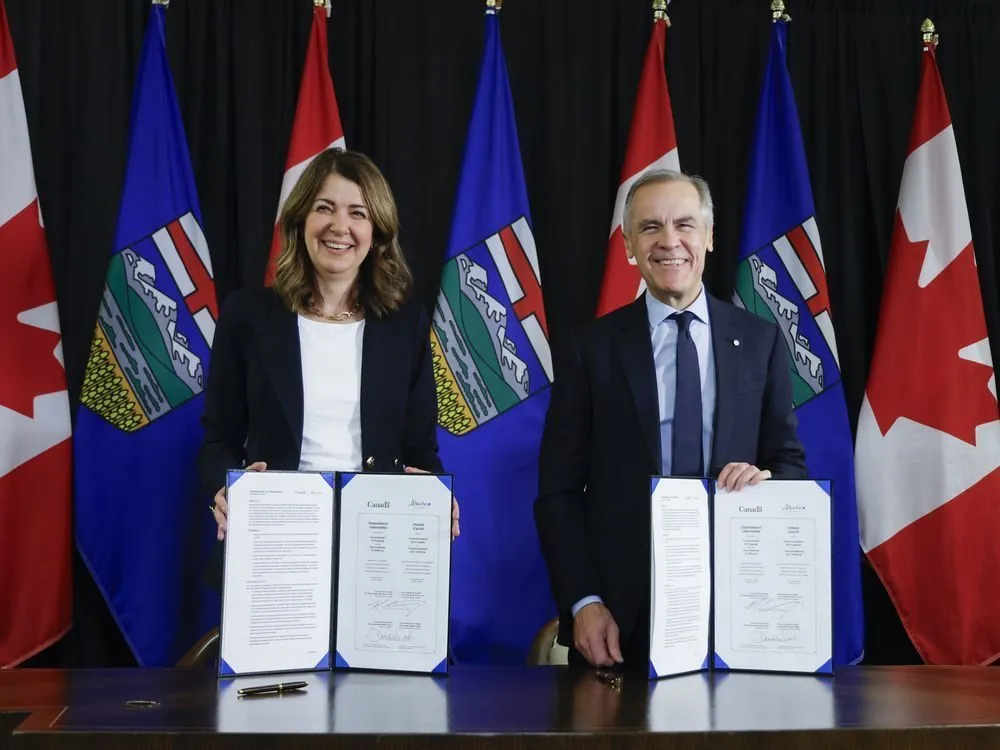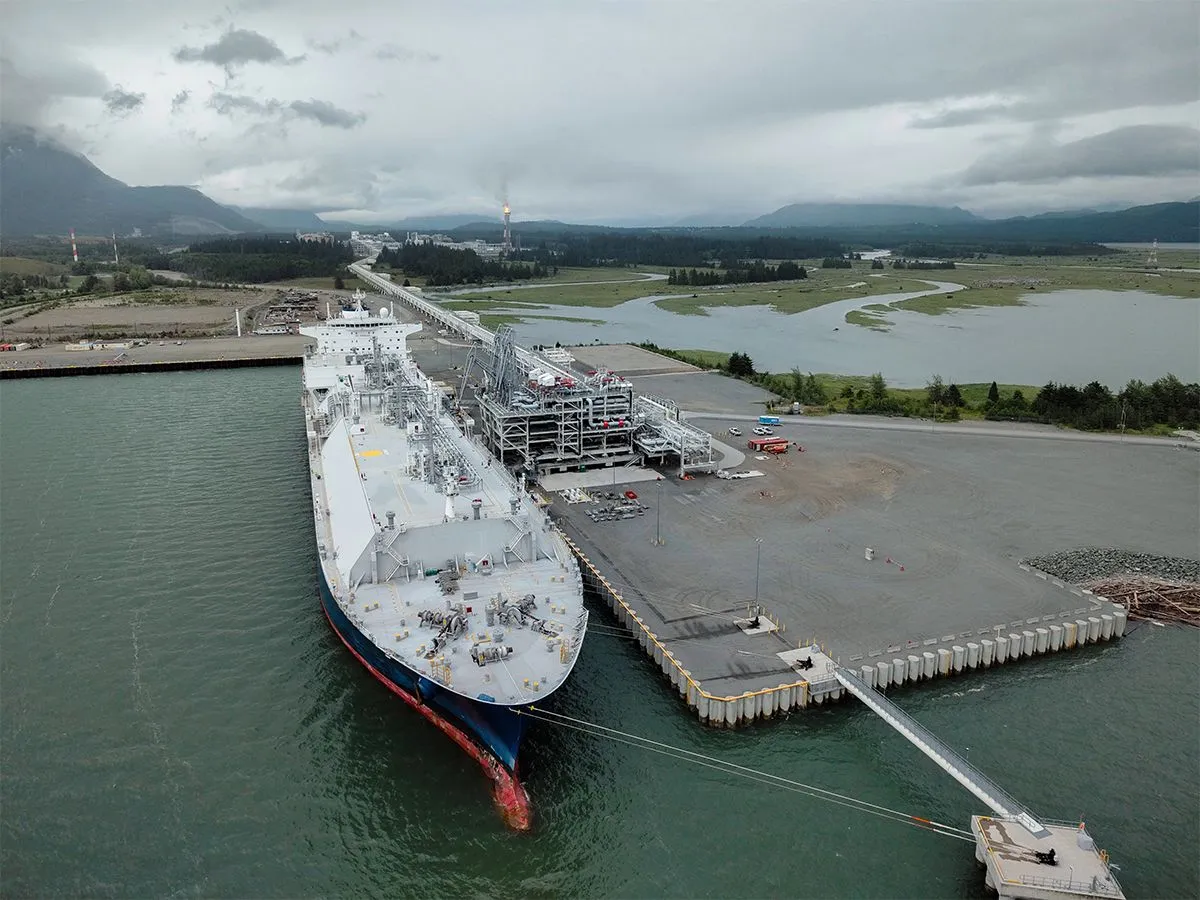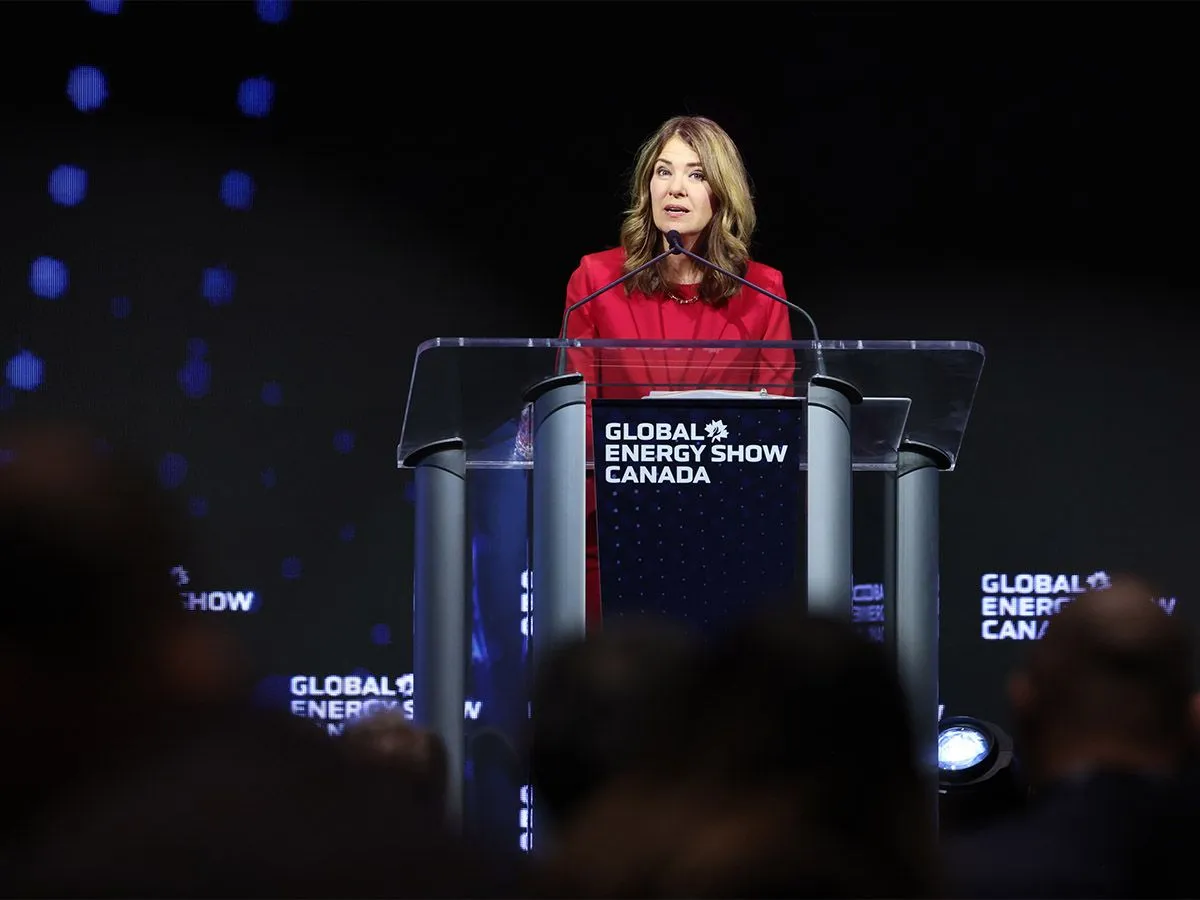
Skip to Content News Archives Economy Energy Oil & Gas Renewables Electric Vehicles Mining Commodities Agriculture Real Estate Mortgages Mortgage Rates Finance Banking Insurance Fintech Cryptocurrency Work Wealth Smart Money Wealth Management Investor Personal Finance Family Finance Retirement Taxes High Net Worth FP Comment Executive Women Puzzmo Newsletters Financial Times Business Essentials More Innovation Information Technology FP500 Podcasts Small Business Lives Told Tails Told Shopping Financial Post Store Obituaries Place a Notice Advertising Advertising With Us Advertising Solutions Postmedia Ad Manager Sponsorship Requests Classifieds Place a Classifieds ad Working Profile Settings My Subscriptions Saved Articles My Offers Newsletters Customer Service FAQ News Economy Energy Mining Real Estate Finance Work Wealth Investor FP Comment Executive Women Puzzmo Newsletters Financial Times Business Essentials HomeEnergyAlberta premier touts 'single-greatest expansion of pipelines in decades' at global energy showDanielle Smith says new energy infrastructure projects 'barrelling ahead' since memorandum of understanding with Ottawa You can save this article by registering for free here. Or sign-in if you have an account.Alberta Premier Danielle Smith speaks during the Global Energy Show in Calgary on Tuesday, June 9, 2026. Gavin Young/PostmediaProgress in Canada’s energy sector can often move at a glacial pace, but it finally feels like change is coming.Subscribe now to read the latest news in your city and across Canada.Exclusive articles from Barbara Shecter, Joe O'Connor, Gabriel Friedman, and others.Daily content from Financial Times, the world's leading global business publication.Unlimited online access to read articles from Financial Post, National Post and 15 news sites across Canada with one account.National Post ePaper, an electronic replica of the print edition to view on any device, share and comment on.Daily puzzles, including the New York Times Crossword.Subscribe now to read the latest news in your city and across Canada.Exclusive articles from Barbara Shecter, Joe O'Connor, Gabriel Friedman and others.Daily content from Financial Times, the world's leading global business publication.Unlimited online access to read articles from Financial Post, National Post and 15 news sites across Canada with one account.National Post ePaper, an electronic replica of the print edition to view on any device, share and comment on.Daily puzzles, including the New York Times Crossword.Create an account or sign in to continue with your reading experience.Access articles from across Canada with one account.Share your thoughts and join the conversation in the comments.Enjoy additional articles per month.Get email updates from your favourite authors.Create an account or sign in to continue with your reading experience.Access articles from across Canada with one accountShare your thoughts and join the conversation in the commentsEnjoy additional articles per monthGet email updates from your favourite authorsSign In or Create an AccountorHowever, it’s going to take time.One year ago, Premier Danielle Smith spoke at the annual Global Energy Show, touting the benefits of a “grand bargain” — advancing a proposed oil pipeline to the West Coast, if teamed up with a carbon capture project in the oilsands.On Tuesday, at the opening day of the same event, both Smith and federal Natural Resources Minister Tim Hodgson highlighted the benefits of an energy accord between Ottawa and Alberta, and the progress that’s been made in recent months.Get the latest headlines, breaking news and columns.By signing up you consent to receive the above newsletter from Postmedia Network Inc.A welcome email is on its way. If you don't see it, please check your junk folder.The next issue of Top Stories will soon be in your inbox.We encountered an issue signing you up. Please try againThe premier told the audience that new pipeline and energy infrastructure projects are “barrelling ahead” since a memorandum of understanding was initially inked in November, along with further details on carbon pricing added last month.“This is the single-greatest expansion of pipelines in decades,” Smith told the energy conference.The premier noted Enbridge is planning to optimize its Mainline pipeline network, adding up to 400,000 barrels per day of transportation capacity later this decade, increasing shipments of oil from Western Canada into the United States.Trans Mountain Corp. is working on two projects to increase its system capacity by about 300,000 bpd, while South Bow is proposing to send more oil into the United States through pipe previously installed in Canada for the ill-fated Keystone XL system.If it receives a positive final investment decision, the project would connect at the U.S. border to a line proposed by Bridger Pipeline, taking Canadian crude to Guernsey, Wyo., potentially moving more than 500,000 bpd south.Of course, Alberta has its own plans for a bitumen pipeline to ship one million bpd to a West Coast port, although no final route or private-sector proponents have been announced. The province plans to submit its proposal to the federal Major Projects Office by Canada Day.In an interview, Smith said the province will propose one route to the Pacific Coast for consideration; it has been studying options to both the northern and southern coast of B.C.“There’ll be one option submitted, because if we want the Major Projects Office to act with speed, as I think everyone does, then they’ve just got to contemplate one proposal,” Smith added.The premier is also confident with the recent steps taken on the MOU, and Ottawa’s push to see Canada become an energy superpower.“We’ve seen some big accommodations from the federal government,” Smith said, pointing to the removal of the oilpatch emissions cap.“I feel like we’ve made incredible progress, and we’re seeing it,” she added.“It’s remarkable how much expansion we’re seeing, and that wouldn’t have been possible if the emissions cap was still in place . . . We’ve moved almost 180 degrees from where we were 18 months ago.” Alberta Premier Danielle Smith speaks during the Global Energy Show in Calgary on Tuesday, June 9, 2026. Gavin Young/PostmediaIn his speech to the Global Energy Show, Hodgson said Canada has to occupy a “practical middle ground” on energy, advancing the pipeline and the Pathways carbon capture project.And with a number of LNG facilities and other infrastructure developments now progressing, it sends a signal that “Canada is back as a serious energy country.”“The government’s job is to create the conditions,” he said. “The private sector’s role is then to build.”However, this won’t be a smooth journey.There’s still opposition to a northern Pacific Coast pipeline by the B.C. government and some coastal First Nations.A new West Coast pipeline depends on the Pathways carbon capture project in the oilsands moving forward. The project has yet to receive the green light.Trilateral negotiations between the federal and provincial governments, and the Oil Sands Alliance — a group of five major oilsands producers, including Cenovus Energy, Suncor Energy and Canadian Natural Resources — are continuing.The companies contend that the MOU’s condition of increasing Alberta’s industrial carbon price to $130 per tonne by 2040 will make the sector uncompetitive. Delegates explore the Global Energy Show trade show floor at the BMO Centre in Calgary on Tuesday, June 9, 2026. Gavin Young/PostmediaThat position was spelled out by Cenovus Energy CEO Jon McKenzie during a speech Tuesday at the conference.“As it relates to the industrial carbon tax, the industry has been clear that the industrial carbon tax is insidious, and it should be revoked,” McKenzie said, noting Canada is the only major oil exporter with such a levy.A project of the size needed to reduce emissions by 16 megatonnes — as is spelled out in the MOU agreement signed last month — would likely cost between $20 billion and $30 billion.“Without firm commitments from the oilsands producers to commit barrels to this pipeline . . . this pipeline is unfinanceable in the private sector,” McKenzie said.“The benefit and prize to Canada in getting this balance right, and unlocking the first meaningful capital investment cycle in the Canadian oilsands in over a decade, is immense.” Cenovus Energy president and CEO Jon McKenzie speaks at the Global Energy Show at the BMO Centre in Calgary on Tuesday, June 9, 2026. Gavin Young/PostmediaIn the interview, Smith said she thinks progress is being made in discussions with the producers.“Everybody is meeting and talking daily,” the premier said.“Everybody is very interested in trying to get a three-way deal signed . . . so everyone knows which direction we’re going.”Former Alberta energy minister Sonya Savage said both levels of government are co-operating and she’s confident the Carney government will approve a West Coast pipeline.“We are making tremendous progress, but we’re not there yet,” said Savage.“We’re not there yet because it takes time.”Chris Varcoe is a Calgary Herald columnist. Join the Conversation This website uses cookies to personalize your content (including ads), and allows us to analyze our traffic. Read more about cookies here. By continuing to use our site, you agree to our Terms of Use and Privacy Policy.
Alberta premier touts 'single-greatest expansion of pipelines in decades' at global energy show
Danielle Smith said that new pipeline and energy infrastructure projects are “barrelling ahead” since a memorandum of understanding.
1,439 words~7 min read