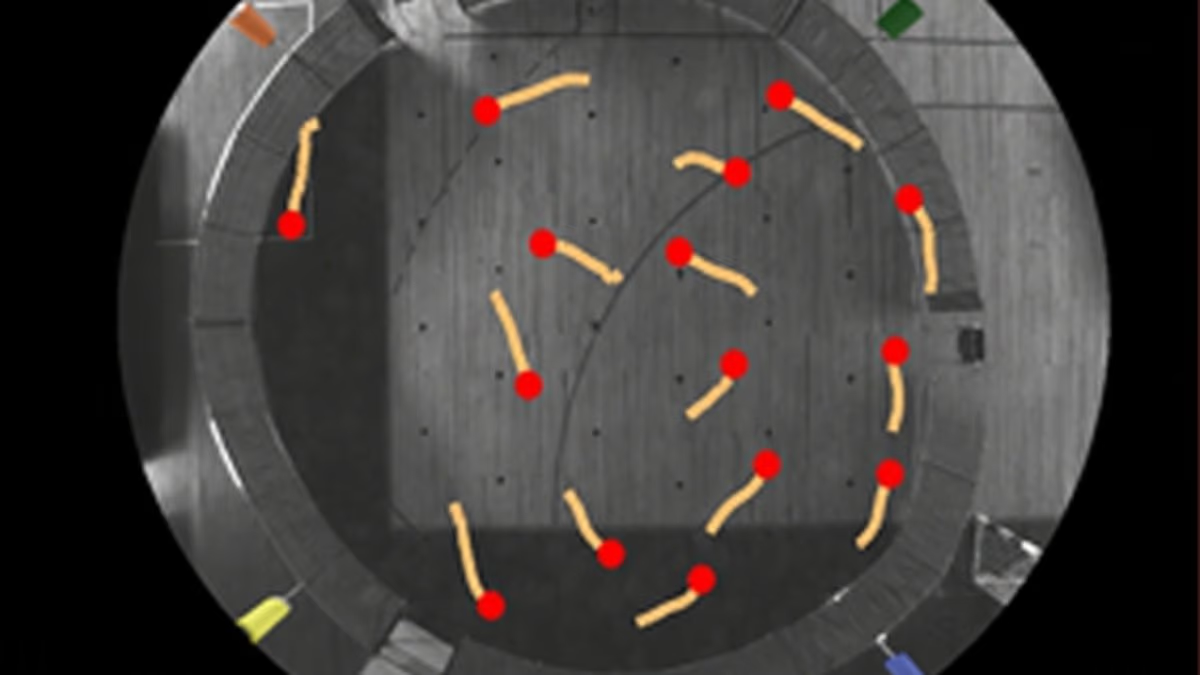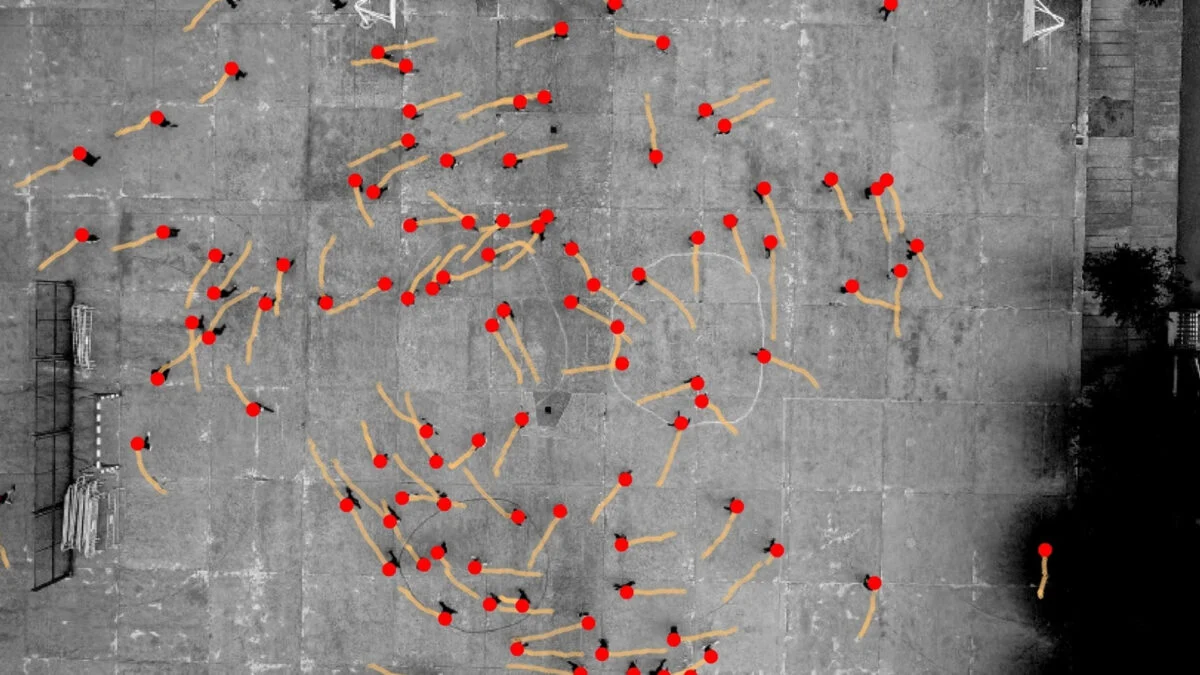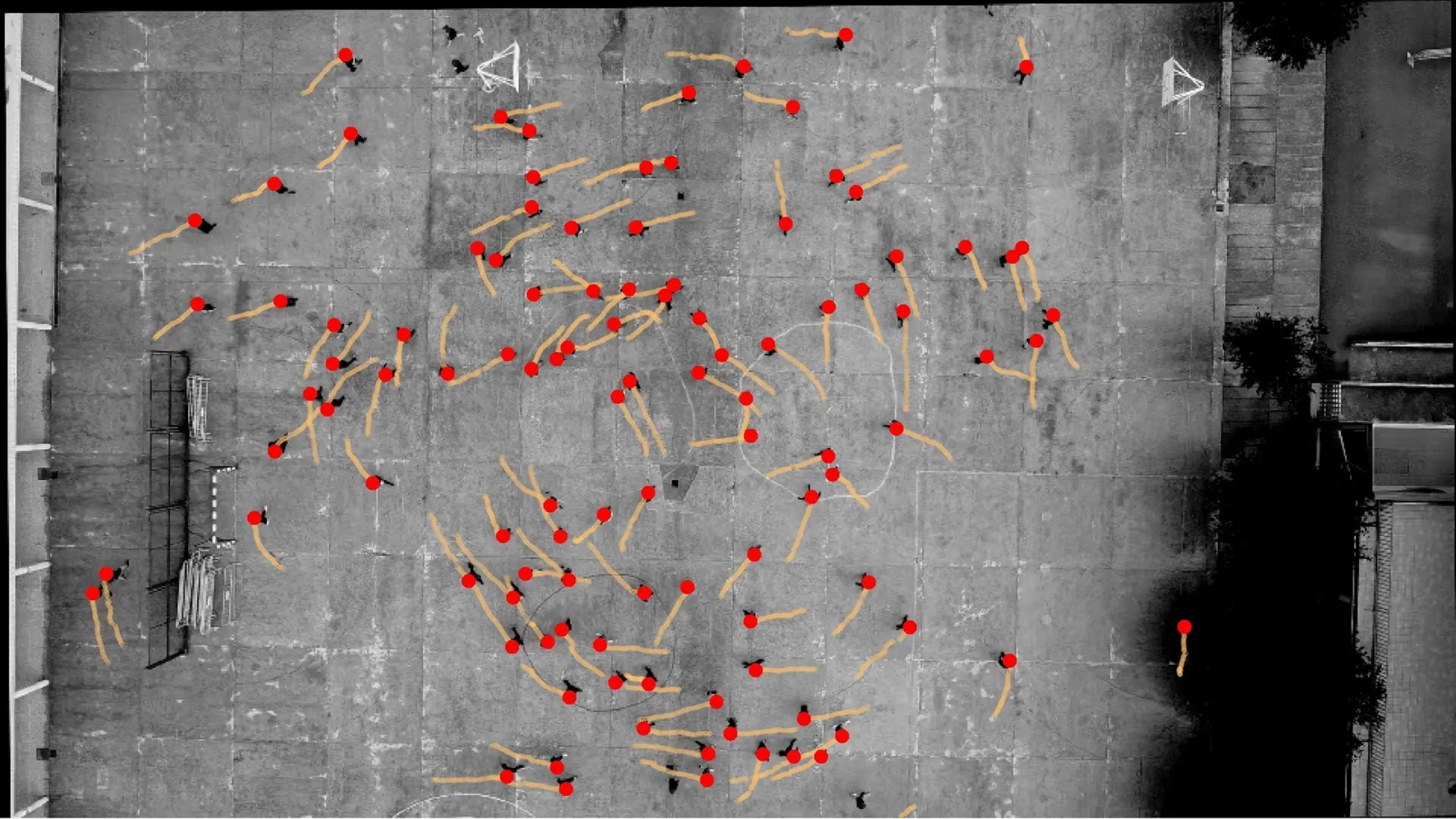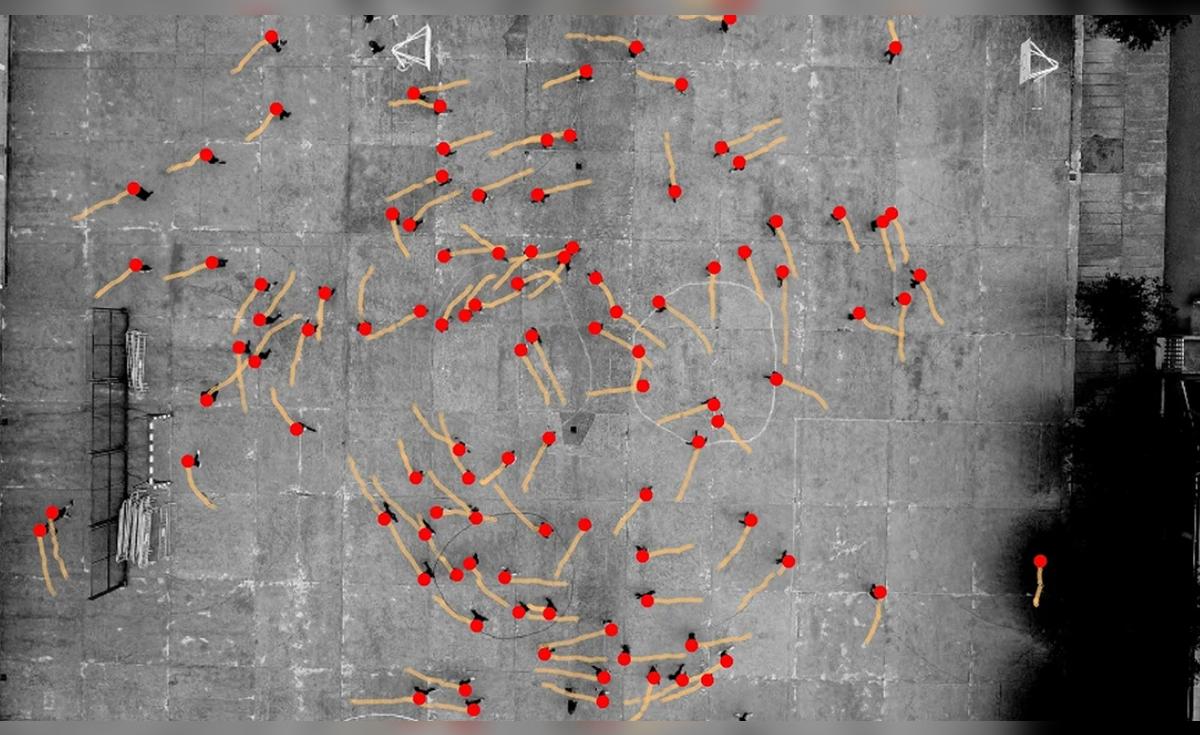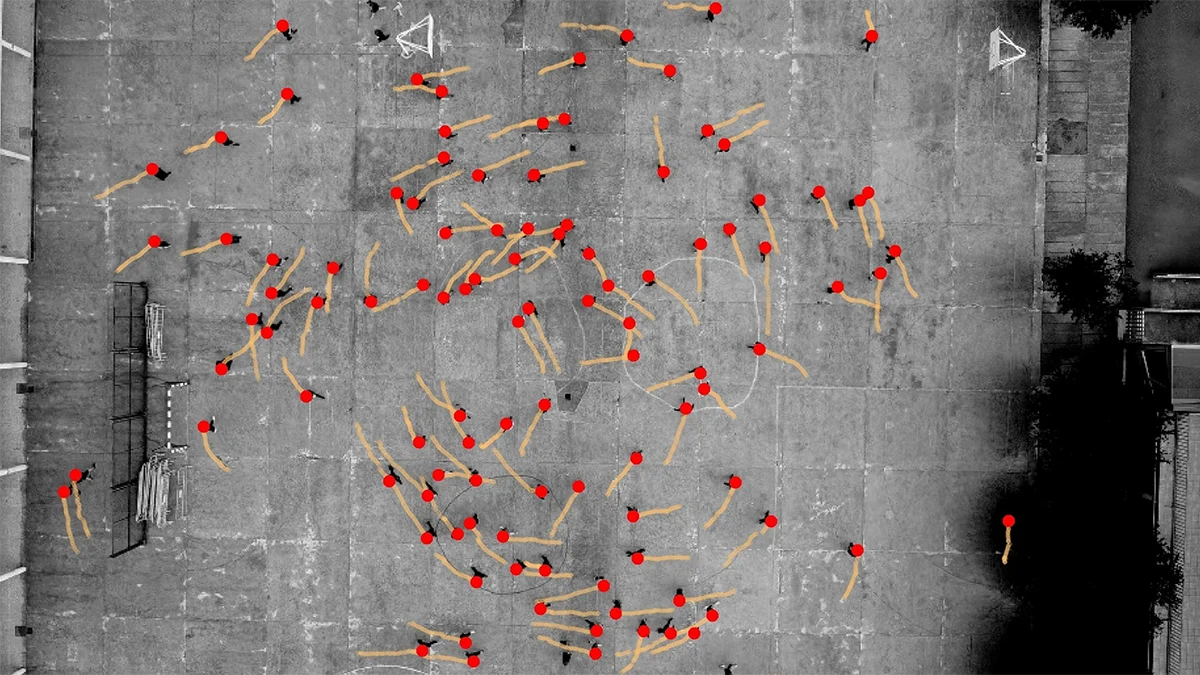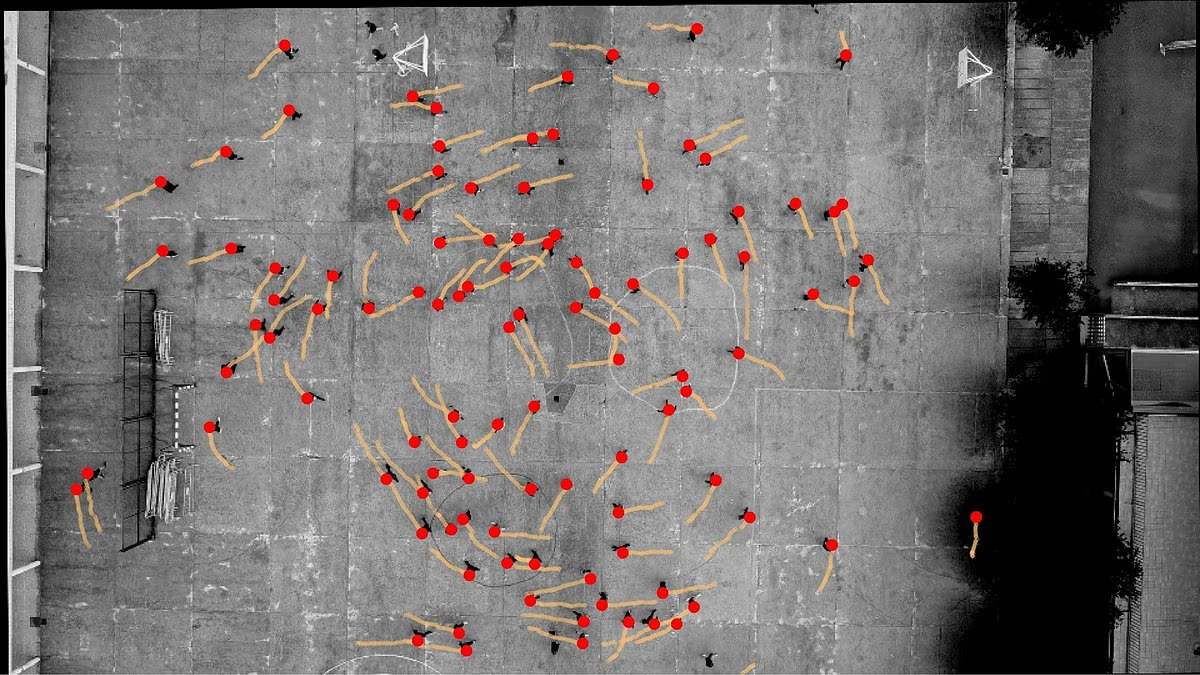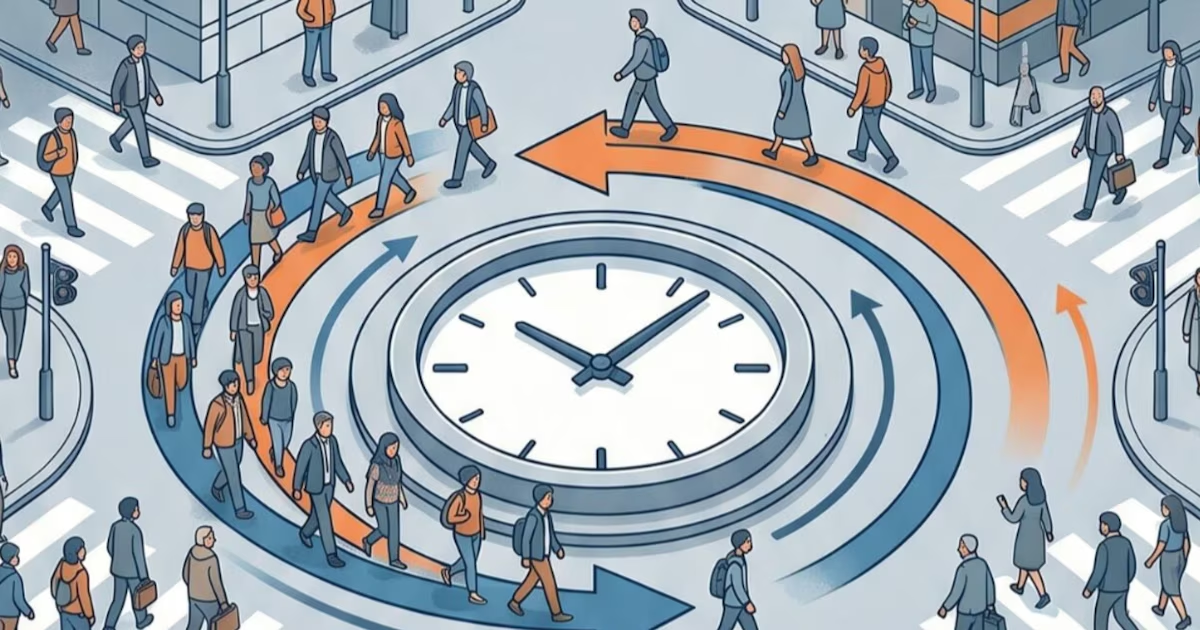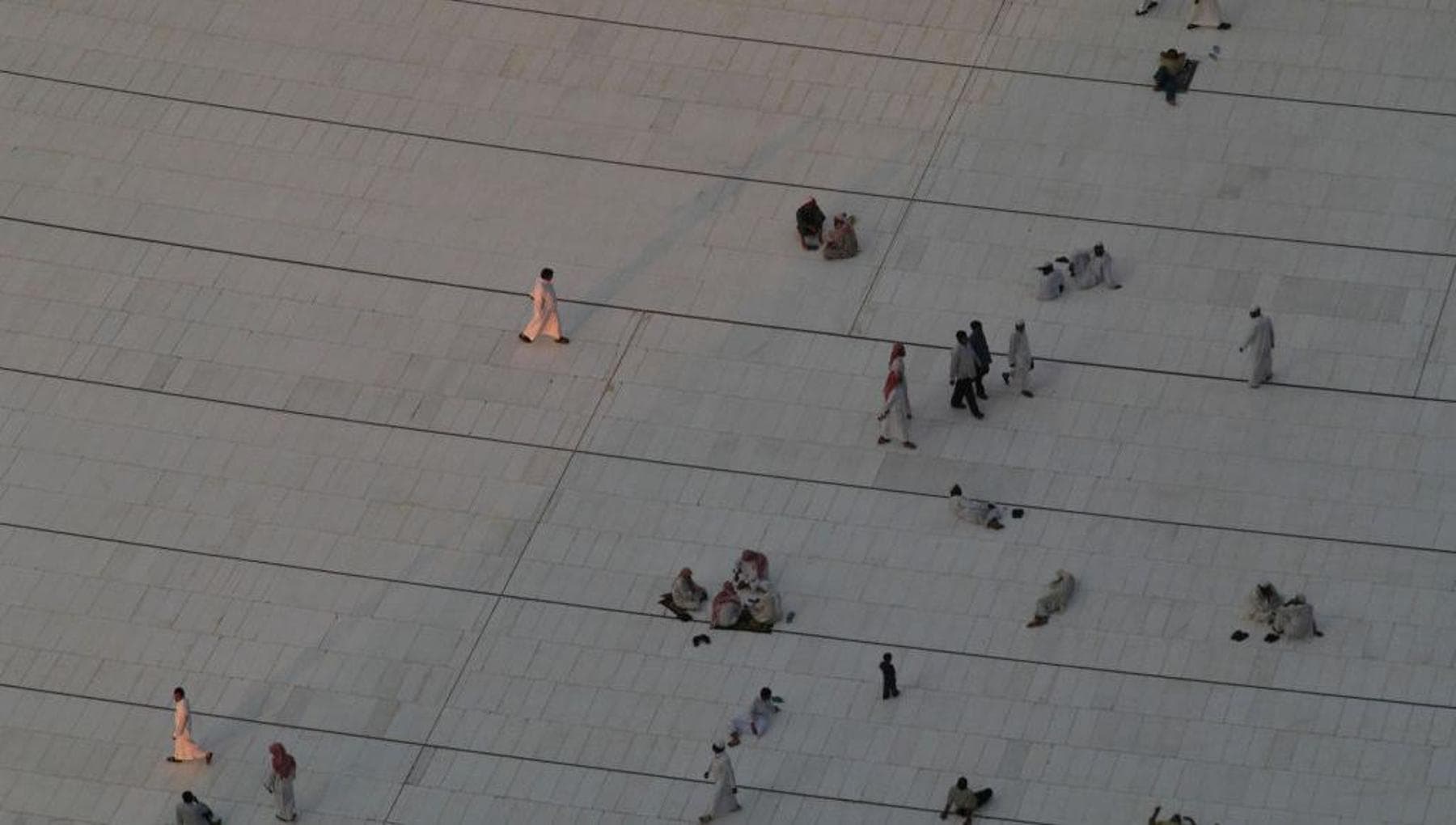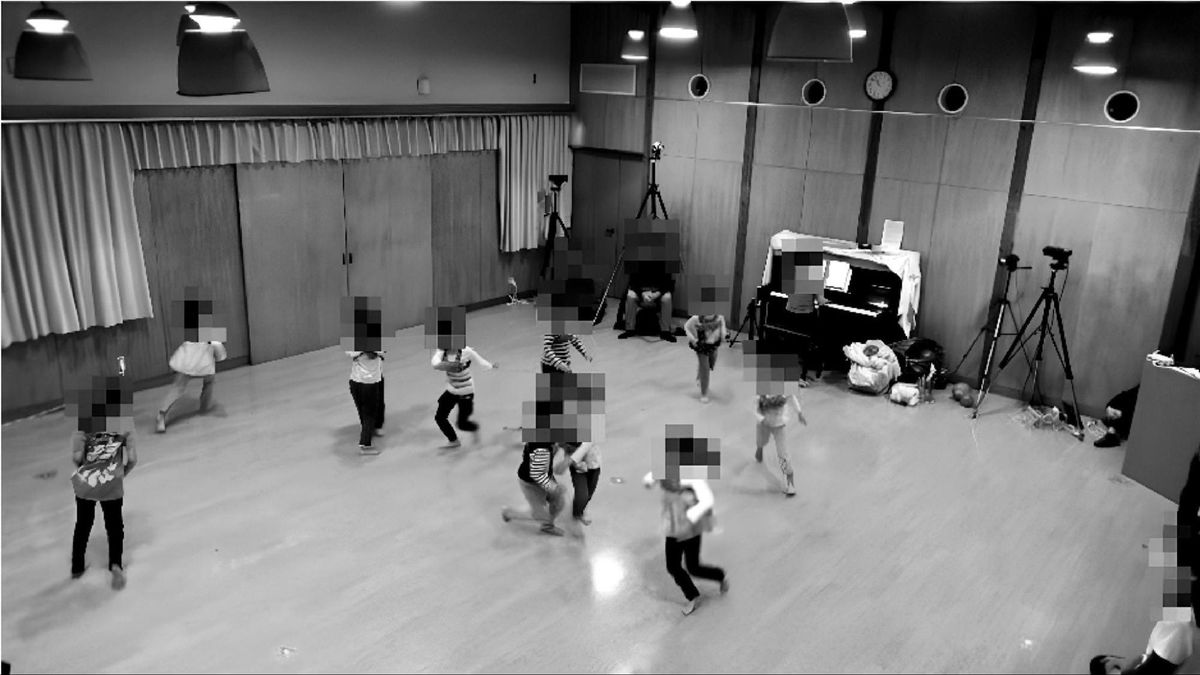
“Curiously, during a conference where I was presenting the first part of this story, Claudio and I got talking and thought together: why not run an experiment in Japan?” he continued. “We were convinced the rotation would flip there, for several reasons (cultural ones, and the different type of avoidance behaviour that exists in Japan compared with Spain). However...it did not.”Indeed, over the course of several experiments that took place in different environments in Spain and Japan, the counterclockwise bias persisted, suggesting that the team may have stumbled on a hidden rule of behavior. This preference showed up whether people were walking alone, or as part of a group, suggesting that it emerges from individuals, rather than as a collective phenomenon that is only present in crowds.Overhead shot of schoolyard in Spain. Image: ©2026 Echeverría-Huarte et al. CC-BY-ND“We are now only sure that it is not a collective but an individual bias, and that is very, very robust,” said Feliciani. However, the team stopped short of describing the bias as a “universal law” until more research is conducted, especially in more complex scenarios, such as emergency evacuations or dense crowds. For this study, the researchers analyzed the movements of hundreds of participants, including adults who were instructed to move freely in different settings, teenagers playing in their schoolyard in Spain, and children at a nursery school in Japan. They accounted for individual variations such as handedness (left or right), age, as well as local social etiquette about expected behavior in crowds.In each situation, the participants displayed a clear counterclockwise bias in the rotation of their bodies as they moved to a new direction. Each group also contained people who turned predominantly clockwise or showed no rotational bias, but they were fewer in number than the counterclockwise turners. The nursery school children showed an even stronger bias toward counterclockwise turns, suggesting that it may not be a learned behavior, but something biologically rooted.“It is likely biomechanical, but exactly why is hard to tell,” said Feliciani. He added that this symmetry-breaking motion appears to be unusual in animals, and that “most animals show no bias, and humans are probably the exception or, for sure, a rare case.”That said, the study outlined a few exceptions, including temnothorax ants, which tend to turn left while exploring, and budgies, which show preferences in certain lateral directions during flight.
Scientists Just Accidentally Discovered a Strange, Hidden Rule of Human Nature
Researchers report a "serendipitous" discovery while watching videos of crowds: an inexplicable bias toward counterclockwise turning that may be rooted in biology.
508 words~2 min read