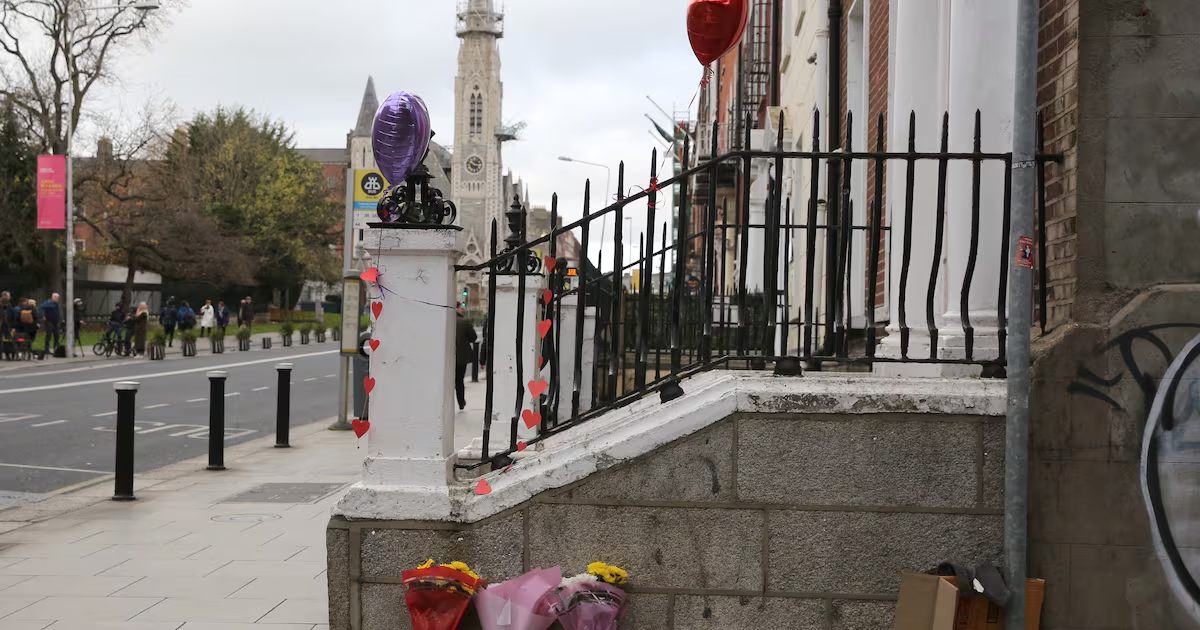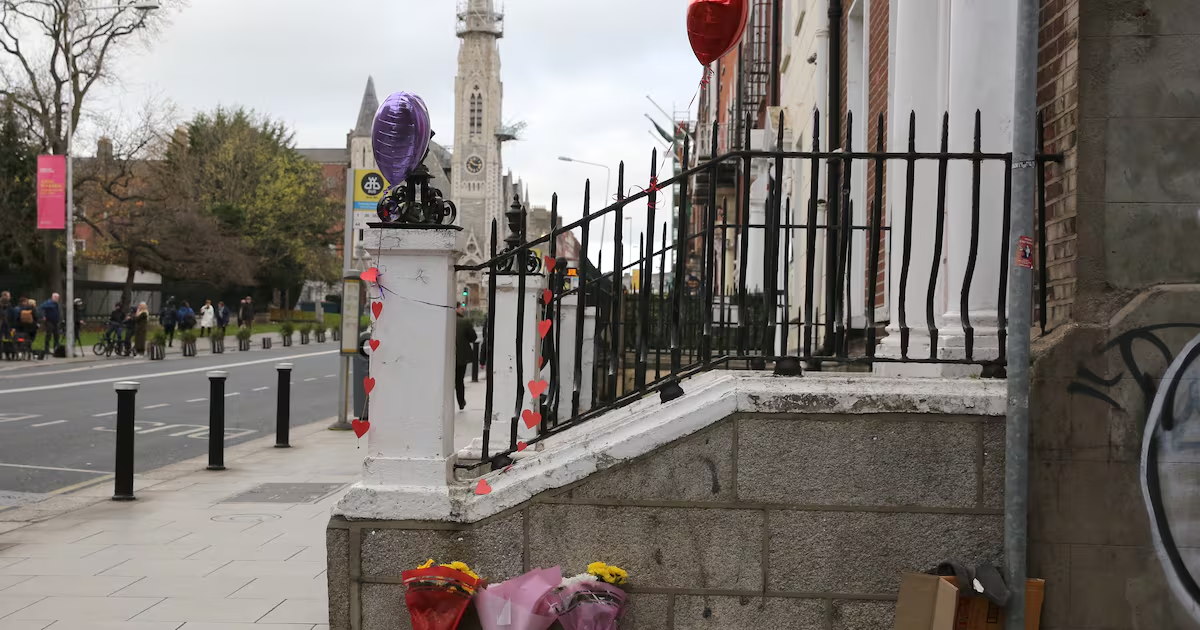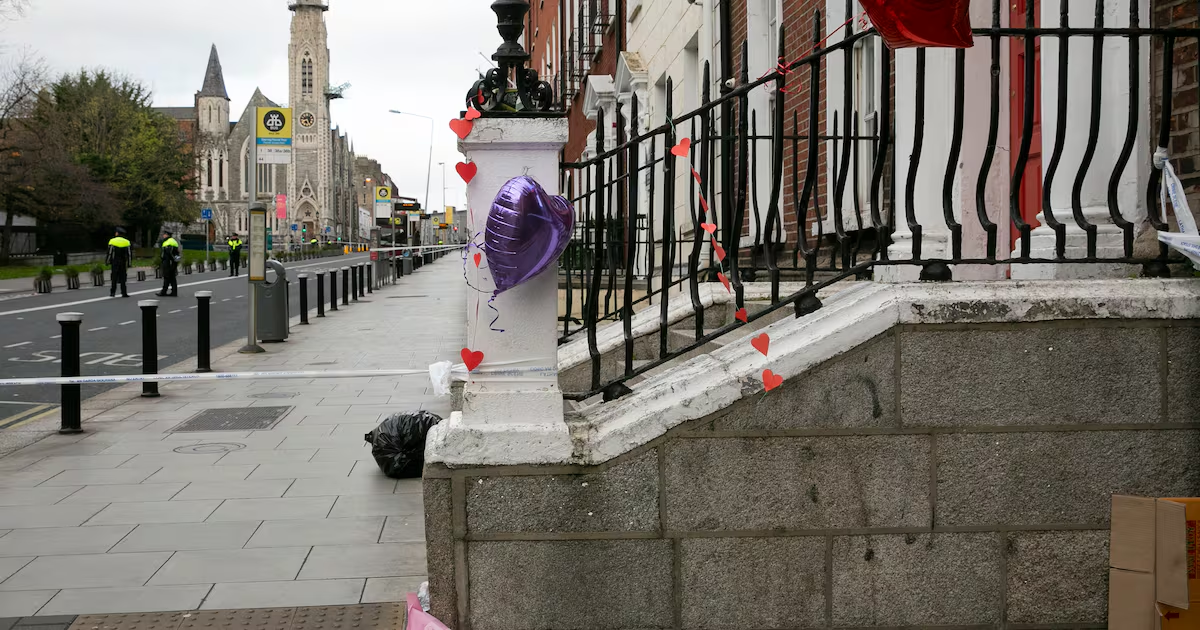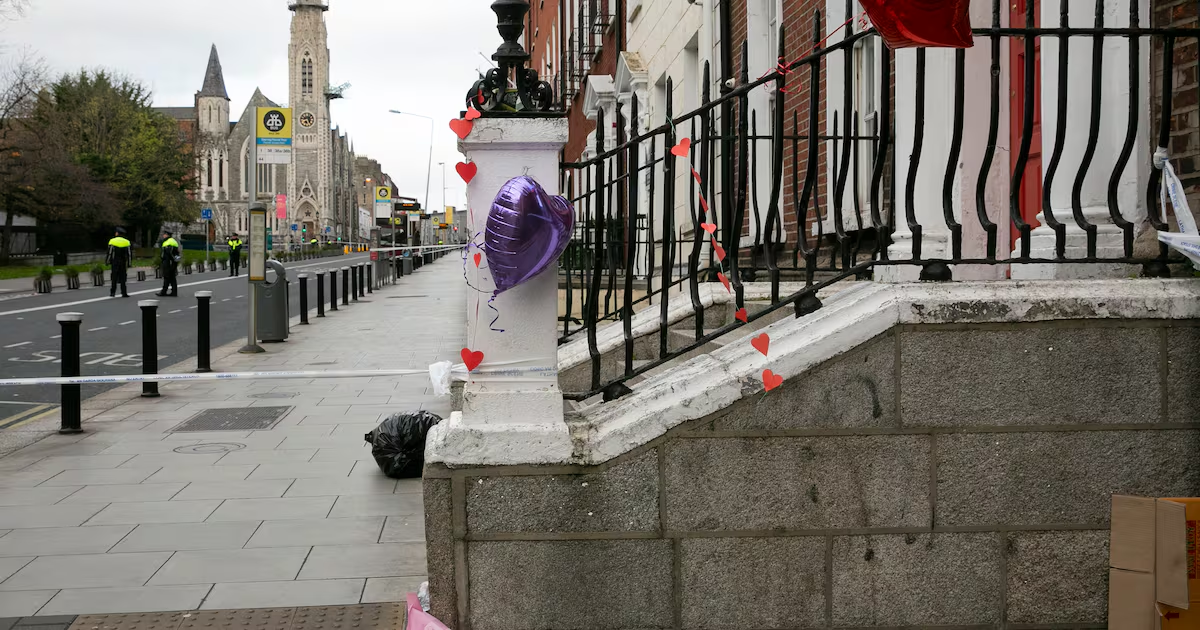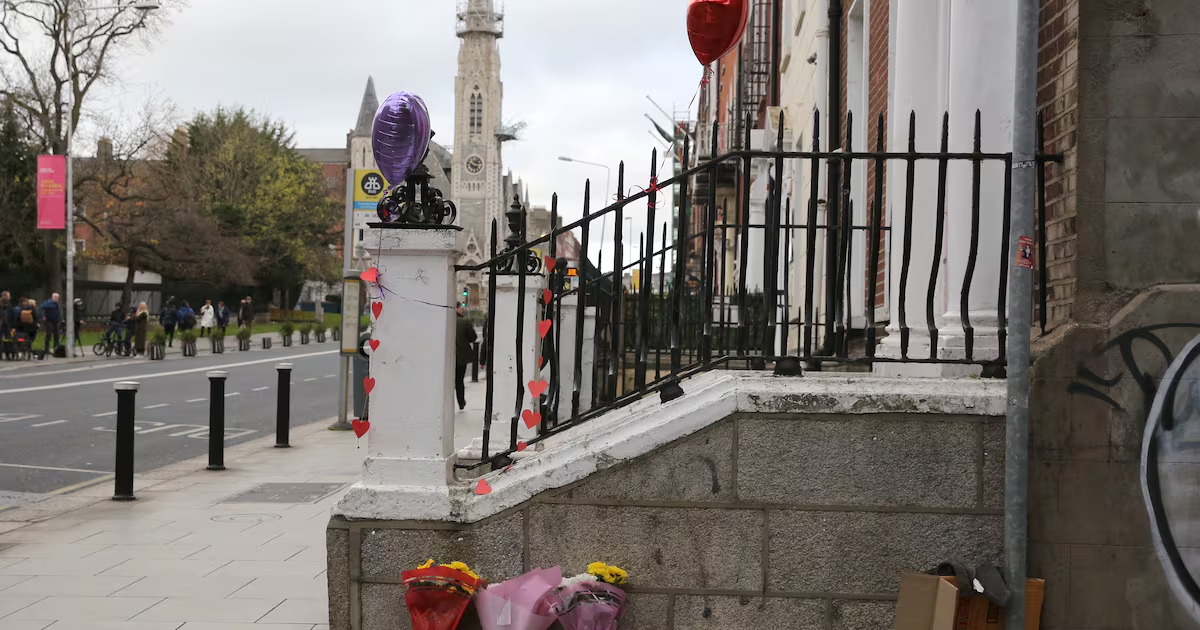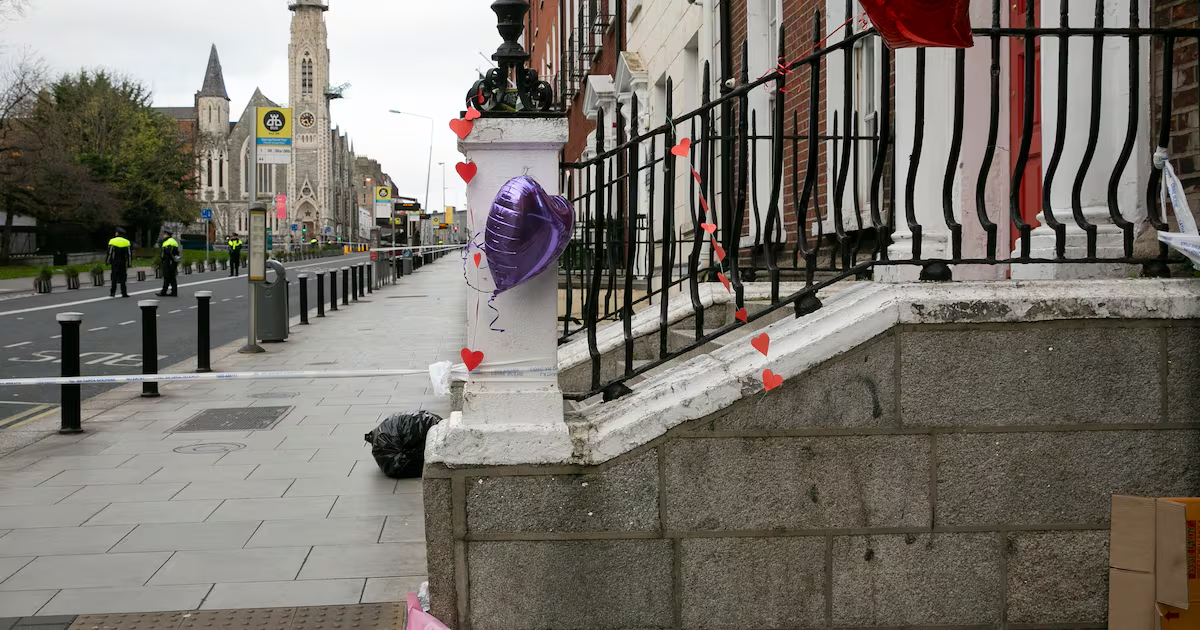
The actions of a man charged with the attempted murder of three children at Dublin’s Parnell Square showed he intended to kill them, a jury has been told.The prosecution case was that Riad Bouchaker’s actions, including stabbing and jabbing with a knife, “targeting” young children and the need for members of the public to stop him, show he intended to kill, prosecuting counsel Karl Finnegan said.Bouchaker had told gardaí he knew he had done something but he was sick and not in his right mind at the time, and had no intention to kill anyone, counsel said. He had said he was angry about being refused a social welfare payment that day and had a knife.One girl suffered a central chest wound and a heart injury and had recovered “to a degree”, counsel said.He was opening the prosecution case in the trial of Bouchaker (52), a native of Algeria of no fixed abode, who has pleaded not guilty to charges of attempting to murder three children, two girls and a boy, on Parnell Square East on November 23rd, 2023. He has also denied assault causing harm to two other children and to a passerby, a French national, who intervened to assist, and a charge of assault causing serious harm to a care worker.He denies a further charge of producing an article capable of inflicting serious injury, a 36cm kitchen knife. At the outset of Wednesday’s hearing, the judge told the jury the presumption of innocence applies to Bouchaker and the onus is on the prosecution to prove its case beyond reasonable doubt.Outlining the prosecution case, Finnegan said he was presenting a roadmap of where the trial may go and what he told them was not evidence.The prosecution must prove its case beyond reasonable doubt, and any doubt must result in an acquittal.Counsel said the case concerned an incident that attracted a very considerable amount of public attention and commentary, and they were all likely to have heard about it. They must put all of that, including media reports, out of their minds and must decide the case on the evidence, he said. As with any case, it was not to be decided on emotion, sympathy or outrage; it must he decided “strictly” on the evidence.The prosecution case was that a group of young schoolchildren were leaving their Gaelscoil on Parnell Square East at about 1.30pm to go to a creche. The accused approached them, produced a knife and began stabbing or attempting to stab.The jury would hear evidence from a care worker who intervened and was herself stabbed before people approached Bouchaker and he was restrained. The prosecution case was that he not only caused harm to but intended to kill three of the children, counsel said. The jury would see CCTV evidence of the attack, hear evidence including of the consequences of the attack and of interviews conducted by gardaí with Bouchaker. They would hear from the children’s parents and family members.They would hear the school day finished at 1.30pm and the care worker had counted 13 children and was preparing to move them from the school to the creche when the attack occurred.There was a lot of CCTV evidence, not just relating to the attack itself but also of the movements of Bouchaker that morning and leading up to the attack, counsel said.He was later arrested and interviewed by gardaí and spoke about a social welfare letter that caused him upset, that he went to get a knife, that he accepted it was in his backpack, counsel said. He had recognised a knife shown to him as the knife that was in his possession. He repeatedly said he was sick, he was not in his right state of mind, and he did not mean to kill anybody.He had previously suffered from a benign brain tumour and required brain surgery in 2021. During intervention by members of the public at Parnell Square, he suffered a further heard injury and required hospitalisation for about a month, after which he was arrested.As a result of his existing injury, and the one suffered at Parnell Square, he has an acquired brain injury affecting his ability to sustain attention and concentration, counsel said. Bouchaker had been found by the judge fit to stand trial, with accommodations including an interpreter. There is no suggestion he was suffering from a mental disorder at the time of the incident itself, such as that a defence of insanity would be available, counsel said.The care worker will say she saw a knife and saw the accused jabbing at the children, that she grabbed him from behind and pulled him back and shouted at him to get away from the children, counsel said. She subsequently realised she had been stabbed.The jury would also hear from members of the public who saw what happened and from some who intervened.They would hear from a man who grabbed the accused’s forearm and knife and, during a scuffle, suffered a cut to his hand and scratch to his face.A knife was seen on the ground and was seized and retained by gardaí, counsel said.The jury would hear medical evidence that one child’s injuries were life-threatening, he said. That child, a girl, had received chest compressions at the scene and it was noted she was not breathing. There was a large laceration to her chest and compressions continued until she was taken to hospital. They would hear the child had recovered “to a degree”.They would also hear evidence about the injury to the creche worker.They would also hear evidence about bone fragments in another girl’s head and about injuries to a boy. Another child’s coat was ripped and there was a clump of hair on her shoulder.The jury would hear Bouchaker was treated in hospital before being arrested on December 20th, 2023. The case continues before Judge Tony Hunt and a jury.
Man’s actions during Parnell Square incident showed he ‘intended to kill’, jury told
Riad Bouchaker, who denies charges including attempted murder, told gardaí he was ‘not in his right mind’ and did not intend to kill
978 words~4 min read