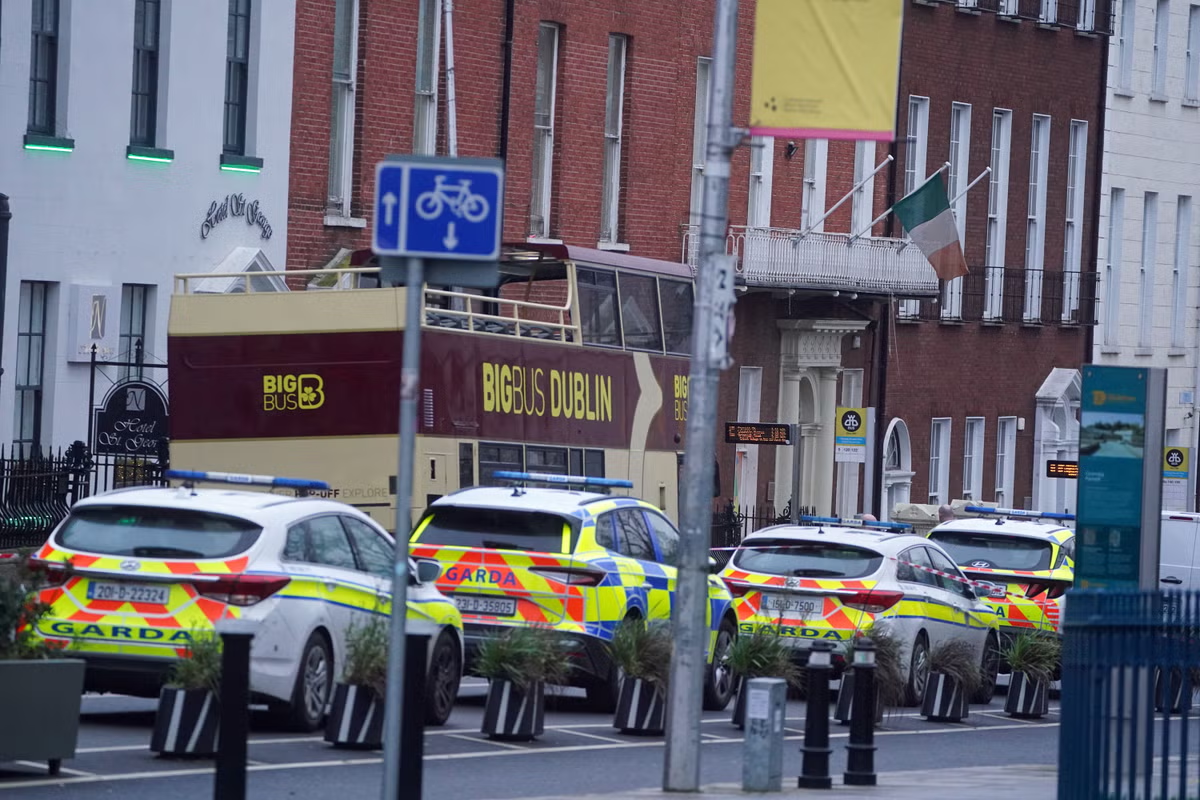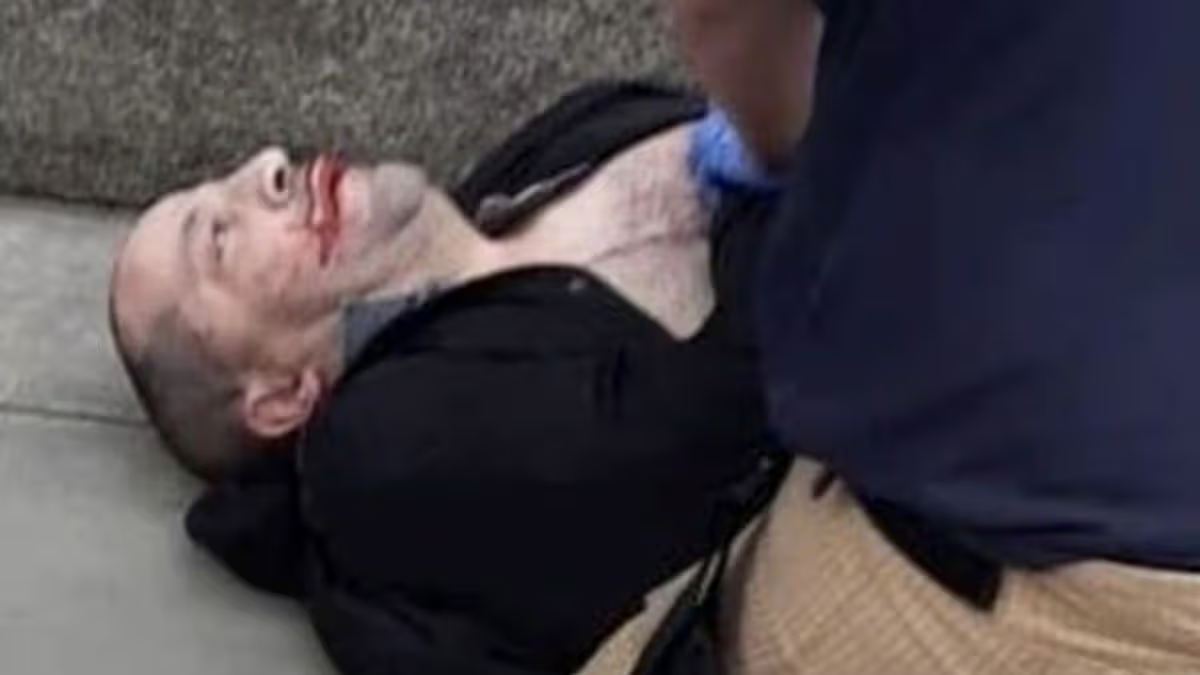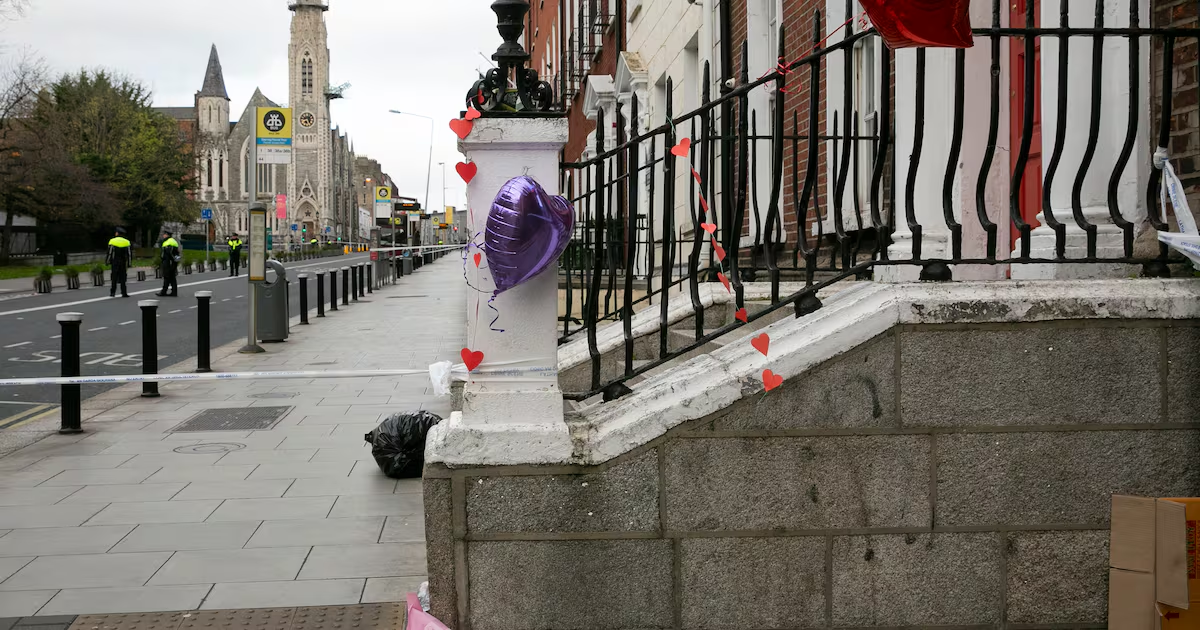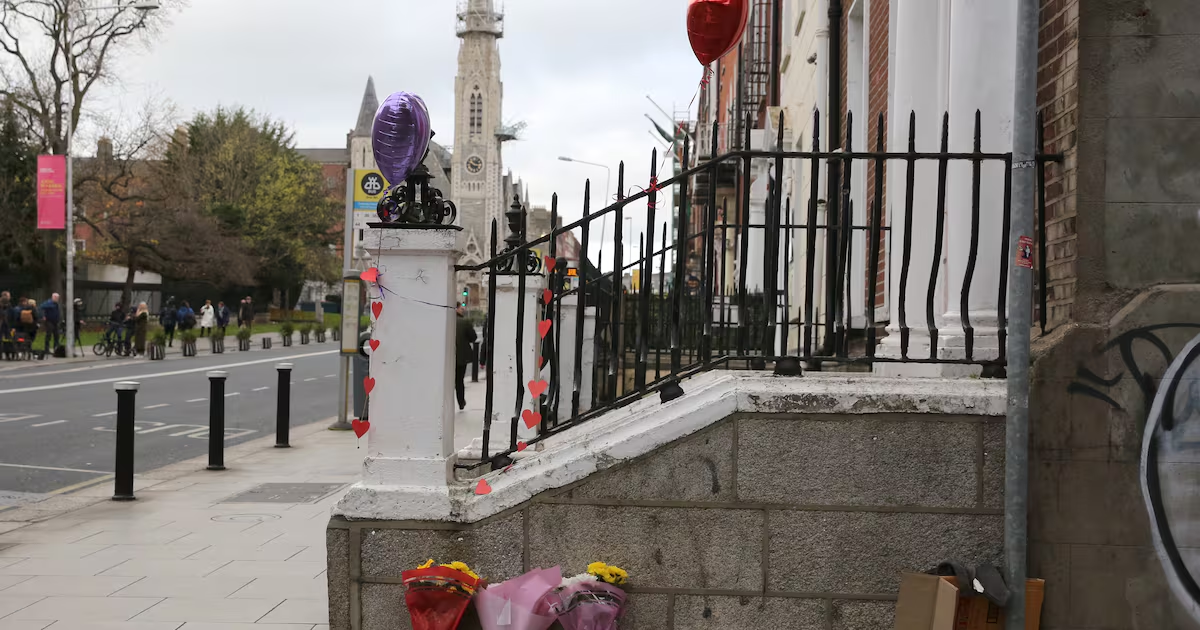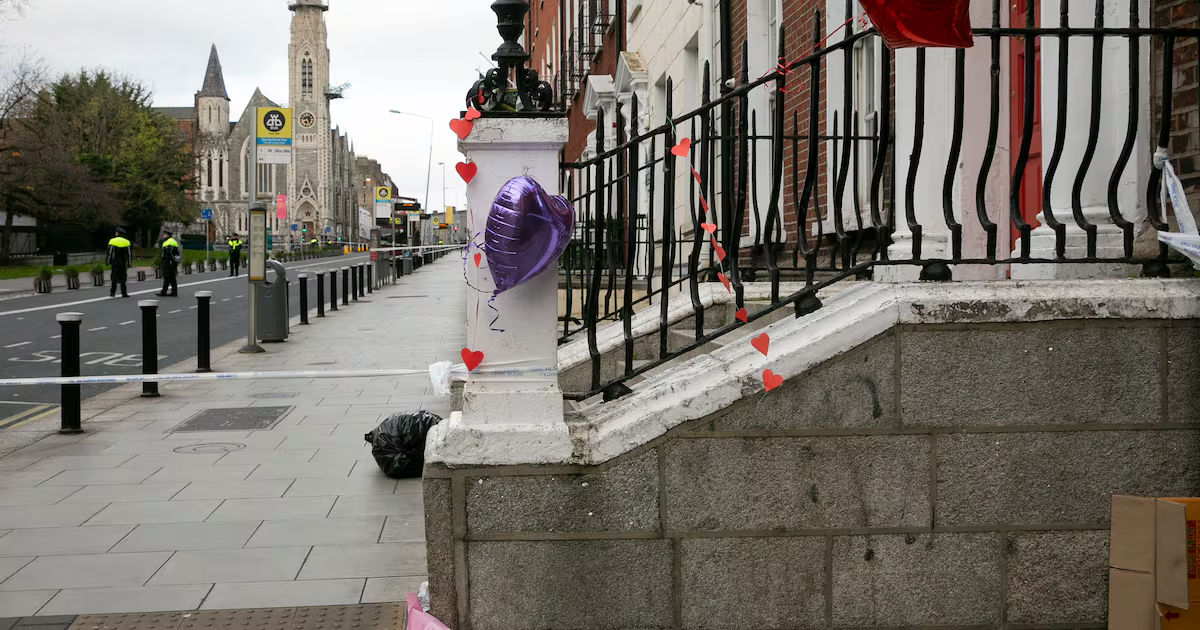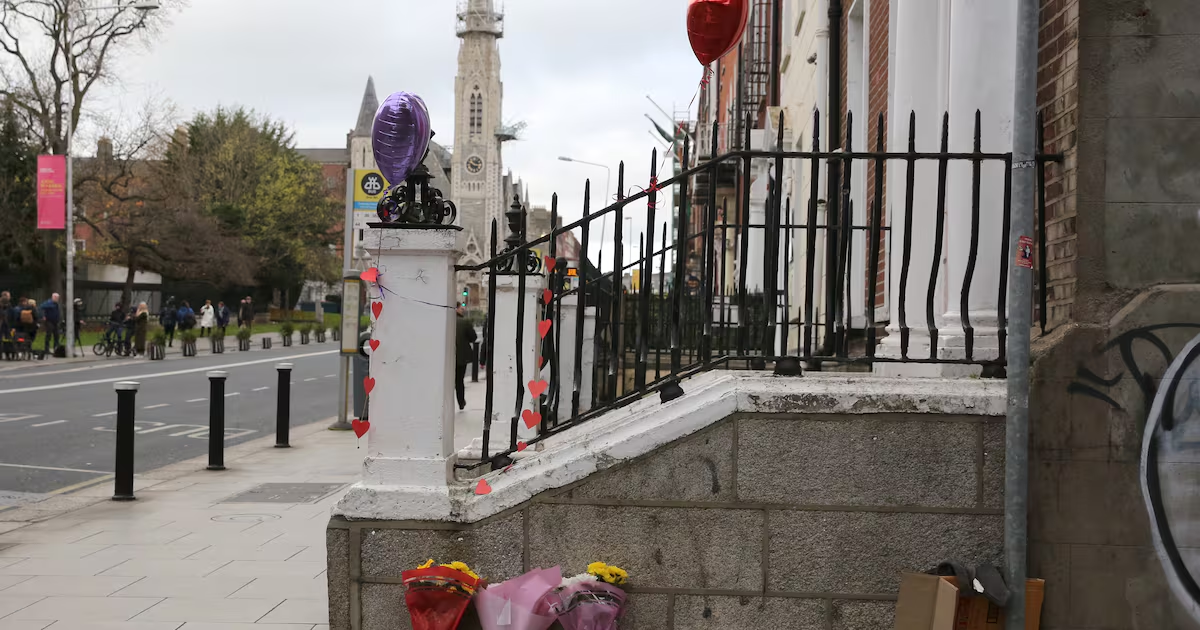
It was “absurd” to suggest Riad Bouchaker’s actions over 15 seconds at Parnell Square in Dublin, including moving towards small children with a knife, did not show an intention to kill, a jury has been told.Bouchaker’s assertion he did not intend to kill “does not help him”, his thanking God that no one died “means he knew himself that death was the likely outcome of what he did”, said prosecution counsel Karl Finnegan.He was closing the case for the prosecution in the trial of Bouchaker on charges arising from the incident at Parnell Square East on November 23rd, 2023. Defence counsel, in his address, said a five-year-old girl suffered severe injuries but there was no evidence that Bouchaker positively intended to kill other children.If Bouchaker had intended to kill other children, he would have done so when he had the chance, counsel said. His actions were “senseless” but did not establish the necessary intent to support the attempted murder charges against him.There was no doubt that whatever “toxic mix of banal frustration and inexplicable darkness” entered Bouchaker’s mind was not an excuse for his actions, counsel said. He told the jury there was a danger of their critical faculties “being simply overwhelmed by horror” and asked them to resist that.In deciding their verdict, he asked them not to treat Bouchaker as a “monster” but to treat him as they would like to see any impaired person in their own family treated if they were on trial.The jury represents “the best part of us”, counsel said. They are “the best answer to those who would rage and hate”, to those not asking for nuance or calm deliberation but who are “shrieking for vengeance and perhaps worse”. That has no place in these courts, he said. [ Child has ‘lifelong and life-limiting’ disability after Parnell Square stabbing, jury toldOpens in new window ]This case was “like a tutorial in dangers and limitations of eyewitness testimony”, he also said. He wanted to stress “not a single person came to court to tell lies”, each were “honest subjectively to a fault, Irish and non-Irish as they were”.The jury heard closing addresses on Monday on the 14th day of the trial at the Central Criminal Court of Riad Bouchaker (52), a native of Algeria of no fixed abode. He denies eight charges: attempting to murder three young children, two girls and a boy, on Parnell Square East on November 23rd 2023; assault causing harm to two other children and a passerby who intervened; assault causing serious harm to childcare worker Leanne Flynn; and producing a 36cm kitchen knife capable of inflicting serious injury.After two psychiatrists disagreed on his fitness to plead arising from an acquired brain injury, caused by a pre-existing cognitive impairment combined with injuries he suffered during interventions by members of the public at Parnell Square, Judge Tony Hunt ruled he was fit to stand trial with assistance of accommodations. At the outset of Monday’s hearing, defence counsel, who cannot be identified for legal reasons, said the defence was not calling evidence. The judge told the jury the law provides the defence does not have to prove anything and that everything has to be proved by the prosecution.In his address, Finnegan said the jury had heard upsetting evidence during the trial but had to set aside emotion when considering its verdict.There was “some comfort” from the upsetting evidence in that there “are clearly good people out there”, Irish, Brazilian, French, who will go to the assistance of people when they need it, he said. There was also extraordinary work of first responders but the jury’s task was, unfortunately, not to select any of these people for honours, it was to decide if the prosecution had proven its case beyond reasonable doubt.There is potential for alternative verdicts in certain circumstances but the prosecution says Bouchaker is guilty of the offences charged against him, counsel said.Bouchaker had cognitive issues when he committed the offences and had further cognitive issues afterwards but the jury should be satisfied he had received a fair trial.The verdict of not guilty by reason of insanity is not available, he said. What that means in law is that the person who did not know the nature of their act or did not know it was wrong or were unable to refrain from committing it.None of those scenarios applied to Bouchaker, said Finnegan. Let there be no doubt that the prosecution case is that Bouchaker intended to kill children, it could have been any one of the children in the line outside the school that day, he said.There was sufficient evidence to prove he intended to kill three children, two girls and a boy, he said. The jury could find that included his annoyance at a letter he received from social welfare, the fact he then obtained a weapon, it was “inherently lethal”, the distance between it and the children, the parts of the body he targeted, the number and severity of strikes and stabs, the targeting of schoolchildren as his victims, the waiting for a suitable time to attack them and the stabbing and throwing aside of Leanne Flynn when she tried to stop him.This attack boiled down to roughly 15 seconds and was “undoubtedly traumatic” for those who witnessed it. It was perfectly understandable the sequence of events each of them saw may have been different, each saw fragments but the core of the offence remained the same. In the chaotic circumstances, their ability to see exactly what happened was not the same but they all saw enough of his actions to come to sufficient conclusion as to his intent.Realising what was happening, Flynn had tried to stop Bouchaker, he stabbed her and then turned back to the children. Her evidence was he was “hell bent” on getting to them. There was “overwhelming evidence” Bouchaker caused Flynn serious harm intentionally, he said. She was injured as a brave intervener to save the children, not as the object of his intent to kill. She suffered a collapsed lung, collapsed diaphragm and her spleen had to be removed. The judge will begin charging the jury later on Monday.
‘Absurd’ to suggest Riad Bouchaker’s actions did not show intent to kill, jury told
Defence argues Bouchaker did not have ‘murderous’ intent and asks jury not to treat Parnell Square accused as a ‘monster’
1,026 words~5 min read