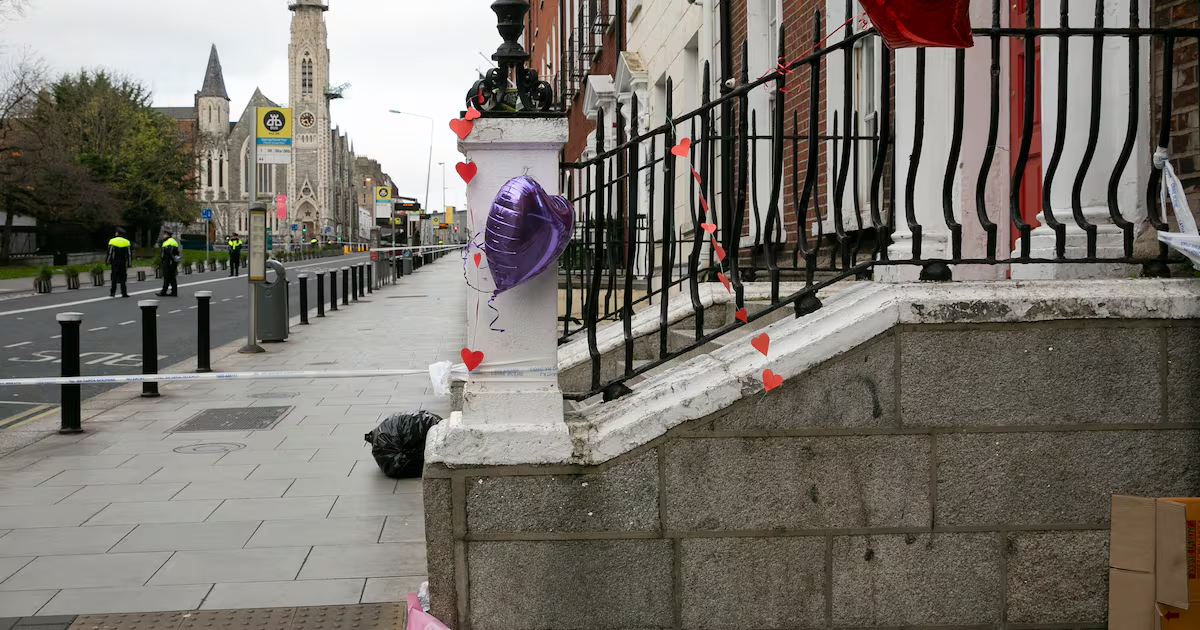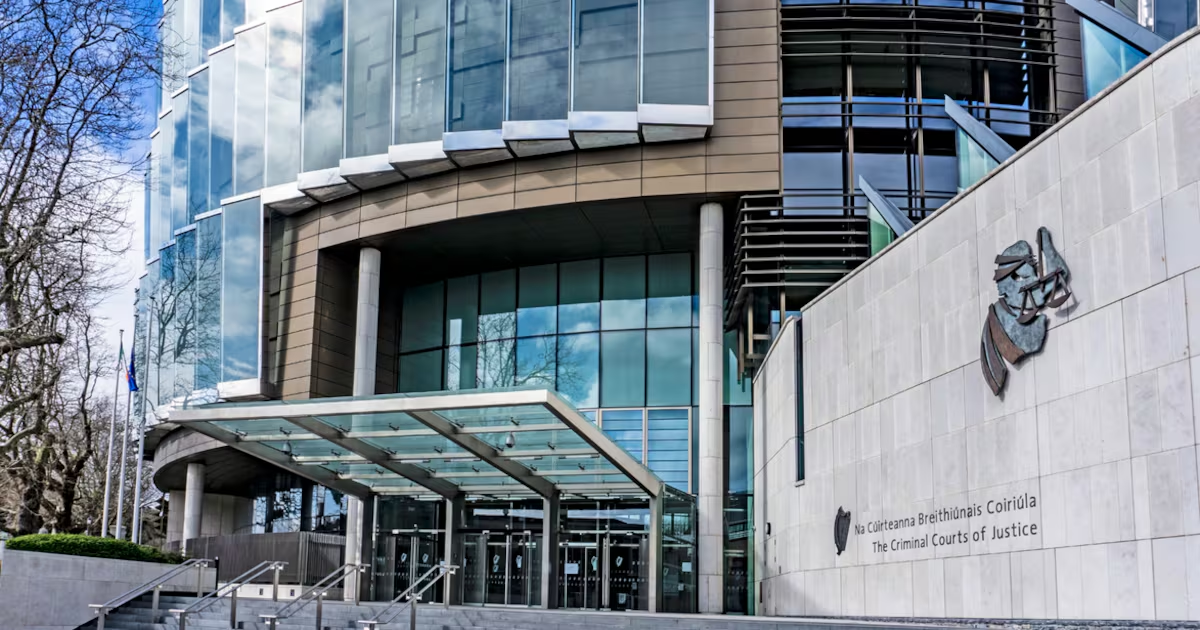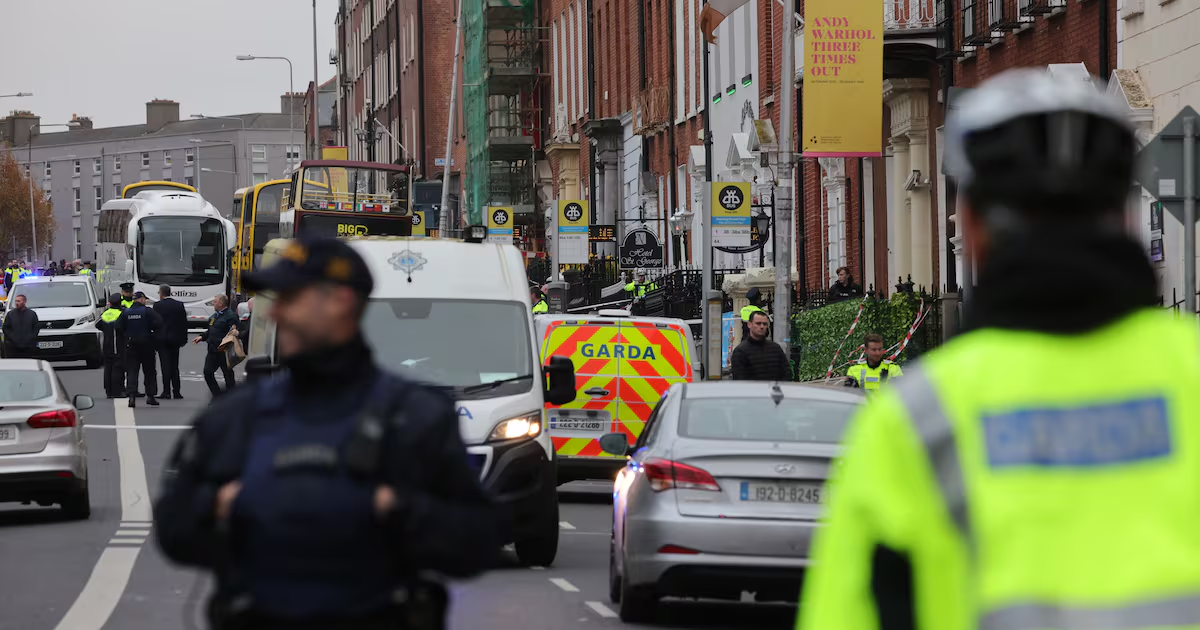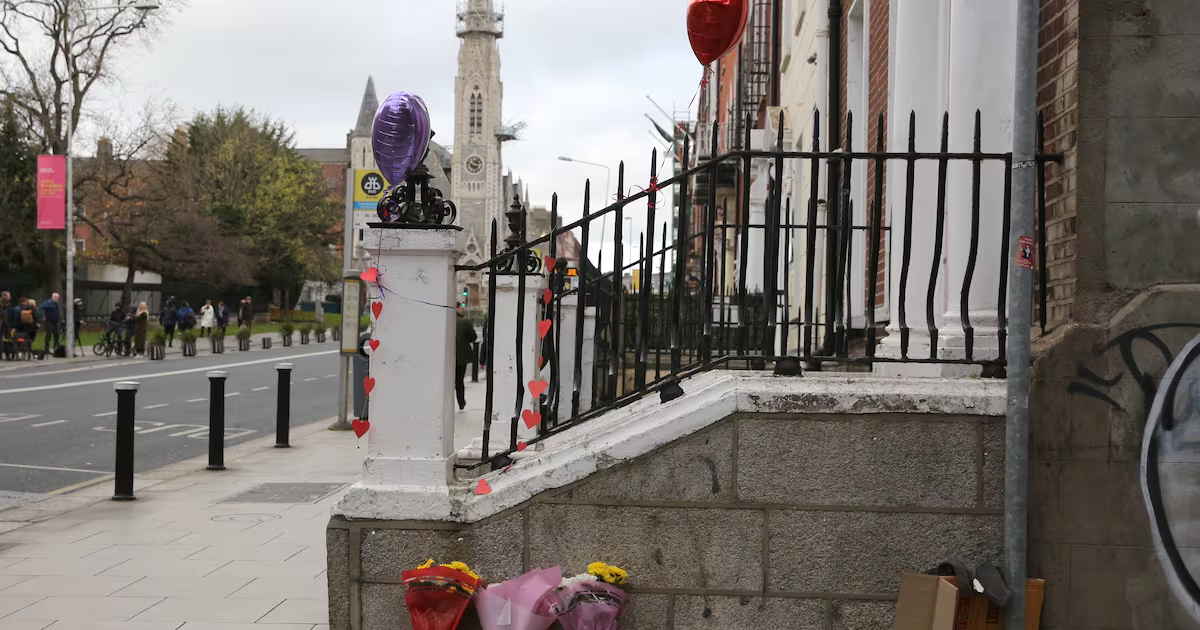
The jury in the trial of Riad Bouchaker has been told of alternative verdicts available to them in relation to charges that he attempted to murder three children during an incident in November 2023 on Dublin’s Parnell Square.Judge Tony Hunt has continued his charge to the nine men and three women on Tuesday, after which they will begin considering their verdict.He told them today the available verdicts in relation to a then five-year-old girl who suffered severe injuries are guilty of attempted murder, guilty of assault causing serious harm or, “a theoretical possibility”, not guilty on either charge. The verdicts available in relation to the two other attempted murder counts – concerning a then six-year-old girl and five-year-old boy who suffered non-penetrative lacerations – are guilty of attempted murder, guilty of assault causing harm or the other “theoretical possibility” of not guilty of either.Tuesday is the 15th day of the Central Criminal Court trial of Bouchaker (52), a native of Algeria of no fixed abode, over the incident at Parnell Square East on November 23rd, 2023. He denies eight charges: attempting to murder two girls and a boy; assault causing harm to two other children and a passerby who intervened; assault causing serious harm to childcare worker Leanne Flynn; and producing a 36cm kitchen knife capable of inflicting serious injury.During a pretrial hearing, two psychiatrists disagreed on Bouchaker’s fitness to plead arising from an acquired brain injury, caused by pre-existing cognitive impairment combined with injuries suffered during interventions by members of the public at Parnell Square.Hunt ruled he was fit to stand trial with assistance of an interpreter and an intermediary. A five-year-old girl who was stabbed in the heart during the attack was regarded as clinically dead at the scene and required emergency surgery to save her life. Now aged seven, she has severe brain and other injuries and will require 24-hour care for the rest of her life. After closing addresses by the prosecution and defence, the judge began his charge on Monday afternoon and resumed it on Tuesday morning.In his closing address, prosecuting counsel Karl Finnegan said it was “absurd” to suggest Bouchaker’s actions during the “roughly” 15-second incident did not show an intention to kill or cause harm. Defence counsel, who cannot be identified for legal reasons, argued the evidence did not establish “murderous” intent on the part of Bouchaker. His actions were “senseless” but did not support the attempted murder charges, counsel argued. The jury should not treat Bouchaker as a “monster” but in the way they would like to see any impaired person in their own family treated if they were on trial, he said.In his charge, the judge said the jurors must separately consider the evidence on each count and their decision on one count does not have “a domino effect” on the others. The onus of proof is beyond reasonable doubt, he said.For attempted murder, the prosecution must prove acts were sufficiently close to killing another person and would have resulted in death but for interruption or failure, he said. In physical terms, there must be an attempt to actually kill a person. Any reasonable doubt about that must be resolved in favour of the accused.The degree of injury is a factor but not in itself determinative. Minimal or no injury may suffice if the act causing that was close to completion, he said. They must analyse the acts in relation to each child and all the circumstances and must conclude the acts constituted an attempt to kill, not to do anything else, he said.If the prosecution prove the physical element, they must also prove an accused had intent to kill. Intention is proven from primary and secondary facts and from actions of an accused during the incident, he said. They must find the purpose was killing the children, he said. It was not enough to find an intention to cause serious injury or to frighten them. An intention to kill must be proven to coincide with a physical attempt to kill. The evidence from Bouchaker’s Garda interviews, in which he stated he did not have malign intent, must be considered, the judge said. He then outlined the alternative verdicts available in relation to the attempted murder counts regarding all three.The count of assault causing serious harm recklessly or intentionally arises principally concerning Flynn but is potentially there in relation to the seriously injured five-year-old girl, he said. A person is reckless where they recognise their conduct creates a substantial risk of bringing about serious harm and they go ahead in the face of that risk, he said.In relation to the charges of assault causing harm, he said that involves directly or indirectly causing injury or an impact to the body of another without consent or lawful excuse. Harm includes harm to the body or mind and there was a “very low bar” to prove it. In relation to the knife charge, he said the jury must decide if the knife was produced in an intimidating manner and was capable of inflicting serious injury.The judge then began going through evidence. He said CCTV footage indicated the time frame for the incident was about 15 seconds from Bouchaker moving towards the children and when the knife was seen on the ground.He said eyewitnesses had done their best and the CCTV was a “useful yardstick” against which they could measure eyewitness evidence. In his view, the closest eyewitness was Flynn, who said she was fixing a child’s coat when Bouchaker approached the children and began stabbing and “jabbing ferociously”, he said. Everyone else “was going about their business on an ordinary day at Parnell Square”.Nobody was expecting to see “such shocking and horrendous things” and that was also relevant to what people remember and how they remember it, the judge said.
Jury in Riad Bouchaker trial told of alternative verdicts on attempted murder charges
Accused man (52) denies attempted murder of three children during Parnell Square incident in November 2023
967 words~4 min read