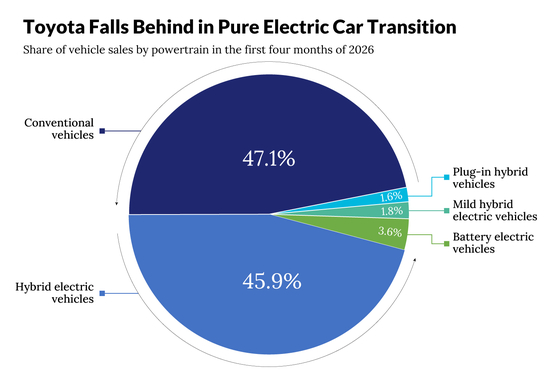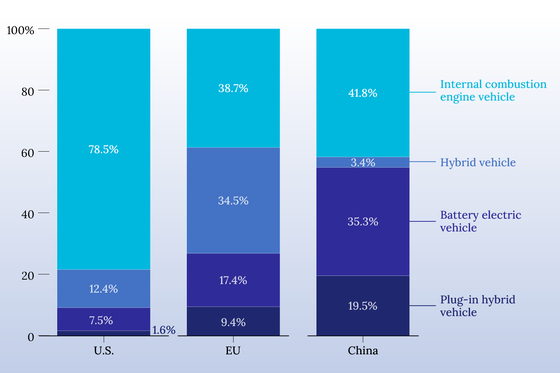
1. Honda Motor Co. Ltd. and Sony Group Corp. canceled their Afeela EVs in late March 2026, signaling a stall in the auto industry's EV shift [para. 1].2. Honda blamed changes in the business environment and retreated from electrification targets, following GM, Ford, Stellantis, and Porsche, who slowed EV transitions since October 2025, incurring major losses [para. 2].3. Analysts cite weak EV demand, slow charging infrastructure growth, and Chinese undercutting of Western rivals as key reasons [para. 3].4. Volkswagen CEO Oliver Blume stated late last year that combustion engine cars could persist 10-15 more years, with VW producing ICE, hybrids, and EVs concurrently [para. 4].5. This trend reduces certainty of phasing out fossil fuel vehicles orderly [para. 5].6. Chinese automakers like SAIC retained ICE and hybrids; in 2024, SAIC shared hybrid tech with VW and GM, inverting traditional tech flow from West to China [para. 6].7. Policy shifts, not just tech, drive the change; in major markets, governments cut EV support, boosting hybrids (HEVs) from transitional to primary option [para. 7].8. HEV rise advantages Chinese makers over Western firms that focused on full EVs [para. 8].9. China's auto trade-in program now offers price-based rebates: 12% up to 20,000 yuan ($2,890) for NEVs, 10% up to 15,000 yuan for small-engine ICE cars, weakening NEV demand [para. 10][para. 11].10. CPCA estimates average subsidies dropped 20%, hitting low-end models [para. 12].11. NEVs now face 5% purchase tax (capped 15,000 yuan), ending prior exemption; execs pushed for this parity, as NEVs dodge fuel-based taxes [para. 13][para. 14].12. Suggestions include weight-based consumption tax and road fees factoring weight/fuel efficiency for EVs to balance costs [para. 15][para. 16][para. 17].13. EU softened 2035 fossil fuel ban to 90% zero-emission new cars, due to battery/supply chain gaps and member state pushback; this reversed aggressive EV plans by VW, Mercedes, BMW [para. 18][para. 19].14. In U.S., President Donald Trump (inaugurated Jan 20, 2025, after 2024 win over Harris) revoked Biden's 2030 half-EV sales order in Jan 2025 and axed up to $7,500 EV tax credits via Republican package eight months later [para. 20][election_info].15. HEVs evolve with better efficiency/emissions, no longer just transitional [para. 22].16. Europe: HEVs hit 38.7% sales in first two months 2026 (up from 34.5% in 2025) [para. 23].17. China: HEVs ~3% domestic sales 2025 but 41% NEV export value early 2026 (up from 31%) [para. 24].18. Chinese firms like Geely (new hybrid April 2026), Changan (March), Great Wall (Jan) invest in HEVs for efficiency standards (3.3L/100km by 2030) [para. 25][para. 26][para. 27].19. Japan (Toyota) leads with power split tech, but Chinese emphasize EV motor integration, dual motors, real-time power adjustment [para. 28][para. 29][para. 30][para. 31].20. Experts urge hybrids amid charging/range issues [para. 32].(Word count: 498)AI generated, for reference only
In Depth: Hybrid Revival Gives China’s Carmakers a Leg Up on Western Rivals
As policy backpedaling around the world has slowed the transition to pure electric vehicles, Chinese automakers look well-positioned to capitalize on the renewed popularity of hybrids, thanks in part to their refusal to abandon the internal combustion engine
453 words~2 min read