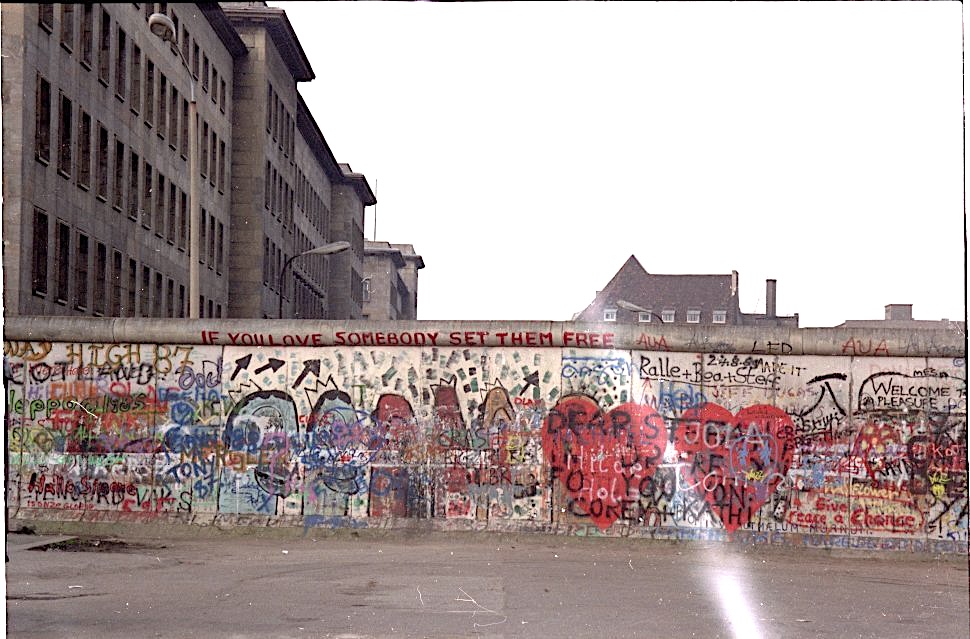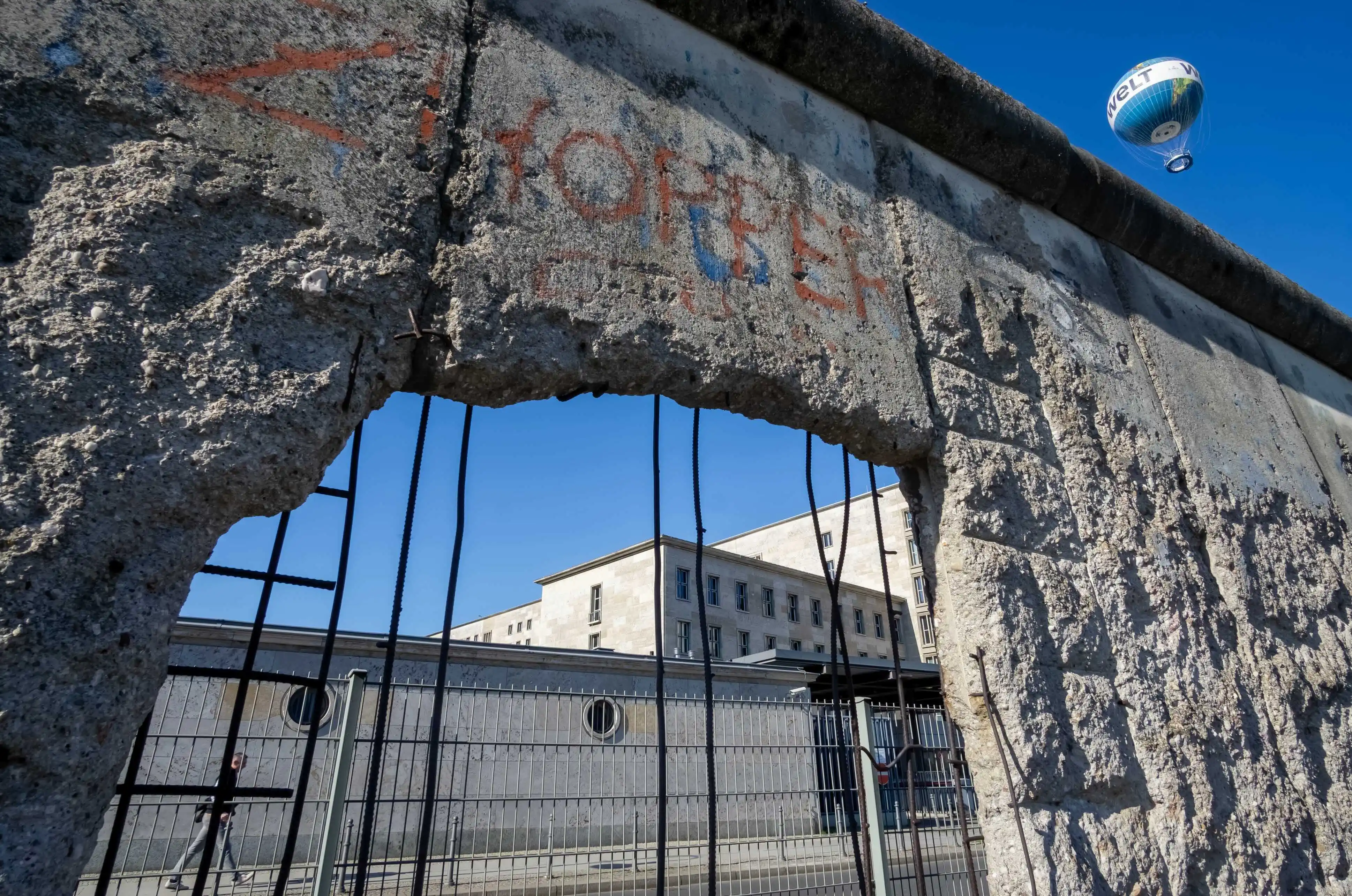
Each time I return to Berlin – that wonderful, awful city where I whiled away the best days of my misspent youth – I take a walk along the cobbled path that marks the route of the Berlin Wall. Half a lifetime since it came tumbling down, there isn’t much left to see. A few stretches have been preserved as memorials, but it’s mainly an absence not a presence – a ghostly gap between the backs of buildings, a fissure between past and present, between the hard truths of the last century and the uneasy ambiguities of today.
Why do I persist with this melancholy Wanderung, year after year? Because a walk along the Mauerweg (as Berliners call that zigzag footpath) is the best way to take the temperature of this Faustian metropolis. When I first walked it, 35 years ago, the differences between East and West were vast. The West was brash and glitzy, the East was dull and funereal – the apotheoses of capitalism and communism, side by side. Now these twin cities are so similar, you’re often unsure which side you’re on (the old border meanders so much that it can be tricky to get your bearings).
The West was brash and glitzy, the East dull and funereal – apotheoses of capitalism and communism
Built in 1961, to halt the mass exodus of Germans from East to West, the Berlin Wall – or ‘anti-fascist protection barrier,’ as the East German authorities liked to call it – ran right around West Berlin, not only separating it from East Berlin but also cutting it off from the East German countryside that surrounded it (the West German Bundesrepublik was more than 100 miles away). The entire wall was 96 miles long, but the outer suburban section is of less interest and more difficult to navigate. It’s the inner-city section, about ten miles long, which I walk along, year after year.