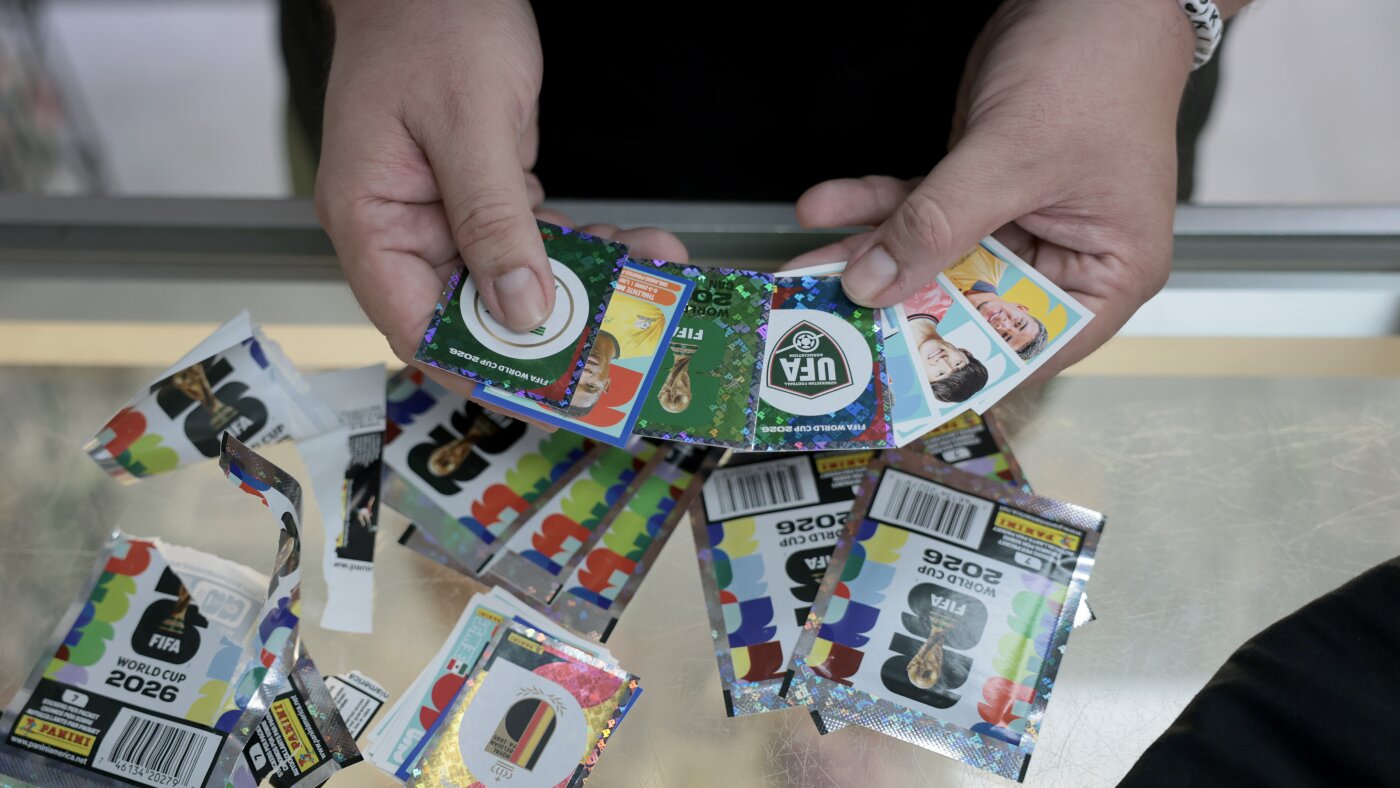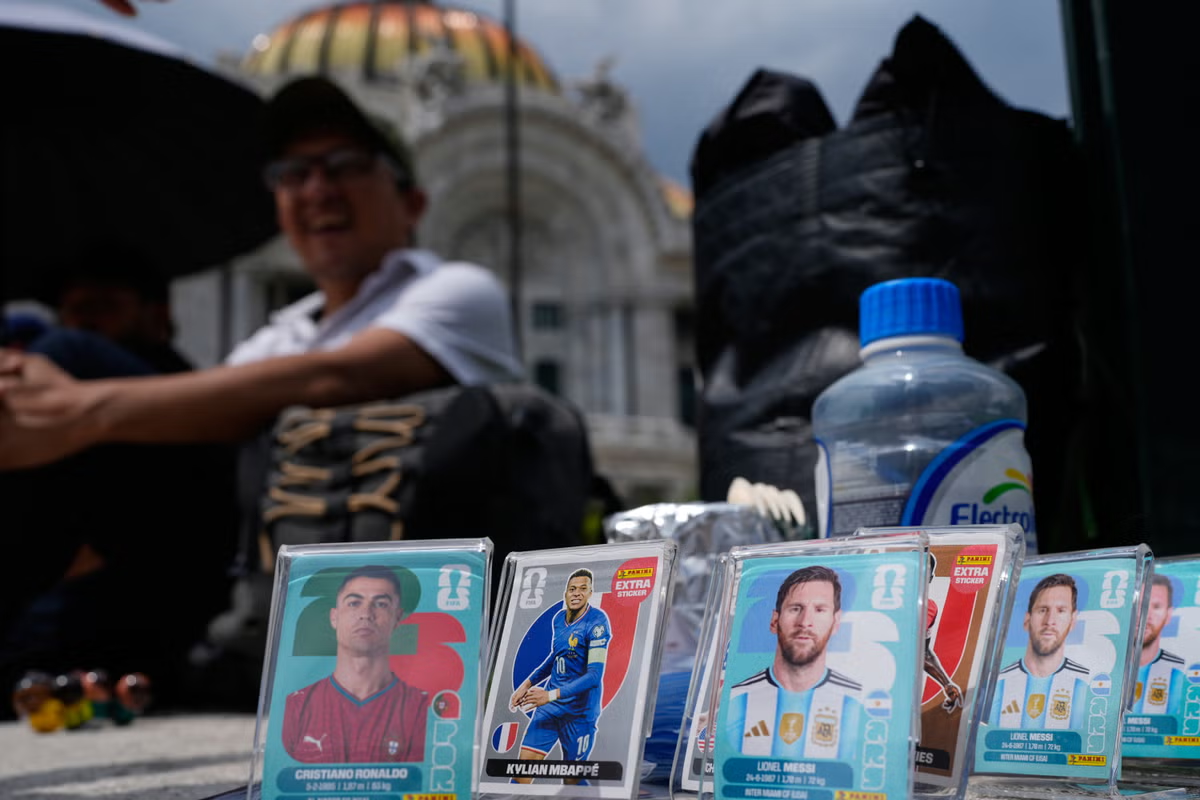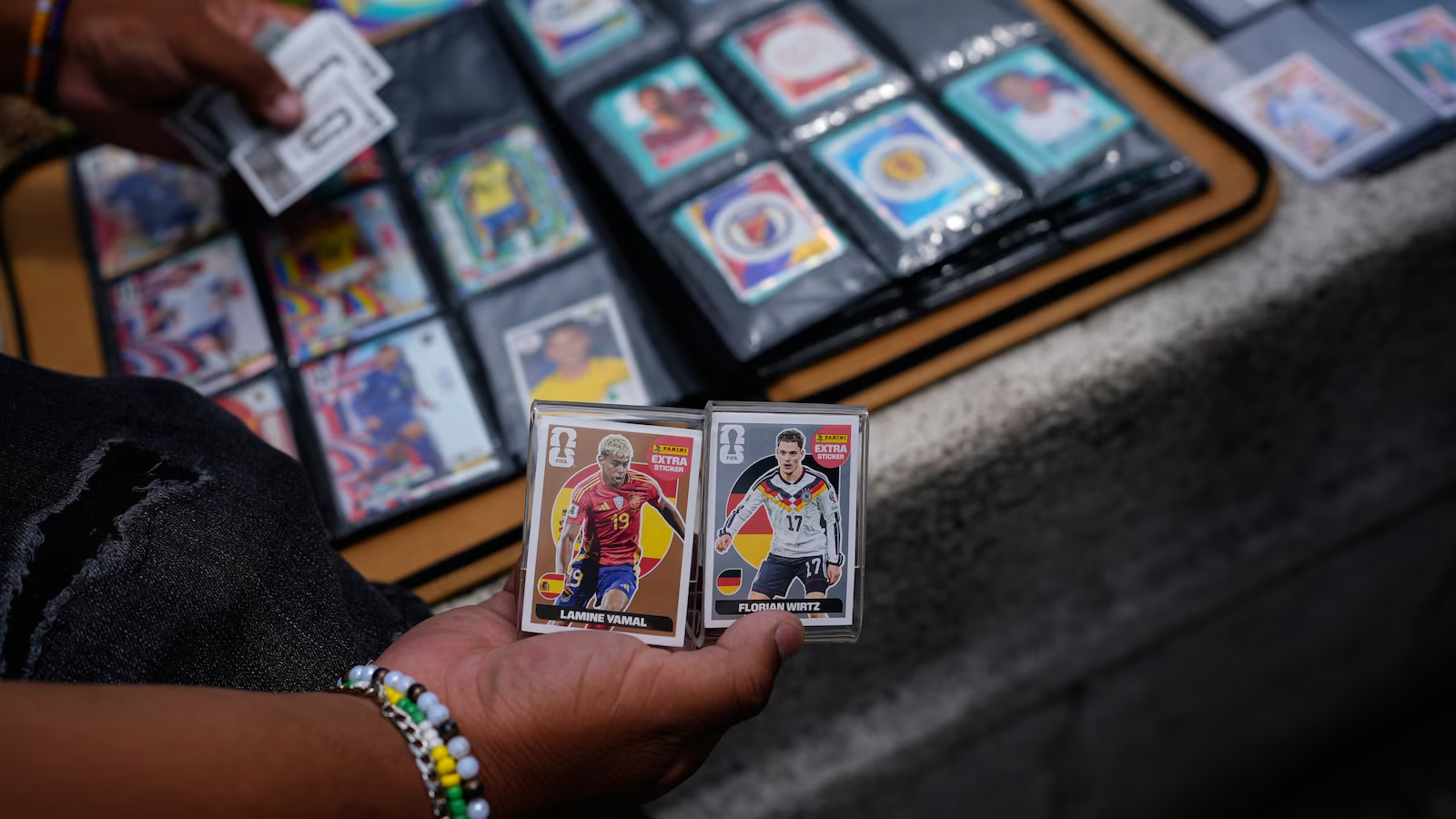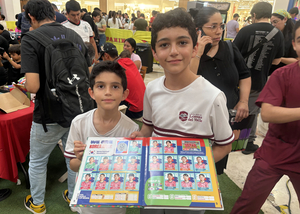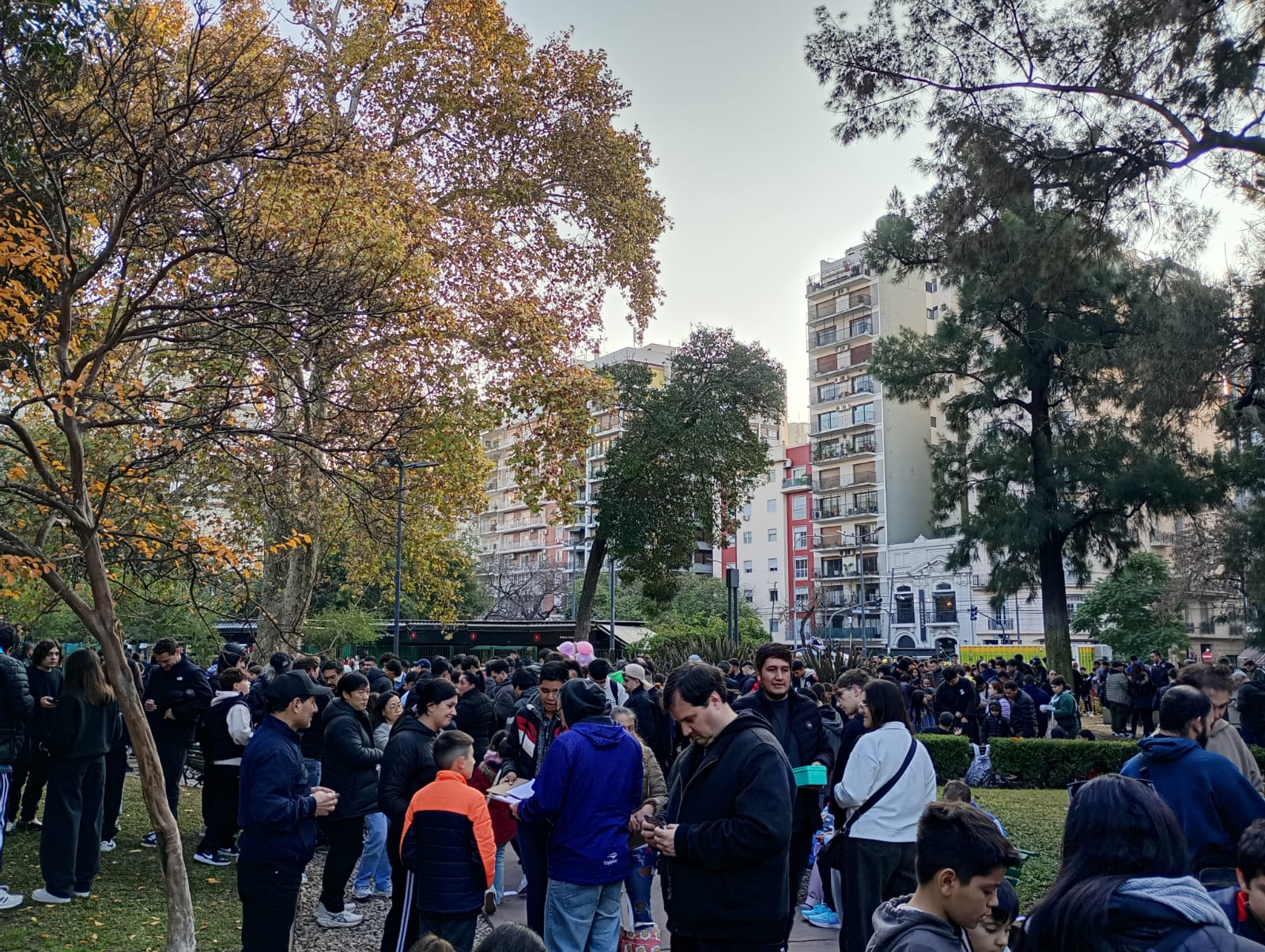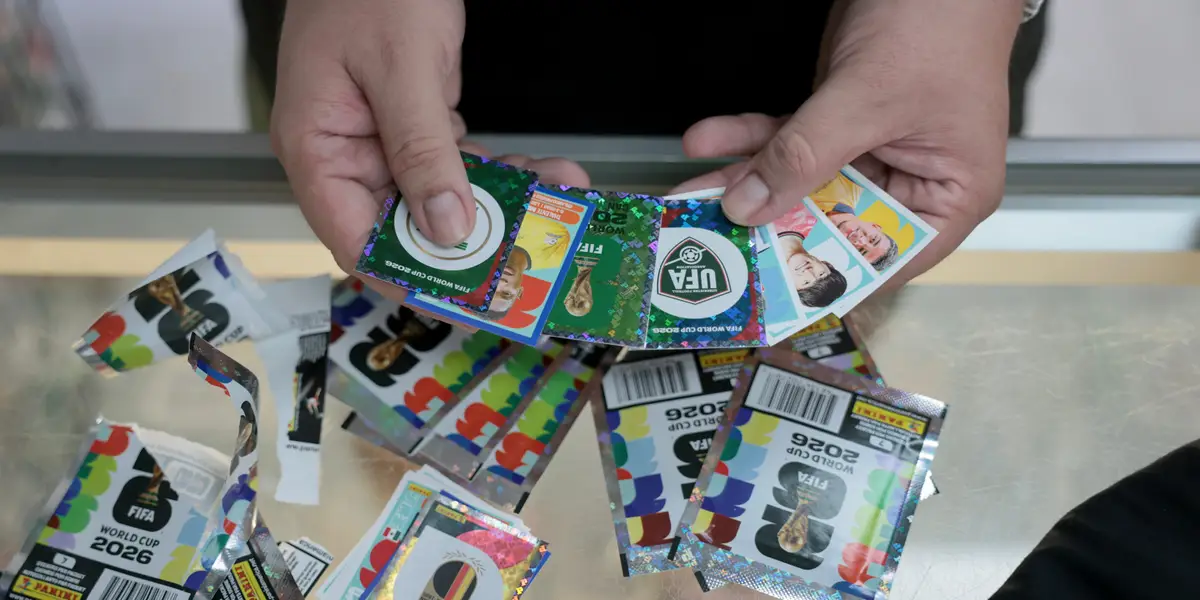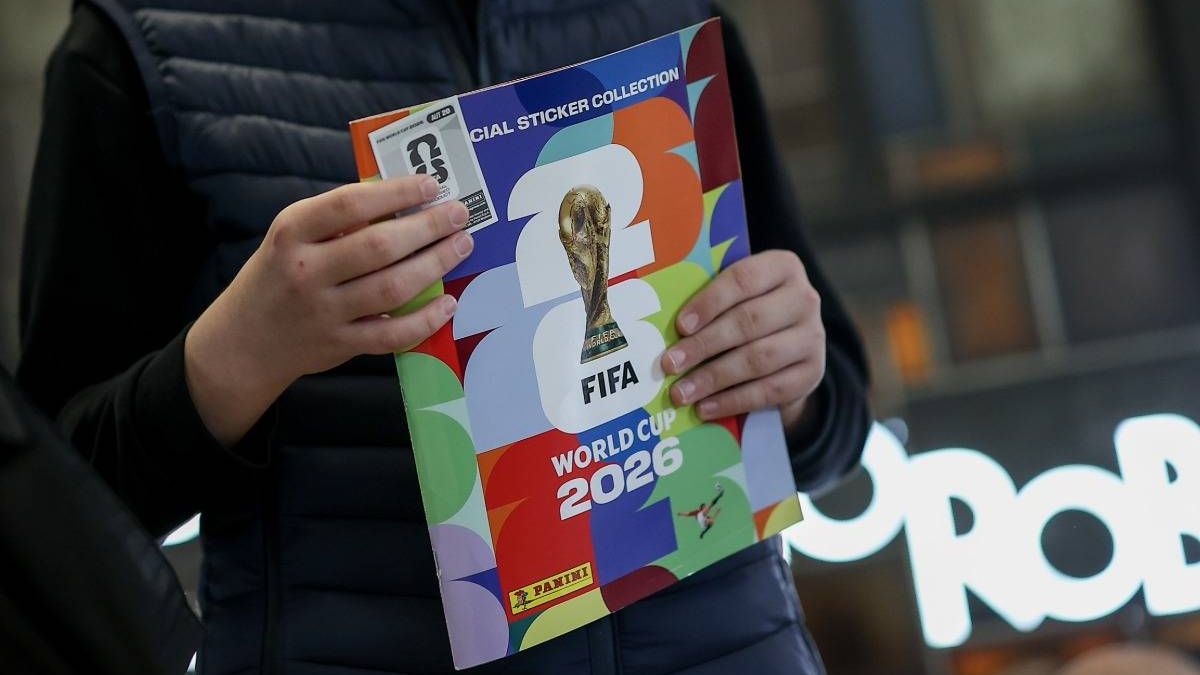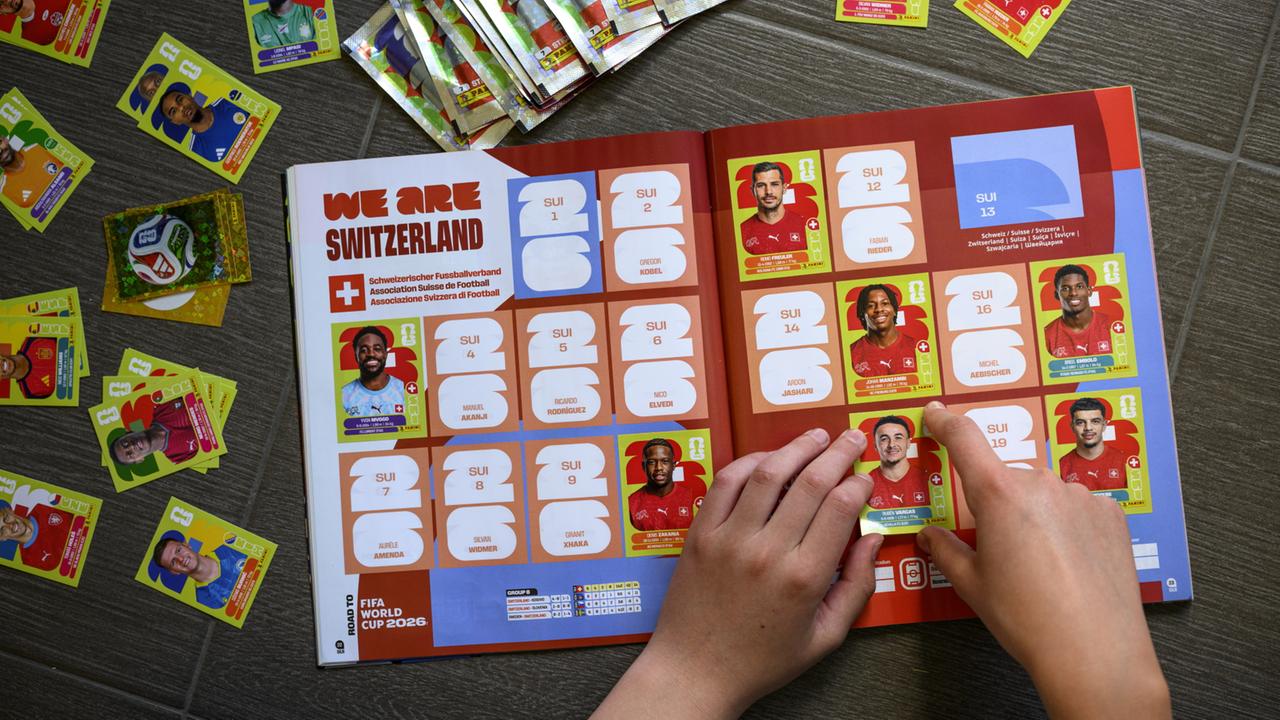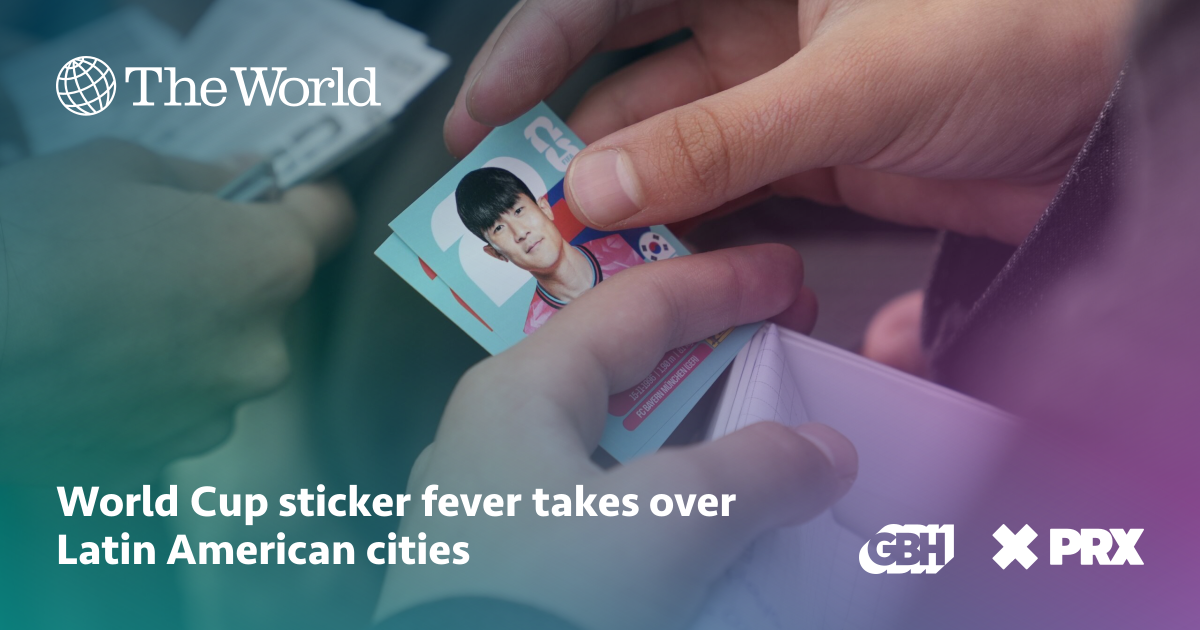
Public radio’s longest-running daily global news program.AboutContactDonateMeet the TeamPrivacyTerms of use©2026 The World from PRXPRX is a 501(c)(3) organization recognized by the IRS: #263347402.World Cup sticker fever takes over Latin American citiesAs the world’s biggest soccer tournament begins, World Cup fans are rushing to complete their Panini sticker albums and taking part in a decades-old tradition that has survived the digital era.Hundreds of fans gather at a shopping mall in Bogota to trade duplicate wolrd cup stickers. Cooperation is essential to completing the sticker album. Jaime Silva started to collect World Cup sticker albums in 1982, when he was 11-years-old. Now at 55, he’s filling up his 12th sticker album and is almost done with it, just days before the 2026 FIFA World Cup begins. Silva, a historian in Colombia, collects all sorts of World Cup memorabilia, such as the official balls and posters from each edition of the tournament. But he says that the sticker album, printed by the Italian company Panini every four years, holds a special place in his heart.“This booklet allows you to see all of the players in the world cup — in one place,” Silva explained. “It shows you information about each player, like when they were born, how tall they are, or what club they play for.”Panini has been partnering with FIFA since the 1970 World Cup, printing the official sticker albums for every edition of the tournament. Manuel Rueda/The WorldThe Panini stickers feature the photos of almost all the players who will be in the World Cup. They come in glossy packets that contain seven palm-sized stickers and cost $1.25 to $2, depending on the country you’re in. To complete the sticker album, you need to get 980 different stickers.For many soccer fans around the world, completing the comprehensive sticker book is an obsession that tests their patience — and their wallets — in the days leading up to the tournament.The sticker album for the 2026 World Cup has 100 pages. There is a two-page spread for every team participating in the tournament. Manuel Rueda/The WorldIn Chile, more than 8,000 fans gathered in a stadium last week to trade duplicate stickers.And in Argentina, there is currently a shortage of stickers that has created a black market, with glossy Panini packets selling for two to three times their regular price — echoing a 2022 sticker crisis that led to government intervention. Like baseball trading cards or jigsaw puzzles, the Panini album is an old-fashioned hobby that has survived the digital era. And in many countries, it has become a quintessential part of the World Cup experience.Hundreds of fans gather at a shopping mall in Bogotá to trade duplicate World Cup stickers. Cooperation is essential to completing the sticker album. Manuel Rueda/The World“People like it because it’s a concrete memento, something they can hold on to,” Silva said.But filling the album requires persistence — and cooperation. The more stickers you have in your album, the more likely you are to get duplicates when you open a new packet. So, trading duplicates is the only way most people can complete the album without spending a small fortune.“Your chances of getting a new sticker get exponentially smaller as you reach the end,” Silva said. A fan displays an unusual Lionel Messi gold sticker, which can sell for hundreds of dollars.Manuel Rueda/The WorldIn fact, once you have 800 stickers in the album (out of the total of 980), only 1 out of 5 stickers you draw from each packet is likely to be new to you. Once you are missing one sticker in the album, your chances of getting it drop to 1 in 980.Those kinds of odds inevitably push collectors towards cooperation and have turned filling Panini albums into a social phenomenon.Maria Claudia Cruz, a collector in Bogota, regularly goes to a shopping mall in the north of the city, where dozens of people show up every night at the parking lot to exchange their duplicates.Every night, dozens of fans meet outside the Unicentro shopping mall in Bogotá to trade World Cup stickers. Manuel Rueda/The World“I don’t follow football that much,” she said. “But I love helping my son fill out the album — you get to know people and get the kids away from technology.”Cruz’s 11-year-old son Matias says he’s a big fan of Colombia’s national team. He added that the sticker album has helped him develop social skills and learn about new places, like Jordan or Curaçao.“The last World Cup we were trying to fill the album, but we couldn’t,” he said. “That’s why I’m trying to trade a lot this time.”Matias said that it takes time to get the final stickers, but with so many people at the mall, trading for the stickers he needs is doable.“If you have a good player like [Kylian] Mbappe or [Lionel] Messi, you can even trade it for more cards,” he said.Some collectors also go to street vendors, who sell individual stickers that have already been taken out of their packets.“It’s cheaper to do it like this when you’re in the final stretch,” said Andres Valencia, who is filling out the 2026 album with his two kids.Street vendors sell individual stickers that have already been removed from their packets. Some fans buy these individual stickers as their albums reach their final stages. Manuel Rueda/The WorldJaime Silva, the historian, says that to fill his album, he bought two boxes containing 1,456 stickers, which cost him about $270.But 630 of those stickers were duplicates, so he could complete only about 85% of the album with the two boxes he bought.To fill in the rest of the album, he has resorted to trading his duplicates — in parks and shopping malls.“It’s part of the fun,” he said. “It’s better to do it like this than by relying only on your bank account.”
World Cup sticker fever takes over Latin American cities - The World from PRX
As the world’s biggest soccer tournament begins, World Cup fans are rushing to complete their Panini sticker albums and taking part in a decades-old tradition that has survived the digital era.
972 words~4 min read