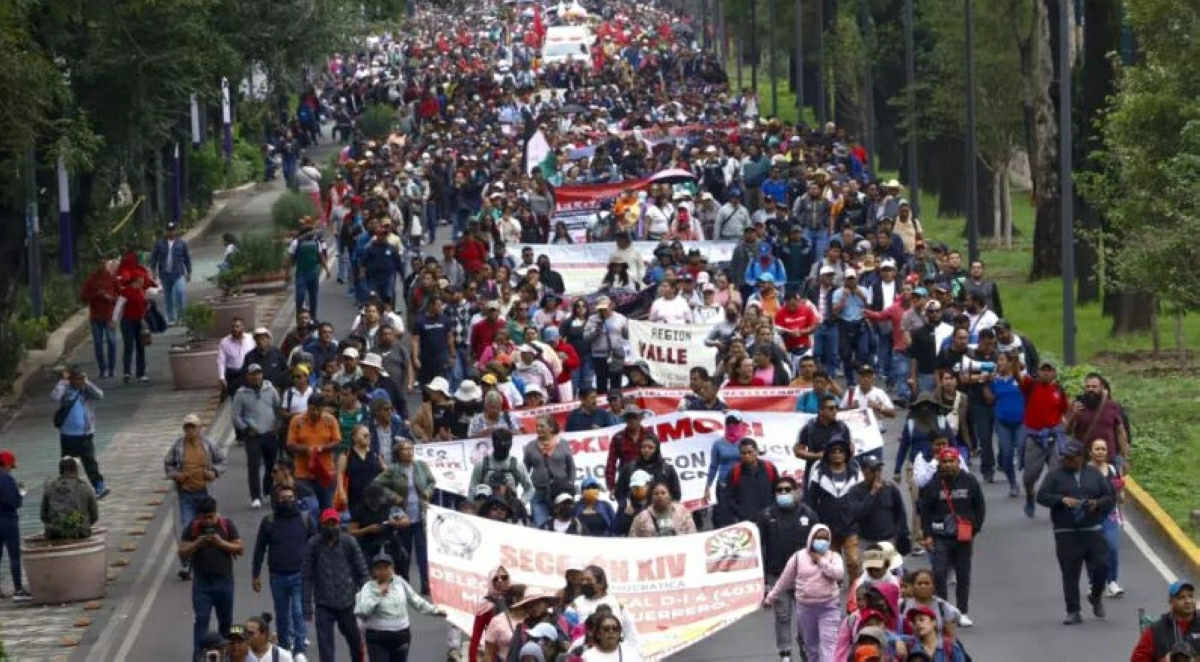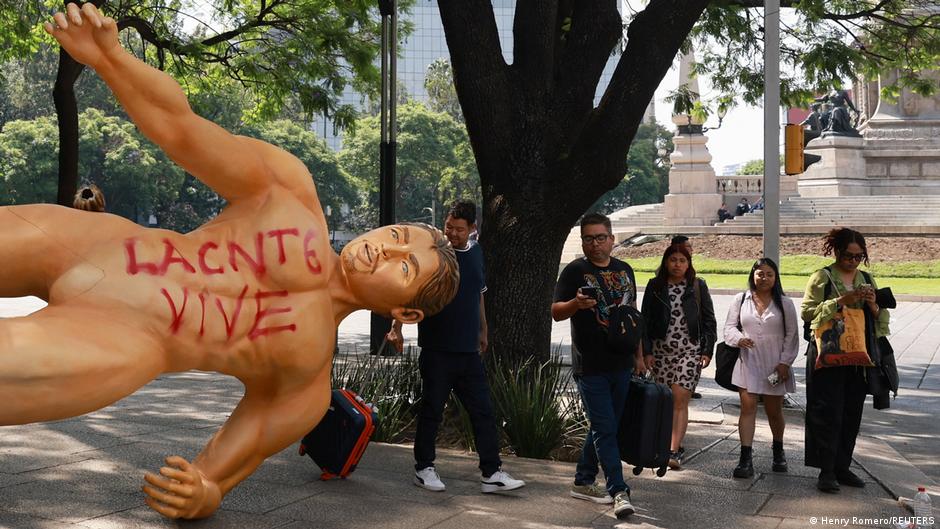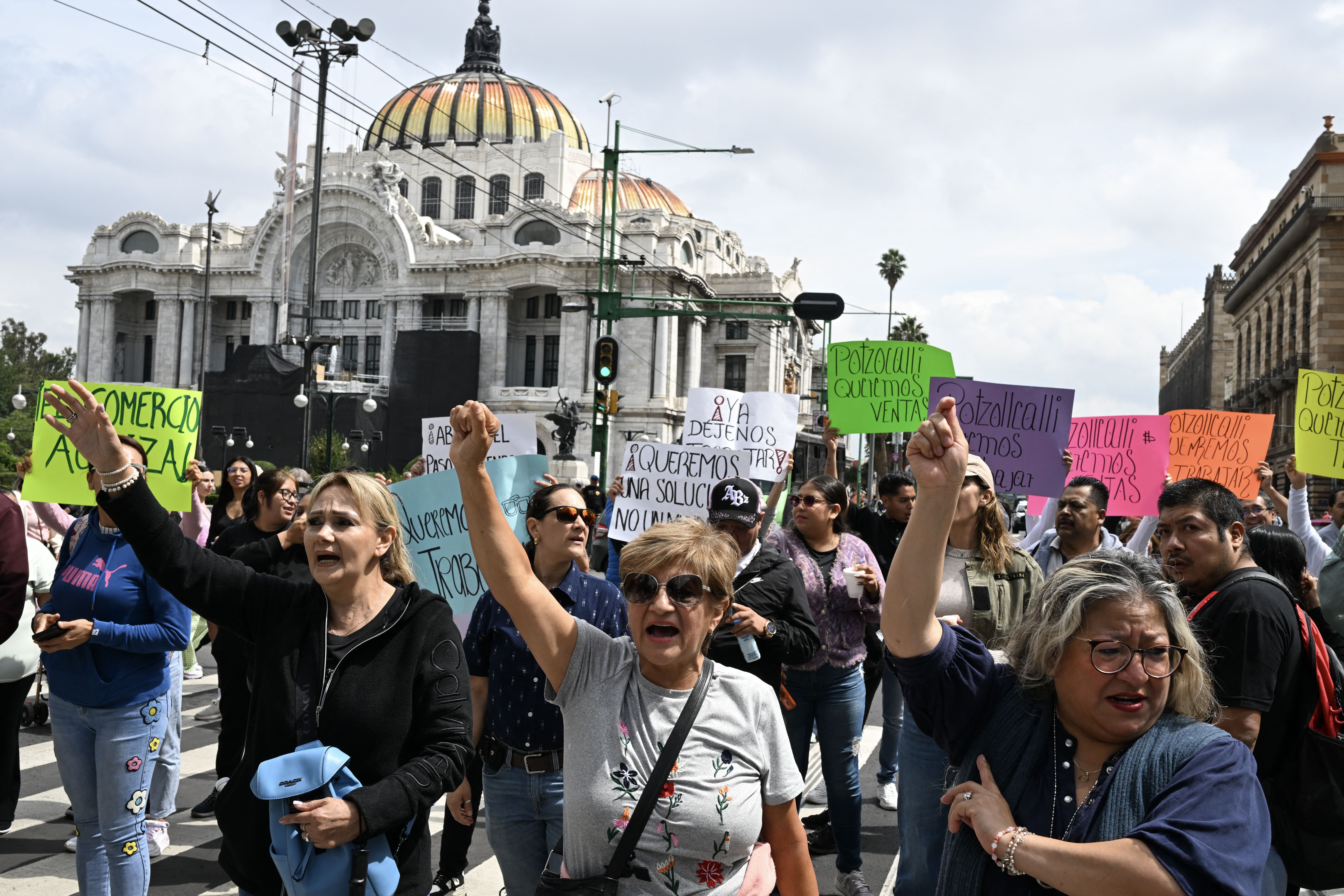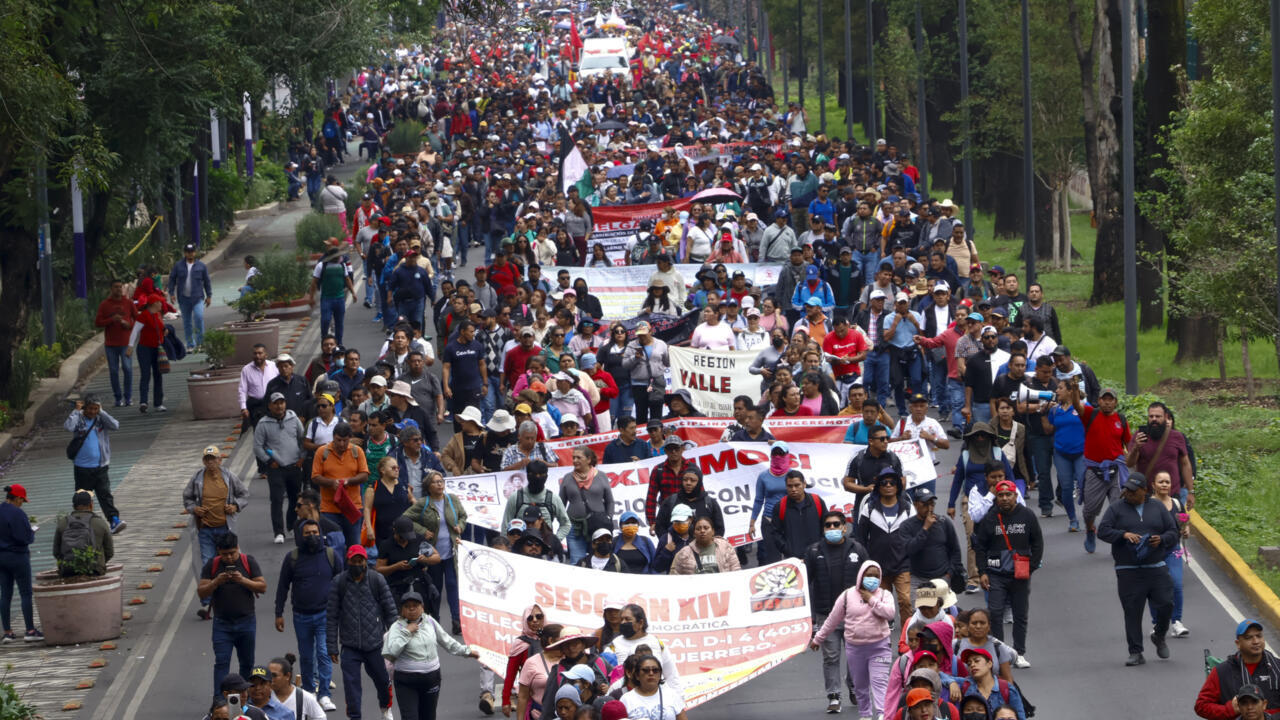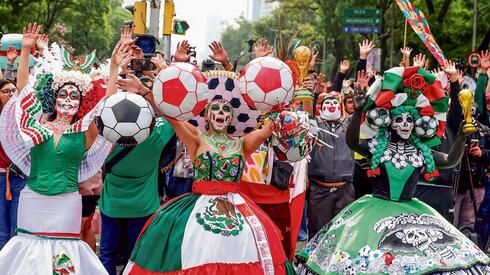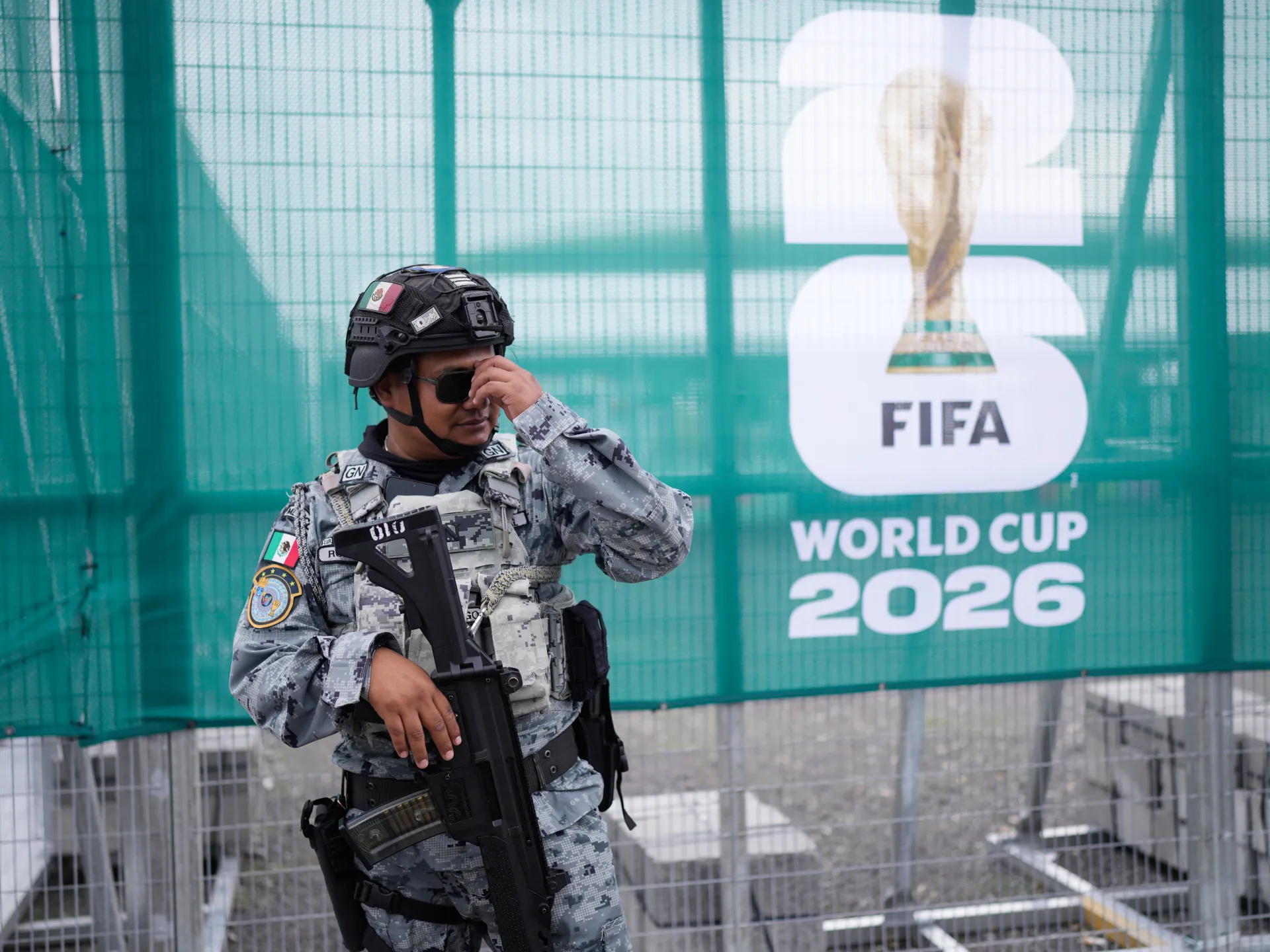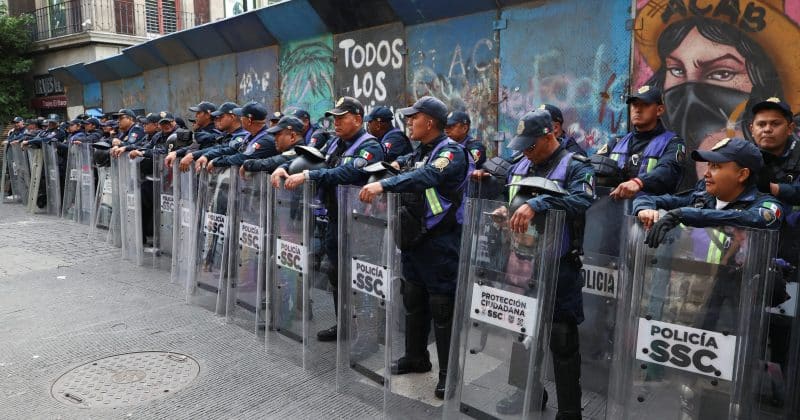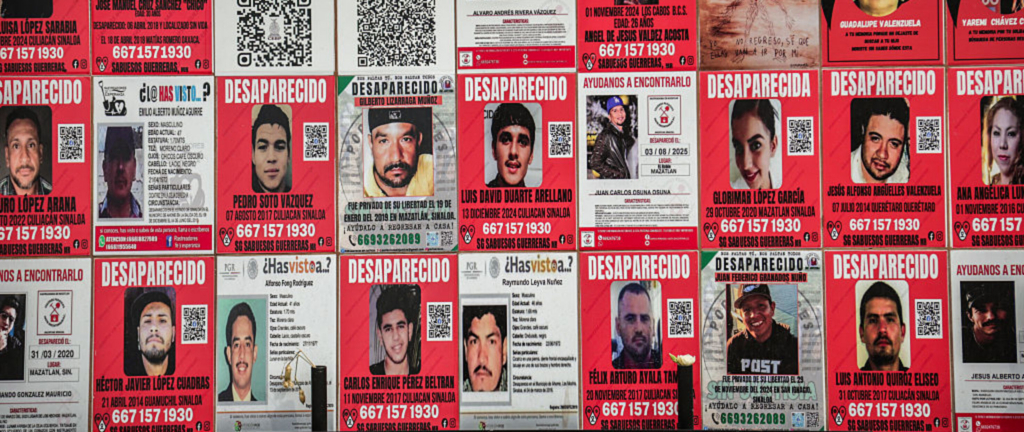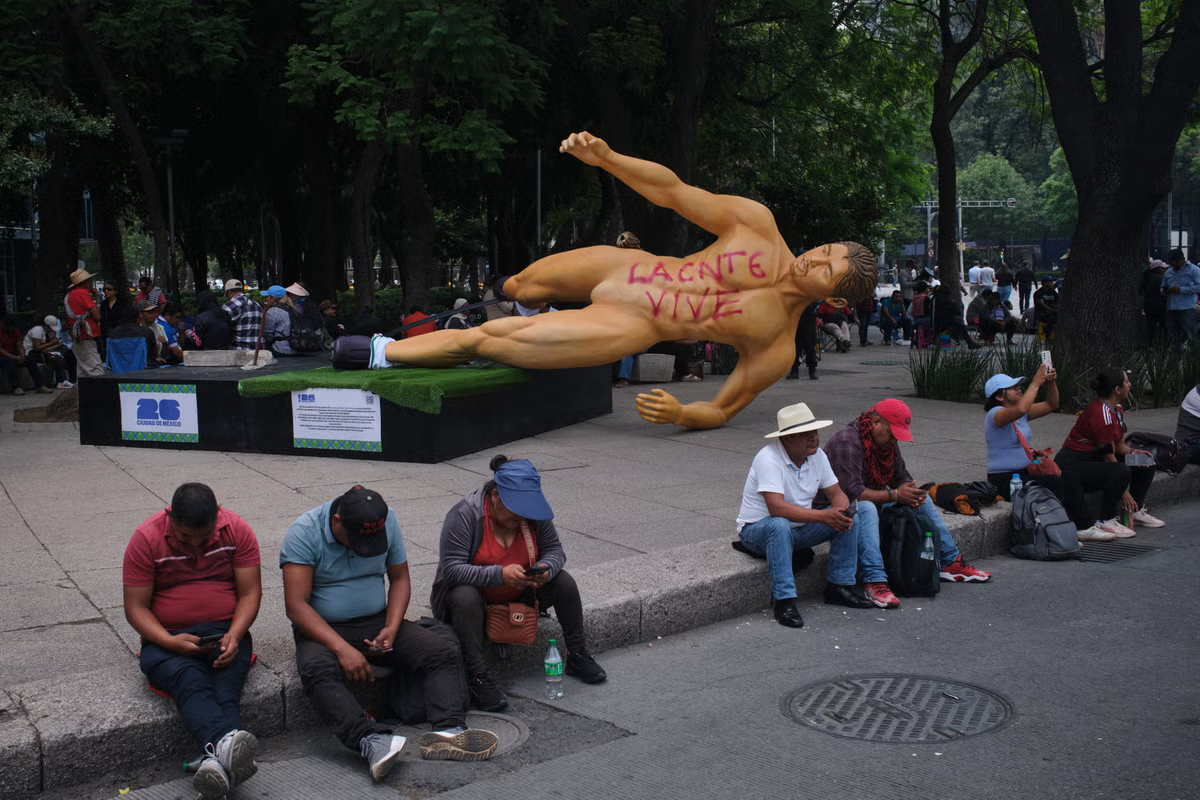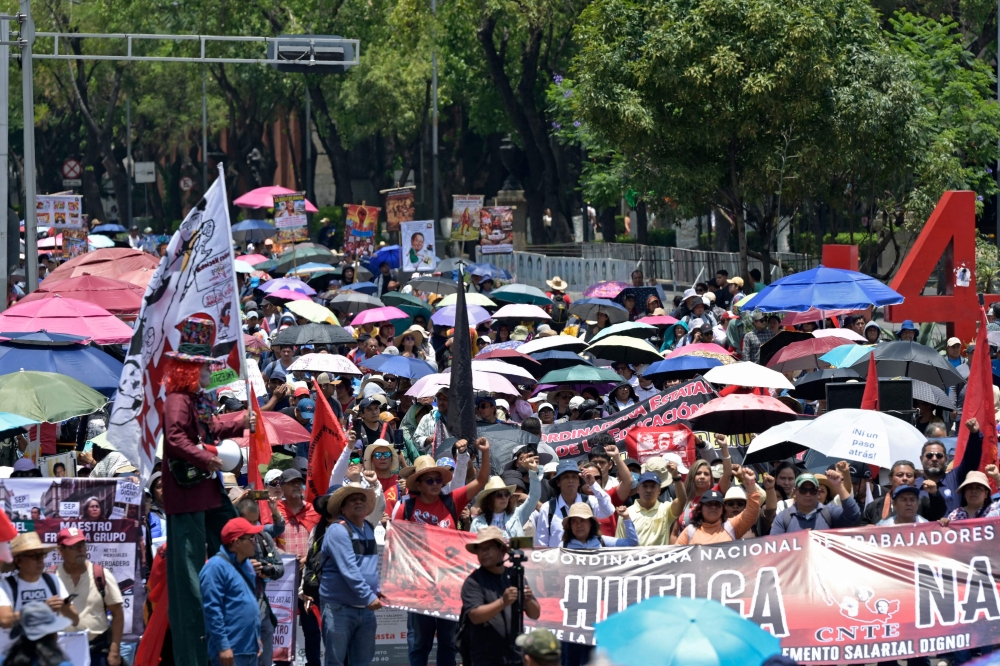
Public radio’s longest-running daily global news program.AboutContactDonateMeet the TeamPrivacyTerms of use©2026 The World from PRXPRX is a 501(c)(3) organization recognized by the IRS: #263347402.As Mexico City gets ready for the World Cup’s opening match, protesters grab the spotlightTeachers, families of the disappeared, anti-FIFA activists and other groups are using the run-up to the opening World Cup match to press long-standing demands. ProtestJune 11, 2026Updated: June 11, 20265:43In the days leading up to the World Cup, the tournament has become an amplifier of grievances, leading to various protests in Mexico City.The World Cup has not yet begun, but Mexico City is already warming up.On Saturday, thousands of people in Mexico’s green soccer jersey packed Paseo de la Reforma, one of the capital’s longest avenues, for a giant “ola” — the wave. They counted down, threw their arms into the air in sequence and broke a Guinness record for the largest outdoor wave.But soccer fans are not the only ones who are feverish.Near the stadium, a coalition of neighborhood groups and activists called for protests around the opening match. They said the tournament is accelerating problems that Mexico City was already facing: rising rents, water shortages, precarious work and the loss of public spaces.Natalia Lara, an activist with one of the groups organizing against the tournament, called it the “World Cup of dispossession.”A person dressed as La Catrina on the day that thousands of people in Mexico packed Paseo de la Reforma for a giant “ola” — the wave — and broke a Guinness record for the largest outdoor wave.Tibisay Zea/The WorldFor Lara and other organizers, the issue was not simply soccer. It was what they described as the machinery around the tournament: security perimeters, street closures, urban beautification projects and a tourist-facing image that, they said, obscured the city’s deeper conflicts.“What we want is to boycott the tourist experience,” Lara said. “The idea is to organize these strategic demonstrations so people can’t access places so quickly — so they have to pass by us and our protest.”Mexico City is no stranger to demonstrations. But in the days before the World Cup, the tournament is becoming an amplifier of grievances. A moment when groups that had been fighting for years finally see a chance to make their demands visible to a much larger audience.Teachers are holding some of the most disruptive protests.Members of the CNTE teachers’ union have launched an indefinite national strike for better pay and pensions. They’ve set up an encampment in downtown Mexico City and have been blocking major roads for days. Teachers’ unions have launched an indefinite national strike for better pay and pensions, setting up an encampment in downtown Mexico City and blocking major roads in protest for days.Tibisay Zea/The WorldSome demonstrations turned tense, with teachers vandalizing government buildings and knocking down giant World Cup figures, and police using tear gas to disperse crowds.Jairo García Ramírez, a primary school teacher from the state of Guerrero, complained that Mexico’s President Claudia Sheinbaum made time to meet with FIFA officials, but not for teachers.“The main demand is that the president sit down with us,” García Ramírez said. “If not, what kind of dialogue is that?”Sheinbaum’s government and some economists have said that the teachers’ demand for a different pension plan is unrealistic, making negotiations difficult. But the teachers found a way to connect their cause to the tournament’s language.“If there’s no solution, the soccer ball won’t roll,” García said, repeating one of the movement’s chants.For families of Mexico’s disappeared, the World Cup itself was not the issue — it was visibility.Outside the stadium and on freshly painted walls nearby, families and volunteers have been pasting hundreds of missing-person posters, faces of people who have disappeared from across Mexico.Families and volunteers have been pasting hundreds of missing-person posters, faces of people who have disappeared from across Mexico, outside the World Cup stadium.Tibisay Zea/The WorldJorge Verásteg González has been searching for his brother and nephew since 2009. He said the World Cup offered families a rare platform to show the world what was happening in the country.“It allows us to make the disappearance crisis in Mexico front and center,” he explained. “We believe this is the best moment to have the world’s attention, because the world will be watching us.”Gabriela Alonso, who is also looking for a missing family member, said authorities have removed similar posters in the past. “If they take them down, we’ll put them up again,” she said.For the families, pasting posters near the stadium is a direct challenge to the city’s World Cup image. As Mexico City was cleaned up for international visitors, they said that their missing loved ones should not be erased from view.In Jalisco, another World Cup host state with one of Mexico’s highest disappearance tolls, families turned the tournament’s sticker-album tradition into a protest. The collective Luz de Esperanza created cards showing missing people in Mexico’s national team jersey — replacing football stars with the faces of the disappeared. Across the city, sex workers, informal vendors, farmers, animal-rights groups and pro-Palestinian activists also tried to make their causes visible. Together, they turned the World Cup countdown into a much wider protest moment.Some demonstrations in Mexico City have turned tense, with police using tear gas to disperse crowds.Tibisay Zea/The WorldAt the same time, Mexico City is trying hard to get into game mode, with giant screens, soccer festivals, exhibitions, fresh paint and new signs. Even cempasúchil — the orange flower usually associated with the Day of the Dead commemorations in November — has been planted early for the tournament.But the preparations have created their own frustrations. On the subway line that serves the stadium area, some stations are still closed for renovation as the opening match approaches. Streets around the stadium have been torn up. And traffic, already one of the capital’s defining problems, has felt worse than usual. Also, the tournament is arriving in the middle of the rainy season, when flooded sidewalks and roads could turn a short commute into a much longer one.Mexico City resident Joselin Salinas said that while the city had years to prepare for the World Cup, it still failed to address the basics: drainage, public transit, mobility around the stadium and clear planning for nearby residents. For some residents, the excitement around the World Cup is real, but so are the barriers to enjoying it.Delfino Ramos, a soccer fan, said he loves the sport. But for working-class fans, especially those coming from outside the capital, the tournament feels out of reach.“I’m passionate about soccer,” he said. “But what are the chances to go see the games, for people like us, who come from the provinces and don’t have the money, even if we wanted to?”Even watching some games on television requires a paid subscription, he complained.“We want to be excited,” Ramos said, “but reality won’t let us.”
As Mexico City gets ready for the World Cup’s opening match, protesters grab the spotlight - The World from PRX
Teachers, families of the disappeared, anti-FIFA activists and other groups are using the run-up to the opening World Cup match to press long-standing demands.
TL;DRAI
Teachers, families of the disappeared, and activists leverage the World Cup opening in Mexico City to amplify demands over wages, missing persons, and displacement. The tournament amplifies governance crises—precarious work, state accountability gaps, water shortages—requiring systemic policy response.
1,140 words~5 min read