RAG Explained: How Retrieval-Augmented Generation Actually Works
What Is RAG?
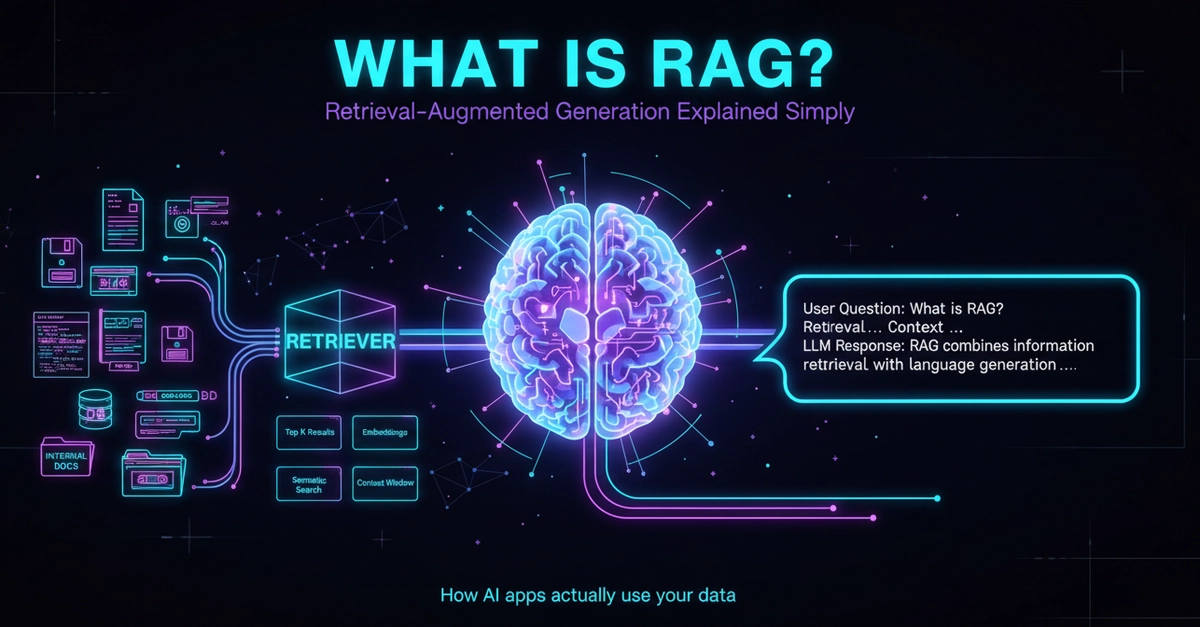
RAG (Retrieval-Augmented Generation) is one of the most important architectural patterns in LLM applications from 2024–2025. The core idea is simple: before the LLM generates an answer, retrieve relevant information from an external knowledge base, inject the retrieval results into the context, and then have the model generate an answer based on that information.
Why is RAG needed? Large language models have three inherent limitations: knowledge cutoff dates (the temporal boundary of training data), hallucination (fabricating non-existent facts), and insufficient domain expertise (lacking enterprise-internal or specialized data). RAG circumvents the model's internal knowledge constraints by adopting a "retrieve first, generate later" approach, allowing the LLM to reference the latest and most accurate private data.
The Core RAG Workflow