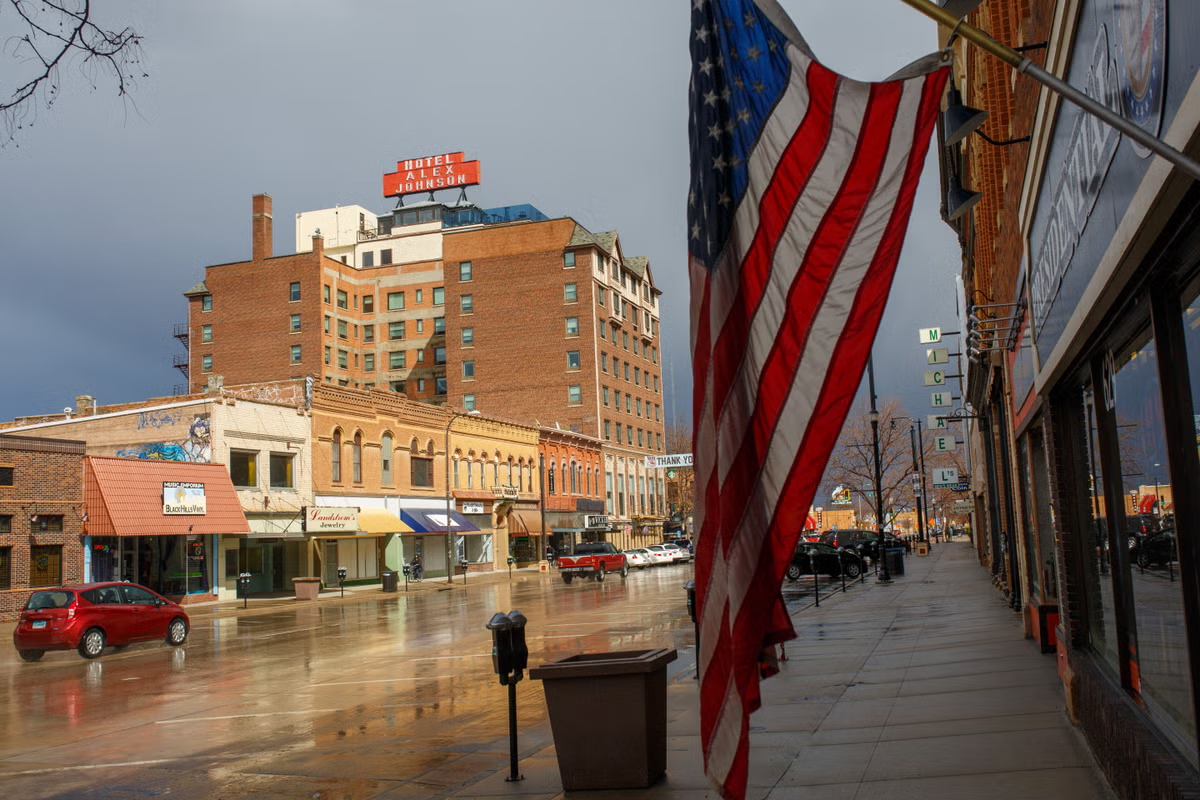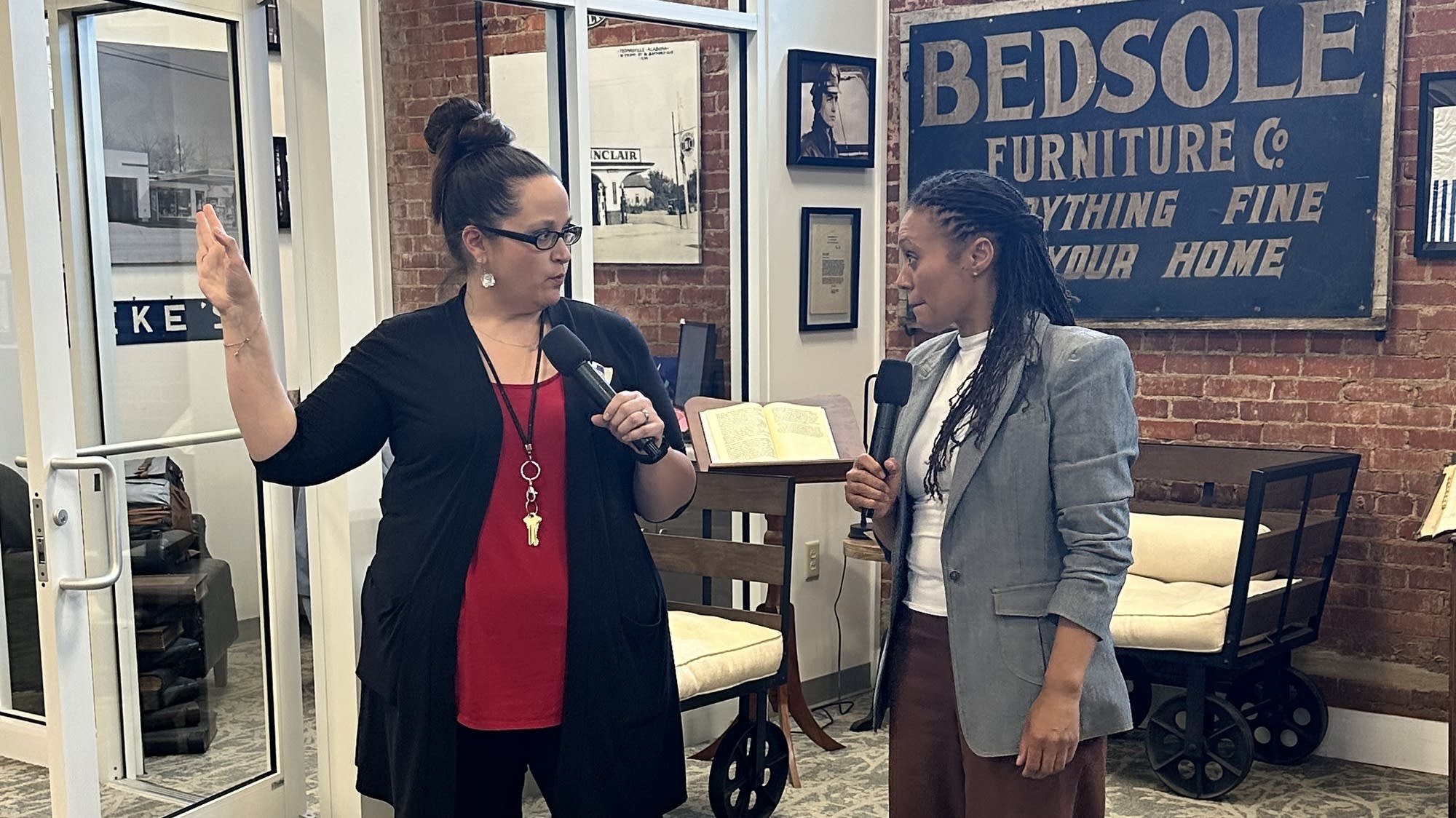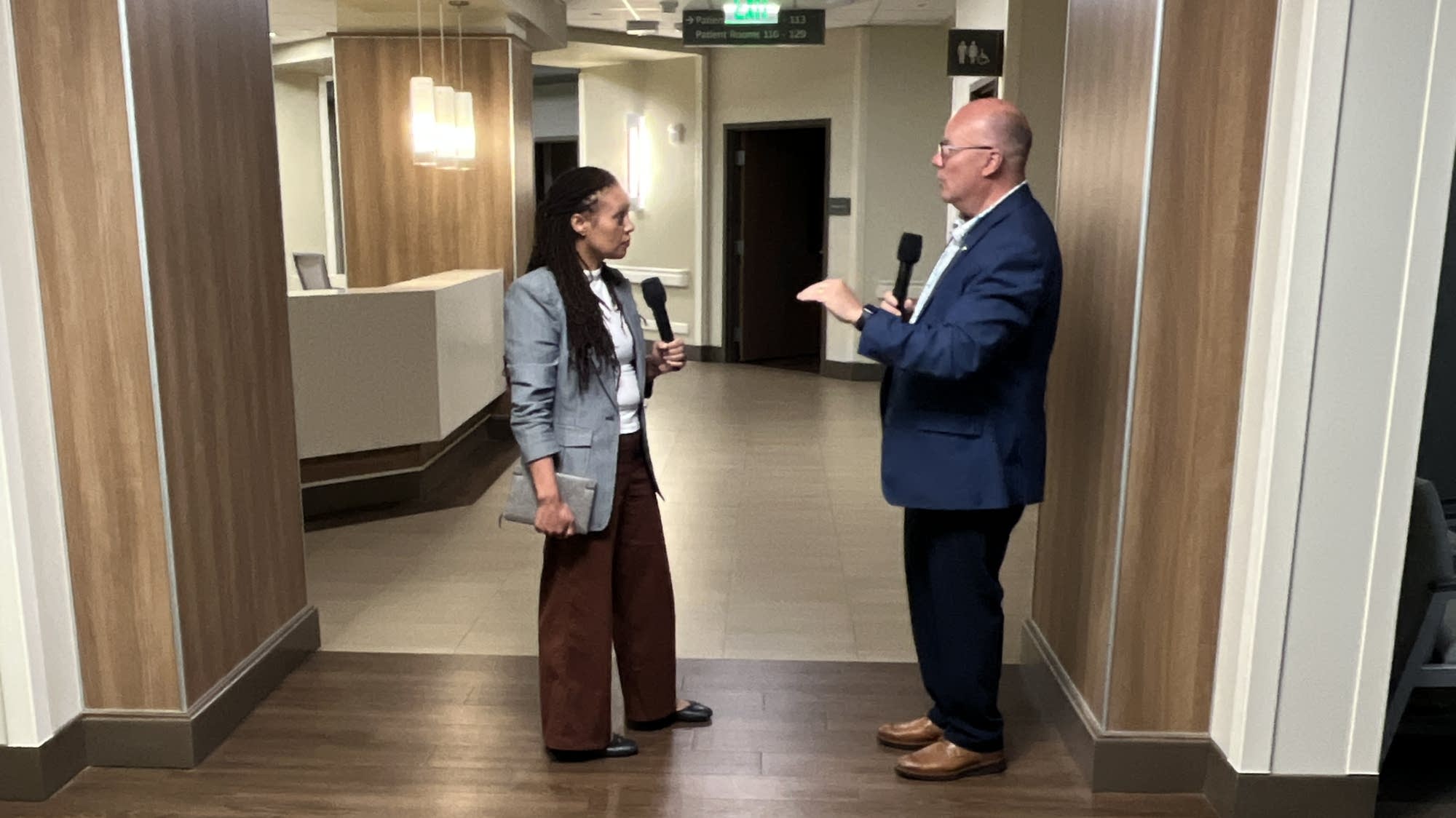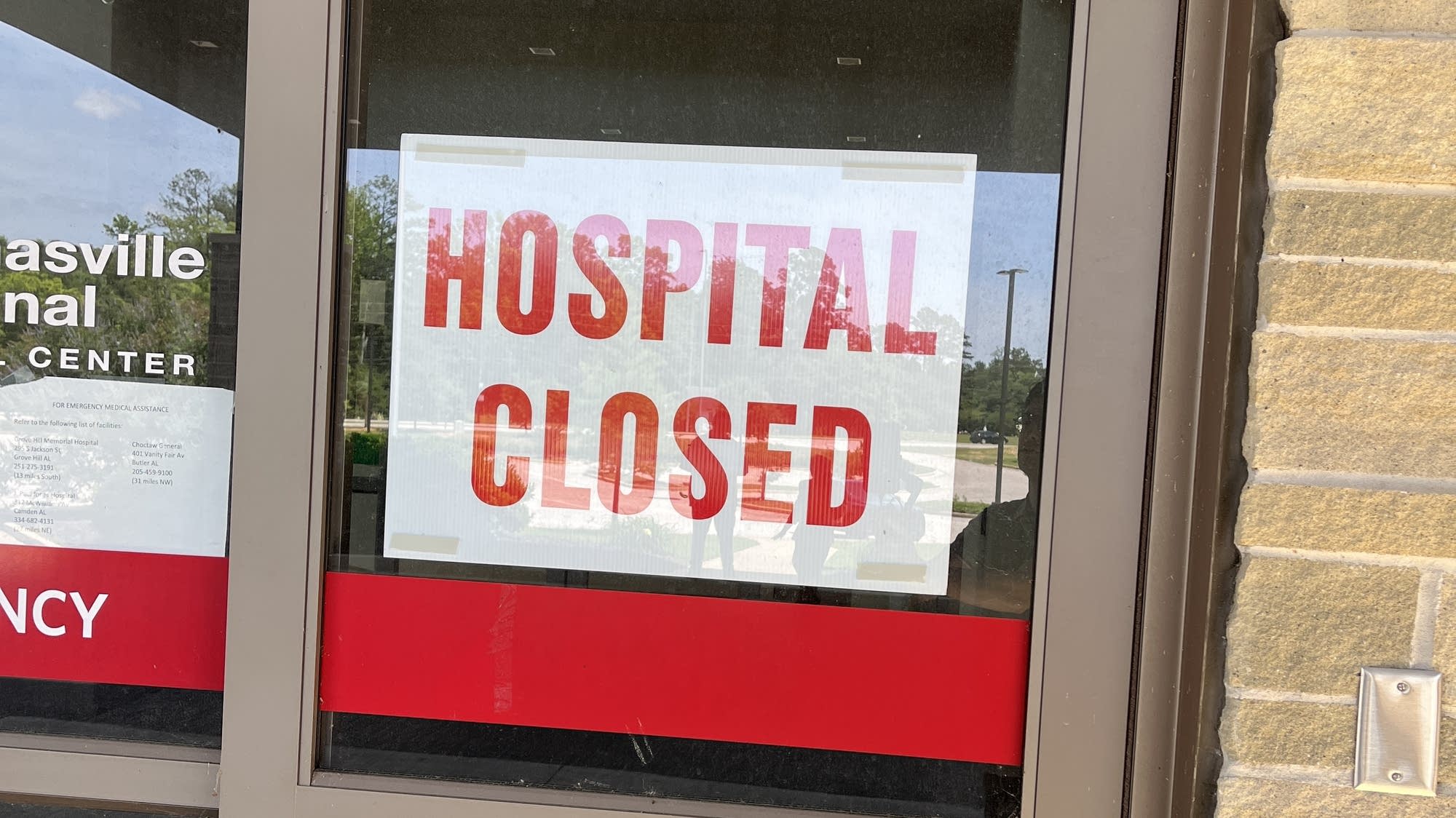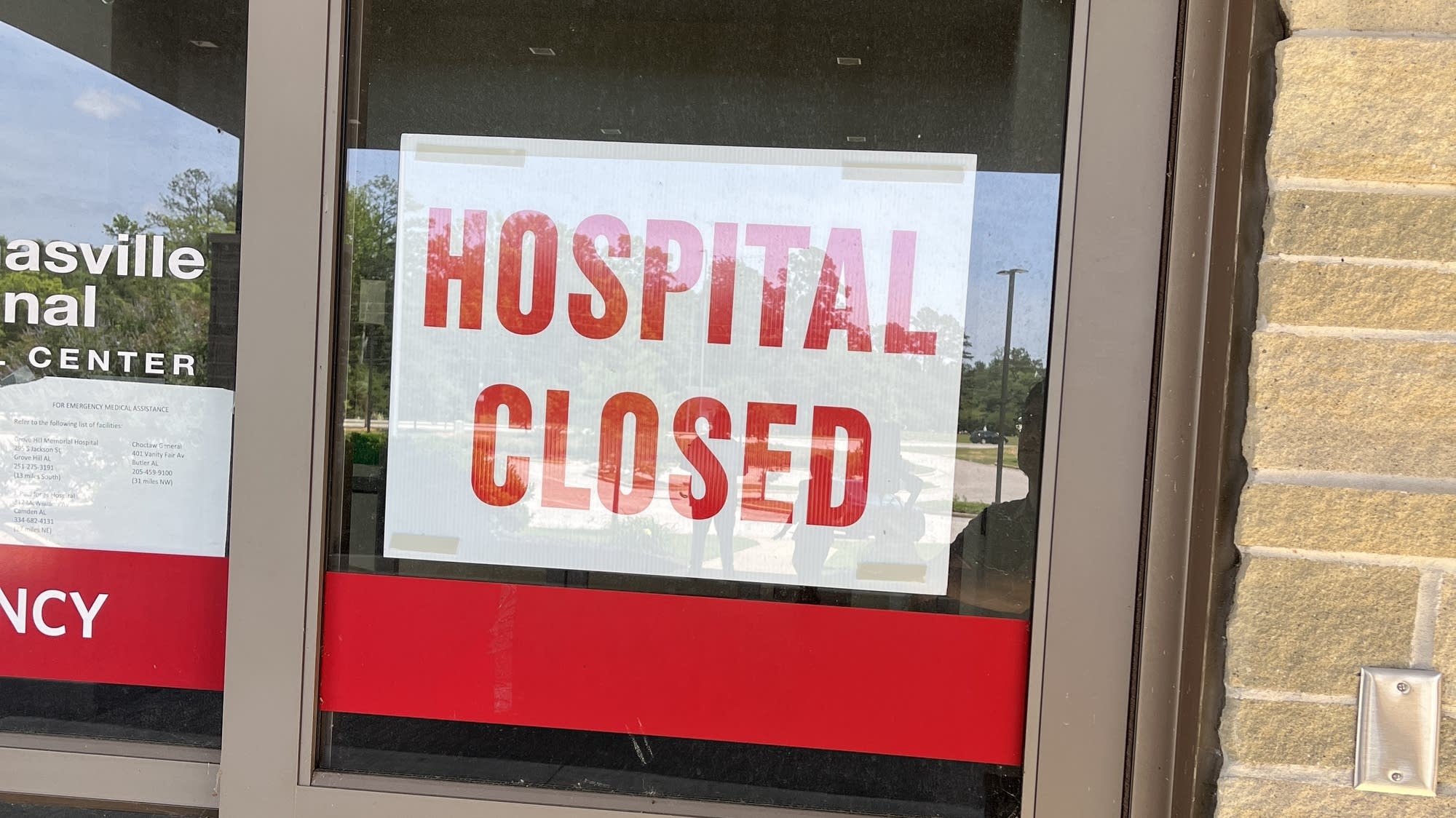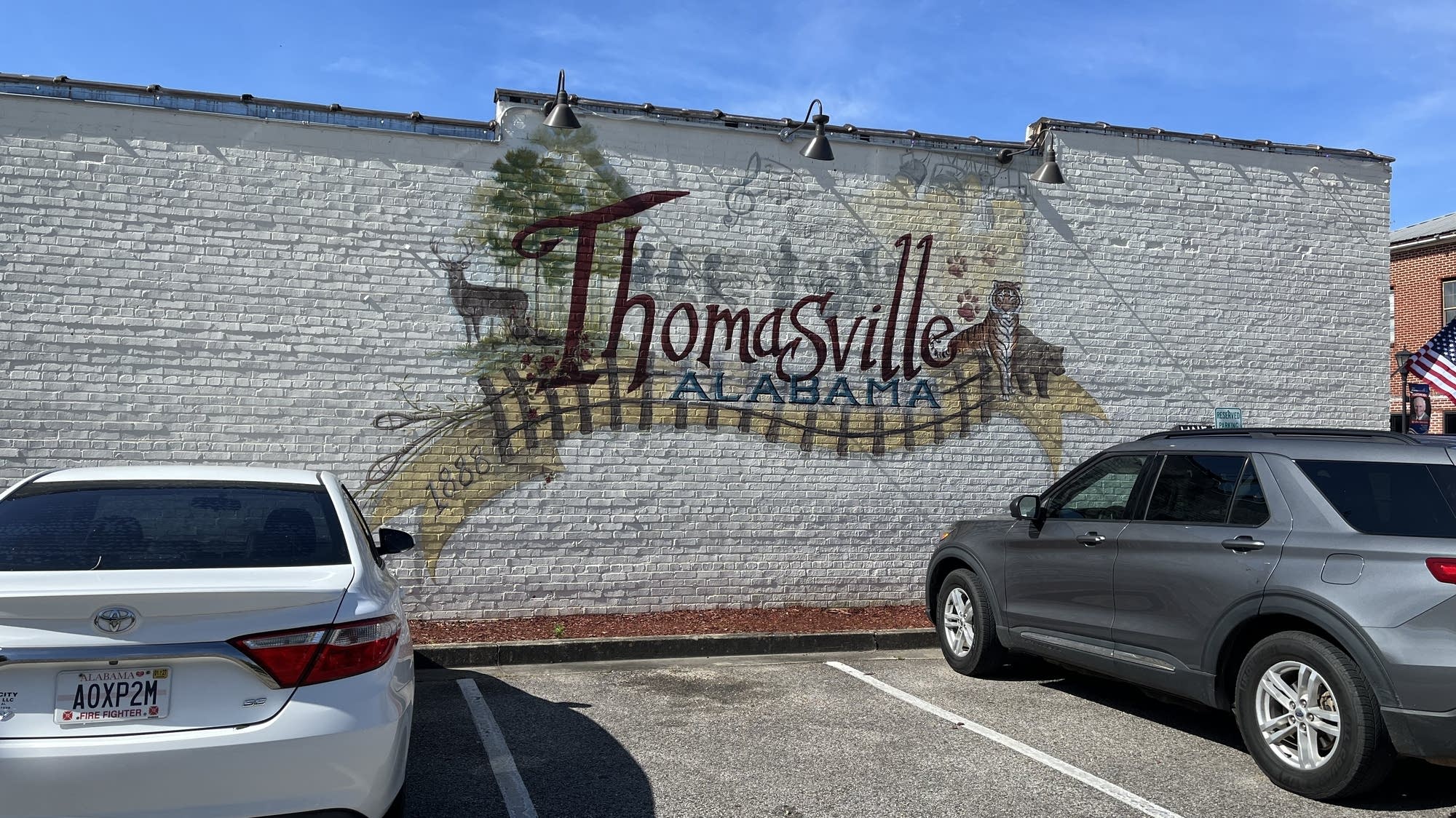
We’re reporting on how changes in federal policy show up in rural healthcare. And what that means for the economy wherever you are.We visited Thomasville, a town of about 3,500 people in southwestern Alabama, to learn more about the economic challenges of keeping a hospital running in rural America. What happens to a local community — and a local economy — when the only hospital in town closes?On the main street of downtown Thomasville, there’s a bakery, a movie theater under renovation, and the Thomasville Sports Hall of Fame. It was there we met Jimmy Duncan.“They put me in the hall of fame about six, eight months ago,” Duncan said. He was a college football national champion in 1971.But after his playing days, Duncan worked at the nearby paper mill his dad helped open.“You see these knees right here?” Duncan asked. “That wasn't from playing football. That was from running up and down that floor, on that cement floor. But the paper mill is pretty tough work, but it was the highest-paying job in the area.”We also met Charlie Anderson, who’s Thomasville-born and -raised. He brought this hall of fame to life a dozen years ago. But we weren’t just visiting to relive the glory days; we also wanted to talk about healthcare, and the lack thereof in this area.Charlie Anderson opened the Thomasville Sports Hall of Fame in 2014.Alex Schroeder/Marketplace“Thirty minutes in any direction you want to go, there are paper mill or wood products industries,” Anderson said. “Jimmy can tell you, accidents that happened at mills, you haven’t got two hours sometimes to drive somebody.”So when the hospital shuts down, as it did here in Thomasville, there’s a hit to community health and to financial health. Alabama hospitals generate about $30 billion a year in economic activity, according to the state’s hospital association.“I would think it probably also affects new people looking at locating in a place like Thomasville, to think about, ‘If I don't have good healthcare, I might not want to go there,’ “ Anderson said.This is something that towns across America have to reckon with, as rising healthcare costs and policies at the federal level put the squeeze on healthcare.Just across the street from the sports hall of fame is Amy Prescott’s bakery, Half Baked. She opened it a little more than a year with one of her daughters.Prescott remembers well when the local hospital opened back in 2020 — at the time, she was director of the local chamber of commerce.“It was a huge effect on getting more businesses in here as far as larger industries and stuff like that,” Prescott said. “Because that's one thing that they look for — if we have an incident, where's the closest place to take someone?”Thomasville resident Angie Newsom (right) says it's not unusual to take a day off from work to travel for healthcare.Alex Schroeder/MarketplaceWhen we visited, another one of Prescott’s daughters was about a week away from having a baby, so their family was keenly feeling the effect of that hospital’s closure in 2024. Now, for her prenatal care, it's a journey.“We were at the doctor yesterday in Mobile, so making sure we weren't ready to deliver a baby. And she has to travel weekly down to Mobile,” Prescott explained.This is at least a half-day trip if not longer. It’s time that comes out of your workday.“If you don't have somebody to run your business while you're gone, you have to run to the doctor, you just have to close the doors,” Prescott said.Angie Newsom also stopped by the bakery while we were visiting. She owns and operates the local radio station.“It's WJDB. It's on the south end of town, 95.5,” Newsom told us.She’s also the coordinator for the town museum at the library less than a block away. Having to travel for healthcare is something very familiar for her, too.“My dad called me one Saturday night, right after the Alabama-Texas game, and I could hear my mother screaming,” Newsom recounted. “We take her to the Thomasville hospital. The doctor came back in after the MRI and said, ‘I've called for the helicopter. Your mother has a tumor on her spinal cord.’ And now we have to travel to Birmingham every three or four months to see her cancer doctors.Newsom told us that sometimes folks will forego care because of the cost and time it takes to travel for it. This concerns her.“We all want to be independent, and nobody wants to just worry someone to death asking them, 'Oh, I need you to take me to the doctor,’ knowing that it's a day’s wages that are lost,” she said.
What a local economy loses when its hospital closes
Hospitals are both healthcare centers and economic hubs for rural communities.
775 words~4 min read