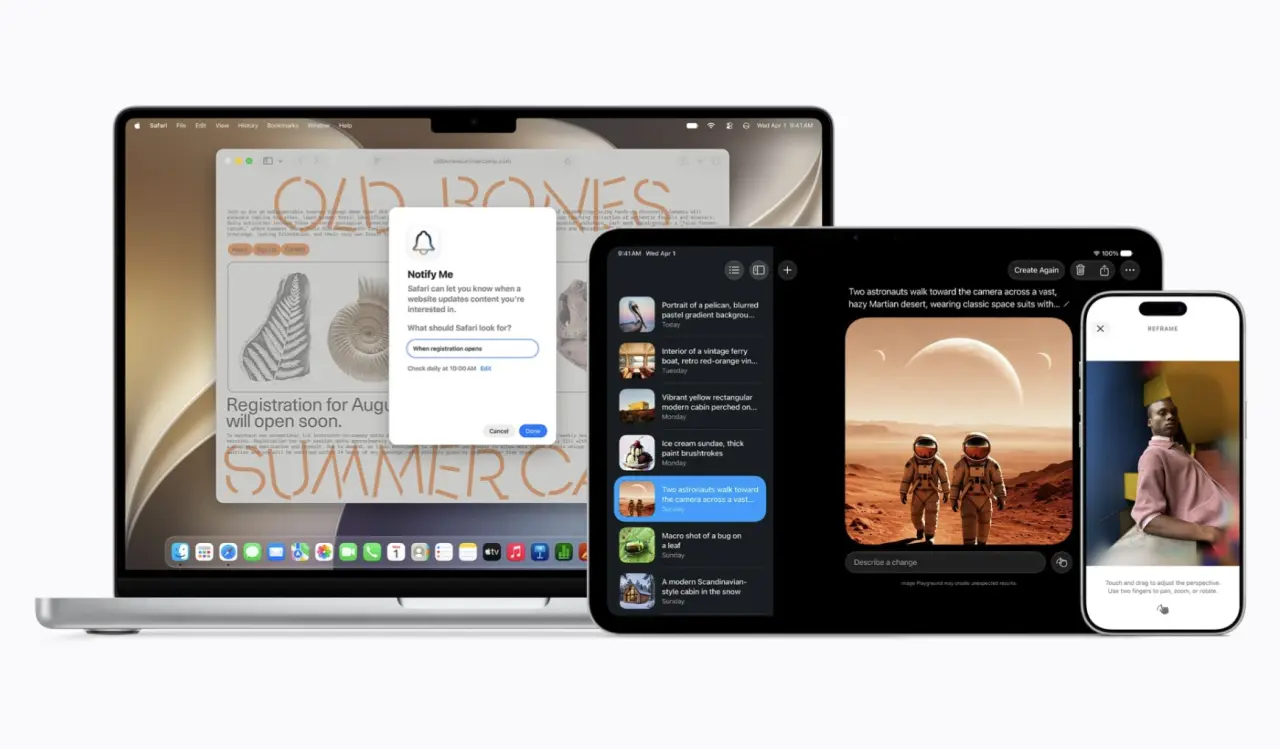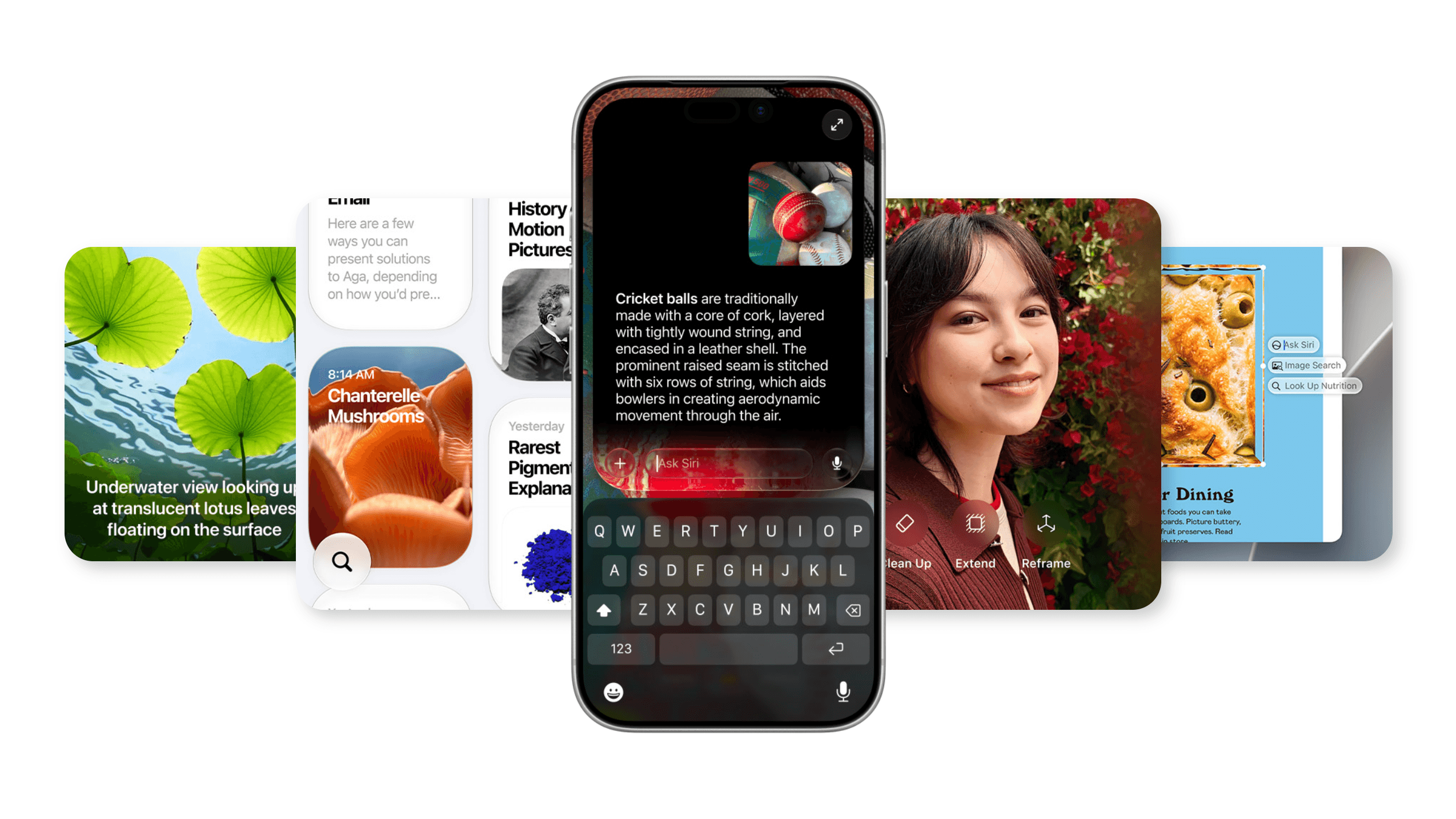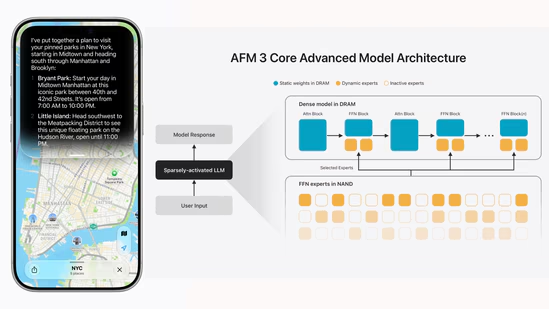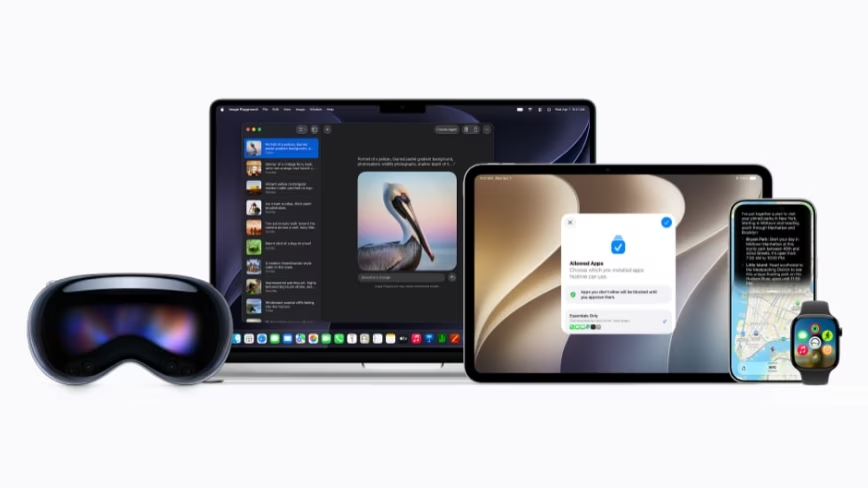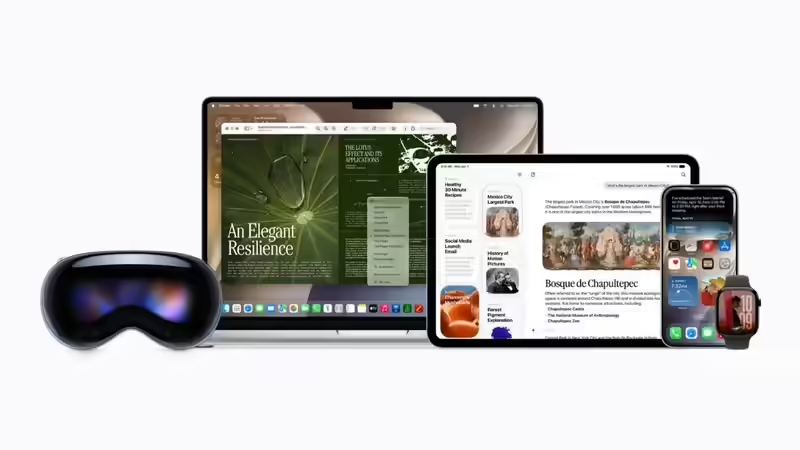
Photo credit: apple.comApple used its WWDC 2026 keynote on 8 June to rebuild the machinery behind Apple Intelligence, and the headline most people will chase - a new Siri trained with Google's Gemini - is the smaller half of the story. The bigger move sits underneath. Apple has taken the privacy promise it makes on your iPhone and stretched it onto computers owned by others: NVIDIA chips sitting inside Google's data centres. Five new models now split the work between your device and the cloud, and the whole arrangement is built so your data stays sealed at every stop.Key TakeawaysApple introduced its third generation of Apple Foundation Models (AFM 3), a family of five models built with Google, spanning two on-device models and three that run on Private Cloud Compute.The most demanding model, AFM 3 Cloud Pro, runs on NVIDIA GPUs inside Google Cloud - the first time Apple's Private Cloud Compute has reached a third-party data centre.The hardware trust base spans three vendors: NVIDIA GPUs with confidential computing, Intel CPUs running TDX, and Google's Titan security chip - with Apple holding the signing keys across all of it.Apple says the five PCC rules hold everywhere: stateless computation, enforceable guarantees, no privileged runtime access, non-targetability and verifiable transparency. Devices trust only PCC software that Apple has cryptographically signed.The on-device flagship, AFM 3 Core Advanced, is a 20-billion-parameter model that loads from flash and activates just 1 to 4 billion parameters per request, so it fits on a phone.For you, the payoff lands as a smarter Siri, better dictation and voices, and new photo and Image Playground tools - with the heavy lifting hidden behind a privacy design Apple has opened to outside inspection.What Apple announced at WWDC 2026 Two things landed together. The first is a refreshed Apple Intelligence with an overhauled Siri, expressive voices, sharper dictation, and new image tools including Spatial Reframing in Photos. The second, quieter announcement is the plumbing that powers all of it.At the centre sits a new line-up of models. Apple's machine-learning team described it as "a family of five foundation models custom-built in collaboration with Google," running from your device up to the cloud. The Gemini link explains the training muscle behind the models; the privacy design explains why Apple thinks it can borrow that muscle and still keep its promises. Hold both ideas at once and the keynote makes sense.Meet the five-model line-up Photo: apple.comThink of AFM 3 as a model line-up the way a carmaker runs a model line-up - different engines for different jobs, tuned for the road each one drives. Two models live on your device. Three live in the cloud on Private Cloud Compute. Each is built for a specific load.ModelJob it doesWhere it runsAFM 3 CoreThe everyday 3-billion-parameter on-device modelOn device (Apple silicon)AFM 3 Core Advanced20-billion-parameter on-device model, multimodal; powers expressive voices and dictationOn device (top Apple silicon)AFM 3 CloudThe server workhorse, tuned for speed and efficiencyPrivate Cloud Compute (Apple silicon)ADM 3 Cloud (Image)Image generation and editing, Image Playground, GenmojiPrivate Cloud Compute (Apple silicon)AFM 3 Cloud ProThe most capable model; agentic tool use and complex reasoningPrivate Cloud Compute on NVIDIA GPUs in Google CloudThe split matters. Four of the five run on Apple silicon, on the device or in Apple's own racks. Only the top model, AFM 3 Cloud Pro, reaches outside to NVIDIA hardware in Google Cloud - and that single exception is what makes this year's announcement new.How does a 20-billion model fit on a phone? By firing only the cylinders it needs. A 20-billion-parameter model would normally swamp a phone's memory, because most models keep every weight loaded in fast memory (DRAM) at once. AFM 3 Core Advanced takes a different approach. The full model sits in flash storage (NAND), and the model picks a small set of "experts" for each prompt, pulling those into active memory and patching them with a core of always-on shared weights to form a compact working engine.Apple calls this a sparsely activated architecture, built on a technique its researchers named Instruction-Following Pruning. The practical result is elasticity: the model spins up only as much capacity as a task demands, activating 1 to 4 billion parameters at a time rather than carrying the whole 20 billion in memory. Light jobs run lean. Heavy jobs draw more power from the same engine. That variable-displacement trick is how a model this size rides inside a phone at all.How much better is it? Apple's own numbers point up across the board, with the caveat that these are Apple's in-house human-grader results, measured side-by-side against last year's models. Treat them as the maker's figures until independent benchmarks arrive.Comparison (Apple human evaluations, approximate)New model preferred2025 model preferredAFM 3 Core vs 2025, general text45.6 per cent23.3 per centAFM 3 Cloud vs 2025 server model, general text64.7 per cent8.7 per centAFM 3 Cloud vs 2025, image understanding37.8 per cent9.6 per centAFM 3 Core Advanced vs current dictation, overall quality44.7 per cent17.6 per centOn voices, Apple graded the new system at roughly 4.15 on a 5-point scale against about 3.87 for the current text-to-speech, rising to about 4.24 on casual, conversational lines. Apple notes that even a 0.1 move on that scale is a change customers tend to notice. AFM 3 Cloud Pro then sits a further step above AFM 3 Cloud - Apple cites around a 10 per cent relative gain on text and roughly 14 per cent on image understanding, with a similar 14 per cent edge on maths.Who is Apple working with - Google, NVIDIA and Intel Three names sit behind the new architecture, each holding up a different wall. Google supplied the model expertise - Apple built AFM 3 by drawing on the technology behind Google's Gemini family, and trained the models on Google's cloud TPU accelerators. Google Cloud also hosts the top model. NVIDIA supplies the GPUs that run AFM 3 Cloud Pro, plus its confidential-computing technology. Intel's chips, running a security feature called TDX, and Google's own Titan security chip complete the foundations.Here is the architecture in plain terms: Apple has built a sealed vault and dropped it inside a building it rents from Google, on machinery supplied by NVIDIA and Intel. The landlord owns the building. The vault, its locks, and the rules for who gets in stay Apple's. Apple's security engineers were blunt about the trust anchor — they wrote that Apple devices "will only trust PCC software that is cryptographically approved by Apple." Your iPhone checks the signature before it sends anything. The hardware underneath can belong to someone else; the keys belong to Apple.What the hardware underneath does Each chip earns its place. NVIDIA brings the raw compute, plus confidential computing that keeps a running job sealed inside the GPU. Intel's TDX does the same on the processor - it locks a slice of memory so the machine's own operating system and operators stay shut out of what runs inside. Google's Titan chip is the root of trust: the part that proves a server is the genuine, Apple-approved article before any work begins. Three layers, one set of keys, all held by Apple.Is your data safe on Google's servers? Apple's answer is that the same five rules travel with the vault. When Apple launched Private Cloud Compute in 2024, it set five load-bearing requirements for cloud AI. Moving onto Google Cloud keeps all five intact, with new hardware doing the enforcing.PCC ruleWhat it means for youStateless computationThe server holds your data only long enough to answer, then wipes itEnforceable guaranteesThe promises live in hardware and software, beyond mere policyNo privileged runtime accessApple and Google staff stay locked out of a running jobNon-targetabilityAiming an attack at one specific person's request stays out of reachVerifiable transparencyThe code ships publicly so outside researchers can inspect itApple added belt-and-braces touches for the rented setting. It keeps a tamper-evident, append-only ledger of every piece of Google Cloud hardware in the PCC fleet, so a swapped or rogue server shows up. For the parts that could leak data if compromised, Apple roots its checks in two separate hardware vendors rather than one. And it treats every layer - firmware, host, guest operating system, app code - as something to verify rather than trust on faith.The transparency rule is the part worth weighing. Apple says it will publish the binaries for public inspection and give security researchers live access to PCC nodes through the Apple Security Bounty Programme, the same depth of access it offers for PCC on Apple silicon. A privacy claim you can audit carries more weight than one you take on trust. Apple has promised more technical detail at the Confidential Computing Summit later this month and in an updated PCC Security Guide later this year, and it says the full set of protections will ramp through the summer preview. Until that detail lands, the strength of the design rests partly on a promise of openness Apple has yet to deliver in full for the Google Cloud build.What developers get out of it For app makers, the established route stays the Foundation Models framework Apple introduced at WWDC 2025 - a Swift interface that hands your app the on-device model, with guided generation for structured output, streaming, and tool calling so the model can run code you define. It runs on macOS, iOS, iPadOS and visionOS, and it keeps the work on-device for privacy and speed.WWDC 2026 widened that door. Apple's framework now accepts image input alongside text, so an app can hand the model a user's photo to understand instead of shipping its own large vision model, according to developer write-ups of the sessions. Apple is also reported to be introducing Core AI, a route for developers who want to run their own or third-party model weights on Apple silicon rather than Apple's model alone - a gap the current framework leaves open. AppleInsider flagged Core AI as a Core ML successor ahead of the event, and developer shops described it as live after the keynote. Treat the finer points as reported rather than confirmed: some claims circulating about a Python SDK, Linux support, or dropping rival models straight into the framework come from single sources and await Apple's own documentation.What it means for you, the everyday user The user-facing wins are concrete. Siri becomes a proper assistant with conversation history, awareness of your personal context and on-screen content, and a dedicated app. Dictation gets sharper at punctuation, casing and capturing what you meant. The voices sound more natural, most of all on casual text read aloud. Photos gains Spatial Reframing, which can re-compose a shot after you have taken it, and Image Playground gets more capable through the new ADM 3 Cloud image model.The deeper point is where this intelligence lives. Apple ran the four most common models on its own silicon - on your device or in its own racks - and reserved Google's hardware for the single heaviest model. Even there, the design erases your data once the answer is sent and keeps the operator locked out. Apple also says it trains these models on a mix of licensed, public and synthetic data, and keeps your private personal data and your interactions out of training. For a user, that is the trade on offer: Gemini-grade capability, delivered through a privacy design you are invited to check rather than accept on faith.The India read For Indian users, two things are grounded and one is worth watching. India sits inside Apple's supported English locales - Apple names India directly in its locale notes - and Hindi appears on its list of supported languages, so the new models cover Indian users at the language level from the start. Device eligibility carries over from Apple Intelligence: you will want a recent iPhone Pro or an M-series iPad or Mac to run the on-device models.The open question is rollout timing. Apple has been reported to hold the new Siri AI features back in the EU and China over regulatory constraints; India sits outside that carve-out, which points to India tracking the global release rather than a delay. Apple has yet to confirm a specific India date for the new Siri, so treat the timing as likely-aligned-with-global until Apple states otherwise. Pricing stays simple for now: Apple Intelligence rides on the OS rather than a separate fee, so the cost question lands on hardware eligibility more than any subscription.Strip away the Gemini headline and the lasting shift is architectural. Apple has decided it can rent someone else's data centre and still be the only party holding the keys - and it has staked that claim on code it says anyone can inspect. The summer preview, and the researchers who take Apple up on that open invitation, will decide whether the vault holds inside the rented building.Frequently Asked QuestionsIs Apple's new Siri just Google Gemini?The truer description is that Apple built its own models using Google's technology. Apple's third-generation Foundation Models were custom-built in collaboration with Google and trained on Google's infrastructure, then optimised by Apple for Apple silicon and NVIDIA GPUs. The new Siri runs on Apple's AFM 3 family, with the heaviest reasoning handled by AFM 3 Cloud Pro.Does my data go to Google?Apple's position is that your data stays sealed even when a request runs on Google Cloud. The top model, AFM 3 Cloud Pro, runs inside Private Cloud Compute on NVIDIA GPUs in Google Cloud, under Apple's five PCC rules: the server wipes your data after answering, operators stay locked out, and your device trusts only Apple-signed software.Which Apple Foundation Models run on my device versus the cloud?Two run on-device - AFM 3 Core (3 billion parameters) and AFM 3 Core Advanced (20 billion parameters, activating 1 to 4 billion at a time). Three run on Private Cloud Compute - AFM 3 Cloud, ADM 3 Cloud for images, and AFM 3 Cloud Pro for the hardest tasks.Can developers use Apple's models in their own apps?Yes. The Foundation Models framework gives apps the on-device model through a Swift API, with guided generation, streaming and tool calling, on macOS, iOS, iPadOS and visionOS. WWDC 2026 added image input, and Apple is reported to be introducing Core AI for running third-party model weights, though some specifics await Apple's documentation.What is Private Cloud Compute in simple terms?It is Apple's way of doing cloud AI while keeping the privacy of an iPhone. Hard requests leave your device for Apple's servers - now including NVIDIA GPUs in Google Cloud - where the data is processed and then wiped, operators are kept out, and the software is published so outside researchers can verify the claims.When does this reach India?Apple supports Indian English and Hindi from the start, and India sits outside the EU and China feature carve-out, which suggests India follows the global release. Apple has yet to confirm an exact India date, so treat the timing as aligned-with-global until it does.end of articleTrending Topics
Apple WWDC 2026: 5 New Foundation Models, Private Cloud Compute On Google Cloud
Find latest technology news, gadgets reviews & ratings. Popular & latest gadgets specifications, features, prices, photos & videos. Trending mobile phone comparisons, slideshows, how tos and videos for latest mobile phones, tablets, technology news updates.
2,488 words~11 min read