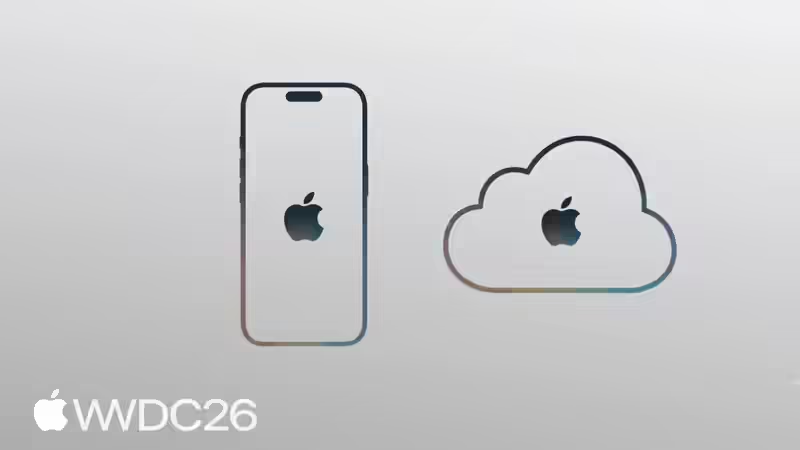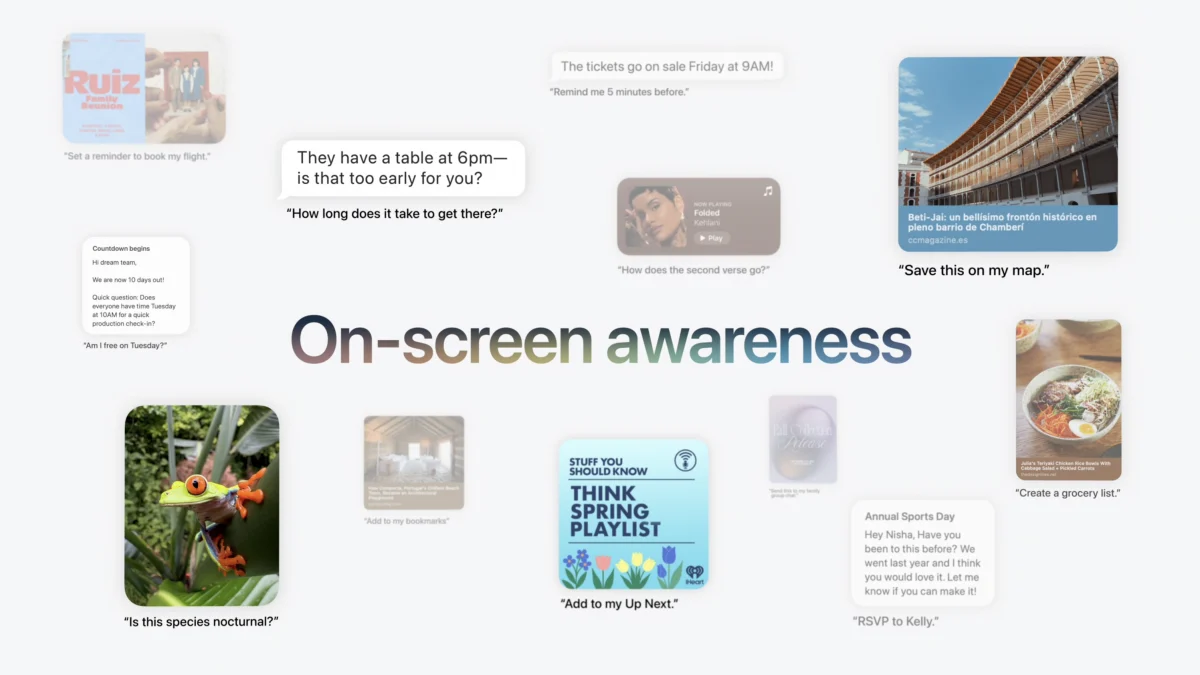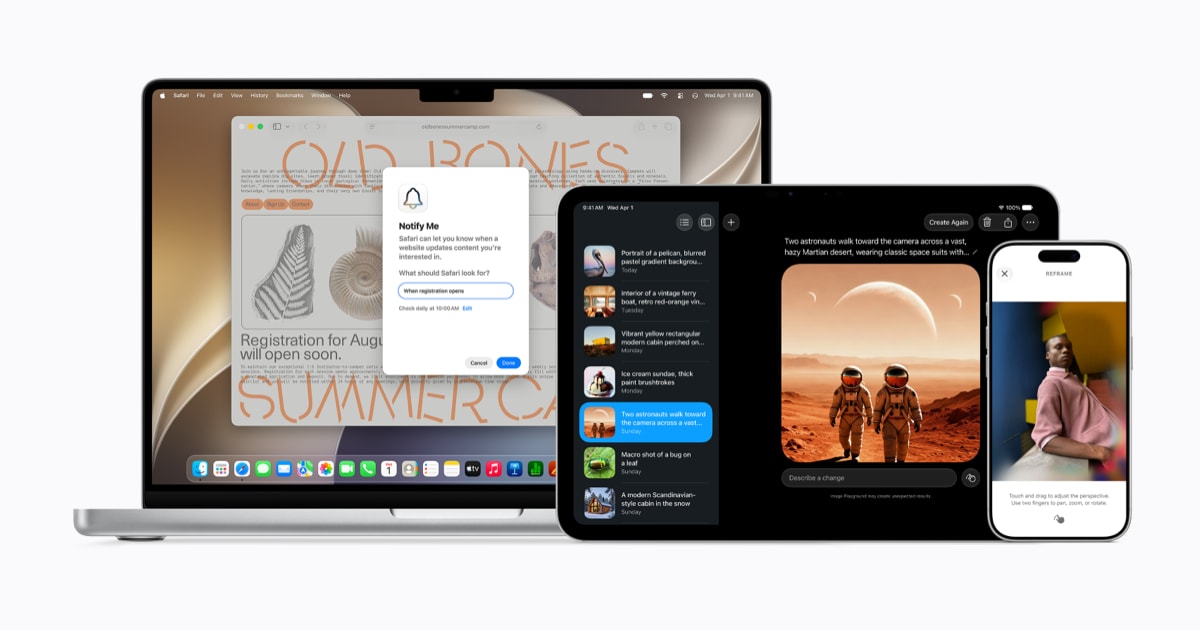
Photo credit: apple.comApple used its WWDC 2026 keynote to introduce the third generation of Apple Foundation Models (AFM), marking its biggest artificial intelligence upgrade yet. Alongside the launch of iOS 27, the company revealed a new AI architecture designed to power Siri, Apple Intelligence, developer tools, image generation, and multimodal experiences across its ecosystem. The new model family includes on-device and cloud-based AI systems optimized for Apple silicon and Private Cloud Compute. Apple said the latest models deliver stronger reasoning, better voice interactions, improved image understanding, and more advanced personalization while maintaining strict privacy protections. The announcement also highlighted a deeper collaboration with Google, whose Gemini technologies helped shape the next generation of Apple’s AI infrastructure. The models will serve as the foundation for Apple's AI strategy moving forward.Key takeawaysApple introduced the third generation of Apple Foundation Models (AFM 3).The model family includes five AI models spanning on-device and cloud computing.AFM 3 Core Advanced is a 20-billion-parameter multimodal model.Apple expanded AI capabilities across text, voice, vision, and image generation.Private Cloud Compute ensures user data is not stored or shared.Google collaborated with Apple on the new AI architecture.Developers gain broader access through the Foundation Models framework.What are the new apple foundation models?Apple's third-generation Foundation Models represent a family of five AI systems designed to power Apple Intelligence across devices and cloud infrastructure. The lineup ranges from lightweight on-device models to powerful cloud-based reasoning engines. According to Apple, the models are deeply integrated into iOS 27 and other operating systems, enabling smarter Siri interactions, advanced content generation, image editing, and multimodal experiences. The architecture combines local processing with cloud intelligence while preserving privacy. Apple says the models are optimized for Apple silicon and can dynamically choose the best computing environment for a task. The new generation aims to improve instruction following, reasoning, language understanding, image generation, and tool usage, making Apple Intelligence significantly more capable than previous versions.ModelKey FunctionDeploymentAFM 3 CoreLanguage understanding and text generationOn-deviceAFM 3 Core AdvancedMultimodal AI, voice and vision tasksOn-deviceAFM 3 CloudHigh-performance AI processingPrivate Cloud ComputeADM 3 Cloud (Image)Image generation and editingPrivate Cloud ComputeAFM 3 Cloud ProAdvanced reasoning and agentic tasksPrivate Cloud ComputeHow apple's new AI architecture worksApple's new AI architecture combines local intelligence with secure cloud computing. Tasks that can be processed efficiently on an iPhone, iPad, or Mac remain on the device, while more demanding requests are routed to Private Cloud Compute servers. This hybrid design helps deliver faster responses while maintaining user privacy. Apple says the architecture was built specifically for Apple Intelligence and integrates directly into operating systems rather than functioning as a separate service.The system can intelligently determine which model should handle a request based on complexity, speed requirements, and hardware capabilities. By distributing workloads across multiple AI models, Apple aims to deliver more accurate responses, improved reasoning, and richer multimodal experiences without compromising performance or security.Architecture ComponentHow It WorksKey BenefitOn-device AI ProcessingSimple and frequently used AI tasks are processed directly on iPhones, iPads, and Macs using Apple silicon.Faster response times and enhanced privacy.AFM 3 CoreHandles everyday language understanding, text generation, and Apple Intelligence features locally.Efficient AI performance without internet dependency.AFM 3 Core AdvancedA 20-billion-parameter multimodal model that processes complex voice, vision, and reasoning tasks on-device.Delivers advanced AI capabilities while reducing memory usage.Private Cloud ComputeMore demanding AI requests are securely routed to Apple's cloud infrastructure when local processing is insufficient.Provides powerful AI performance without storing user data.AFM 3 Cloud ModelsCloud-based models handle advanced reasoning, image generation, and large-scale AI workloads.Enables sophisticated AI features beyond device limitations.Dynamic Model RoutingThe system automatically selects the most suitable model based on task complexity and hardware capabilities.Optimizes speed, accuracy, and resource efficiency.Multimodal ProcessingAI models can understand and combine text, voice, images, and visual inputs in a single workflow.Creates more natural and intelligent user interactions.Apple Intelligence IntegrationThe architecture is embedded directly into iOS 27 and Apple's ecosystem rather than operating as a separate service.Seamless AI experiences across Apple devices and applications.Breakthrough behind AFM 3 core advancedAFM 3 Core Advanced is Apple's most powerful on-device AI model and one of the key innovations announced at WWDC 2026. The model contains 20 billion parameters and introduces a new sparse architecture that activates only a fraction of its parameters during processing. Apple says this approach dramatically improves efficiency while preserving performance. The company developed a technique called Instruction-Following Pruning (IFP), allowing the model to store its full structure in flash memory while loading only the necessary portions into active memory.This breakthrough reduces hardware constraints that traditionally limit large AI models on consumer devices. AFM 3 Core Advanced is also natively multimodal, enabling advanced voice interactions, better dictation accuracy, visual understanding, and richer Apple Intelligence experiences.Private cloud compute: AI without data collectionPrivacy remains central to Apple's AI strategy. The company said its Private Cloud Compute infrastructure allows complex AI tasks to run on secure servers without storing or sharing user data. Unlike conventional cloud AI systems, Private Cloud Compute is designed so that information is processed only for the duration of a request and cannot be retained by Apple. The new cloud-based models, including AFM 3 Cloud, ADM 3 Cloud Image, and AFM 3 Cloud Pro, operate within this framework. Apple says users receive the benefits of powerful AI reasoning and image generation while maintaining the privacy protections associated with on-device processing. This approach reinforces Apple's longstanding commitment to minimizing data collection and maximizing user control over personal information.Apple expands beyond text into voice, vision and imagesThe latest Foundation Models move Apple Intelligence beyond traditional text generation into a fully multimodal AI platform. AFM 3 Core Advanced can process and understand voice, visual content, and images alongside text. These capabilities power new Siri experiences, improved dictation, image editing tools, visual question answering, and expressive voice interactions. Apple also introduced ADM 3 Cloud, a dedicated image model capable of generating and editing images for applications such as Image Playground and advanced photo enhancement.The company believes multimodal AI will create more natural interactions between users and devices. By combining language understanding with visual and audio intelligence, Apple is positioning its ecosystem to compete more directly with emerging AI platforms from rivals across the industry.Foundation models were built in collaboration with googleOne of the most notable announcements at WWDC 2026 was Apple's confirmation that the new Foundation Models were developed in collaboration with Google. Apple stated that its third-generation Foundation Models were custom-built alongside Google technologies, leveraging expertise behind the Gemini family of AI models. The partnership extends to cloud infrastructure as well, with Apple using Google Cloud and NVIDIA-powered systems for its most advanced cloud model, AFM 3 Cloud Pro.Industry analysts view the collaboration as a major strategic shift, reflecting the growing complexity of AI development and the need for large-scale computing resources. Despite the partnership, Apple emphasized that the resulting models remain tightly integrated with its privacy-focused architecture and Apple Intelligence ecosystem.What it eans For DevelopersFor developers, the new Foundation Models framework opens access to the same on-device AI technologies that power Apple Intelligence. Through Apple's APIs, developers can build features such as summarization, structured output generation, language understanding, tool calling, and intelligent content creation directly into their applications. Because many functions run locally, developers can deliver AI-powered experiences while maintaining user privacy and reducing cloud costs. Apple says the framework is designed to simplify AI integration across iPhone, iPad, Mac, and Vision devices. With the introduction of more powerful models in iOS 27, developers will gain access to improved reasoning, multimodal capabilities, and enhanced performance, enabling a new generation of intelligent applications throughout Apple's ecosystem.FAQs1. What are Apple Foundation Models?Apple Foundation Models are the AI systems that power Apple Intelligence features across iPhone, iPad, Mac, and other Apple devices.2. What is AFM 3 Core Advanced?AFM 3 Core Advanced is Apple's 20-billion-parameter multimodal on-device AI model designed for voice, vision, and advanced reasoning tasks.3. Does Apple collect user data through Private Cloud Compute?Apple says Private Cloud Compute processes requests without storing or sharing user data, including with Apple itself.4. Did Apple collaborate with Google on these models?Yes. Apple confirmed that the third-generation Foundation Models were custom-built in collaboration with Google and technologies related to Gemini.5. How do developers use the new Foundation Models?Developers can access the models through Apple's Foundation Models framework to build AI-powered features such as summarization, content generation, structured outputs, and tool calling into their apps.end of article
Apple unveils third-gen foundation models at WWDC 2026, powers iOS 27 with advanced artificial intelligence
Find latest technology news, gadgets reviews & ratings. Popular & latest gadgets specifications, features, prices, photos & videos. Trending mobile phone comparisons, slideshows, how tos and videos for latest mobile phones, tablets, technology news updates.
1,386 words~6 min read