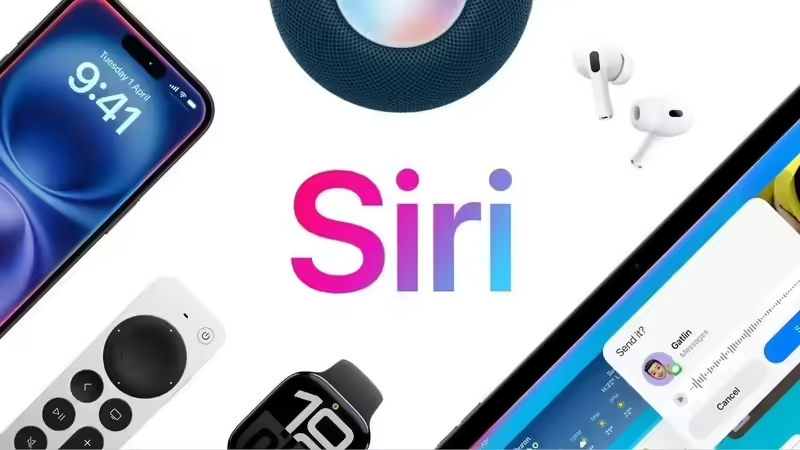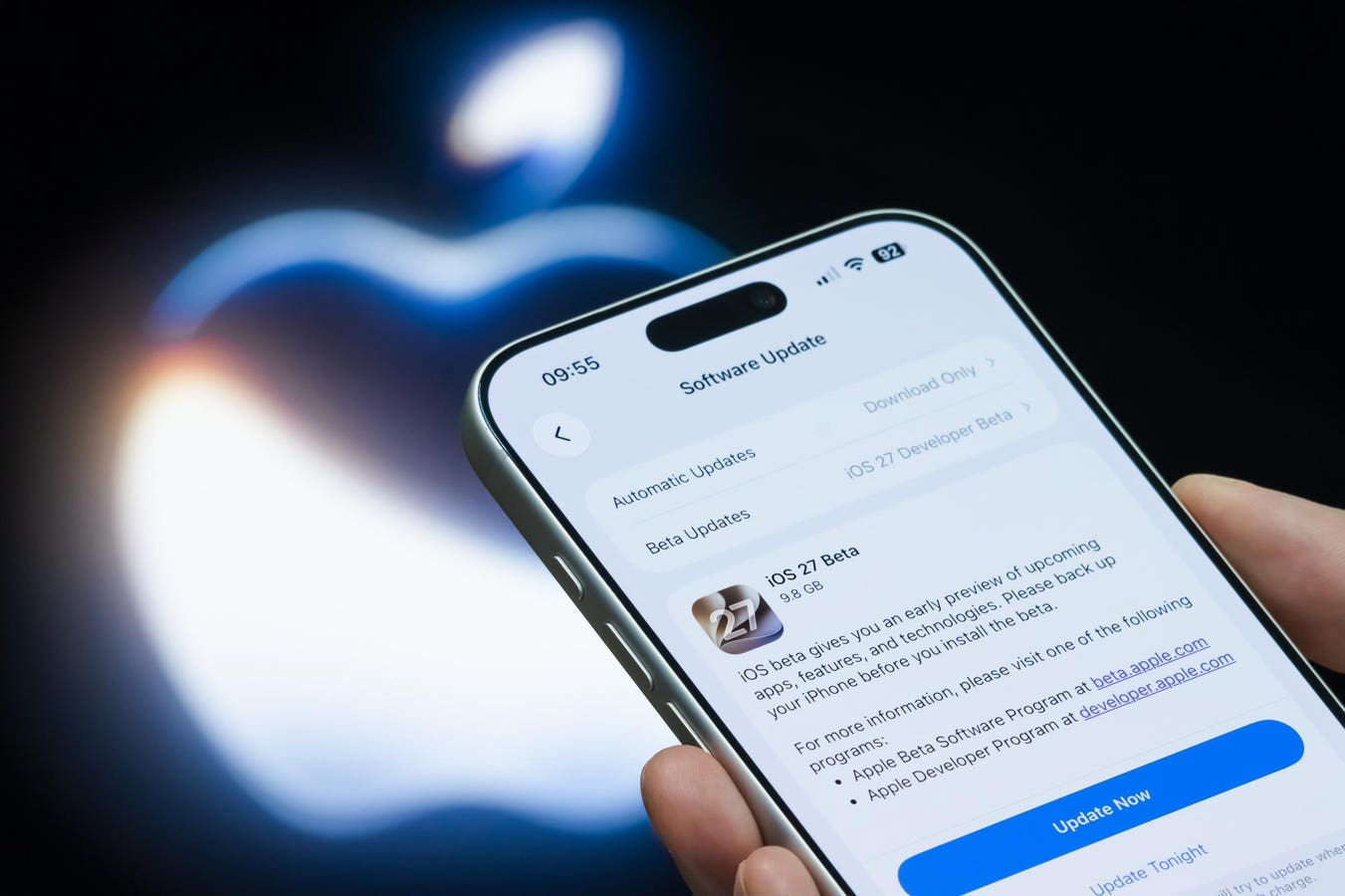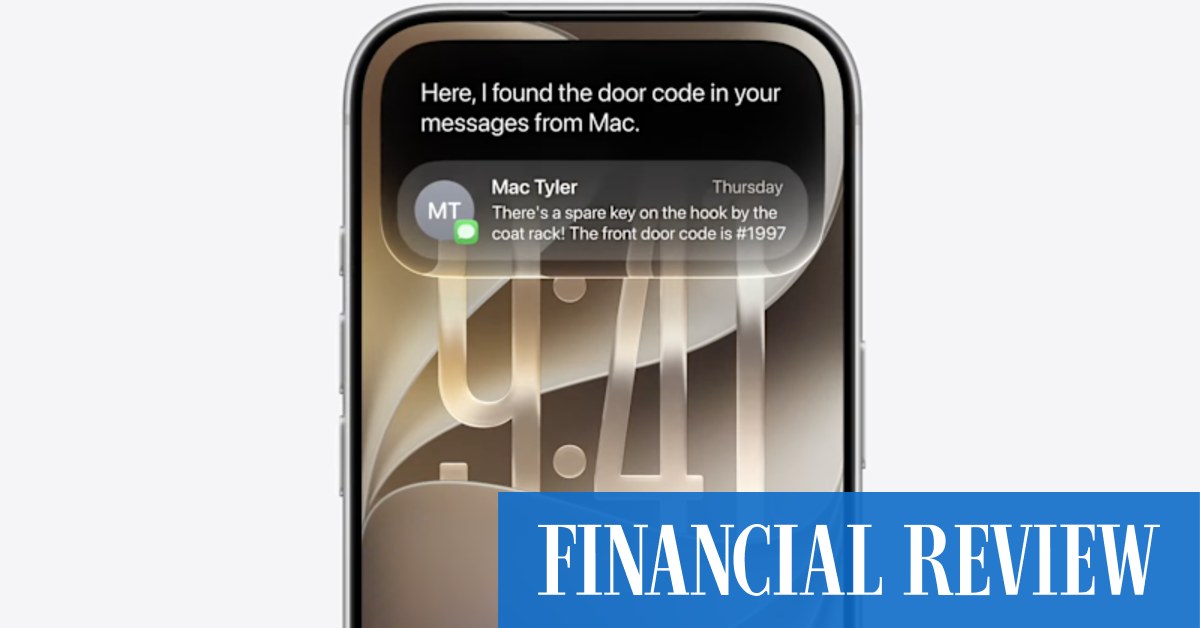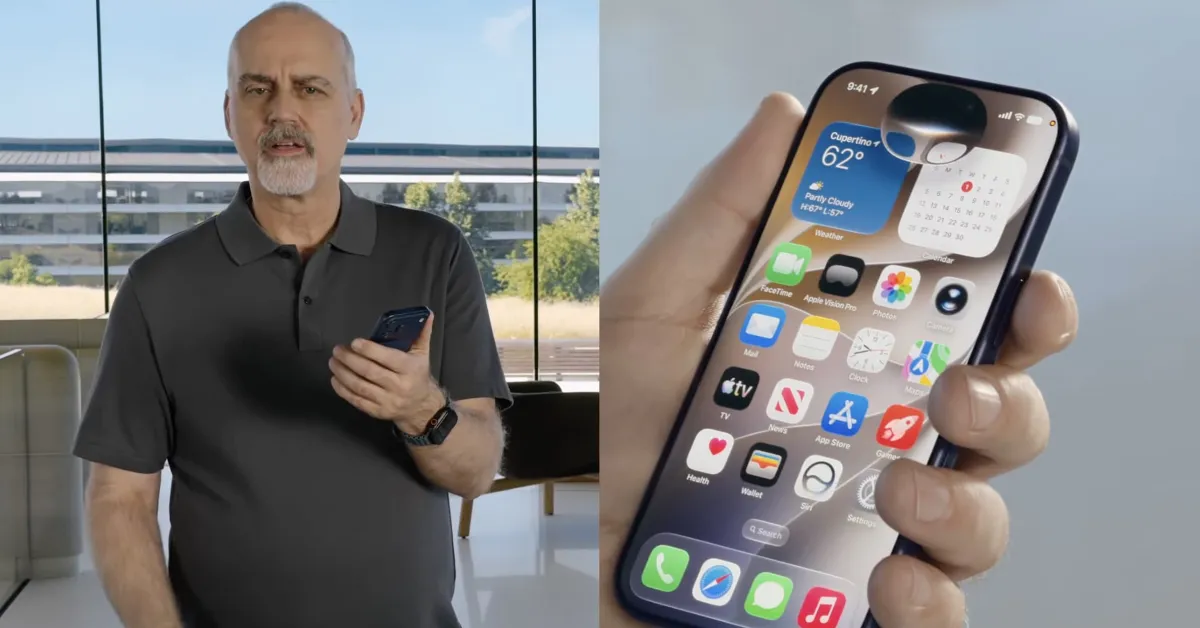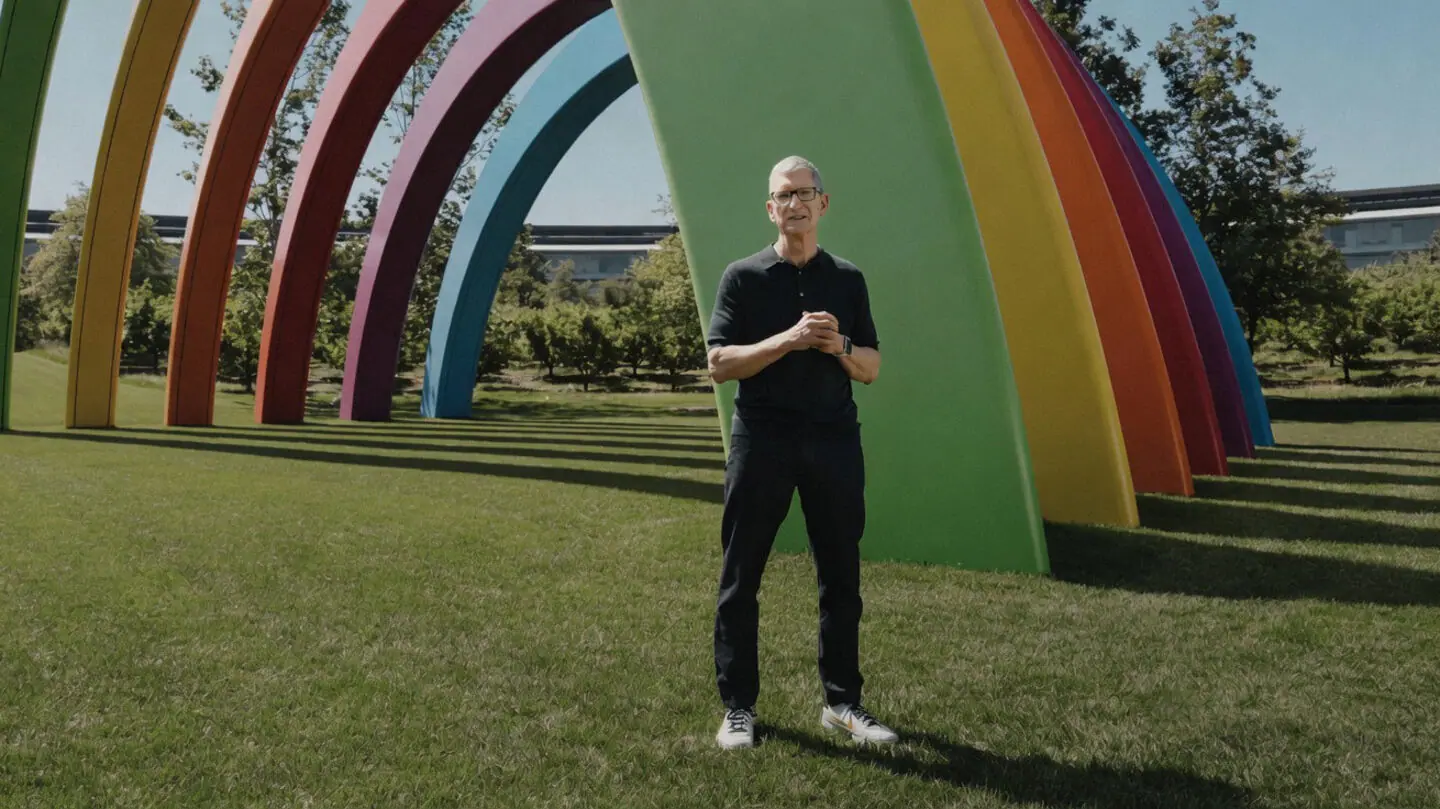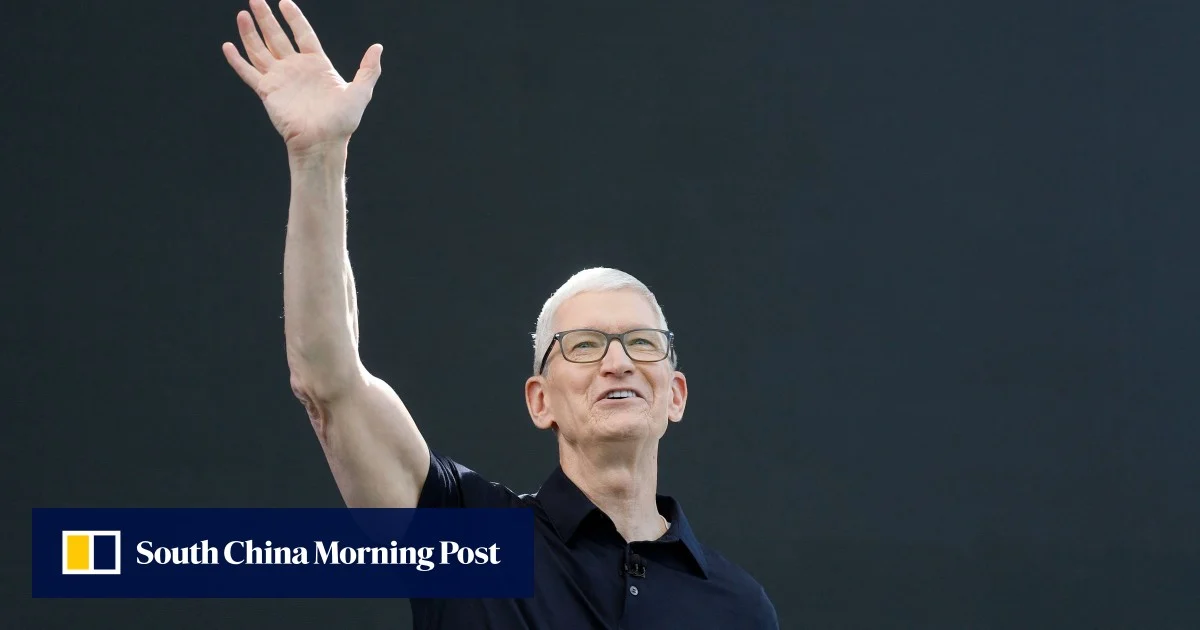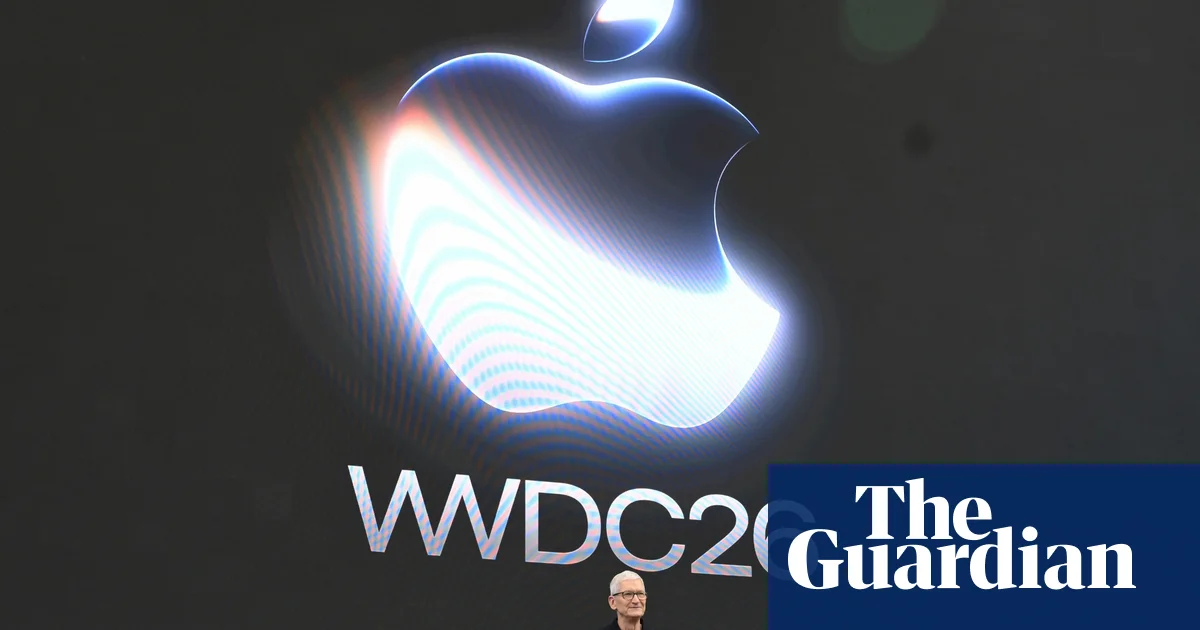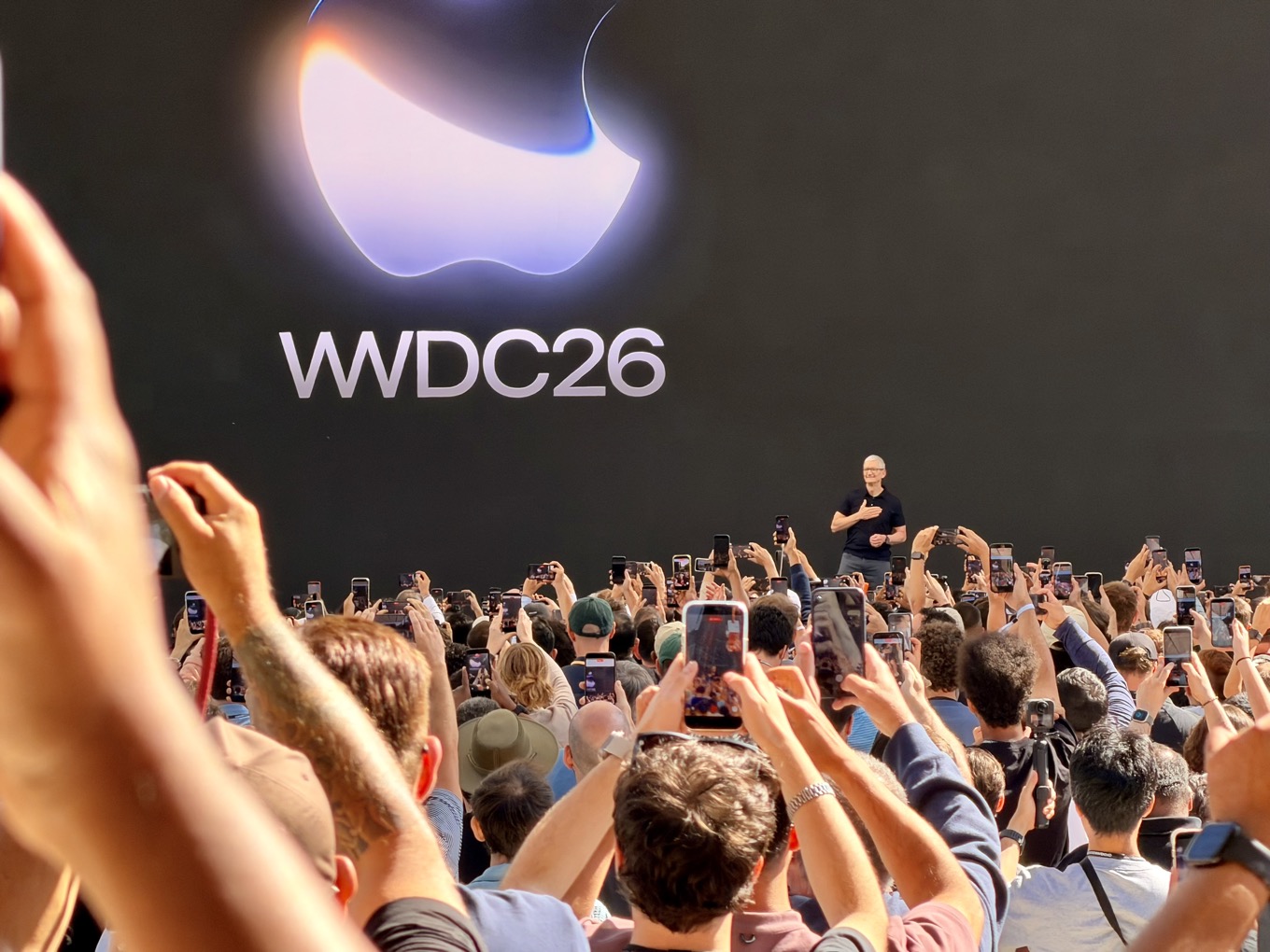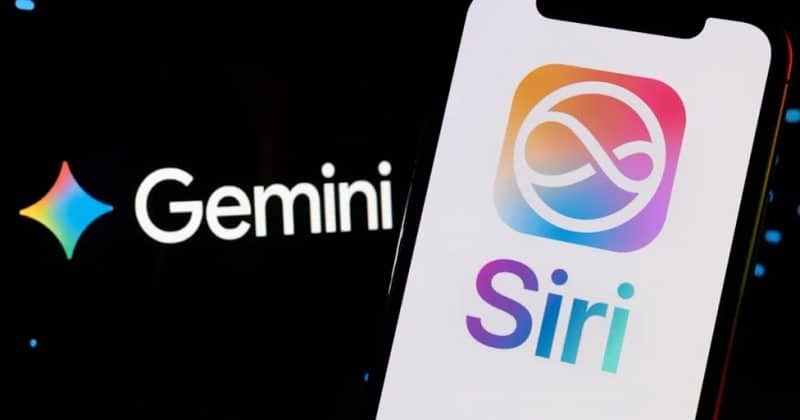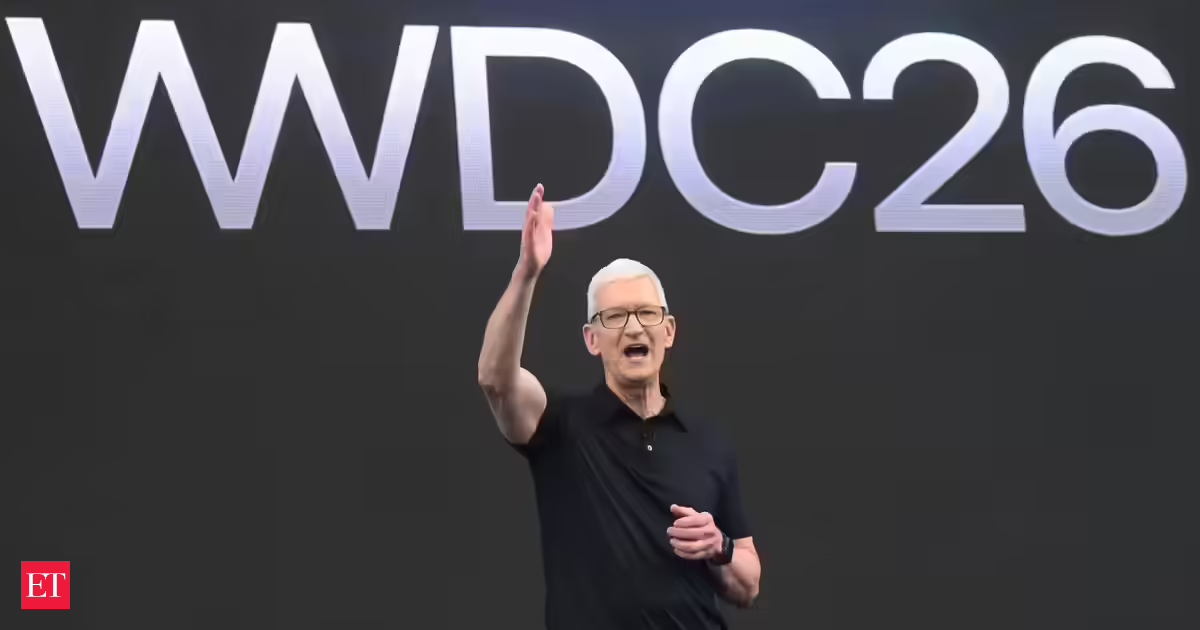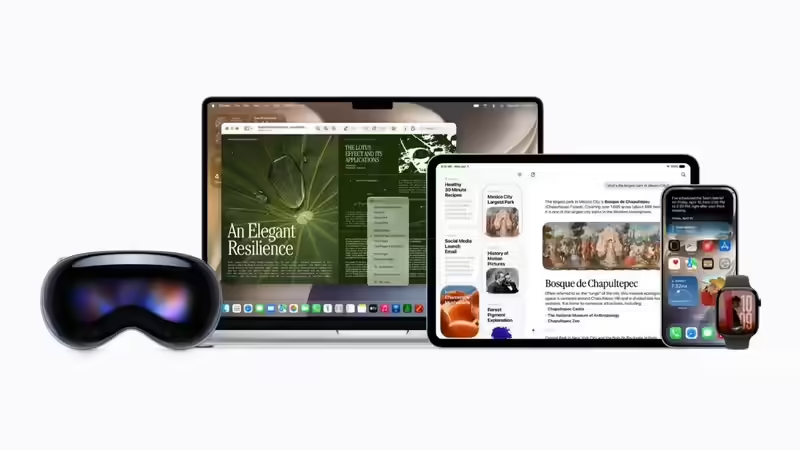
Photo credit: apple.comFor a year, the iPhone’s headline was a look. This year it is a voice. At its WWDC 2026 keynote on 8 June, Apple introduced Siri AI — an entirely new assistant built on the next generation of Apple Intelligence, powered in part by Google’s Gemini — and finally delivered the talking, reasoning Siri it had promised, advertised, and then yanked back two years ago. The demos landed. Whether the shipping version lands is the only question that matters now, because if it does, Apple has not merely fixed Siri. It has handed itself the most persuasive reason to upgrade an iPhone in years.Key TakeawaysSiri AI, the all-new assistant Apple unveiled at WWDC 2026 on 8 June, runs on the next-generation Apple Intelligence, built with Google’s Gemini, and reaches across iPhone, iPad, Mac, Apple Watch and Apple Vision Pro.It folds personal context, on-screen awareness, broad web knowledge and systemwide app actions into a single assistant, with a dedicated app that syncs conversations privately across a user’s devices.Siri AI needs an iPhone 15 Pro, 15 Pro Max, or an iPhone 16 model or later, and arrives as a beta later this year in English first — so the headline feature is, for now, still a promise.Apple made child safety a second pillar, with deeper parental controls and a redesigned Screen Time — a privacy-led pitch that doubles as a reason for parents to keep the whole family on iOS.Why does a working Siri count as a comeback? Because Apple sold this exact assistant once already, and then took it back. Cast your mind to WWDC 2024. On this same stage, Apple demonstrated a more personal Siri — one that could pull a flight number out of your mail, act across your apps, read what was on your screen. It looked superb. The company put it on its website and built a television advertisement around it, starring Bella Ramsey, hung on the iPhone 16. Then the record never shipped. In March 2025, Bloomberg’s Mark Gurman reported the personalised Siri had slipped for the foreseeable future, and within days, on a conveniently quiet Friday, Apple admitted the features would now come “in the coming year.” It pulled the Bella Ramsey ad. It papered its marketing pages with disclaimers. It collected at least three California lawsuits over capabilities it had marketed and failed to ship. For a company whose entire brand rests on the promise that the thing simply works when you lift it from the box, advertising a feature and then withdrawing it was the rare self-inflicted wound. The reviews wrote themselves. The late-night hosts had a fortnight of material. And the next time Apple said the word “Siri” on a stage, the room would remember.The rot was architectural, and that matters, because it shapes the comeback. The 2024 Siri was bolted onto the old assistant — a rule-based, pipeline-heavy thing Apple had been patching for a decade — using App Intents to reach inside apps. It buckled in testing. The more an assistant has to reason across your screen and your apps, the harder it leans on a system that was never built to think, and the heavier the models it has to run on hardware that can barely carry them. Some Apple engineers, by several accounts, concluded the whole edifice needed knocking down. For users, the price was simpler. Siri had long since become the assistant you stopped asking, and an advertised fix that vanished only proved the instinct right. The difficult debut album, recorded at expense, promoted on tour, then quietly shelved while the fans drifted off.How Apple rebuilt Siri, and the rival it called for helpApple tore the assistant down to the studs and rebuilt it on a new architecture — and it brought in an outside producer to do it. At WWDC 2025, with the personalised Siri pointedly missing from the keynote, Federighi had been candid in a way Apple rarely is: the company had shipped a first-generation Siri while quietly building the deeper, end-to-end second-generation system it knew it actually needed. Siri AI is that second system. It runs on the next generation of Apple Foundation Models. And those models are custom-built with Google and its Gemini models, working on the device and on Apple’s servers through Private Cloud Compute, with a new orchestrator deciding what stays on the phone and what goes to the cloud.What does end-to-end actually buy? Everything, it turns out. The old assistant heard you, guessed your intent from a fixed menu of possibilities, then passed the job to whichever module it thought fit — a relay race with a fumbled baton at every exchange. The second-generation system reasons in one piece, from your words straight to the action. That is why it can hold a thread, weigh what is on your screen, and judge for itself whether a request is light enough to settle on the phone or heavy enough to route to Private Cloud Compute. The orchestrator is the conductor of that decision. It is also the precise thing Apple could never have grafted onto the decade-old Siri, which is the whole reason the 2024 version had to die rather than be patched once more. You cannot bolt a brain onto a switchboard.Sit with that for a second. Apple’s comeback runs on an engine licensed from Google — the company whose Android it has spent fifteen years defining itself against. The reported tab is around a billion dollars a year. The corporate backstory was its own soap opera: through 2025 Apple pulled Siri away from its long-time AI chief and handed it to Mike Rockwell, the executive behind the Vision Pro, while Federighi and Eddy Cue cut the Google deal, a scramble that by several reports went all the way up to Tim Cook once the depth of the hole became clear. That it came to this is its own admission. Apple, the most vertically integrated company in technology, the one that designs its own silicon precisely so it leans on no one, looked at the defining software shift of the decade and concluded it needed outside help to get there in time. Pride is expensive. Shipping late is more expensive still. Cupertino, for once, chose the cheaper humiliation. Two houses that knife each other on every phone shelf on earth went into the studio together. The supergroup nobody booked. And on first listen, the harmonies are tighter than anything either side managed alone.What can Siri AI actually do? It does the things the 2024 version only described. Ask Siri AI to find the restaurant a friend texted you about, dig a hotel confirmation out of an ancient email, or round up the photos from last month’s trip, and it goes and finds them across your messages, mail and library — that is the personal context Apple kept promising. It watches your screen, too: get a text about a potluck and you can brainstorm what to bring, then drop the answer into Notes without lifting the pen. It reaches the open web for a fact and then holds a proper conversation about it. And it acts — drafting an email from nothing, editing and sharing a set of photos on command. Four tricks that used to live in four places now behave like one assistant. This is what the user-at-the-centre pitch means in practice, and for once it is more than a slogan. Put two of these together and the shift shows plainly. The old Siri answered one sentence at a time and forgot the last; ask the new one to find a thread, sum it up, and draft the reply, and it carries the errand from start to finish without dropping you back to the home screen between steps. The unit of work has changed — from the single command to the whole task.Two things matter more than any single feature. There is a dedicated Siri app now, syncing your conversation history privately across devices over iCloud, so a thread you start on a Mac picks up on your iPhone. And Visual Intelligence has gone everywhere — Camera “Siri mode” on iPhone splitting a bill over Apple Cash or reading the calories on a plate, the screenshot flow on iPad, a keyboard shortcut on Mac, a glance on Vision Pro. There is also a quieter win the long-suffering will notice first: a sharper on-device model, more expressive and adjustable voices, and dictation that finally lands punctuation where you meant it. Federighi called the result a “dramatically more capable and conversational” assistant. The catch arrived in the small print. Apple Intelligence and Siri AI run only on the iPhone 15 Pro, 15 Pro Max, and the iPhone 16 line and newer, and even there Siri AI ships as a beta later this year, English first. The thing everyone came to see is, a second time, a thing most people will be waiting for.The bigger AI build beneath the headlineSiri is the peak; the mountain is larger. The same next-generation Apple Intelligence runs through the apps people open without thinking, and that breadth is the real tell of how seriously Apple is taking this. Photos gets genuine editing brains — a Spatial Reframing tool that shifts a shot’s perspective after the fact, an Extend tool that straightens a horizon and fills the gap, a sharper Clean Up — with anything AI-altered stamped by a hidden SynthID watermark, so an edited image owns up to being edited. Safari can herd a mess of tabs into topics on its own, watch a page for a price drop, and conjure a custom extension from a sentence. Passwords can walk through a site and quietly upgrade a weak login to a strong one. Image Playground moves to photorealistic generation on Private Cloud Compute. Messages and Mail learn how you write; the Phone app surfaces your booking code the moment you call the airline; Shortcuts assembles an automation from plain English. Even VoiceOver and Magnifier get cleverer. The single is what people will hum. The album is where the work is.Is Apple too late? On the calendar, yes embarrassingly so. The assistant war was effectively founded by OpenAI’s ChatGPT, which has since crossed roughly a billion weekly users and launched its own agentic browser. Google has dissolved its old Assistant into Gemini, which is taking over Android outright, and its 2026 layer proactive, able to act across apps and steer the web for you, starts rolling out this summer on the Galaxy S26 and the Pixel 10. Samsung’s Galaxy AI rides the same Gemini engine. Amazon rebuilt the decade-old Alexa as the large-language-model-era Alexa+ and shoved it onto the web to chase ChatGPT and Gemini head-on. Microsoft has Copilot wired through Windows and Office. While Apple was rebuilding, the frontier moved past chat entirely, to agents that book, buy and act, with Google and OpenAI now running rival protocols to wire that commerce into the web. This is the field Apple steps into, years after the gun. It is exactly where Tarun Pathak, research director at Counterpoint Research, puts the stakes. Agents, he argued, can become the primary way people touch their devices, and while the agentic era may unfold in ways nobody foresees, it is “too big a risk to miss out and Apple must follow swiftly.” Apple’s reply is not to be first. It is to be everywhere its users already live, and to make its agent act through the apps they already own rather than through a browser stapled on the side.And “act” is the word carrying the weight. The race has moved past answering questions to finishing tasks — booking the table, buying the basket, filling in the form and the rival camps are already laying the plumbing for software to transact with the web on a user’s behalf, OpenAI and Google each pushing competing standards for exactly that. ChatGPT now ships inside its own browser. Copilot sits in the software half the working world opens by nine each morning. Alexa+ wants to run the house from the kitchen counter. Each is racing to become the layer you speak to before you touch anything else, and each holds a head start measured in years. Apple is betting that the layer people trust most is the one already holding their photos, their messages and their bank cards — and that trust, unlike a model, takes more than a year to build.Why being last has worked for Apple beforeLateness is Apple’s oldest move, not a fresh humiliation. The iPod came years after the first MP3 players and buried them. The iPhone followed BlackBerry and Nokia, and the smartphone is now remembered as an Apple idea. The iPad was not the first tablet; the Apple Watch was not the first smartwatch; AirPods were not the first wireless earbuds. Each became the centre of gravity anyway. The pattern is consistent enough to be a strategy: let the others define a category and tire themselves out proving it exists, then arrive with the version that is integrated, legible and stitched into everything the customer already owns.That is the playbook, now aimed at AI, and it rests on a moat the rivals struggle to dig. Start with scale — roughly 2.5 billion active Apple devices, with the AI running on silicon the customer already paid for, while the competition pours fortunes into data centres to serve their models. Apple’s slow march let it dodge most of that spending, though the bill arrives in its own way: finance chief Kevan Parekh has signalled the company will end its long habit of handing spare cash back to shareholders, clearing room to invest. Then there is privacy. Private Cloud Compute is built so your data, once it leaves the phone, is neither stored nor readable by Apple or anyone else, and outsiders are invited to keep checking. For a company that sells hardware rather than attention, that is a wall the advertising-funded houses cannot easily raise, because their business sits on the wrong side of it. And there is a philosophy under all of it that travels furthest of all. Where the rest of the field has spent two years racing to ship the smartest model, Apple built its story around the user, and Federighi took a plain swipe from the stage at rivals who chase AI for its own sake rather than for the person it is meant to serve. Convenient, for the company that showed up last. Also true. The mechanism that makes it real is the developer base: Siri AI reaches a third-party app’s data and actions when the developer wires into Spotlight and App Intents, which means the moat is not only the devices but the millions of developers already building for them. Google can match the model. Matching the model and the devices and the developers and a decade of privacy posture, all at once, is the harder trick.The second headline: keeping children saferThe day’s quieter announcement may matter just as much to a particular kind of buyer. Apple gave child safety a pillar of its own, and the timing is no accident. In an age when AI has made both the making and the reaching of content almost frictionless — when a convincing fake or an explicit image is one sentence away from anyone a parent’s anxiety has narrowed to a few hard questions. How long is the child on the device? What can they see on it, in private? Who can reach them through it? Apple’s answer is a thicket of guard rails that hand the parent more control and less guesswork. A child account now switches on age-appropriate protections in one step. A Setup Assistant lets a parent pick exactly which apps a child may open, and keep that grip as new ones appear. Communication safety can demand a parent approve each new contact, and step in on its own when explicit or violent content is shared, building on the on-device detection Apple already runs without sending images anywhere. Daily time allowances span Entertainment, Games and Social Media, anchored to a recommended figure Apple says comes from clinical and child-development guidance, with schedules for which apps are reachable when. Screen Time itself has been rebuilt around an at-a-glance view. Google’s Family Link has done a version of this on Android for years, so the ground is not virgin. What Apple is selling is depth — the controls woven into the operating system rather than bolted on top — and the strategic logic mirrors Siri exactly. A parent who sets a child up inside iOS, with these rails in hand, has a strong reason to keep the family there. Peace of mind is a value proposition. In a household, it compounds across every device bought next.What does Siri AI mean for India?For Indian users, the innings reads in two halves. On the front foot: Apple Intelligence and Siri AI support English, which is how a large share of India’s iPhone owners already run their phones, so the features land without waiting on Hindi or regional languages — none of which, it should be said, are on the launch list yet. India also dodges the harder dismissals taken elsewhere. Siri AI is held back from China entirely while Apple works through the regulators, and from iPhone and iPad in the European Union at launch, while an eligible Indian iPhone set to English should collect the beta when it opens later this year. Against two of Apple’s biggest markets, India is ahead by omission — playing itself in while others are stranded at the crease. That counts for plenty in the market Apple has been building towards with new stores, local assembly and a fast-growing premium base. None of that is small. India is the market Apple has spent half a decade courting in earnest — assembling iPhones on Indian lines, opening its own retail, watching a young and aspirational middle class trade up to a first premium phone. An English-first assistant that works on the day it ships, in a country that runs much of its digital life in English, meets that buyer exactly where they stand. The rivals will arrive in India too. Few will arrive already woven into the phone the buyer has chosen.The deeper Indian story belongs to the second headline. India has written this exact anxiety into law. The Digital Personal Data Protection Act and its 2025 rules demand verifiable parental consent before any platform processes the data of anyone under 18, and they ban tracking, profiling and targeted advertising aimed at children, with penalties reaching Rs 200 crore — a far stricter line than the GDPR’s or America’s COPPA. Apple did not build its parental controls for India. But they arrive in a market whose own regulator is pushing every platform towards precisely this posture, which turns “choose iOS for your child” from a marketing line into something closer to compliance comfort. In a country with one of the largest young populations online anywhere, that is a partnership at the crease worth more than any single flashy stroke — Apple and the Indian rulebook, for once, batting the same way.So has Apple won? Not yet, and not on its own engine. The throne is within reach; it is not held. The strongest case against everything above is also the bluntest: Apple stood here before, sold this assistant, took it back, and credibility burned once is not lent twice. The comeback runs on Gemini — an enabler today, a dependency tomorrow, a rival’s engine wired into Apple’s most strategic product at the very moment regulators on two continents are already prising at the commercial ties between these two companies, whose existing search arrangement is itself the subject of an antitrust fight. Lean on a rival’s model for your most strategic product and you inherit that rival’s weather — its legal exposure, its pricing power, its roadmap calls. Apple insists it can swap the Gemini engine out for its own models in time, and the on-device work suggests it means to. Insisting and shipping are different records, as the past two years taught everyone watching. For now, the most Apple thing about the new Siri is the one part Apple did not build. And a lock-in that shuts out China and the European Union is, for now, a wall with two large holes in it. None of that is fatal. None of it changes the shape of the bet. The financial logic is why Cupertino treats this as more than a software refresh: its installed base has been clinging to old iPhones, waiting for a reason to upgrade that faster chips and sharper cameras no longer supply, and an assistant that genuinely changes how the phone works is the rare reason that moves a replacement cycle — and a moved cycle across a base this size is counted in tens of millions of units. That is the prize behind the supercycle talk. Not a cleverer Siri for its own sake, but the upgrade trigger Apple has gone years without. The band that walked out on its own record two years ago has announced the comeback album, an unlikely co-writer in the credits and a release date that slips past the headline. Whether it goes to number one is, at last, a question of shipping rather than promising.Frequently Asked QuestionsWhat is Siri AI, and how is it different from the old Siri? Siri AI is an all-new assistant built on the next generation of Apple Intelligence, with Google’s Gemini in the engine. The old Siri followed fixed rules and rarely held a thread; Siri AI is conversational, draws on your personal context and what is on your screen, pulls live answers from the web, and can act across your apps.**Which iPhones get Siri AI? **Siri AI runs on the iPhone 15 Pro, 15 Pro Max, and the iPhone 16 line and newer — the same hardware bar as Apple Intelligence. Older iPhones that move to iOS 27 keep the existing Siri, so the device list for the operating system is wider than the list for the new assistant.When will Siri AI be available? Developers can test it now, and Apple says Siri AI reaches users as a beta later this year, in English first, with more languages following. That is later than the general iOS 27 release expected this autumn, so the headline feature trails the software it ships inside.Does Apple really use Google’s Gemini for Siri? Yes. Apple has confirmed the next generation of its Apple Foundation Models is custom-built in collaboration with Google and its Gemini models, running on-device and on Apple’s Private Cloud Compute servers. Apple keeps the data-handling under its own privacy architecture, and it stayed quiet on the commercial terms.Why is Siri AI missing in the EU and China? Apple is holding Siri AI back from iPhone and iPad in the European Union at launch and from China entirely, in both cases citing regulatory work it still has to finish. Other markets, including India when set to English, are in line to receive the beta later this year.What did Apple announce for child safety? Apple added deeper parental controls and rebuilt Screen Time: one-step age-appropriate protections through child accounts, parent approval for each new contact, automatic intervention on explicit or violent content, and daily app-time allowances guided by child-development advice. The pitch is privacy-led peace of mind for parents choosing a phone for their kids.end of article
Apple Unveils New Siri AI at WWDC 2026 in Its Boldest Comeback Yet
Find latest technology news, gadgets reviews & ratings. Popular & latest gadgets specifications, features, prices, photos & videos. Trending mobile phone comparisons, slideshows, how tos and videos for latest mobile phones, tablets, technology news updates.
3,910 words~18 min read