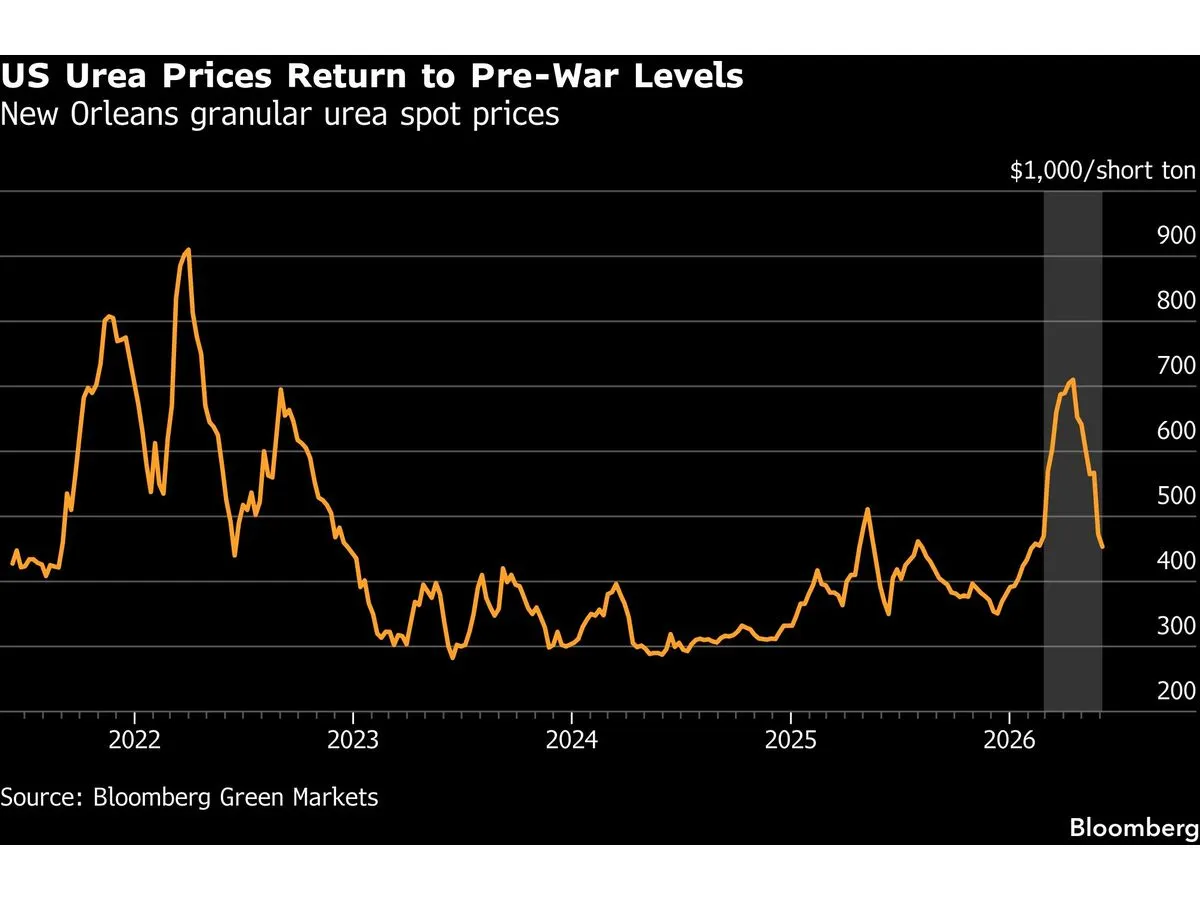
Skip to Content News Archives Economy Energy Oil & Gas Renewables Electric Vehicles Mining Commodities Agriculture Real Estate Mortgages Mortgage Rates Finance Banking Insurance Fintech Cryptocurrency Work Wealth Smart Money Wealth Management Investor Personal Finance Family Finance Retirement Taxes High Net Worth FP Comment Executive Women Puzzmo Newsletters Financial Times Business Essentials More Innovation Information Technology FP500 Podcasts Small Business Lives Told Tails Told Shopping Financial Post Store Obituaries Place a Notice Advertising Advertising With Us Advertising Solutions Postmedia Ad Manager Sponsorship Requests Classifieds Place a Classifieds ad Working Profile Settings My Subscriptions Saved Articles My Offers Newsletters Customer Service FAQ News Economy Energy Mining Real Estate Finance Work Wealth Investor FP Comment Executive Women Puzzmo Newsletters Financial Times Business Essentials HomePMN BusinessCrop and Fertilizer Markets Wipe Out Iran War Risk PremiumThe Iran war risk premium that swept through crop and fertilizer markets is rapidly evaporating as fears of prolonged supply disruptions fade, easing one of the biggest threats to food inflation.Author of the article: You can save this article by registering for free here. Or sign-in if you have an account.ft]z0t6rqba9agdzudok)fam_media_dl_2.png Bloomberg Green Markets(Bloomberg) — The Iran war risk premium that swept through crop and fertilizer markets is rapidly evaporating as fears of prolonged supply disruptions fade, easing one of the biggest threats to food inflation.Subscribe now to read the latest news in your city and across Canada.Exclusive articles from Barbara Shecter, Joe O'Connor, Gabriel Friedman, and others.Daily content from Financial Times, the world's leading global business publication.Unlimited online access to read articles from Financial Post, National Post and 15 news sites across Canada with one account.National Post ePaper, an electronic replica of the print edition to view on any device, share and comment on.Daily puzzles, including the New York Times Crossword.Subscribe now to read the latest news in your city and across Canada.Exclusive articles from Barbara Shecter, Joe O'Connor, Gabriel Friedman and others.Daily content from Financial Times, the world's leading global business publication.Unlimited online access to read articles from Financial Post, National Post and 15 news sites across Canada with one account.National Post ePaper, an electronic replica of the print edition to view on any device, share and comment on.Daily puzzles, including the New York Times Crossword.Create an account or sign in to continue with your reading experience.Access articles from across Canada with one account.Share your thoughts and join the conversation in the comments.Enjoy additional articles per month.Get email updates from your favourite authors.Create an account or sign in to continue with your reading experience.Access articles from across Canada with one accountShare your thoughts and join the conversation in the commentsEnjoy additional articles per monthGet email updates from your favourite authorsSign In or Create an AccountorPrices of urea — one of the world’s most important crop nutrients — have plunged more than 30% since mid-April, wiping out the gains triggered by the conflict. That’s dragging down prices of corn, wheat and other farm products, with the Bloomberg Agriculture Spot Index tracking 10 of the world’s most-traded crops falling to its lowest level since March 5 on Friday.It’s a dramatic reversal from the early weeks of the war when the effective closure of the Strait of Hormuz choked off about a third of globally traded urea supplies, sending prices soaring and leaving farmers scrambling for alternatives. The decline may curb farm input costs and slow the pace of food inflation, but experts caution that energy prices remain elevated, while fertilizer is still sensitive to flare-ups in Middle East tensions.Get the latest headlines, breaking news and columns.By signing up you consent to receive the above newsletter from Postmedia Network Inc.A welcome email is on its way. If you don't see it, please check your junk folder.The next issue of Top Stories will soon be in your inbox.We encountered an issue signing you up. Please try again“What we’re seeing is the market unwinding the risk premium,” said Kang Wei Cheang, an agricultural broker at StoneX in Singapore. “That said, we’re not fully out of the woods. The initial shock was real.” The collapse in prices of urea, the most widely-used nitrogen fertilizer, came after China eased export restrictions and as the market takes into account supplies stranded at Hormuz, according to FertiStream, one of the world’s largest fertilizer traders. Lackluster grain prices have also curbed demand from farmers, said Milton Sato, the company’s head of global market intelligence.Some South Asian producers resumed output after curtailments in the early weeks of the conflict.The urea market is also seasonal and the planting season in much of the Northern Hemisphere has wound down, while Brazil deferred purchases and reduced imports from a year earlier, according to Bloomberg Intelligence. As concerns over Middle East supply ease, buyers have become less concerned about immediate shortages, according to Andrew Whitelaw, founder and director at agriculture market analysis service Episode 3. “The fertilizer market has undergone a remarkable shift over the past month,” Whitelaw wrote in a website post on Tuesday. “Today, the conversation has changed to how much further prices might fall.”Crop TurnaroundThe turnaround in crop prices has also been marked. The Bloomberg Agriculture Spot Index has fallen about 10% from a peak reached in mid-May and is approaching levels seen before the war, when bumper harvests and ample global stockpiles had weighed on farm commodities. Favorable US crop conditions and the start of Northern Hemisphere harvests have ramped up global supply, driving grain prices lower. Global stockpiles remain ample and even with higher farm input costs and El Niño risks, “the global balance sheets are not concerning,” said Ishan Bhanu, Kpler’s lead agricultural commodities analyst.Still, as the conflict drags on, the market continues to be sensitive to energy and geopolitics, and any renewed disruption can push prices higher again, StoneX’s Cheang said. Fuel costs remain elevated, putting pressure on food and grocery prices. Brazil will be key to watch. Urea prices should firm up in the second half of the year, starting to rise as early as July as buyers step up purchases of the nutrients, according Alexis Maxwell, an analyst at BI in Chicago. “All eyes now pivot to Brazil,” she said, while adding that she believes urea prices have reached their peak for 2026.Traders will also focus on how farm-level fertilizer prices perform later this summer and into the fall, when farmers start securing supplies for next year’s crop, according to David Ortega, a professor of food economics at Michigan State University. If a peace deal comes together and a ceasefire holds, prices should stabilize, but inflationary risks remain, he said.“The market correction is good news, but I’d be careful about treating it as the end of the story,” Ortega said. “There are still many inflationary pressures at play from the conflict, plus a great deal of uncertainty.”—With assistance from Pyotr Kozlov and Eleanor Thornber. Join the Conversation This website uses cookies to personalize your content (including ads), and allows us to analyze our traffic. Read more about cookies here. By continuing to use our site, you agree to our Terms of Use and Privacy Policy.
Crop and Fertilizer Markets Wipe Out Iran War Risk Premium
The Iran war risk premium that swept through crop and fertilizer markets is rapidly evaporating as fears of prolonged supply disruptions fade, easing one of the big…
1,172 words~5 min read