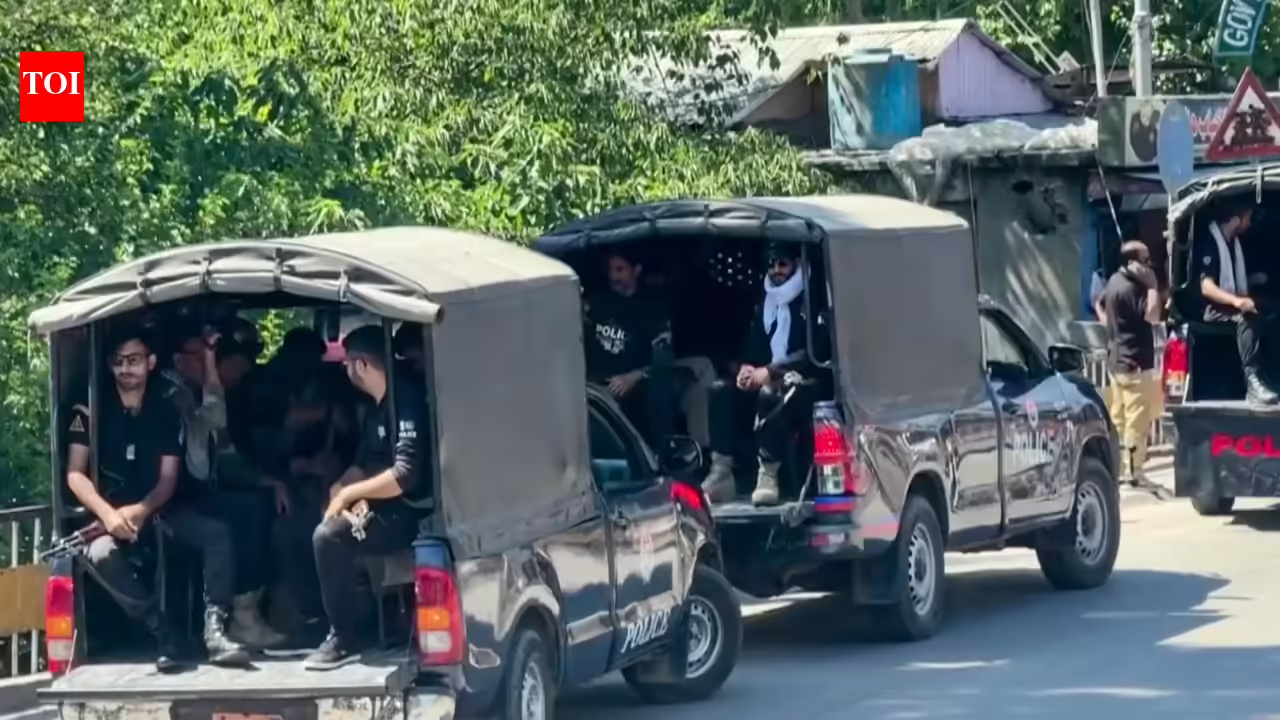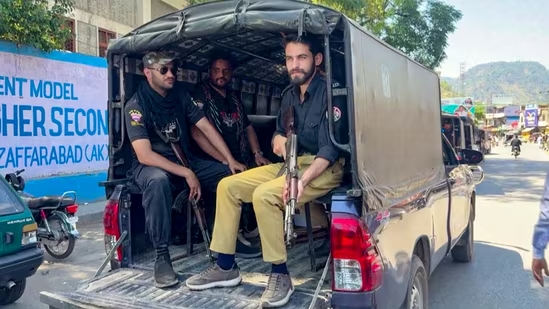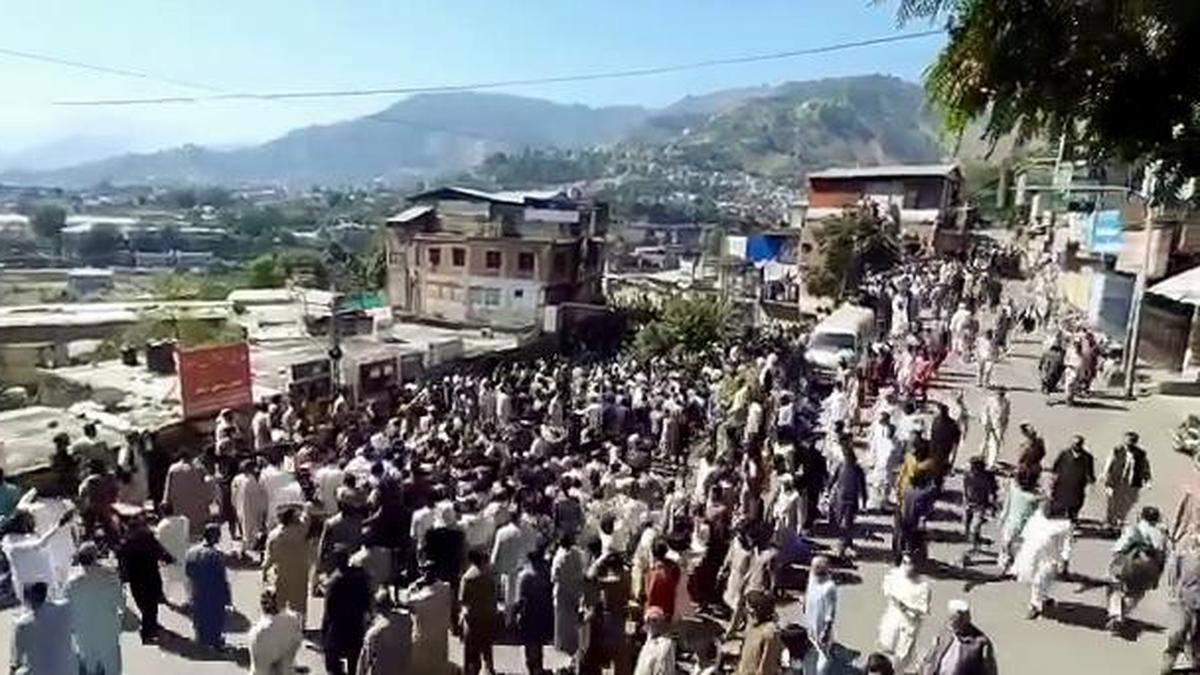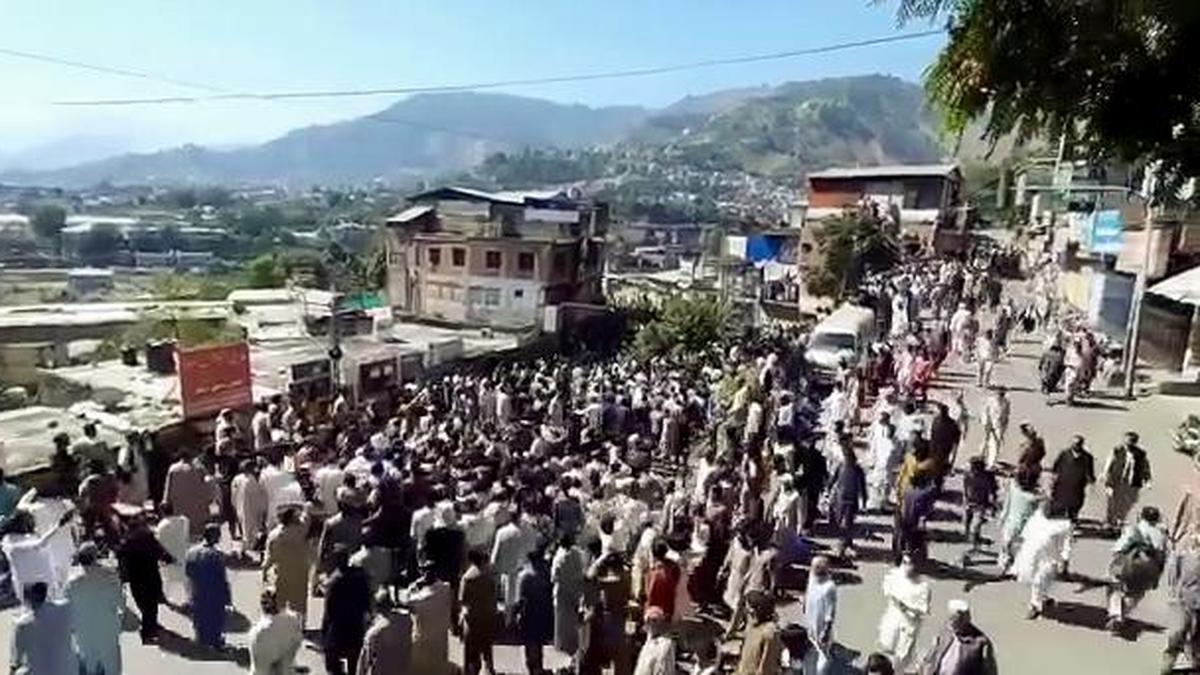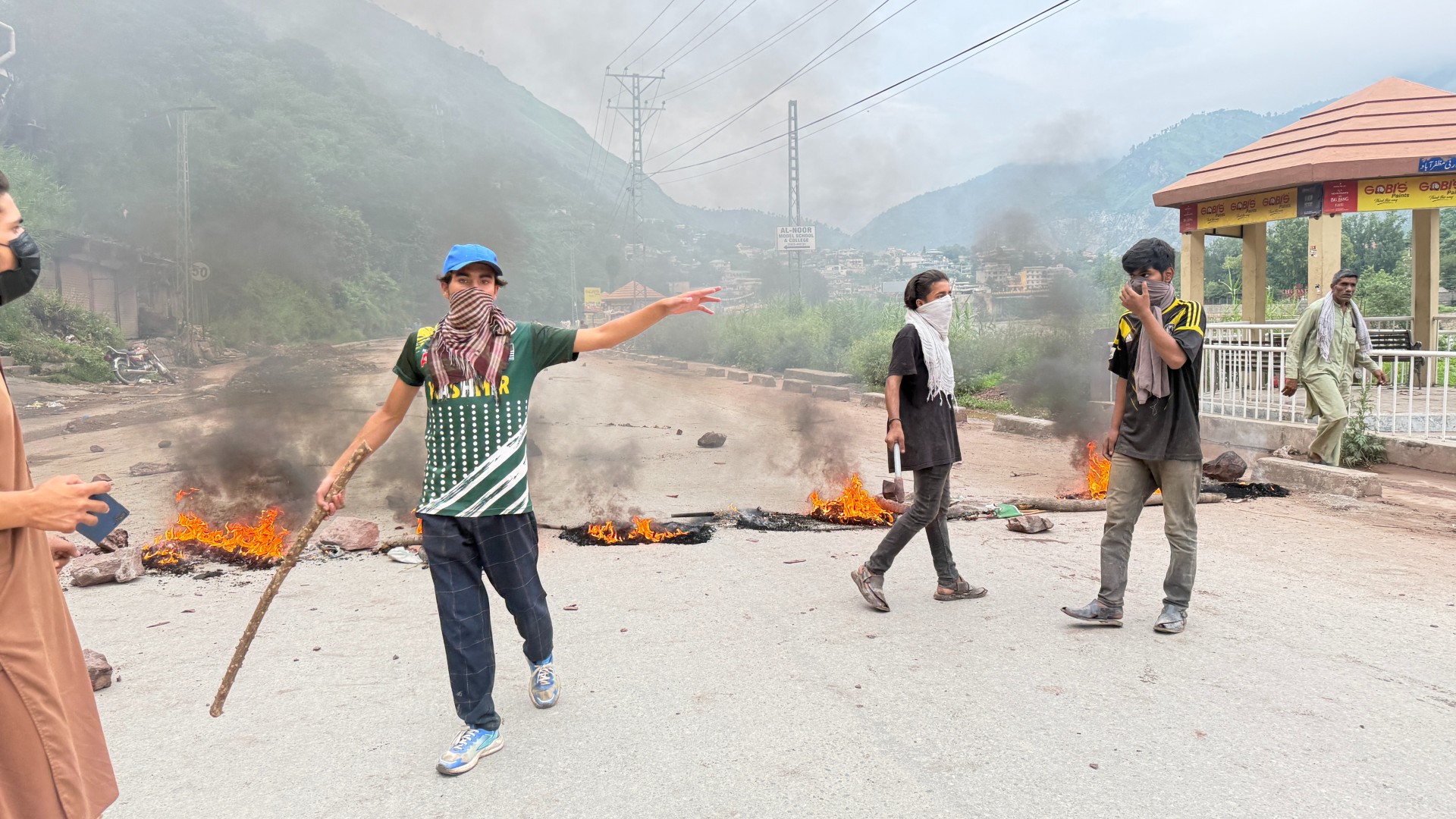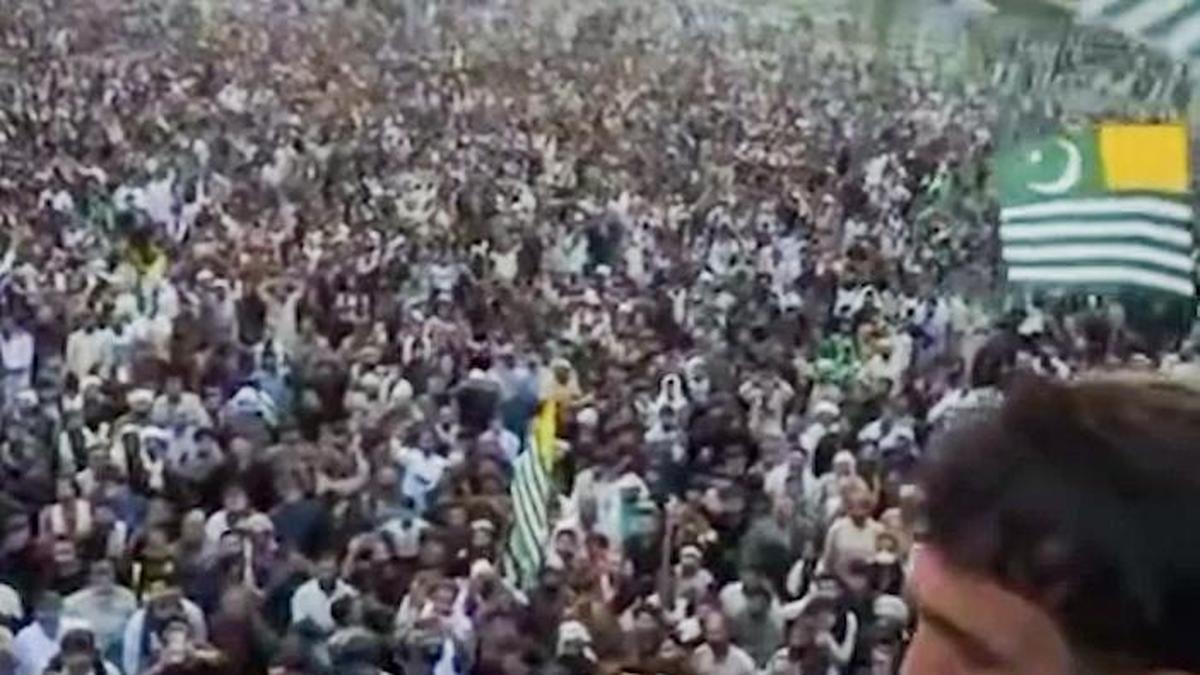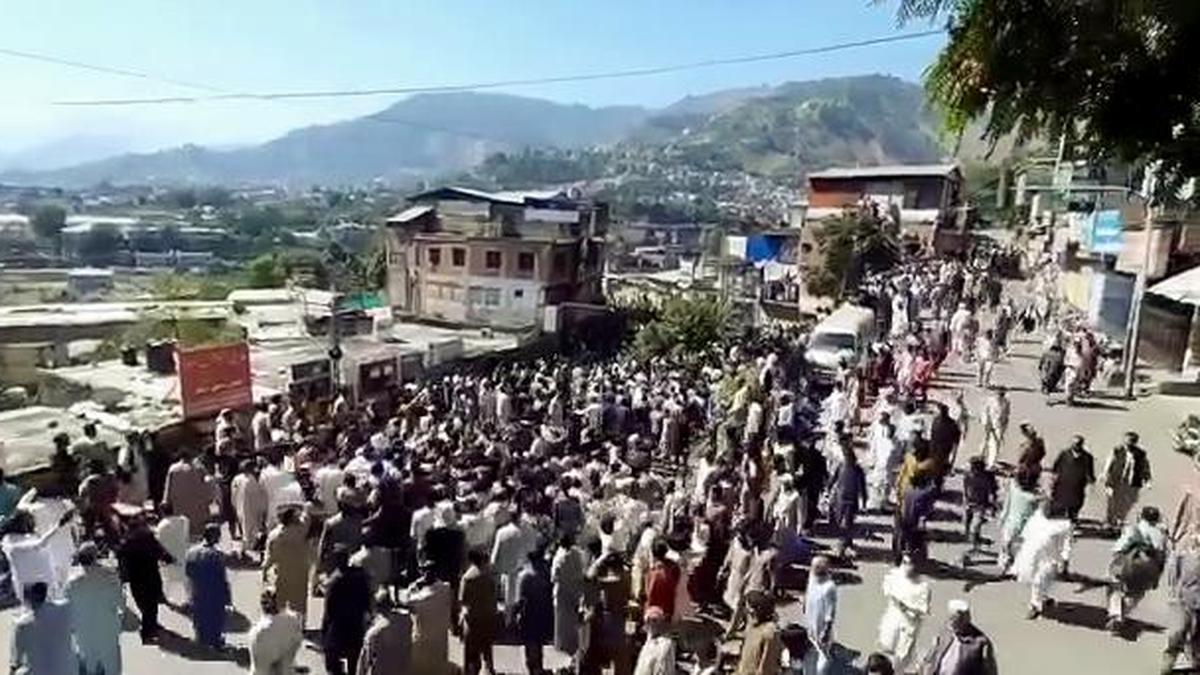
Nearly two decades ago, a person from Pakistan’s Punjab asked me, curiously, why people in Pakistan-administered Jammu and Kashmir appeared so antipathetic towards Punjabis, even though, as he put it, “we almost spoke a similar language.” Perhaps he assumed that someone who also had one side of the family that had migrated from the region during the 1947 Partition riots and who could converse in that language might offer a more detached assessment. Coincidentally, I was then researching my book — Across the LoC — on the region. What stayed with me was not merely the question itself, but the deeper tensions it hinted at questions of identity, representation and the uneasy relationship between the region and Pakistan’s political centre. Nearly two decades later, those unresolved sentiments appear to be resurfacing in a new form.The latest events suggest that the public discontent simmering in Pakistan-administered Kashmir has once again entered a volatile and violent phase. Founded in 2023, the Jammu Kashmir Joint Awami Action Committee (JAAC), which emerged last year as a powerful grassroots platform mobilising around electricity tariffs, wheat subsidies and governance reforms, has renewed pressure on the regional administration over what it describes as unfulfilled commitments made during earlier negotiations. Authorities have responded by moving to ban the organization, declare it as a terrorist organization and detaining several of its supporters ahead of a planned mobilisation. JAAC, however, maintains that unresolved concerns, particularly institutional and electoral grievances, remain at the heart of the movement.Reports emerged of violence against protesters in the Rawalakot area, during which one protester, a local trader, was killed on June 5. The situation escalated further on the night of June 7, when at least eleven persons, including four law enforcement personnel, lost their lives and dozens more were injured. Around 15 people remain missing. The violence reportedly intensified around a military-run hospital where the deceased’s body had been kept, turning the facility into the epicentre of clashes. Yet the unrest did not emerge in isolation. The central belt of the region has a long history of volatility and resistance to perceived external control. The Sudhans, a prominent clan in the region, rose up in the early post-partition years against what they viewed as political exclusion and heavy-handed interference from Islamabad. This is a historical memory that continues to shape contemporary political sentiment.Against that backdrop, the current confrontation appears less like a sudden eruption and more like the latest expression of accumulated grievances. Last year, at least 15 people were killed in protests and subsequent clashes that eventually compelled the government to offer concessions. Fearing a repeat of that unrest, the Pakistan government formally declared JAAC a proscribed organisation on June 5 this year under the First Schedule of the Anti-Terrorism Act, 2014. Police arrested 72 individuals linked to the banned protest group, alleging the recovery of weapons, suspicious documents and material intended to disrupt public order. The unfolding confrontation has transformed the four million inhabited PAJK into a political volcano, underscoring how political and economic frustrations are increasingly intersecting with deeper questions of representation, institutional legitimacy and governance in the region.The situation has acquired a transnational dimension as a group of more than 30 British parliamentarians wrote to the U.K. Foreign Secretary Yvette Cooper expressing concern over reports of a communications blackout, arrests and escalating tensions in PAJK, urging the British government to closely monitor developments and engage diplomatically to prevent further deterioration. The letter, dated June 6 and led by Labour MP Imran Hussain, chair of the All-Party Parliamentary Group (APPG) on Jammu and Kashmir, cited reports from PAJK of internet and mobile service disruptions, restrictions on movement and a broad lockdown that had allegedly left residents unable to communicate with the outside world. Yet beyond competing narratives and external reactions ,which have often shaped discourse on the region without sustained engagement with realities on the ground, the current moment calls for a closer examination of the structural forces at play and a deeper understanding of the region’s society and history, both of which continue to underpin the demands being articulated today.Although the government claims to have accepted many of these demands, including withdrawing cases against protesters and providing compensation to families of those killed or injured during the protests, the JKJAAC argues that these concessions fall short. According to the protesters, the central grievance remains unaddressed: the demand for genuine political and economic empowerment. They also claim none of the major demands have been conclusively addressed, including the compensation to the aggrieved and reduction of electricity bills.Apart from this, there are two additional issues that appear difficult for the Pakistani establishment to accommodate and have increasingly become points of contention. One concerns the 12 reserved seats, commonly referred as “refugee seats”, in Pakistan for Pakistan-administered Jammu and Kashmir legislative assembly. The JKJAAC has called for the abolition of the 12 reserved “refugee seats” in Pakistan-administered Jammu and Kashmir’s Legislative Assembly. These refugee seats are designated for individuals and their families who migrated to Pakistan in 1947 from the Indian side of J&K. This contrasts with the narrative that undivided J&K remained untouched by communal upheaval in 1947. In reality, a large number of Hindus and Sikhs from Mirpur and surrounding areas of PAJK migrated into present-day India side of Jammu and Kashmir and the rest of India. On the other hand, a substantial number of Dogri or Punjabi speaking Muslims moved from Jammu plains to Pakistani Punjab as well and their cultural and economic assimilation in Pakistani Punjab was seamless.Pre-1947 demographic contextTo understand the current political dynamics, it is necessary to revisit the pre-1947 demographic context of Jammu and Kashmir. Before Partition, the demographic reality of the undivided princely state was that communities speaking allied languages, including Dogri, Punjabi, Pahari and Gojri, constituted the majority. Jammu province, which included both the plains and much of present-day mountainous PAJK, was also Muslim-majority, alongside the Kashmir Valley. Yet ethnic, geographical and cultural differences created a discernible gap between the political leadership of the two regions (Jammu and Kashmir valley), shaping their responses to the upheavals of 1947. This is the theme explored in greater detail in my book Across the LoC. Migration from the Kashmir Valley itself remained limited, although a few prominent figures did relocate, including K. Khurshid, who had served as private secretary to Mohammad Ali Jinnah, as well as the then Mirwaiz and some other elite families. These historical trajectories are essential to understanding why contemporary politics in Pakistan-administered Jammu and Kashmir has developed its own distinct political character, rooted in local geography, social realities and political experience. They also help explain how demographic change and patterns of displacement have influenced the way Pakistan and some sections of the international community have understood and framed the Jammu and Kashmir question. It is against this broader historical backdrop that a closer examination of the reserved seats reveals a striking demographic imbalance.Of the 12 reserved refugee seats, six are allocated to refugees and their families originating from Jammu and six to those from Kashmir. In practice, however, most of the original refugee generation has passed away, and the electorate today largely consists of second-, third-, and fourth-generation descendants. Over time, these communities have become deeply integrated into the Pakistani cities where they live and work. Yet their electoral weight within PAJK remains disproportionately large. According to the latest figures, the 12 refugee seats account for around 4.36 lakh registered voters, while the remaining 33 directly elected seats in PAJK have around 33 lakh voters. In effect, one refugee vote cast from Pakistan carries electoral weight far greater than that of a voter residing in PAJK.The imbalance becomes even more striking when one examines the composition of these refugee constituencies. Some Jammu refugee constituencies represent around 50,000 people, whereas certain Kashmir refugee constituencies contain between only 3,000 and 8,000 voters. Reportedly, in the 2021 election, 3,73,652 voters were registered across the six constituencies representing refugees from Jammu, while only 29,804 ,around 7%, were registered in the six constituencies representing refugees from the Kashmir Valley. This pattern is not new. Data from the 2006 Assembly elections showed 5,46,031 registered voters for the six reserved Jammu seats compared with just 35,256 for the six seats reserved for Kashmir province, meaning voters linked to Kashmir valley constituted only 6.45% of the total migrant vote bank despite parity in seat allocation. The situation in 2026 remains broadly unchanged. These figures invite a reassessment of the historical composition of migration from the former princely state. An additional point is that nearly 25% of migrant families have opted to remain voters for the PAJK Legislative Assembly while also participating in electoral processes in Pakistan. These voters can cast ballots for both the Punjab Assembly and the Pakistan National Assembly, whereas residents of PAJK themselves cannot vote in elections to the Pakistan National Assembly. Family members of the migrants remain eligible to serve in the region and, at present, many senior positions in the civil services, police, and judiciary, including the current Chief Justice of PAJK, are held by individuals whose backgrounds lie outside PAJK. This has created another layer of discontent among sections of the local population, who view the arrangement as limiting local representation in key institutions.This asymmetry has increasingly fed debates over representation, legitimacy and political equity in the region. In 1990, the Muslim Conference won all 12 refugee seats and Nawaz Sharif, the then Prime Minister, boasted that his government had “gifted” these seats to Muslim Conference founder and leader, Sardar Qayoom. The pattern replicated in the 2021 PAJK election. The PTI won 75% of the refugee seats, compared to 48% of seats in the remaining 33 elected seats within PAJK. The seats can become disproportionately influential in determining who governs the region and most of these seats are won by the party that controls Islamabad.The total number of seats in Pakistan-administered Jammu and Kashmir’s Assembly are 53 and this includes 45 seats which are directly elected from PAJK (33 elected seats) and Pakistan (12 refugee seats). The unelected 8 seats are also appointed arbitrarily. They are reserved seats allocated through proportional representation inside the Assembly after the general election results are known. The composition is 5 seats reserved for women, 1 seat reserved for technocrats, 1 seat reserved for ulema/mashaikh (religious scholars) and 1 seat reserved for the diaspora.This brings us to Pakistani establishment’s reluctance to abolish the 12 refugee seats. Part of the resistance appears to stem from concerns about losing one of its longstanding instruments of political influence in PAJK. Another argument frequently advanced is that removing these seats could dilute Pakistan’s official position on Jammu and Kashmir, since their continued existence is viewed both as a historical justification for its claim and as a symbolic institutional link to the undivided pre-1947 state. Against this backdrop, recent efforts to push the issue into procedural channels or delay it through bureaucratic processes rather than subject it to broader public debate have reinforced perceptions among critics that the establishment remains committed to preserving the existing arrangement. The agreement reached last October, followed by the decision to proceed with elections on 27 July without resolving the issue, has further strengthened those perceptions. In a further setback for the protesters, the Supreme Court of PAJK observed on 7 June that the 12 seats reserved for refugees enjoy constitutional protection and therefore cannot be abolished through administrative or executive measures.The roots of this political contestation also lie in the foundational dynamics of PAJK politics. Alongside the large-scale migration of populations from the Jammu plains to Pakistani Punjab, a significant segment of the Muslim political leadership of Jammu and Kashmir also migrated. Like the broader migrant community, this leadership initially settled in Pakistani Punjab but gradually began asserting claims over political authority in PAJK. Ghulam Abbas emerged as a central figure in this process and enjoyed the patronage of the Pakistani state. Although he resigned from his position in 1951, he remained influential in shaping the political role of migrant communities within PAJK. These arrangements were later institutionalized. This happened first through limited franchise mechanisms in 1960, which initially provided equal representation to migrants and the PAJK electorate, and subsequently through the 1970 ordinance and the 1974 Parliamentary framework that laid the foundations of the modern PAJK constitutional order.Established politicians in the region, many of whom broadly echo Pakistan’s official position on Jammu and Kashmir, argue that any changes to these legislative provisions should be pursued through the formal legislative process rather than through unilateral action. They ask the protesters to demonstrate their legitimacy by contesting elections and contend that bypassing institutional mechanisms would set an undesirable precedent and are, for the most part, strongly opposed to abolishing the seats. Protesters, however, maintain that if the 12 refugee seats are removed, they are prepared to contest elections directly, arguing that meaningful political competition requires a level playing field from the outset.Demand for an airport in MirpurThe demand for an international airport in Mirpur is another explosive issue which has highlighted not only local aspirations but also the growing influence of the diaspora in shaping the regional politics. Protesters have been told that the feasibility study found an airport in Mirpur to be unfeasible. The finding has surprised many residents, considering that Mirpur is only around 20-30 minutes by air from Islamabad and Lahore and is situated at a relatively low elevation than other areas where airport exists. The Mirpur–Kotli belt, together with migrants from other parts of Pakistan-administered Jammu and Kashmir, constitutes one of the largest South Asian diaspora communities in the U.K. This migration gathered momentum in the 1960s when American firms constructed the Mangla Dam and the U.K. government subsequently granted migration permits to many of the families affected by the project. At the same time, Mirpur emerged as one of the earliest regions in South Asia to establish migration links with Britain at the turn of 20th century. I have met individuals with documents showing that their grandparents travelled to the U.K. in the early 20th century as crew members aboard ships bound for British ports.The community’s influence in British politics is influenced by the numbers. It has elected British MPs and councillors and, notably, the present British Home Secretary Shabana Mahmood has direct family links to Mirpur and is fluent with Mirpuri language. And for a country like Pakistan, which remains heavily dependent on remittances and external assistance from Western countries, the mood and political sentiments of the diaspora cannot be ignored.Yet, despite being one of Pakistan’s largest sources of remittances, the diaspora’s role is not without complexity. Residents of Pakistan-administered Jammu and Kashmir are issued Pakistani passports, and Pakistan’s citizenship framework permits dual nationality. As a result, many members of the diaspora retain both Pakistani citizenship and citizenship of the U.K. or other western countries while maintaining close familial and social ties to their places of origin. This has produced a transnational community with unusually strong social, economic, and political linkages to Britain and beyond. It is therefore common for older generations to divide their time between Pakistan-administered Jammu and Kashmir and the U.K., while many families continue to maintain relatives and networks across both locations.With cousin marriages also remaining relatively common, these cross-border connections continue to reinforce social and familial ties. It is easy to meet a couple with the young migrant from the region living in the U.K. who had just been married to a British-born spouse of PAJK origin who spoke with a Birmingham accent English as well as Mirpuri language. Yet, unlike the cultural distance that often shapes perceptions of relations between South Asians and citizens from western countries of South Asian origin, the relationship here appeared strikingly seamless.The travellers from the U.K. to Mirpur-Kotli region transit through international airports in Lahore or Islamabad to reach their native areas in PAJK. This is the fact that attains special significance as removing Pakistan as the principal gateway could carry wider political implications for Islamabad. Exposure to constitutional language, rights-based discourse, and political norms in the U.K. and other western countries has also shaped community perceptions, contributing to questions over what many see as inconsistencies in the establishment’s approach to Jammu and Kashmir. Demographically, this has contributed to the emergence of a politically aware and internationally connected constituency whose expectations often extend beyond traditional frameworks of governance and representation. With regular back-and-forth movement between the region and the West, the diaspora from Mirpur will continue to impact the region, directly or indirectly, which is why it remains a multi-dimensional field of study.Elections to the PAJK assemblyIn the midst of this, the local election commission has announced elections to the PAJK assembly on July 27. According to the notice, candidates can submit their nomination papers to returning officers between June 9 and 4 p.m. on June 19. The checking of nomination papers will begin on June 20, and the list of approved candidates will also be released the same day. With no abolition of the 12 refugee seats, this has further provoked the protesters as the elections are seen as an exercise to further cement the status quo. It is important to highlight the substance of the protests, which have not centred on, or challenged, the institutional realities of Pakistani state control or the broader official stance on Jammu and Kashmir. The constitutional and procedural framework within which elections to the PAJK Assembly have historically been held undermines the claim that the region is an independent entity, as Pakistan maintains. Several constitutional provisions complicate Pakistan’s official and diplomatic position. Article 257 of Pakistan’s Constitution states: “When the people of the State of Jammu and Kashmir decide to accede to Pakistan, the relationship between Pakistan and the State shall be determined in accordance with the wishes of the people of that State.”By contrast, Part II, Section 7 of the 1974 PAJK Constitution provides that “no person or political party in Azad Jammu and Kashmir shall be permitted to propagate against or take part in activities prejudicial or detrimental to the ideology of the State’s accession to Pakistan.” Section 5(2)(vi) of the PAJK Legislative Assembly Election Ordinance, 1970, further provides for disqualification if a person propagates opinions or engages in activities prejudicial to the ideology of Pakistan, the State’s accession to Pakistan, or the sovereignty and integrity of Pakistan. No candidate is permitted to participate in elections to the PAJK Legislative Assembly without signing an affidavit pledging allegiance to Jammu and Kashmir’s accession to Pakistan. In several elections, many parties, which advocate for an independent State of Jammu and Kashmir, were prevented from participating because they refused to sign such an affidavit.The present quagmire in PAJK stems from a complex web of institutional control exercised by the central authority. It has elements of post-colonial societies, where the instruments of control and insecurity are those inherited from the colonial state. Yet to view the region and the protests solely through the lens of the state and the people is to overlook one of the most dynamic societies in South Asia. In an era of unprecedented connectivity and social media, amplified by a large and influential diaspora, the state’s instinct to prioritise control over political engagement and the presence of communities with a strong tradition to rebel may allow unrest to be suppressed for a time. Yet containment is not resolution; absent meaningful political engagement, the next trigger may only be a matter of time.When I think back to that question asked nearly two decades ago by a person from Pakistani Punjab, why people in Pakistan-administered Jammu and Kashmir appeared so antipathetic towards Punjabis despite speaking a similar language, I am reminded that the issue was never really about language alone. The recent unrest and deaths in PAJK suggest that beneath the familiar vocabulary of electricity bills, elections, and constitutional arrangements lies something deeper: a society negotiating the terms of its own political existence while remaining embedded within structures designed elsewhere.That is why Pakistan-administered Jammu and Kashmir cannot be understood merely through binaries of state versus citizen, centre versus periphery, or India versus Pakistan. It is a place shaped by history, memory, diaspora, competing ideas of legitimacy, and persistent demands for more meaningful representation. These demands emerge from an awareness of both structural constraints and lived realities on the ground.Perhaps that is why, despite its size, the region continues to exert an influence far greater than its geography or population would suggest. The questions emerging from there are no longer confined to the mountains; like its people, they travel far beyond the Line of Control. Read in this light, recent developments may also point to deeper limitations in Pakistan’s management of its administered portion of Jammu and Kashmir. A framework centred primarily on control and national security increasingly appears inadequate to address political aspirations that are more complex, local, and enduring.(Luv Puri has authored two books on Jammu and Kashmir namely Uncovered Face of Militancy and Across the Line of Control, the latter published by Columbia University Press based on field-work in the region.)
The revolt within: Why Pakistan-administered Jammu & Kashmir is restless again
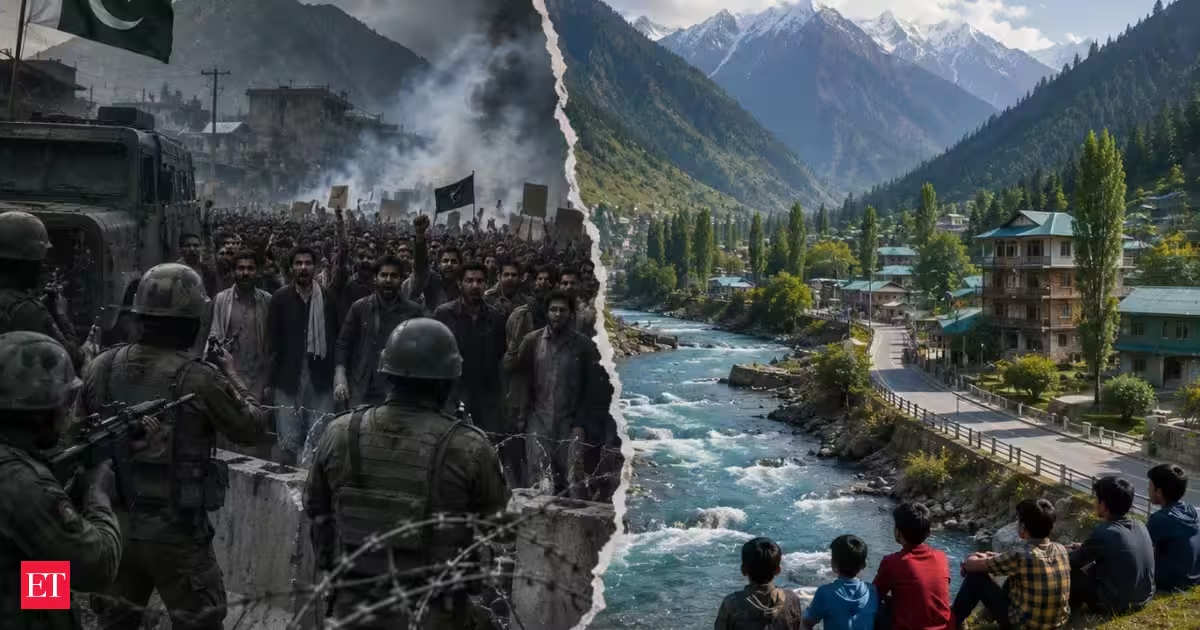
The rising unrest in Pakistan-administered Jammu & Kashmir, fuelled by political grievances and demands for representation.
3,506 words~16 min read