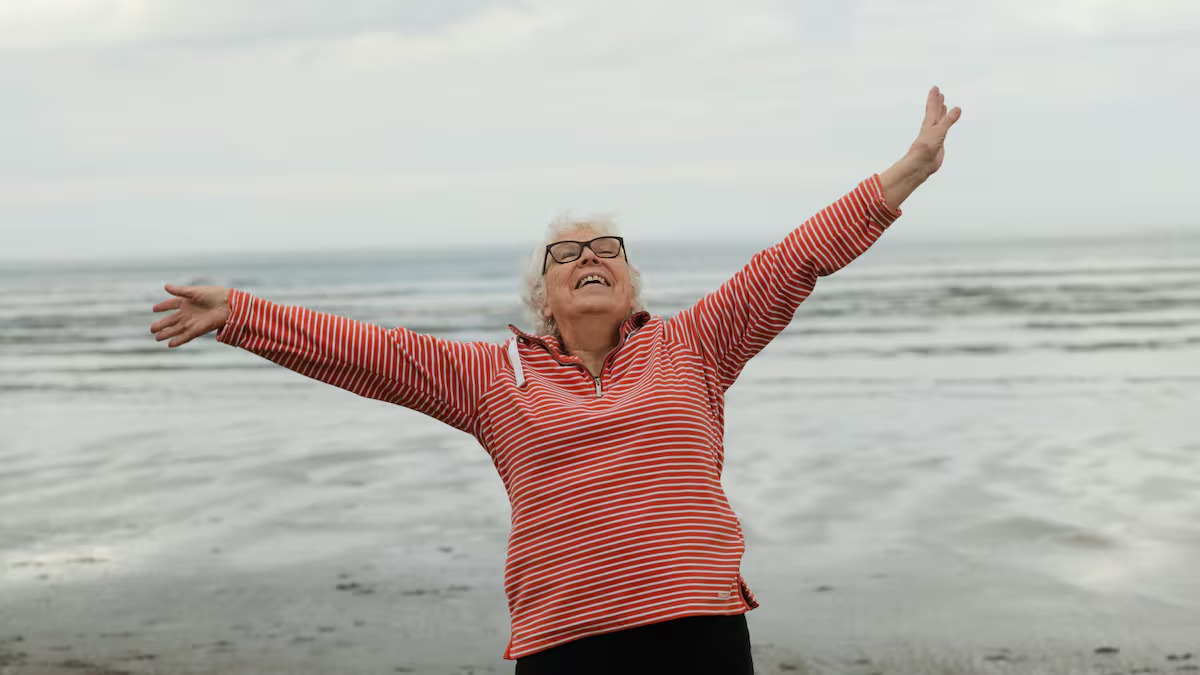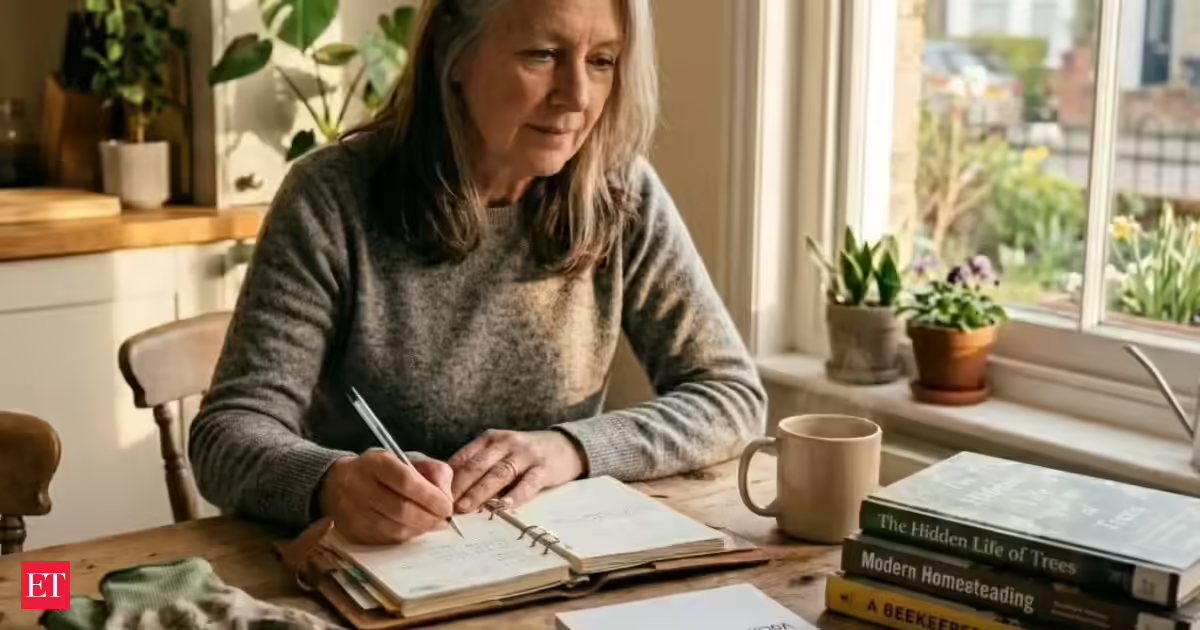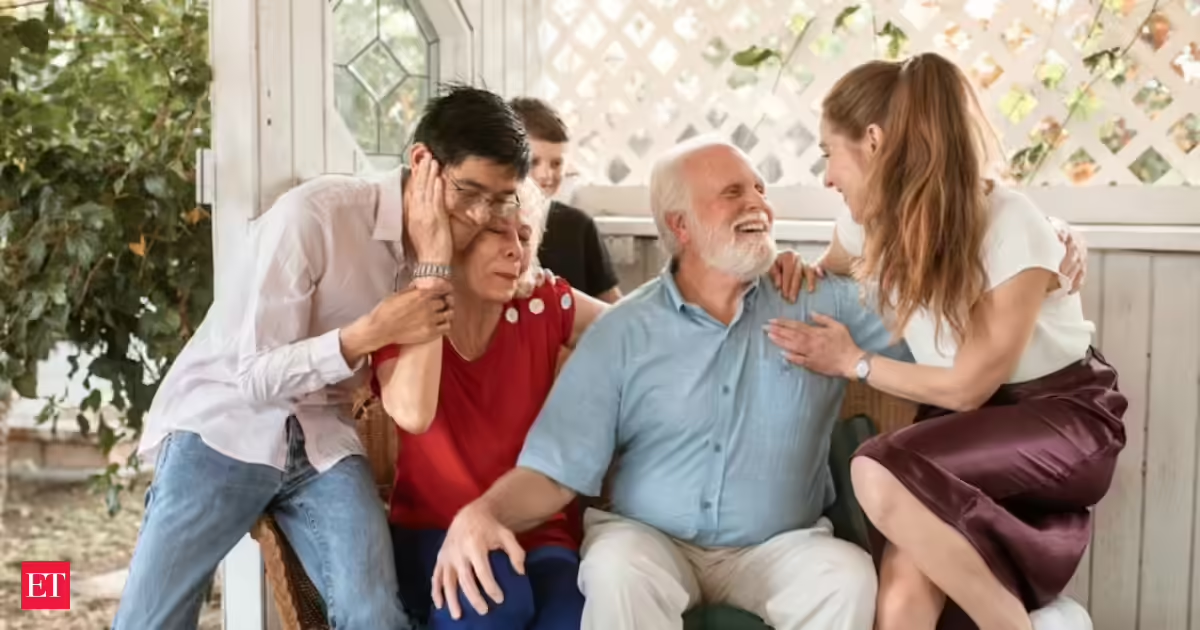
Research psychologists who focus on aging have repeatedly shown that good emotional health need not deteriorate as one gets older. Indeed, many landmark findings regarding aging, such as those in Laura Carstensen’s Socioemotional Selectivity Theory and her subsequent work in journals like Psychological Science, Emotion, and Annual Review of Psychology, suggest that a few older individuals become surprisingly good at defending themselves emotionally. This involves paying attention, managing their emotions, and spending their energy wisely.For this reason, people whose positivity borders on exceptional at seventy do not tend to be positive simply by chance. Their positive outlook in life is usually underpinned by several habits that affect what they pay attention to, how they explain things that go wrong, and how they spend their time and energy.Positive people at age 70 sustain a narrow circle of contacts that guarantees reliability and familiarity | Pexels1. They become selective about what deserves their attentionOne of the most extensively researched concepts in geropsychology is the “positivity effect.” The results of studies conducted under Socioemotional Selectivity Theory revealed that people tend to focus more on positive information while allocating less attention to negative information when emotional needs are more salient than informational ones.It doesn’t imply ignoring reality; it implies making choices about where the mind spends its energy. They are less likely to spend several hours worrying about distressing information, agonizing about small inconveniences, or allocating equal attention to everything. As a consequence of such selectivity, the mood in their everyday lives shifts.2. They pause before reactingAccording to recent studies on emotional regulation published in Psychology and Aging, older people become much better at regulating emotional reactions due to their lifetime of experience. They know for sure that disappointment has been experienced before, but most frustrations tend to resolve themselves sooner or later.Therefore, exceptionally happy seniors tend to have a very good coping skill: they create a gap between what happened and their response to it. The gap takes several seconds, yet those moments help older people avoid frustration turning into long-lasting negative emotions.3. They maintain a small but reliable social circleResearch conducted by the English Longitudinal Study of Aging has repeatedly demonstrated that social interactions benefit cognitive and psychological states.Positive people at age 70 are unlikely to be among the most socially active; they rather sustain a narrow circle of contacts that guarantees reliability and familiarity. Perhaps, a phone conversation, a routine coffee break, or simply a weekly visit means much more for happiness than numerous casual ties.4. They do not let loneliness make decisions for themSocial isolation is one of the risk factors of poor mental health among older adults, according to the World Health Organization. However, highly positive older adults react actively when feeling lonely rather than reacting passively.They do not wait until they are connected with others; instead, they initiate contact. They make phone calls, participate in activities, and attend community gatherings that ensure that they interact with people. While this may seem like nothing, frequent contact stops loneliness from developing into social isolation.5. They use mindfulness in ordinary waysAccording to a 2026 randomized controlled experiment, mindfulness-based treatments were able to alleviate loneliness in older people. What makes this discovery interesting is that mindfulness doesn't require drastic lifestyle changes.To someone in their seventies, mindfulness practice will seem rather mundane. For example, it might be as simple as drinking your morning coffee without engaging in any activity, taking an unhurried walk, taking several minutes of focused breathing before going to bed, or simply becoming more mindful of daily activities.6. They reframe setbacks instead of replaying themThere is abundant literature suggesting that just because older individuals are positive does not mean that they do not experience any sort of loss. All they do is that they perceive losses in a completely different way.Positive Aging and Resilience literature indicates that reframing, acceptance, and finding meaning are key strategies by which many older people cope with challenges in their lives without getting overly emotional. Instead of focusing on why something went wrong, they focus on what they can still salvage out of the whole scenario.Sleep is essential for emotional and mental well-being in old age | Pexels7. Protecting their sleepSleep is probably the most underrated behavior linked with positive aging. Research articles on aging well have repeatedly noted that sleep is essential for emotional and mental well-being in old age.Individuals who remain emotionally stable later in life tend to prioritize sleep rather than ignore its significance. 8. They keep moving, even when motivation is lowAccording to research carried out in 2026, a systematic review and meta-analysis of life satisfaction among older adults found evidence of associations between health and well-being and health-related behaviors, including physical activity and good sleeping habits.What is important about the benefit is that it does not require high levels of physical activity, but rather just involvement in physical activities associated with day-to-day living.9. They give themselves a reason to get up tomorrowPerhaps the most important determinant of enduring positivity is one’s purpose, since studies on daily happiness show that those older adults who rate themselves as more autonomous, competent, connected, and purposeful are also more likely to experience higher positive affect and less negative affect.Purpose does not necessarily need to be an overwhelming task. For example, helping loved ones, taking care of pets, volunteering with local charities, tending a garden, or maintaining a regular routine with purpose are all ways that can serve that role. The important thing is to engage in something that helps to move you forward.While the most optimistic individuals at age 70 may not be optimistic simply because they lead easier lives than the average person, they have definitely gone through the same struggles, setbacks, illnesses, and uncertainties as others around them. What makes them different is that they employ certain habits to cope with these issues. These include paying close attention, protecting one’s emotional resources, staying connected with others, having a sense of purpose, and maintaining a beneficial routine.
Psychology says people in their 70s who stay exceptionally positive tend to practice these 9 tiny habit
Studies reveal that seniors often cultivate remarkable positivity by centering their attention on uplifting experiences. They take time to consider their responses, nurture strong social ties, and actively combat loneliness. Embracing mindfulness techniques and viewing obstacles as opportunities are essential strategies. Moreover, getting adequate rest, staying physically engaged, and having a meaningful purpose are vital for lasting happiness.
994 words~5 min read