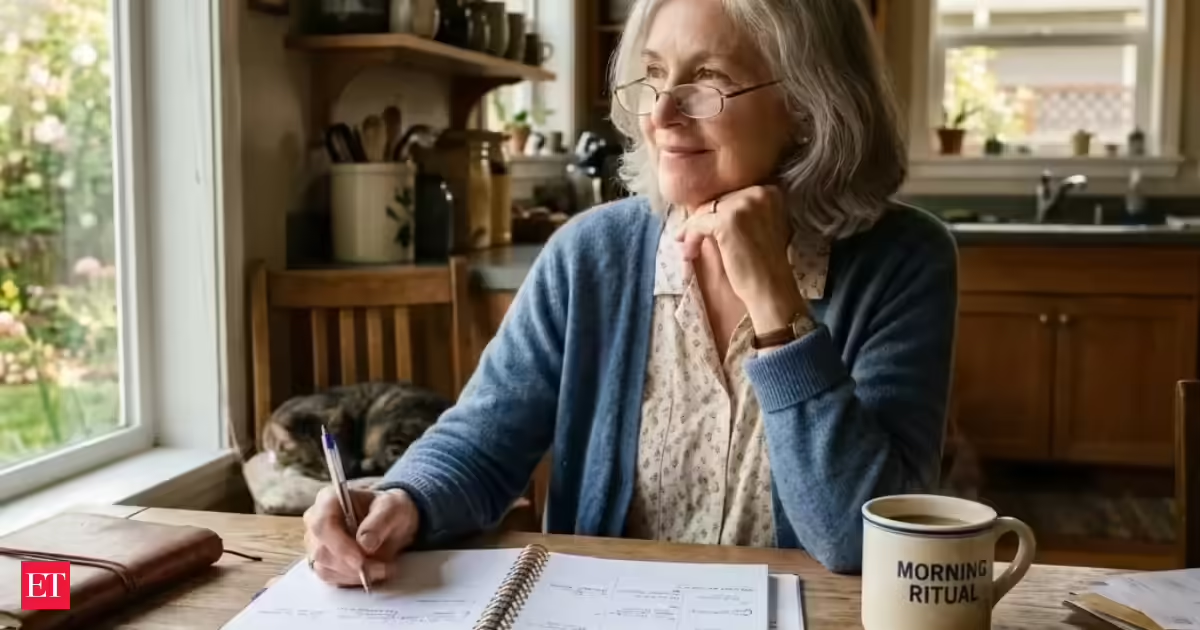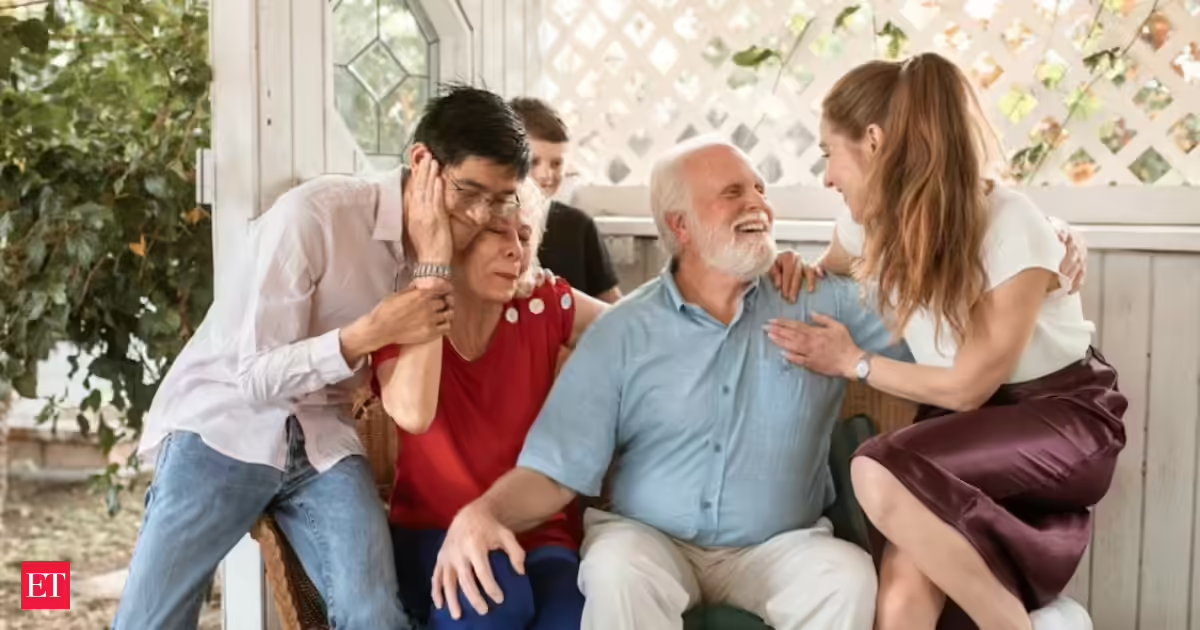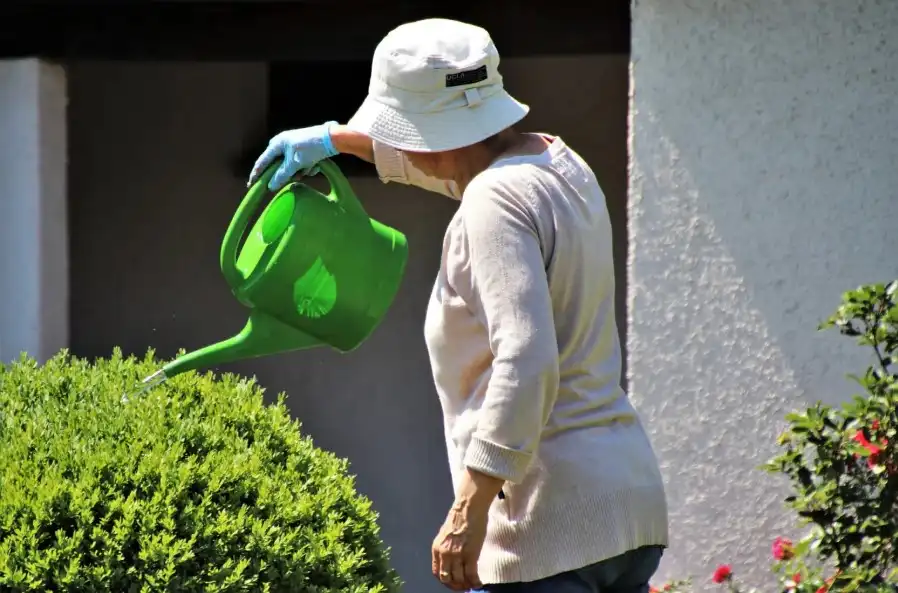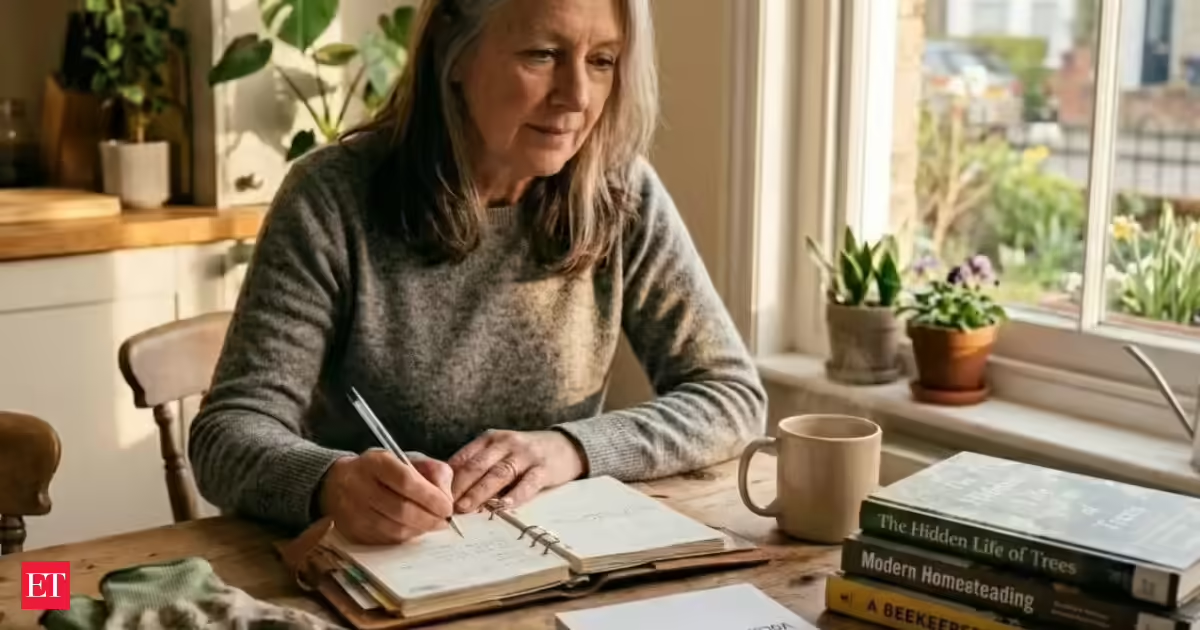
Amongst other things, retirement can give individuals another thing they've been waiting for during their careers: a chance to make decisions on how they spend their time. Not having a set schedule imposed by their job, senior individuals now have the opportunity to choose for themselves how they want to use every day, from morning till night. Some may pursue their hobbies, help out with volunteering or meet up with friends, while others prefer to enjoy their leisure by staying at home.In recent years, psychologists have shown particular interest in the consequences that may arise when an elderly individual starts leading a certain lifestyle. Does it have anything to do with how they feel? Could there possibly be a connection between how people arrange their time and their emotional well-being? Research seems to point to the affirmative.Older adults who mix up their weekly routine may be gaining an unexpected mental health boost. Image credit - GeminiHobbies, sports and other activities asideThe idea of healthy aging usually implies particular kinds of activities, including taking walks, gardening, reading books or joining clubs. However, scientists decided to take a step further and ask whether or not it is the variety of activities performed daily that counts. This approach takes advantage of what is known as “activity diversity.” This term describes the tendency to participate in a greater variety of daily activities rather than performing the same set of actions every day.Based on scientific evidence, activity diversity might involve volunteer work, assistance to relatives, leisure activities, home chores, social events, and active participation in life at the local level.Results found by scientists regarding activity diversityOne of the best empirical pieces of evidence on this issue analyzed data obtained from the National Survey of Daily Experiences. Scientists studied the effect of activity diversity on seven different areas of people’s lives and its impact on emotional well-being. The results clearly demonstrated that the more diverse the activities of people aged 60-74 years old, the better their psychological well-being tended to be.Moreover, an increase in activity diversity had a positive effect on emotions. People experienced positive emotions and avoided negative ones because of activity diversity. The scientists concluded that activity diversity was linked with increased psychological well-being in middle and late adulthood.This simple weekly habit may help older adults stay happier for longer. Image credit - GeminiThe reasons why variety seems more crucial after retirementScientists assume that this may be because of something other than remaining active – but having structure in one’s life and achieving balance.For example, when individuals are at work, they are constantly experiencing variety. They engage in conversations with colleagues, deal with problems, travel to different places, take part in meetings, switch between various tasks, etc.Upon their retirement, however, many of these aspects cease.According to psychologists, changing their role from time to time in order to perform various activities can be helpful in gaining new social contacts, changing environments, and receiving diverse experience.As mentioned above, the connection between the two factors proved most significant for elderly participants. On the contrary, no such trend was noticed among the other age categories involved in the research in 2016 by the National Survey of Daily Experiences. Thus, there is reason to conclude that routine may mean something else for seniors.Role of leisure-time managementOther studies conducted in recent years concluded that older people's leisure-time management skills could also be important for well-being. The study found that higher leisure-time management was linked with better subjective well-being in the future.This finding shows that emotional well-being cannot just be about having enough time left in one's schedule. It may also involve effective utilization of that time. The researchers suggested that leisure-time activities should be chosen purposefully to help people feel accomplished and engaged.Having more varied leisure does not mean being always busyAn assumption that people need to keep themselves constantly busy in order to stay healthy as they get old. This assumption was proven false by a meta-analysis studying the connection between leisure activities and subjective well-being. Leisure satisfaction turned out to be an important mediator for the relation.Weeks spent calmly reading, volunteering, socializing, exercising, and engaging in home improvement may have more psychological advantages than weeks full of activities that may seem stress-inducing or meaningless. Scientists highlight that the principle of activity diversity should not be interpreted as being in constant movement all day.The things the research does and does not sayAlthough the study results look promising, the scientists warn against concluding a causal relationship between two variables. The majority of existing research studies on the topic are observational in nature, which implies that while correlations can be found, the scientists cannot make a definitive conclusion about causality. Thus, it is still possible that individuals who experience improved psychological states tend to keep their schedules diverse due to their higher level of overall well-being.The consistent pattern in the results of the numerous studies makes a convincing impression. Overall, the evidence shows that once retired or having less time at work, how individuals plan their weekly schedule may have an impact on their emotional well-being. For elderly individuals, a varied daily routine is not just a tool for avoiding boredom. It might very well be one of the everyday activities that help maintain an improved psychological state.
Psychology suggests older adults who keep a varied weekly routine aren't just avoiding boredom; they may be building the kind of activity diversity linked to better well-being
Retirement is your time to reclaim your schedule. Experts reveal that seniors who shake up their weekly habits report better mental health. Mixing up daily activities isn't just beneficial; it's vital for emotional well-being and positivity. Thoughtful management of your free time can significantly enhance overall joy and satisfaction.
877 words~4 min read