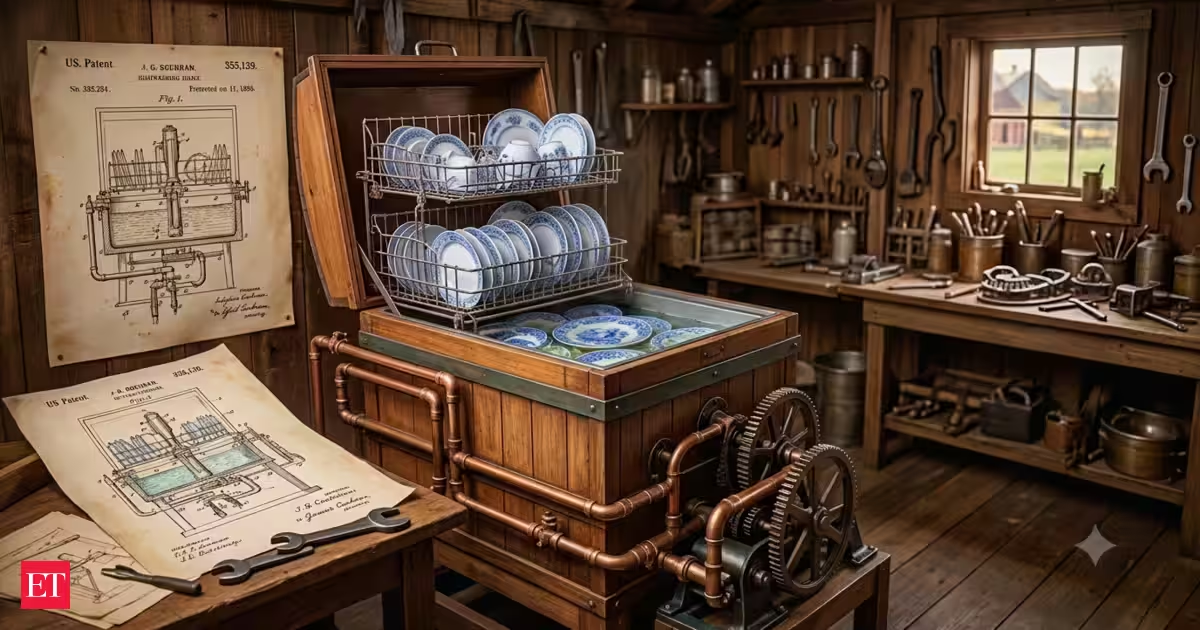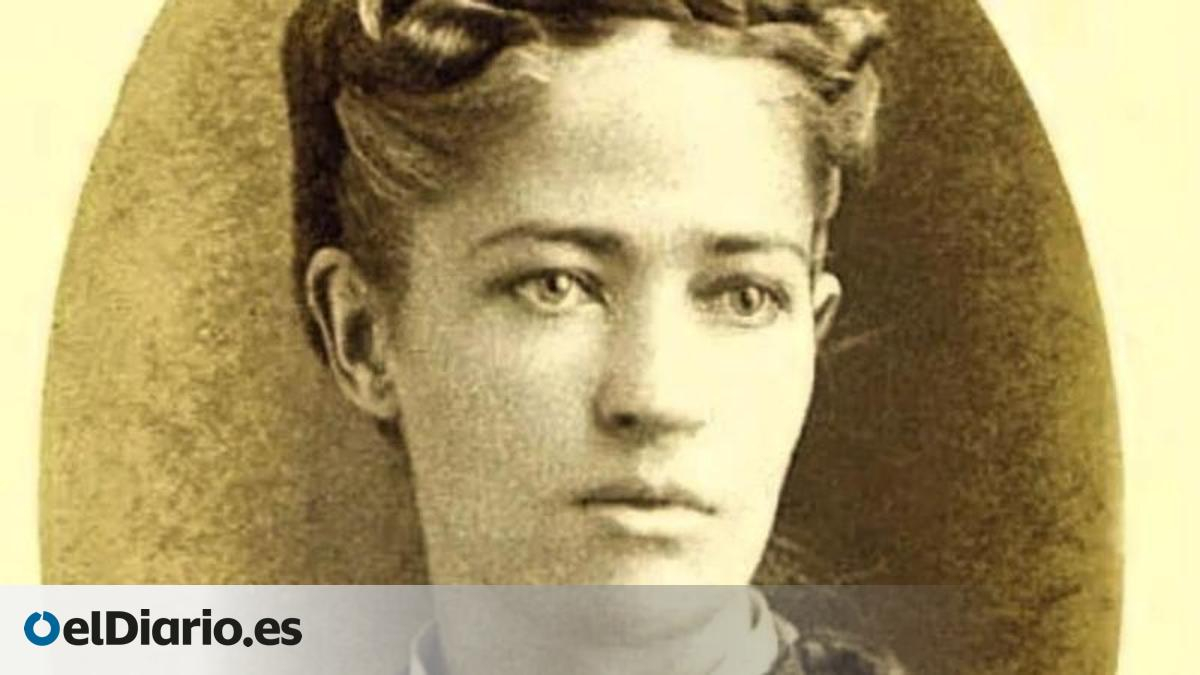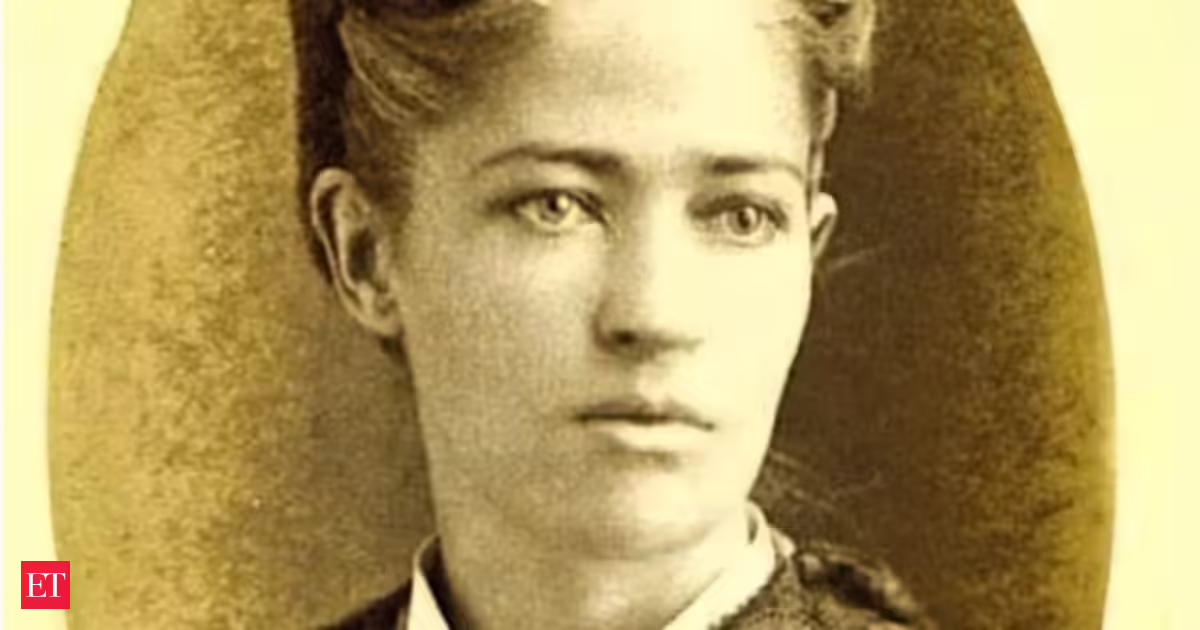
The history of dishwashers was not motivated by any abstract notion of automating household chores. Rather, they were developed out of a concrete frustration experienced by one woman, namely Josephine Cochrane, an Illinois socialite famous for organizing large parties.When Josephine found out that many of her fine dishes had become chipped and damaged after being washed by hand, she decided to take action and approached the problem from an engineering perspective, inventing a machine that would wash her dishes using water pressure instead of scrubbing.The machine, patented by Josephine Cochrane in 1886, is recognized by historians as one of the most effective inventions in the history of home devices. The files from the United States Patent and Trademark Office and the Library of Congress confirm that this invention indeed implied a revolution in thinking about household work.Portrait of Josephine Garis Cochrane as a young woman | Wikimedia CommonsA household frustration became an engineering challengeIndeed, many inventions are made when an individual realizes that a recurring problem is tolerated too often, which was the case for Cochrane too. Chinese dinnerware and other decorative objects were valuable in homes during the nineteenth century and could be broken during the washing process. Most people did not view it as a problem, but Cochrane saw potential there and tried to change the process completely.From the historical materials provided by the USPTO as part of its Journeys of Innovation series, one can learn that Cochrane began working on a dishwasher that would hold dishes firmly while allowing jets of water to reach them. There was no need for rough handling, brushing, or even manually scrubbing dishes, as water could do most of the work. The idea sounds logical today because dishwashers have become very common; however, in the 1880s, it was a new idea of doing things. Instead of finding ways to make dishwashing less problematic for humans, Cochrane looked for ways to eliminate it altogether.Water pressure became the real innovationOne factor in the success of Cochrane's invention was its use of controlled water spray. According to historical narratives from the Library of Congress, the design of her dishwasher featured racks that held dishes and exposed them to streams of water mixed with soap and heat. The application embodied one of the trends common among nineteenth-century innovations, recognized by historians of technology as the replacement of unpredictable human actions by reliable mechanisms. It happened in manufacturing, transport, and agriculture. In the kitchen, too.The significance of the innovation was not limited to efficiency. Labor varies due to human factors, whereas mechanical processes may reliably duplicate the same actions under the same conditions. The creation of a machine-based process from a human activity created the potential for a technology that could be mass-produced, refined, and expanded in use. Historians interested in the history of home technologies tend to point out that successful inventions solve both labor reduction and standardization problems. This machine did both.A patent transformed an idea into a technologyInvention takes on its historical meaning when it transcends the confines of an individual’s own workshop; thus, Cochrane’s invention, patented in 1886, played an important role. Both the Library of Congress and the USPTO recognize Cochrane’s patent as an important historical milestone in domestic appliances. This was how the solution was turned into a tangible invention that could be created, demonstrated, and marketed.Sometimes, the difference between a clever idea and innovation lies in its transformation from a private experience to a publicly accessible technology. There are always countless individuals who run into problems; however, only some of them manage to formulate solutions that others can use and improve. This invention also had particular importance in light of the situation of women inventors in the late nineteenth century. While women certainly took part in inventing numerous devices and technologies, they often received little recognition compared to men.Patent for the dishwasher (US Patent 1,223,380) | Wikimedia CommonsA machine built for dishes changed the way people thought about choresThe dishwasher was not invented in some grand scientific research facility; rather, it was invented in response to a personal problem encountered by a woman who grew tired of seeing her plates broken. However, many of the technologies that have had a profound impact on human history were discovered or invented for such seemingly mundane reasons.What Josephine Cochrane's invention accomplished, besides saving dinnerware, was showing how household chores could be automated. It proved possible to change our relationship to housework using technology. This fact makes the 1886 invention patent historically significant. While we no longer consider the invention remarkable due to its prevalence, the dishwasher became so commonplace precisely because of the success of its automation of routine chores, which is what made it so useful that people began to consider it an integral part of their homes.
In 1886, a wealthy hostess tired of broken crockery built a machine with water jets, and the dishwasher entered the modern kitchen
A socialite named Josephine Cochrane invented the first dishwasher in 1886. She was frustrated by her fine dishes breaking during handwashing. Cochrane engineered a machine using water pressure to clean dishes. This invention transformed household work, showing how technology could automate chores. The dishwasher became a common home appliance due to its success.
796 words~4 min read