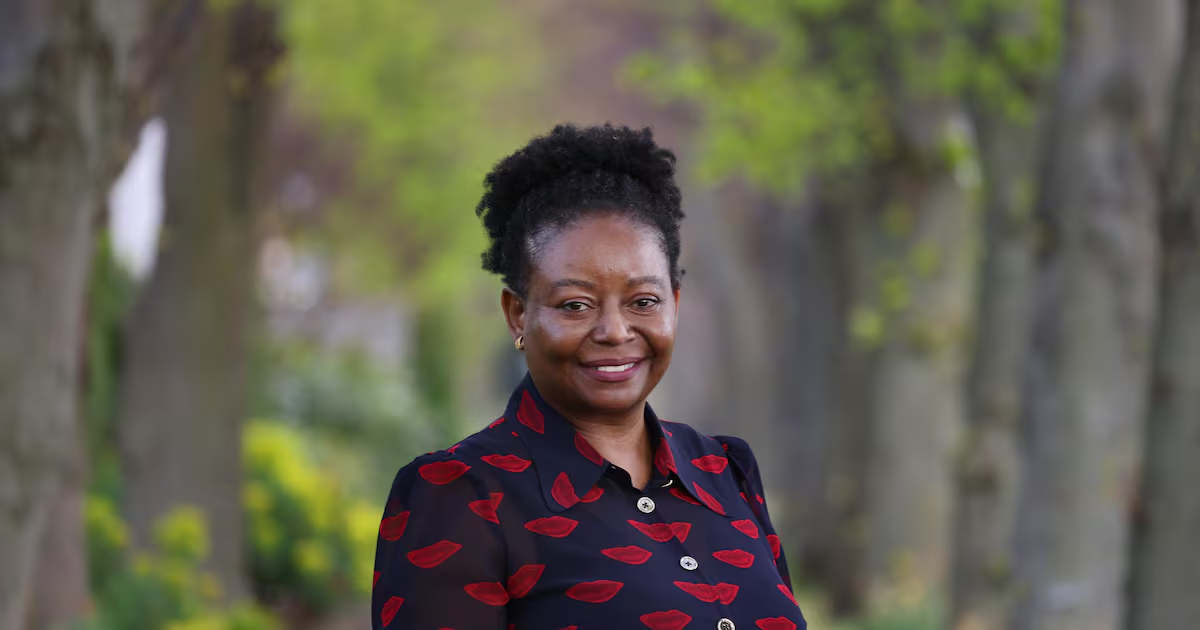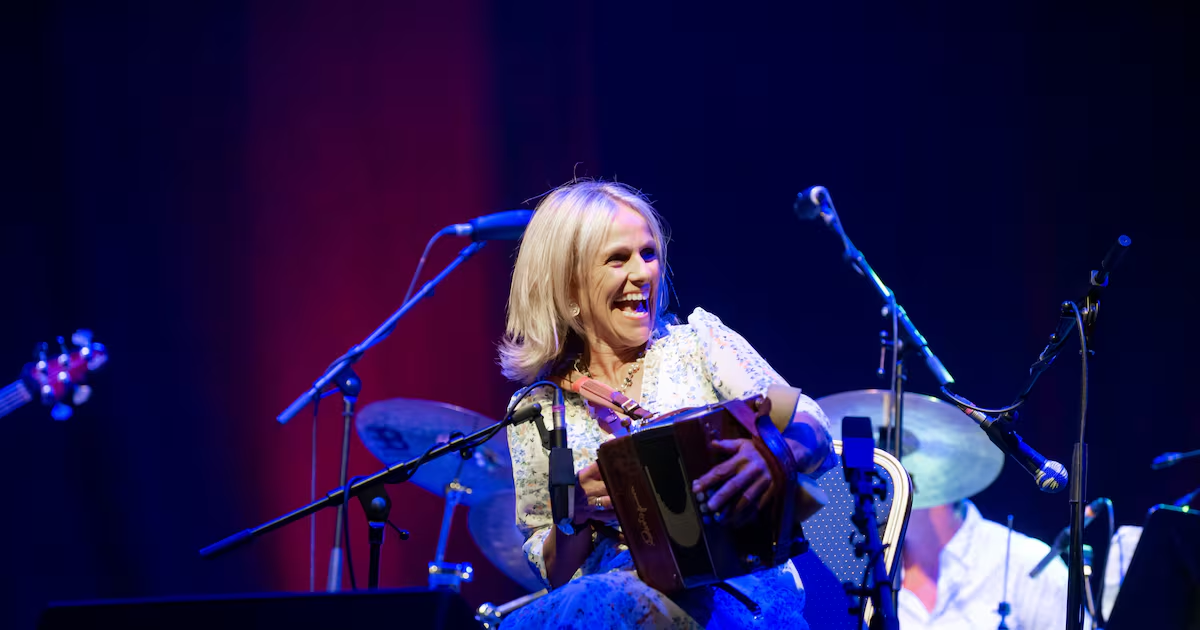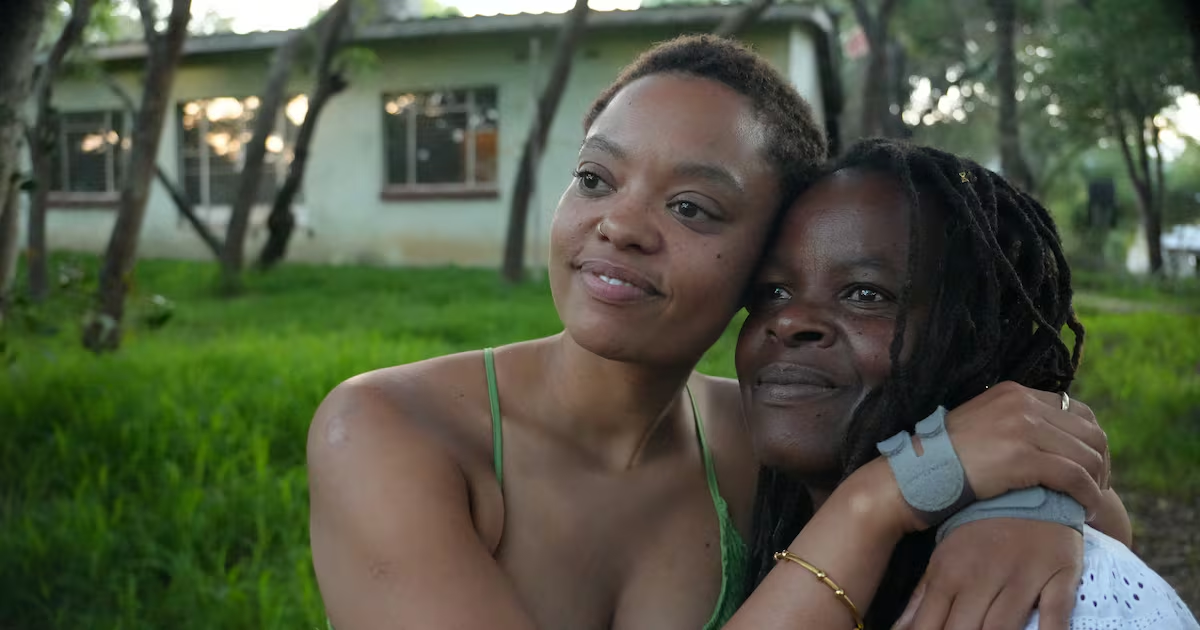
Until a few years ago, Irish-Zimbabwean singer-songwriter Siobhán McClean, better known as Shiv, felt loved and accepted in Ireland. She was the only non-white kid in her school in Athy, Co Kildare, but remembers this as a novelty – a bit of fun, really – rather than something that would cause her to question whether she belonged in the country where she grew up.That has changed as social media has amplified the racism that has always sloshed around among the dregs of society and has given the knuckle-draggers of the world (certainly the knuckle-draggers of Ireland) the means to unite and to wallow in each other’s vitriol. And so a return to Zimbabwe, which she left aged five, has taken on a significance that would not have even been imaginable a decade ago, as we discover in the first episode of the new documentary, BackStory (RTÉ One, Monday).The big idea behind the series is that we accompany Irish people born into immigrant families as they “travel back to their parents’ ancestral homeland” and, in the process, discover something about themselves and their Irishness.Not so long ago, this would have been a fun excursion – but it has taken on an edge due to the rise of racism in Ireland. “I’m in a very weird place with identity,” says McClean as she and her mother, Tambu, travel from Ireland to Zimbabwe’s capital, Harare. “If somebody asked me, I would say I was Irish. I know there are some people who would tell me I’m absolutely not in the last few years. I feel less accepted, I guess. On a day-to-day basis, if I give someone a smile, they might not smile back.”Ireland is home, but then, so too is Zimbabwe, and the journey is understandably emotional for McClean, who feels she has to unpack feelings locked away in Athy. She reveals that she hasn’t been back in 15 years and that she had been putting off the return because there was tension within her about her identity. “I felt I was not being Zimbabwean enough. The nerves come from not wanting to disappoint my family. It has made me feel my family won’t accept me.”Racists see the world as a binary place – either you’re something, or you are something else. But identity is more complicated, and this absorbing film confirms that point by accompanying McClean to the rural farm where her extended family lives and then to Mutare, the city of her birth and the place where her parents, an Irish doctor and Zimbabwean nurse, met.BackStory avoids the familiar pitfall of depicting people in Africa as lacking agency, and dependent on western goodwill. The Zimbabwean people we meet here are ordinary individuals getting on with their lives – and so, not very different from those she left behind in Ireland, as is made clear when McClean records a song with a local producer.[ Dublin singer Shiv: ‘Rent is so high. It’s hard to find places here creatives can go, hang out, meet each other, share ideas’Opens in new window ]The increase in racism in Ireland has clearly affected McClean. “If they’re not going to accept me, I have to figure out how to accept myself,” she says. But her mother has her own take – which is essentially that such individuals are best ignored and that their racism says nothing about the target of their hate and everything about them. “Those people who are saying go back to your country – they’re not really important in your life,” she says. “The problem is not yours, the problem is not you, the problem is that person’s.”
BackStory on RTÉ One: ‘Some people would tell me I’m absolutely not Irish... I feel less accepted’
Television: Irish-Zimbabwean singer Siobhán McClean’s return to Africa takes on a new significance unimaginable a decade ago
605 words~3 min read