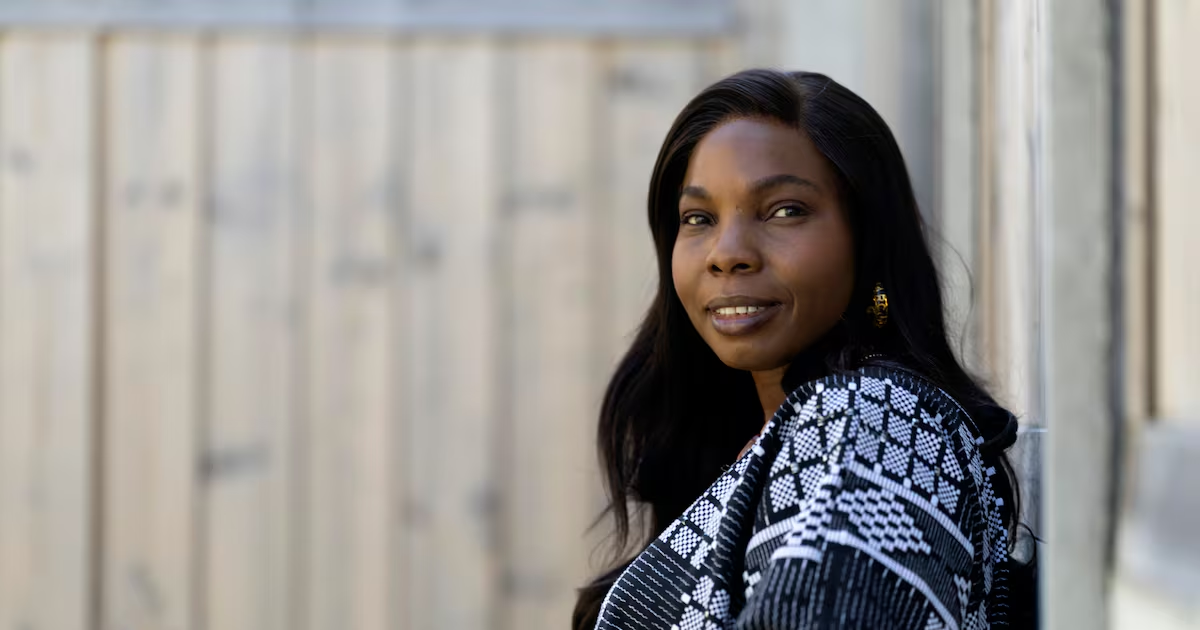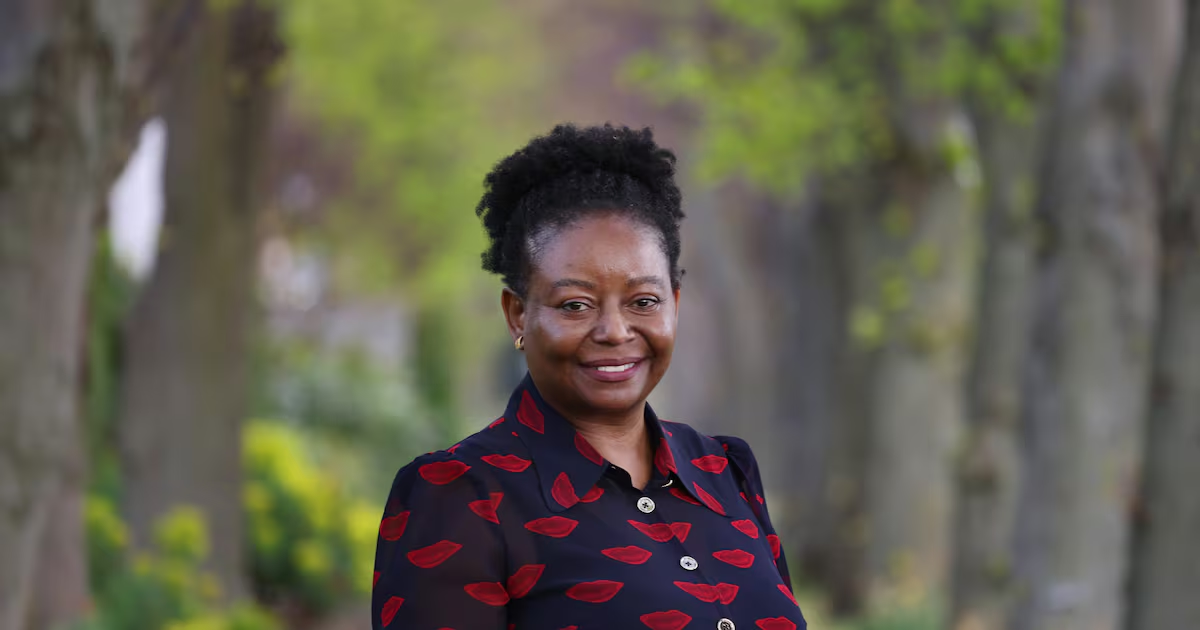
Dorcas Mafuva and her husband Lloyd have seen radical changes in Dublin since they moved from Zimbabwe in 2001Around the time of the millennium, Dorcas Mafuva and her husband Lloyd decided that they were going to move abroad. Photograph: Bryan O’Brien Hosanna BoulterTue May 19 2026 - 06:11 • 4 MIN READ“Despite the racism and whatever that goes on, I found Irish people to be really friendly,” says Dorcas Mafuva (54), who moved to Dublin from Zimbabwe in 2001. Around the time of the millennium, Mafuva and her husband Lloyd decided that they were going to move abroad because of Zimbabwe’s worsening economic climate. “We applied to the UK because everybody seemed to be going there.”Mafuva and her husband are both nurses, they had met at university when they took the same class. They would have likely ended up moving to the UK if a cousin, who was living in Ireland at the time, had not come home for a holiday.“When we told him our plans he said, why don’t you try Ireland? Because you’re starting your family and Ireland is very stable and it’s so conducive for a young family.”That conversation changed everything, and Mafuva and her husband set about figuring out how they could move to Ireland. They ended up moving to Dublin, where they have been ever since, as it had the most work opportunities for them both. Mafuva has seen Dublin undergo radical changes since she arrived 25 years ago. “It’s now a lot more crowded. It’s so busy, and just driving home from work is taking so long now because of the traffic. We didn’t anticipate that that would happen – if we had known things would be a lot more crowded, we probably would have opted to buy a house on the outskirts of Dublin instead.”It had always been a dream for the couple to own their own home, but after buying and moving into their home in central Dublin, she says they were subjected to racist abuse in their neighbourhood.[ ‘Dublin has a really good energy. It’s easy to have a nice night out and chat with people’Opens in new window ]“The kids outside were saying: ‘Get away from here. You’re spending our money.’ I think in the beginning people thought all foreign people who are here are using social welfare money to get their homes or cars or whatever.” Mafuva says: “It took a few of our neighbours a while to realise that we actually purchased the home and that we actually worked.”Once her sons grew up and began to travel to and from school by themselves, they experienced some incidents of racist abuse. Her sons told her they would only experience this in certain areas of Dublin, or when they were on certain bus or tram routes. “That was a bit worrying for us, to be honest. Thankfully it didn’t go on for long. It was only for a certain period of time.”Mafuva has also observed Ireland becoming much more of a multicultural place since she moved here. “When my youngest son was very little, because there were so few black people, if we were walking on, say, O’Connell Street and if he saw a black person crossing the road or walking on the other side, he would literally tug on my dress to say ‘Mum, look’, because he thought maybe it’s our relative or someone we know. That’s how different it is compared to now.”Dorcas Mafuva is now a fellow of the RCSI, chairperson of the Irish Rheumatology Nursing Forum and an assistant professor at University College Dublin. Photograph: Bryan O’Brien Thinking back to their early days in Ireland, Mafuva recalls that she began to doubt her decision to move during her first winter here. “It was so cold. The snow turned to ice. I didn’t have a car at that time. My worst fear was falling flat on my face or breaking a bone before I even started to work properly. I was like, ‘Oh my God, I don’t think I’ll survive this’.”While the couple did not have the easiest time raising their children in Dublin, especially because of the exorbitant cost of childcare, she believes young families today have it much harder.[ What brought so many Irish people to live in Zimbabwe?Opens in new window ]“The cost of living I feel is getting worse and worse. I can really see a difference with accommodation, because when we started we were renting – and the rent was not as bad or crazy as it is now.”For the first five years after they moved, Mafuva worked in a nursing home while she completed a BSc in Nursing Management at the Royal College of Surgeons Ireland (RCSI). She then decided she wanted to work in palliative care and moved to the rheumatology department at Our Lady’s Hospice & Care Services, Harold’s Cross. Mafuva went on to complete her master’s to become an advanced nurse practitioner. Today she is a fellow of the RCSI, chairperson of the Irish Rheumatology Nursing Forum and an assistant professor at University College Dublin. Alongside her work as a nurse practitioner in the rheumatology department, she runs a nurse-led clinic to support people with fibromyalgia. Today Mafuva feels settled and happy in Ireland. Quite a few of her family members have also moved over, including her mother. “I think those kind of things made everything feel whole. We’re a really close family.” Mafuva and her husband have adapted to some Irish customs – popping into their local pub for a drink at the end of the working week and continually talking about the weather. “We work hard and when we want to wind down, the place that we go to wind down is the pub.”We would like to hear from people who have moved to Ireland in the past 10 years. To get involved, email newtotheparish@irishtimes.com or send us two lines about yourself using the form below. IN THIS SECTION
‘It was so cold in Ireland, I thought, oh my God, I don’t think I’ll survive this’
Dorcas Mafuva and her husband Lloyd have seen radical changes in Dublin since they moved from Zimbabwe in 2001
993 words~5 min read