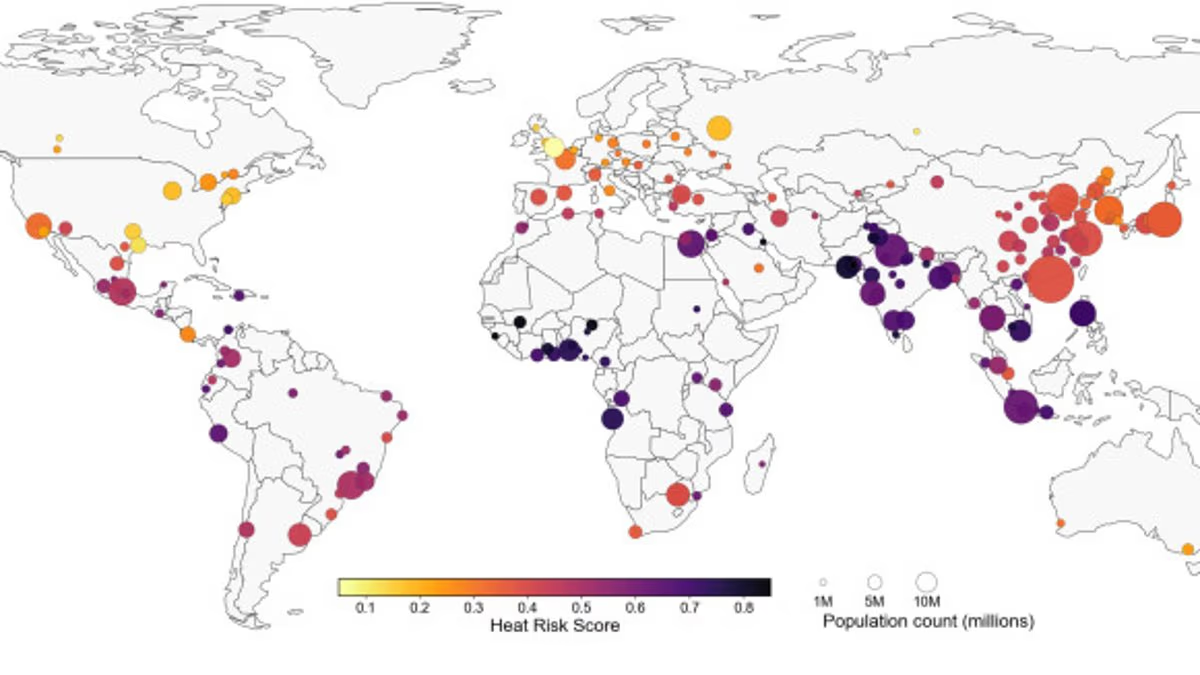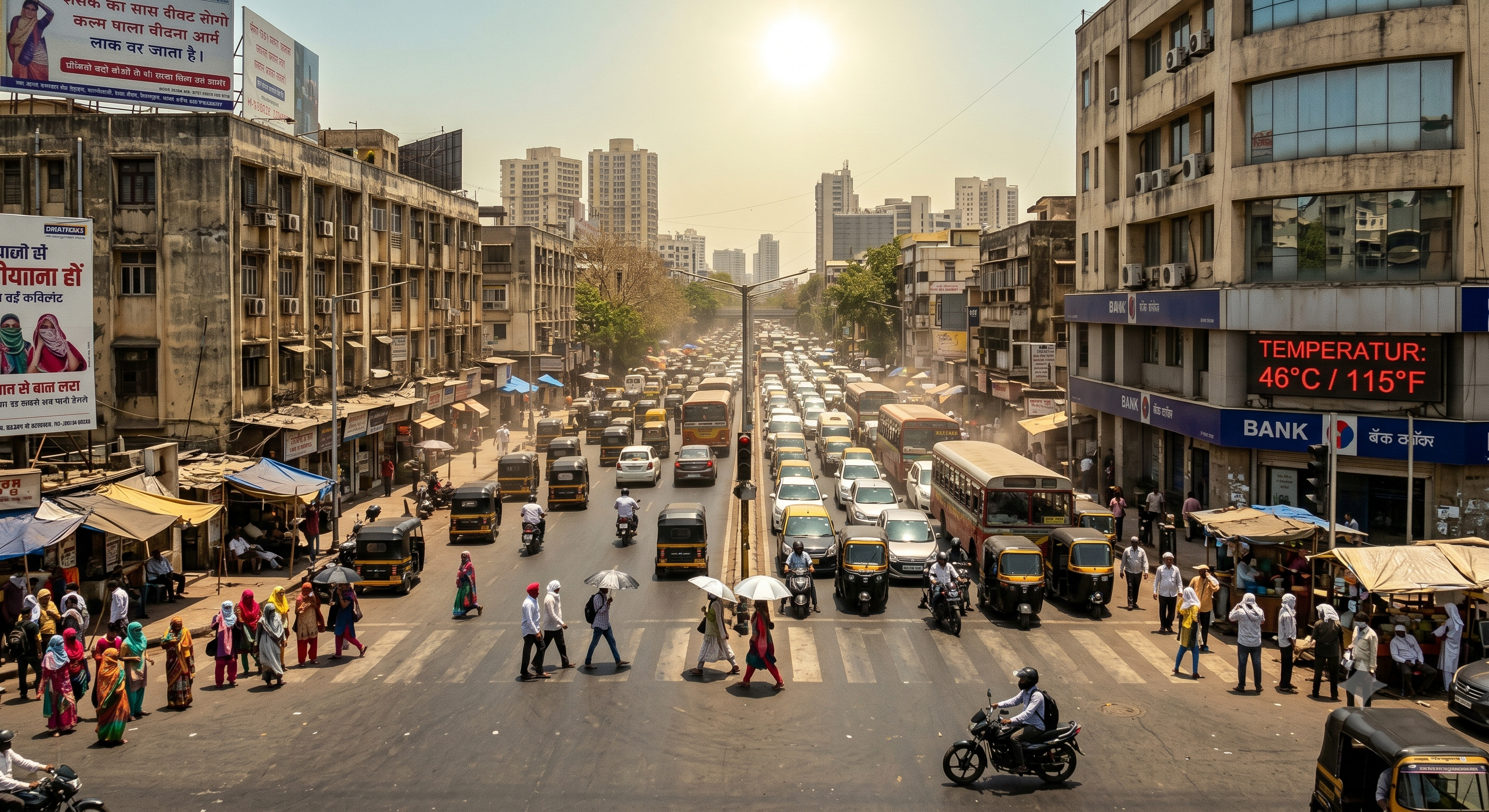
India, Pakistan, Nigeria and Ghana host the largest number of cities with high-risk scores.
The world’s heat risk is increasingly being shaped not just by rising temperatures but by inequalities in infrastructure, income and access to cooling, with more than 95% of the highest-risk cities concentrated in South and Southeast Asia and Sub-Saharan Africa.
These are the findings of a new global study from the University of Oxford, which analysed 205 cities with populations of more than a million people to determine where people are most at risk from rising global temperatures.
The paper, published in Sustainable Cities and Societies, examined key indicators of risk across hazard exposure, vulnerability and coping capacity.
In their study, the researchers describe how extreme heat is emerging as one of the most dangerous and inequitable consequences of climate change, with cities increasingly becoming global hotspots of risk as populations grow and urbanisation intensifies.