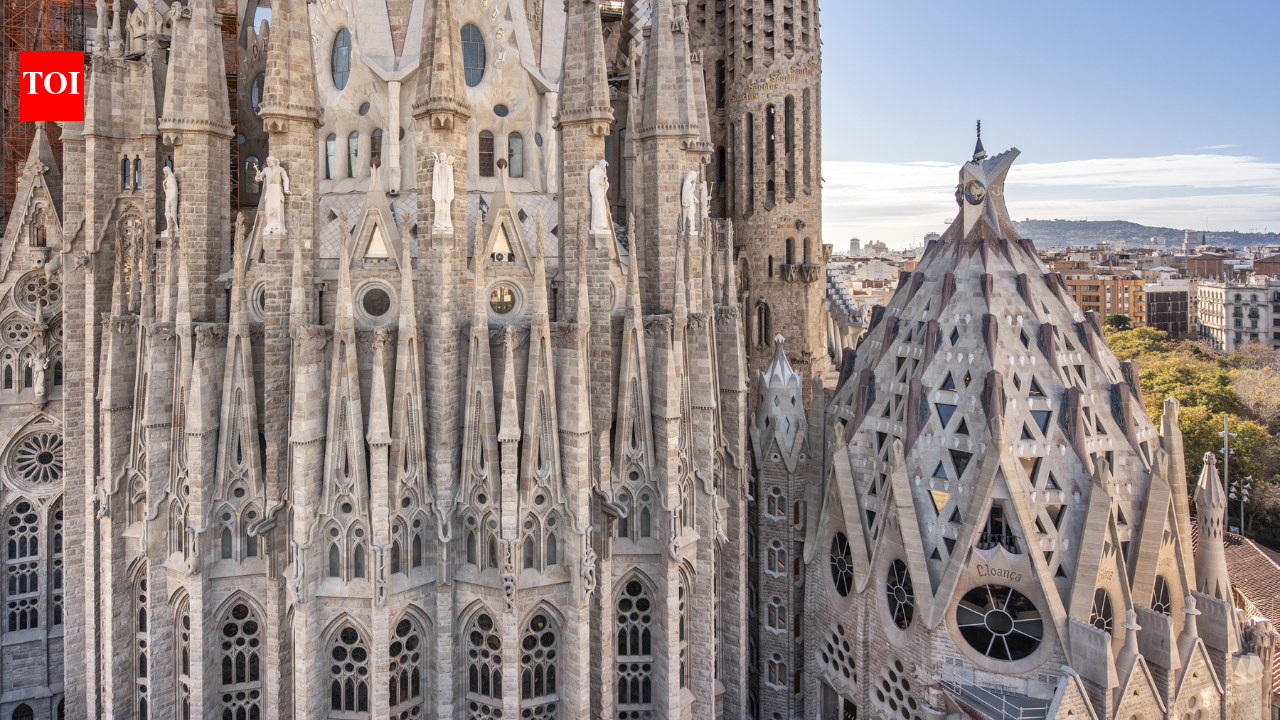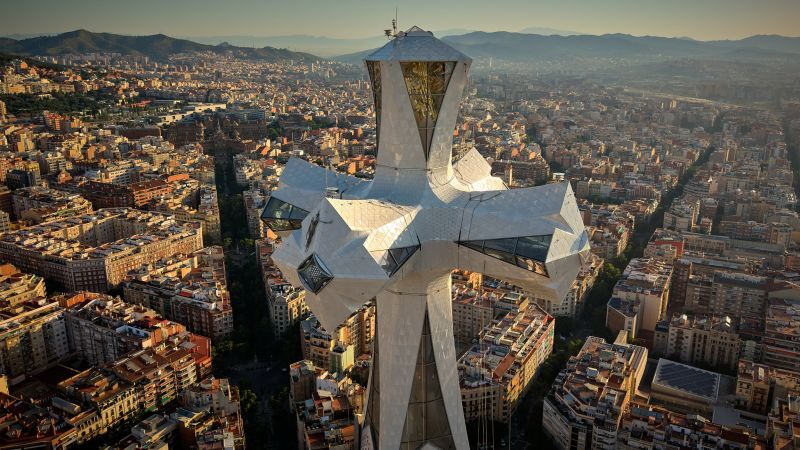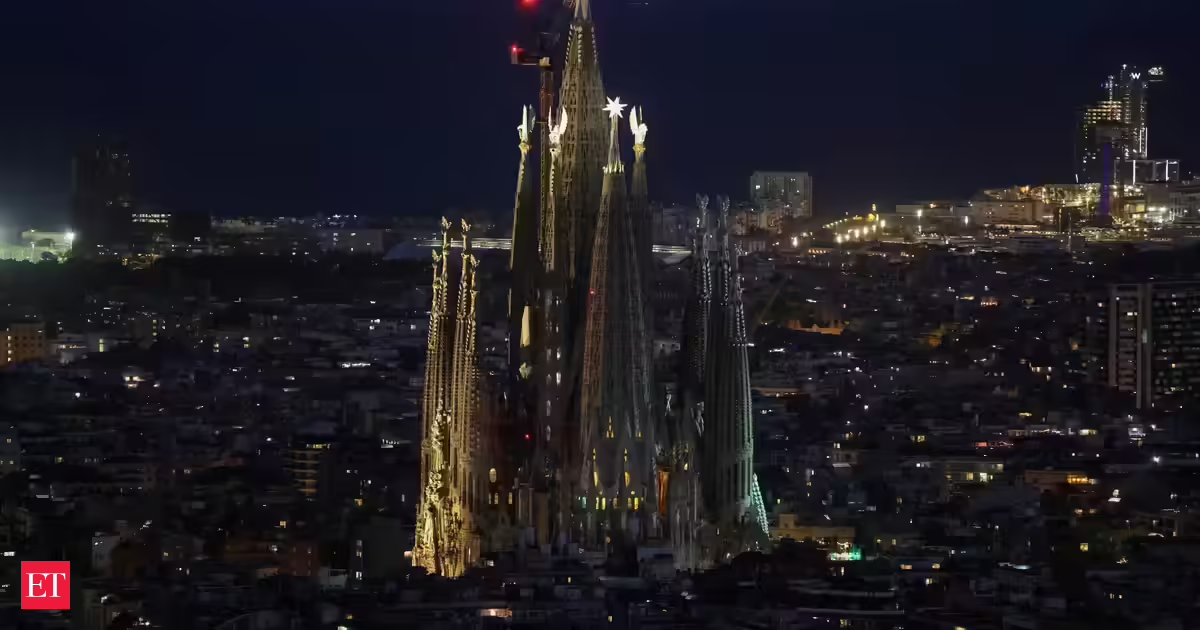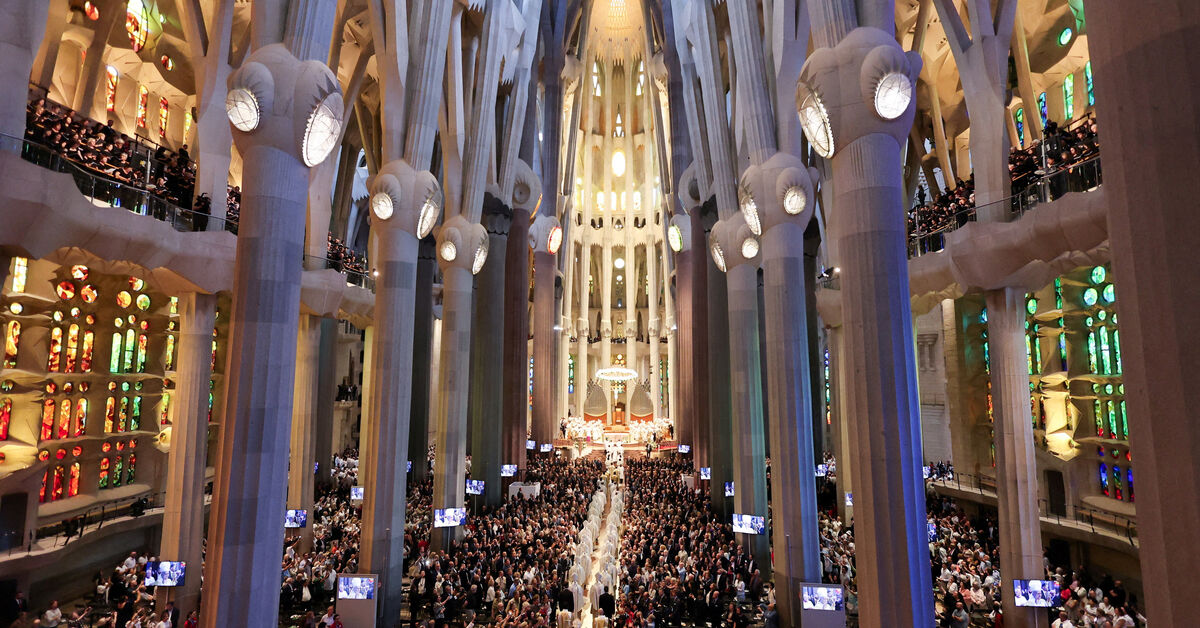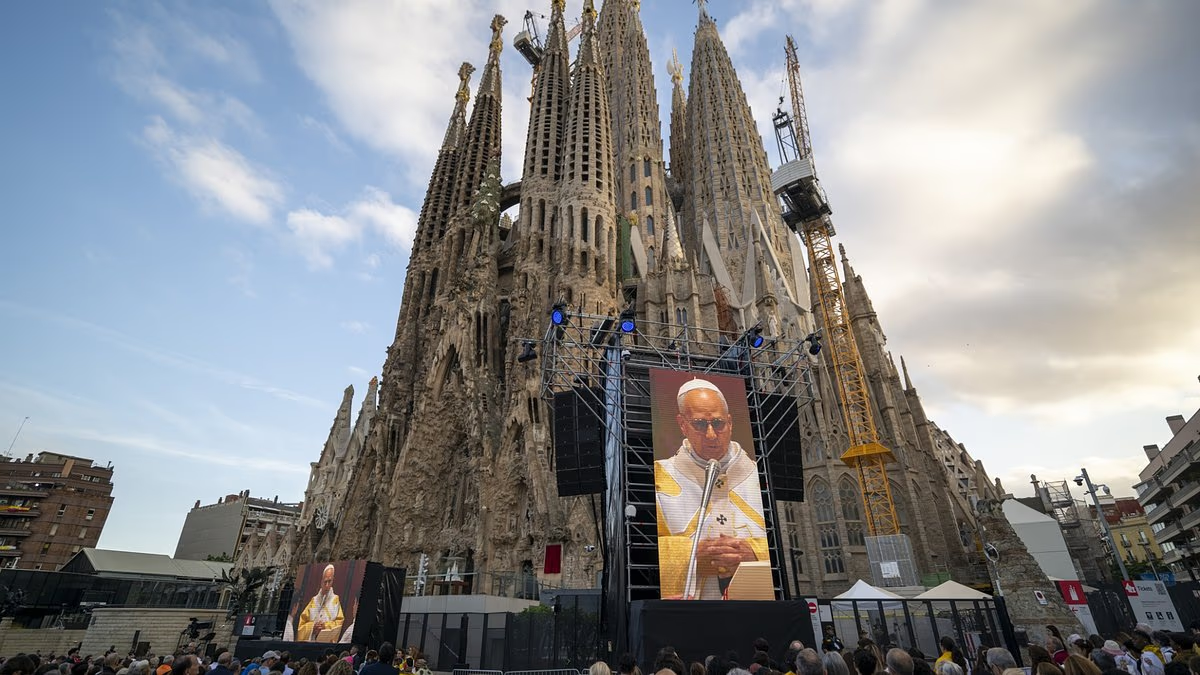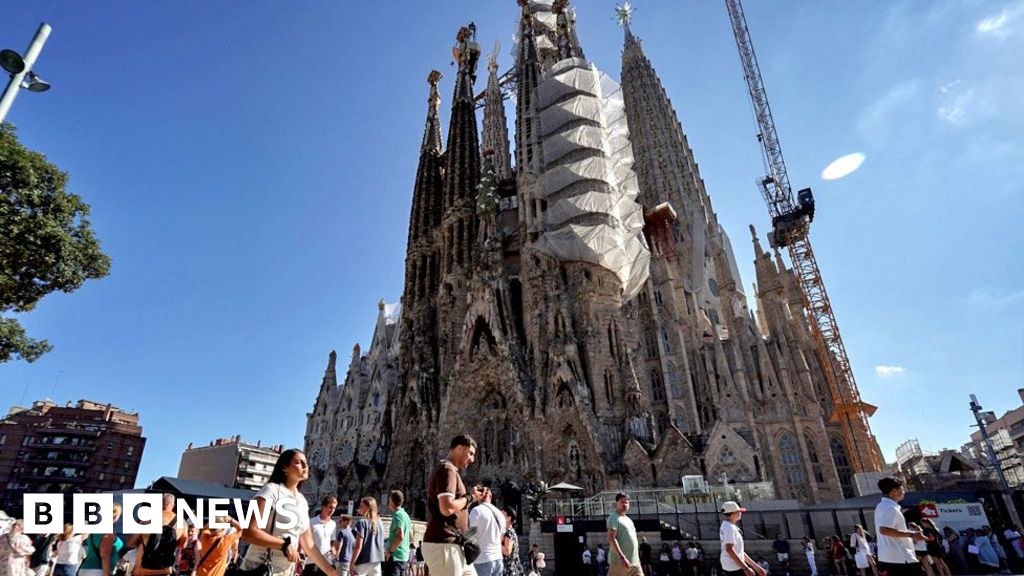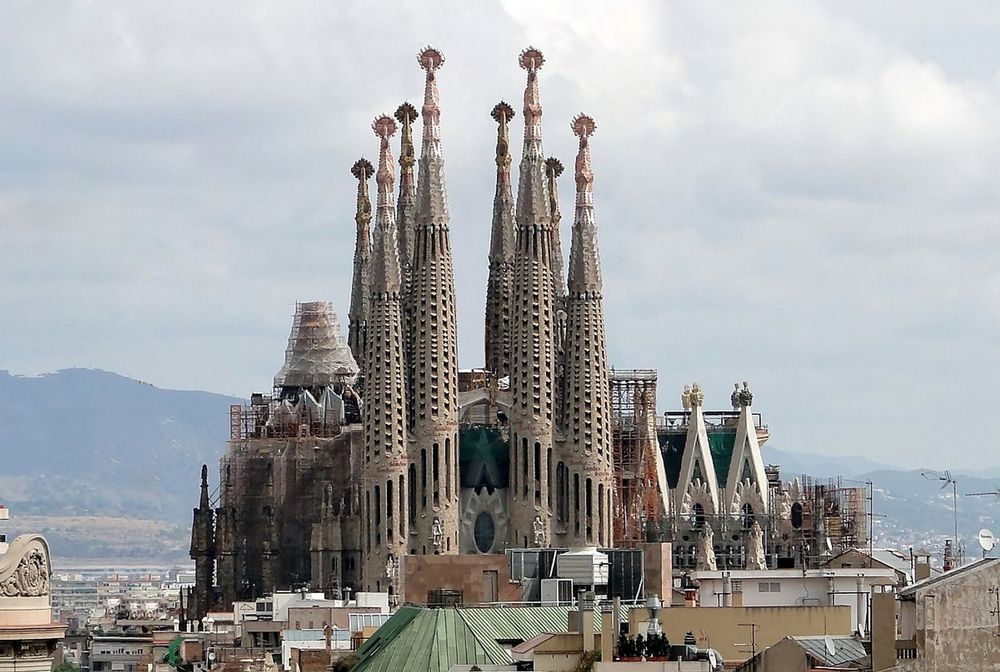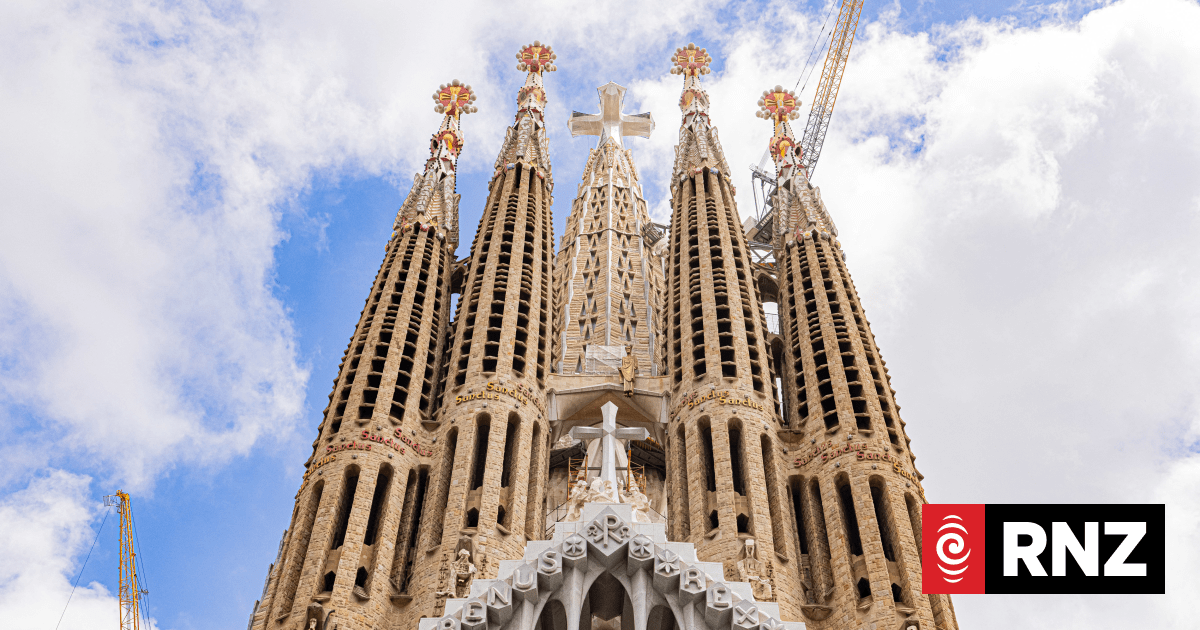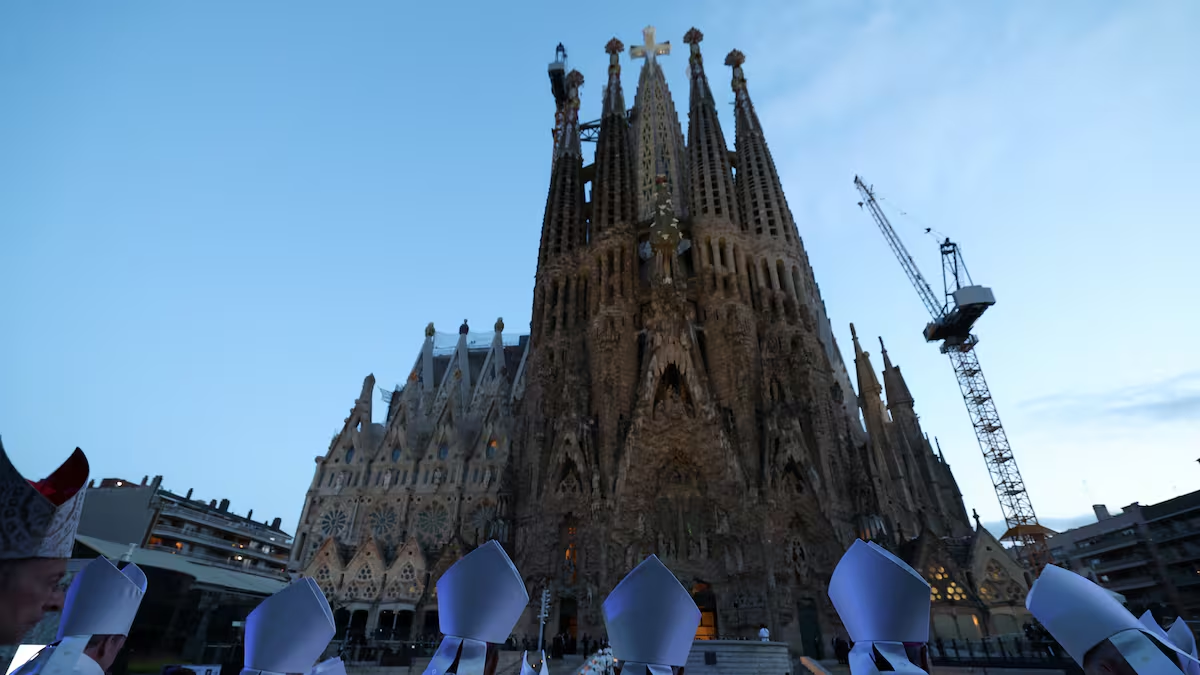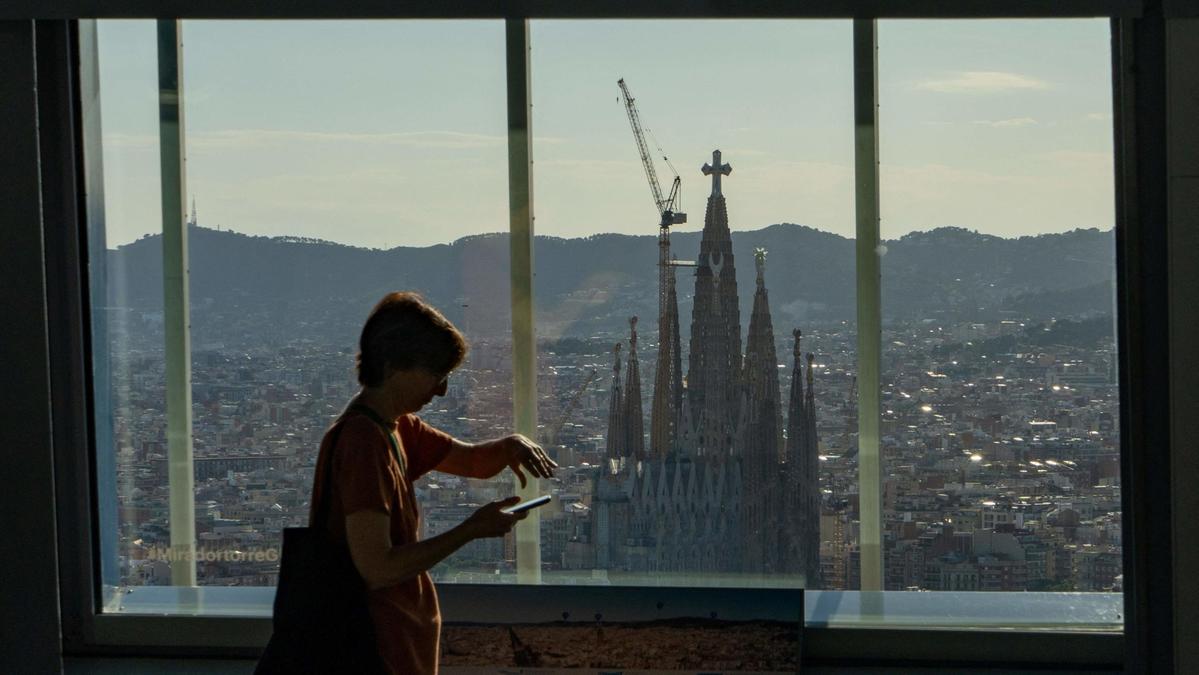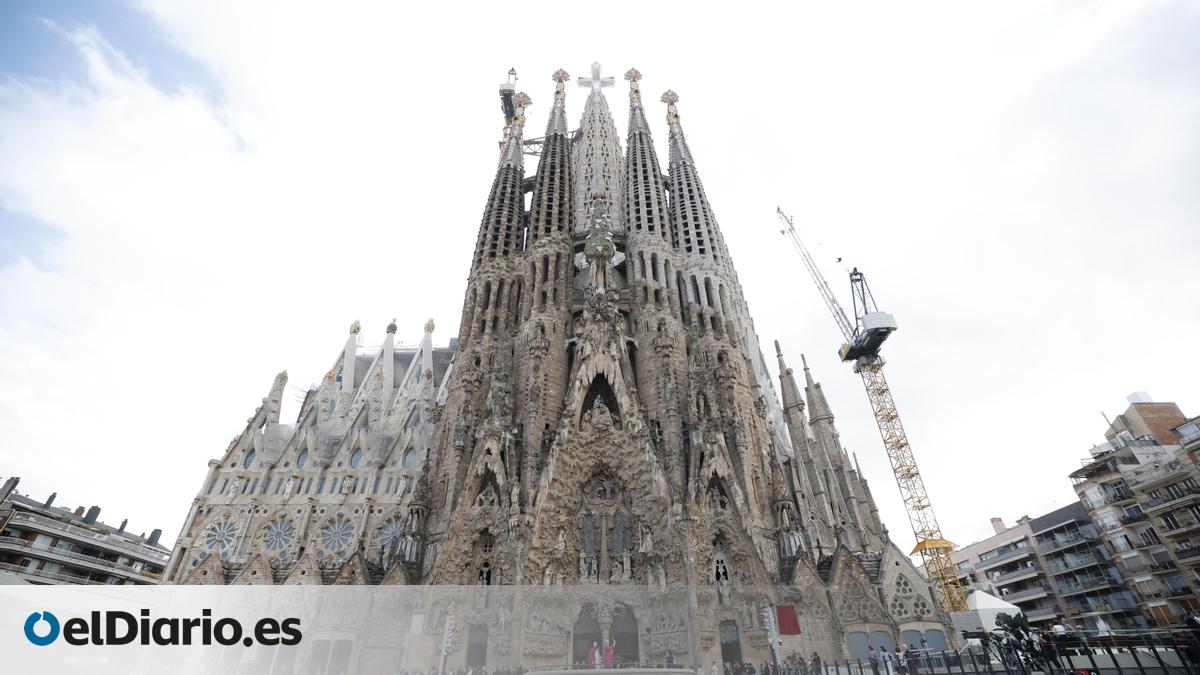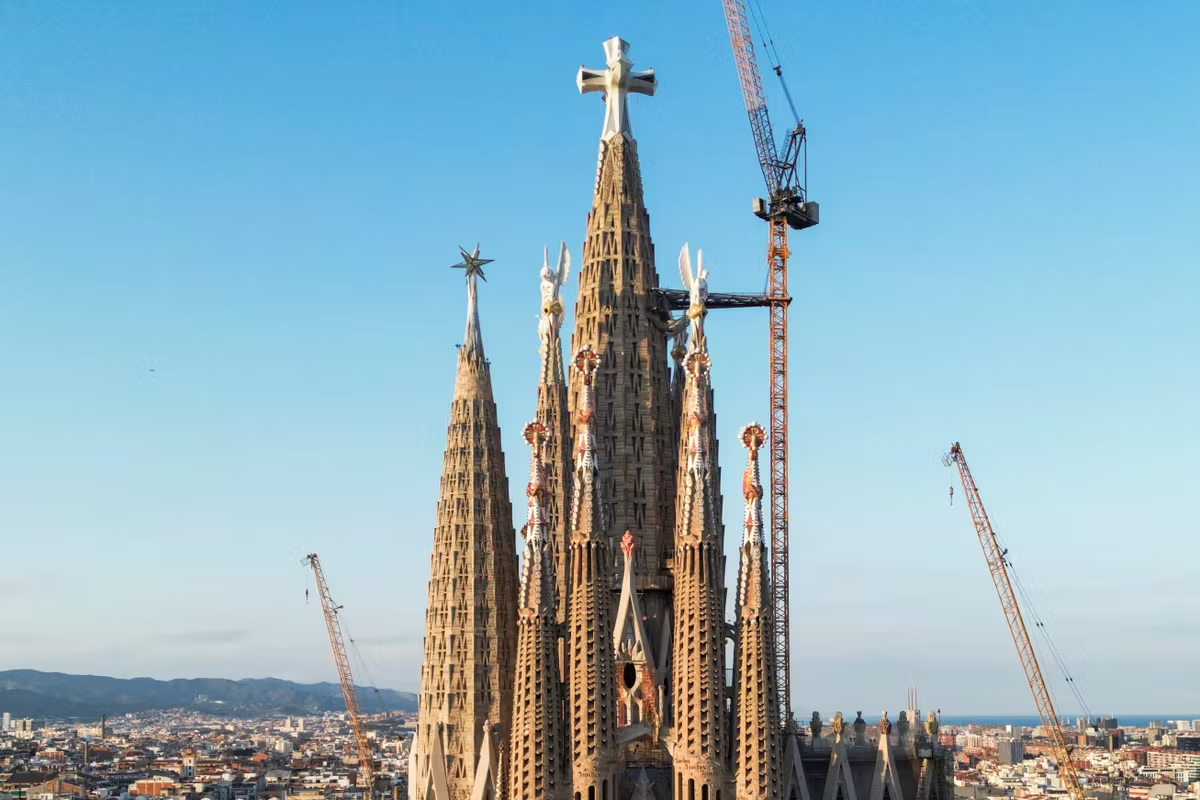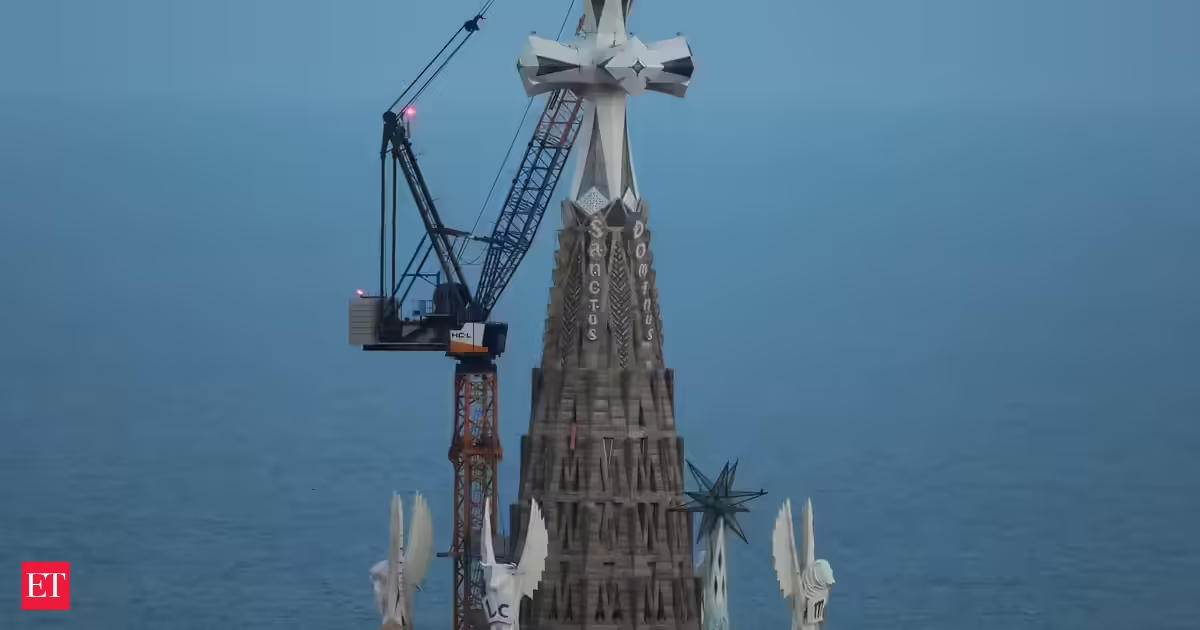
For generations, visitors arriving in Barcelona have encountered the same sight: towering cranes surrounding the Sagrada Família, the world's most famous unfinished church. What began as a church project in 1882 has evolved into one of the longest-running construction efforts in modern history, spanning wars, political upheaval, economic crises and even a global pandemic.Now, after 144 years of construction, the basilica has reached the milestone that generations of architects and worshippers believed they might never see. The long-awaited Tower of Jesus Christ, the 18th and final major tower envisioned by Antoni Gaudí, has been completed in February, bringing the structure to its full height of 172.5 meters (566 feet) and making it the tallest church in the world. The tower is set to be formally inaugurated this week in what is widely being viewed as the project's de facto grand opening. On Wednesday, Pope Leo XIV, the 11th pope to serve during the basilica's construction, will preside over a Solemn Mass and blessing ceremony. The occasion carries added symbolism as it coincides with the centenary of Gaudí's death in 1926.APSagrada Familia basilica While decorative and non-structural work is expected to continue for several more years, the completion of the final major tower represents the most significant milestone in the church's extraordinary history.Construction of the Sagrada Família began in 1882 under architect Francisco de Paula del Villar. A year later, Catalan visionary architect Antoni Gaudí took over the project and radically transformed its design, combining Gothic architecture with organic forms inspired by nature.Gaudí dedicated more than four decades of his life to the basilica and spent his final years almost exclusively focused on the project. When he died after being struck by a tram in 1926, less than a quarter of the church had been completed.His death marked the beginning of a lengthy struggle to preserve and realize a vision that many believed was too ambitious to complete.Why did it take 144 years?The extraordinary construction timeline of Sagrada Família can be traced to several major obstacles.One of the biggest setbacks came in 1936 during the Spanish Civil War. Anarchists attacked the church, setting fire to parts of the complex and destroying many of Gaudí's original drawings, models and architectural plans.The loss forced future architects to reconstruct his ideas using surviving fragments, photographs and notes. Decades of research were required to interpret exactly how Gaudí intended key sections of the building to be completed.Unlike many major cathedrals, the Sagrada Família was conceived as an "expiatory temple," meaning it would be funded through private donations rather than government money.For much of its history, limited funding slowed progress considerably. Construction advanced in stages as money became available, creating periods of rapid activity followed by lengthy slowdowns. Today, the project is largely financed through ticket sales and tourism revenue.Gaudí's vision pushed the limits of engineering long before modern computers existed.The basilica's twisting towers, hyperboloid structures, intricate stonework and mathematically complex geometry required techniques that were difficult to execute using traditional construction methods. Many of the building elements could only be efficiently produced decades later with digital modeling, advanced engineering software and precision manufacturing technologies.According to current chief architect Jordi Faulí, modern architects have been able to accelerate construction because they now better understand the design systems and geometric principles Gaudí developed more than a century ago.Even in the 21st century, construction faced setbacks. The COVID-19 pandemic caused visitor numbers to collapse, significantly reducing the tourism revenue that finances the project. Work slowed as a result before recovering once international travel resumed.How much has the Sagrada Família cost?While an official cumulative construction bill has never been published, industry estimates place the total cost of building the Sagrada Família at between €600 million and €700 million from the start of construction in 1882 through its projected structural completion in 2026.The figure reflects nearly a century and a half of work, including periods of reconstruction after significant setbacks such as the destruction of many of Antoni Gaudí's original plans during the Spanish Civil War in 1936.The most expensive phase of the project has been the final stretch of construction. Estimates suggest that work carried out between 2010 and 2026 alone may have cost €400 million to €500 million, accounting for the construction of the basilica's most technically challenging elements, including the towering spires and the intricate Glory Facade, according to Sagradafamiliatickets.com.The Tower of Jesus Christ: A historic milestoneThe newly completed Tower of Jesus Christ stands 172.5 meters (566 feet) tall, making the Sagrada Família the tallest church in the world. The tower is crowned by a giant cross measuring approximately 17 meters in height and weighing around 100 tons. The giant cross atop the Tower of Jesus Christ was manufactured in Germany and transported to Spain in 14 prefabricated sections. Built from concrete and stainless steel, it combines modern engineering with Gaudí's original vision, with the latter material chosen for its strength and lighter weight.Once in Barcelona, the sections were lifted by crane to a workshop about 200 feet (60 meters) above ground on the basilica's central nave, where they were assembled before being installed atop the tower.Is the Sagrada Família finally finished?Not entirely. Although the church has reached its intended maximum height and the Tower of Jesus Christ is complete, significant work remains. Construction teams are still working on portions of the interior, decorative elements and the controversial Glory Facade, which has sparked debate because of potential impacts on nearby residential buildings. Some estimates suggest final works could continue until 2035.That means the Sagrada Família may have achieved its most visible milestone, but the story of the world's most famous unfinished church is not quite over.
144 years later, Gaudí's masterpiece Sagrada Família finally reaches its full height: Why has the world’s most famous church taken so long to build and how much did it cost?
Barcelona's Sagrada Familia has reached a historic milestone. After 144 years, the final major tower, the Tower of Jesus Christ, is complete. This brings the iconic church to its full height. Pope Leo XIV will preside over an inauguration ceremony. The project faced many challenges, including war and funding issues.
939 words~4 min read