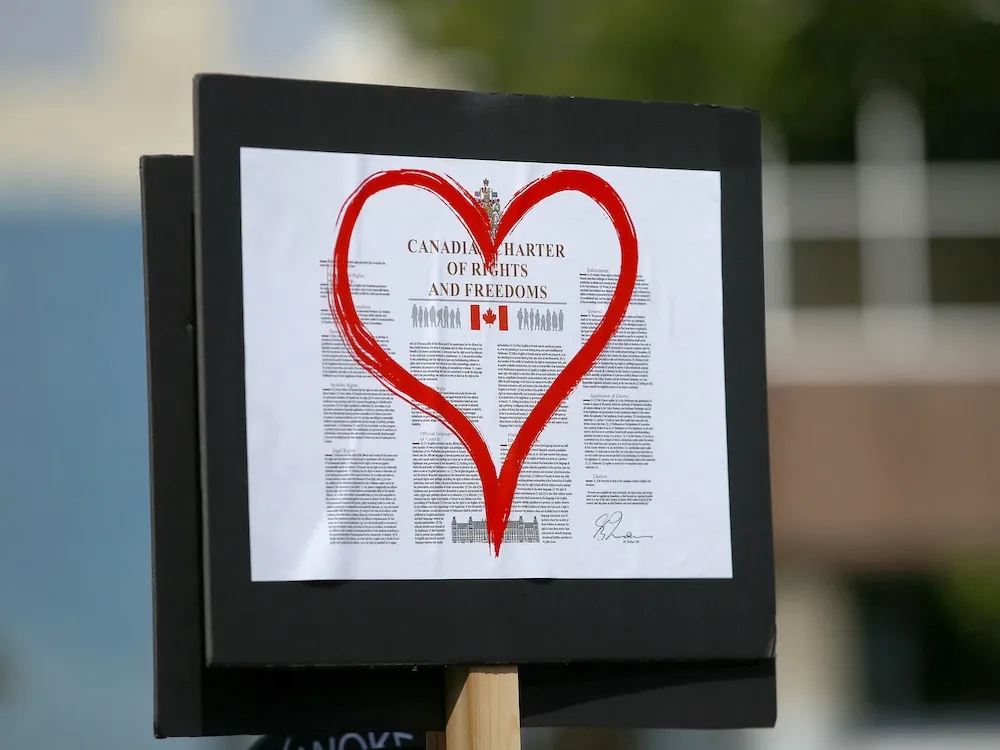
Skip to Content Subscribe Our Offers My Account Manage My Subscriptions FAQ Newsletters Canada Canadian True Crime Canadian Politics Health World Israel & Middle East Financial Post NP Comment Longreads Puzzmo Diversions Comics NP News Quiz New York Times Crossword Horoscopes Life Eating & Drinking Style Sponsored Play for Ontario Travel Travel Canada Travel USA Travel International Cruises Travel Essentials Culture Books Celebrity Movies Music Theatre Television Business Essentials Advice Lives Told Tails Told Shopping Buy Canadian Home Living Outdoor Living Kitchen & Dining Tech Style & Beauty Personal Care Entertainment & Hobbies Gift Guide Travel Guide Amazon Prime Day Deals Savings National Post Store More Sports Hockey Baseball Basketball Football Soccer Golf Tennis Driving Vehicle Research Reviews News Gear Guide Obituaries Place an Obituary Place an In Memoriam Classifieds Place an Ad Celebrations Working Business Ads Archives Healthing Epaper Manage Print Subscription Profile Settings My Subscriptions Saved Articles My Offers Newsletters Customer Service FAQ Newsletters Canada World Financial Post NP Comment Longreads Puzzmo Diversions Life Shopping Epaper Manage Print Subscription HomeNewsCanadaCanadian Politics'Realistic' chance that SCC ruling on Bill 21 inspires violent extremist rhetoric: intelligence assessmentThe top court's decision on Quebec's secularism law is expected in the coming monthsLast updated 18 minutes ago You can save this article by registering for free here. Or sign-in if you have an account.Supreme Court of Canada in Ottawa March 4, 2026. The building will be undergoing renovations for approximately 10 years starting later this year. Photo by Blair Gable /PostmediaOTTAWA — No matter what the decision is, the Supreme Court’s upcoming ruling on Quebec’s controversial secularism law will probably inspire violent extremist rhetoric, warns a federal intelligence assessment.Enjoy the latest local, national and international news.Exclusive articles by Conrad Black, Barbara Kay and others. Plus, special edition NP Platformed and First Reading newsletters and virtual events.Unlimited online access to National Post.National Post ePaper, an electronic replica of the print edition to view on any device, share and comment on.Daily puzzles including the New York Times Crossword.Support local journalism.Enjoy the latest local, national and international news.Exclusive articles by Conrad Black, Barbara Kay and others. Plus, special edition NP Platformed and First Reading newsletters and virtual events.Unlimited online access to National Post.National Post ePaper, an electronic replica of the print edition to view on any device, share and comment on.Daily puzzles including the New York Times Crossword.Support local journalism.Create an account or sign in to continue with your reading experience.Access articles from across Canada with one account.Share your thoughts and join the conversation in the comments.Enjoy additional articles per month.Get email updates from your favourite authors.Create an account or sign in to continue with your reading experience.Access articles from across Canada with one accountShare your thoughts and join the conversation in the commentsEnjoy additional articles per monthGet email updates from your favourite authorsSign In or Create an AccountorIn a March intelligence brief, Canada’s Integrated Threat Assessment Centre (ITAC) said it was “very unlikely” that violent extremists would target the court’s four days of hearings later that month on the challenge of the law known as Bill 21.But, ITAC noted, “it is a realistic possibility that the Court’s decision — whether the law is found to be constitutional or not — will inspire violent extremist rhetoric.”Quebec’s controversial secularism law Bill 21 prohibits certain Quebec public sector workers, such as judges, police officers, teachers and prison guards, from wearing religious symbols at work. It also requires them to perform their duties with their faces uncovered.Though popular in the province, the 2019 law is fiercely opposed by religious groups, civil liberties advocates and many groups representing women’s or anglophones’ rights.To pass the bill seven years ago, then-Quebec Premier François Legault invoked section 33 of the Charter of Rights and Freedoms, better known as the notwithstanding clause.The pre-emptive invocation of the clause — which allows a government to suspend the application of certain Charter rights for up to five years before needing to renew it — to block a court challenge of the law is at the heart of the case at the Supreme Court.Over four hearing days in March, dozens of challengers and interveners opposed the law and asked the top court to rule it to be unconstitutional or impose limits on the invocation of the notwithstanding clause.On the other hand, seven provinces including Quebec and Ontario argued that the court had no power to limit the invocation of the clause and to do so would amount to a constitutional amendment.The top court’s decision is expected in the coming months.In its unclassified March brief, ITAC assessed that there was a higher chance of a violent extremist attack linked to the enforcement of Bill 21 than there was against the apex court.“State actions seen to be sacrilegious or blasphemous could be a mobilizing factor for a violent extremist with intent, or a radicalizing factor for an individual with existing grievances,” reads the brief, though noting that there was no information at the time indicating such action was brewing.ITAC is a part of the Canadian Security Intelligence Service that focuses on assessing the risks of violent extremism in the country. It also sets Canada’s national terrorism threat level, which is currently at “medium” or “realistic possibility.”In an interview, foreign interference and national security specialist Jean-Christophe Boucher said no matter the decision, he expects the outcome of the decision to be “instrumentalized” by groups on either side of the issue.“If Bill 21 gets shut down, then you’ll have probably a lot of possibly far-right, but also Quebec separatists… amplifying issues around judicial overreach,” said the political science professor at the University of Calgary.“If Bill 21 is upheld, then of course ethnic communities will feel wronged, and that will increase… not necessarily extremism, but at least kind of conversations around whether or not Canada is as welcoming as it used to be,” he added. “And I can see how other actors could actually kind of use this as a way to recruit and radicalize.”He also said foreign actors who are trying to undermine Canada’s democratic institutions like the courts or governments will also seize on the decision to sow further division.In a statement, Supreme Court spokesperson Vanessa Racine said the court had the appropriate security measures in place during the March hearings.She also noted that “any potential security concerns will not affect the outcome of the decision in this case.”In its assessment, ITAC said it that violent extremists in Canada are unlikely to even be able to breach the security of a secure location like the Supreme Court.In the unlikely eventuality of an attack on the fortress-like building, “it would likely involve an inspired lone actor using basic weaponry and targeting security checkpoints or areas outside the building perimeter,” reads the brief.National Postcnardi@postmedia.comOur website is the place for the latest breaking news, exclusive scoops, longreads and provocative commentary. Please bookmark nationalpost.com and sign up for our politics newsletter, First Reading, here. Join the Conversation This website uses cookies to personalize your content (including ads), and allows us to analyze our traffic. Read more about cookies here. By continuing to use our site, you agree to our Terms of Use and Privacy Policy.
'Realistic' chance that SCC ruling on Bill 21 inspires violent extremist rhetoric: intelligence assessment
The top court's decision on Quebec's controversial secularism law is expected in the coming months
1,189 words~5 min read