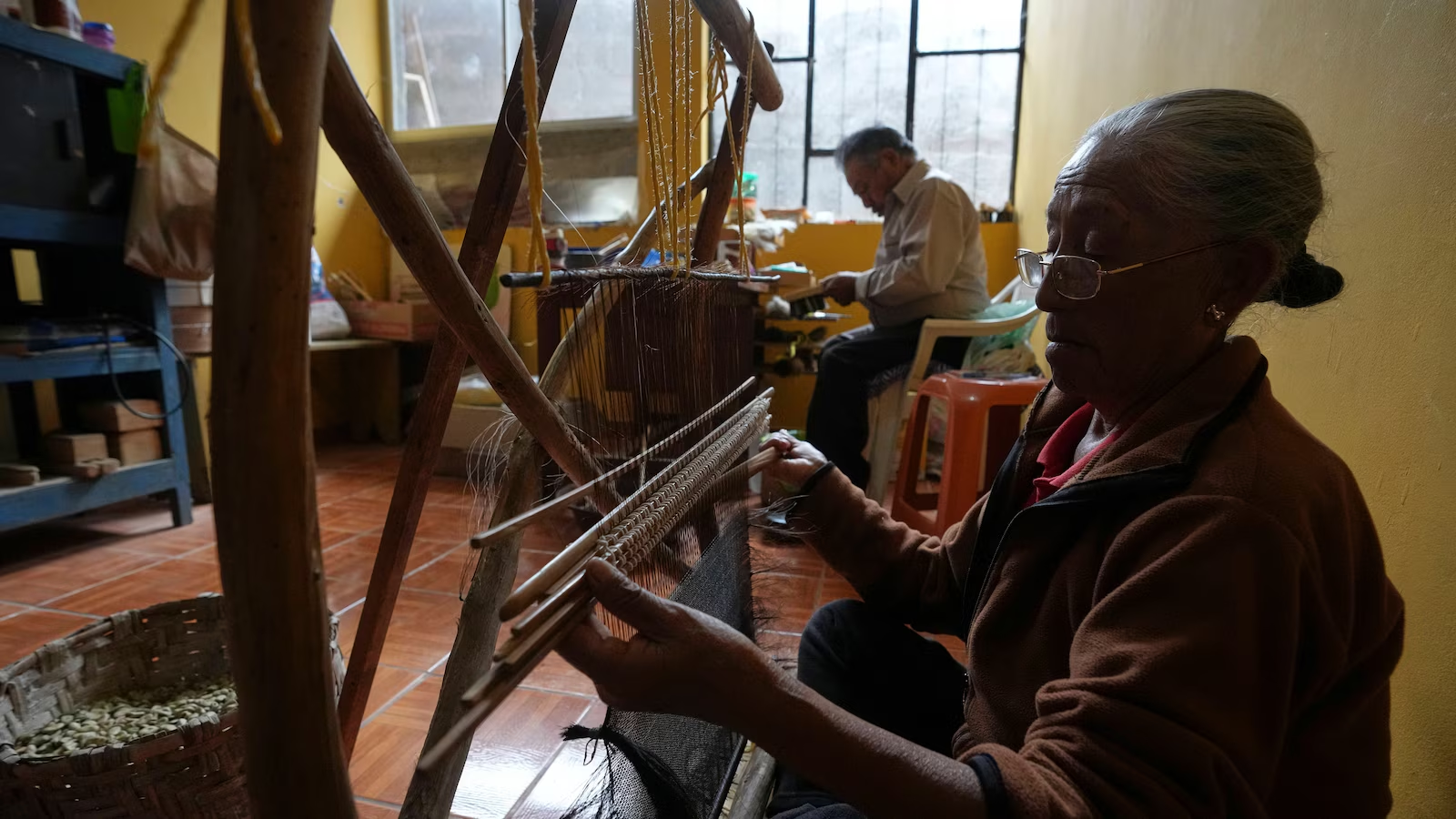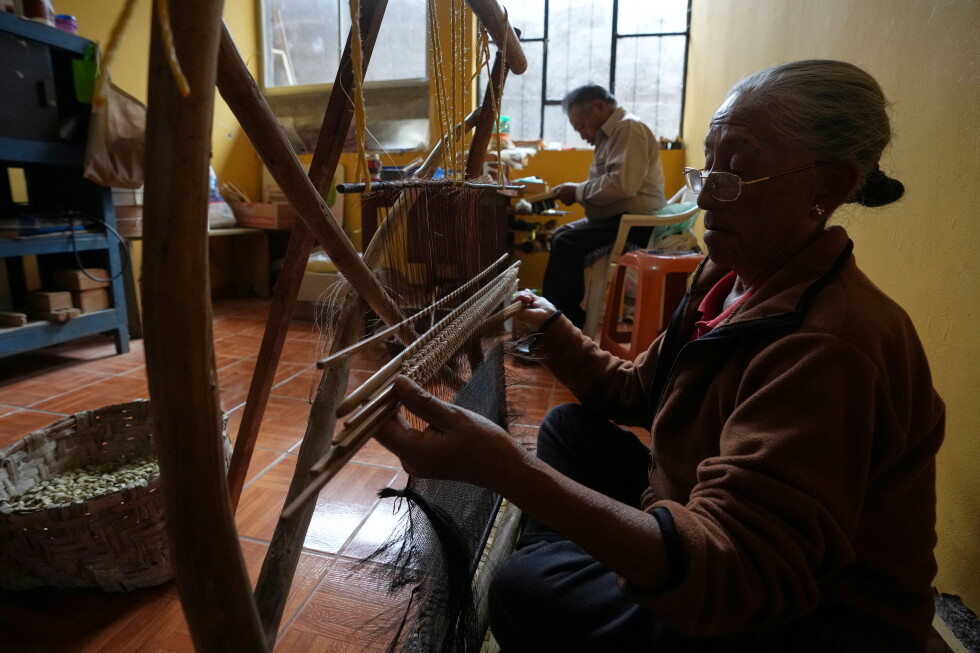
GUANGOPOLO, Ecuador (AP) — In her modest home in Guangopolo, east of Ecuador’s capital, Ligia Ipiales carefully separates strands from a horse’s tail, weaving a mesh as fine as gauze for a “cedazo,” a traditional sieve clinging to survival.The craft that once made the village famous is now fading. Only nine “cedacero” artisans remain. The youngest is 51-year-old Guido Paucar, the only man in the group, while the oldest is Ipiales, at 76.“This is our village’s identity. If it disappears, Guangopolo loses a part of who it is,” said Paucar. “We are the last generation making these sieves.”Fifty years ago, recalled Paucar, around 500 Indigenous families made a living by crafting and selling sieves, moving up to 600 units every month, with prices ranging from $6 to $30 depending on the size. But the emergence of cheaper plastic sieves and synthetic fabrics meant that sieves were reduced to display crafts with no presence in everyday life. “Now we only sell up to 10 each week,” he added.
Local records show that 1,500 residents of Guangopolo have been weaving sieves for 200 years. Crafted like a drum, each sieve features a thin, 15-centimeter (6 inches) high wooden rim that secures the traditional horsetail fabric. Until the turn of the past century, the tools were indispensable in Ecuadorian kitchens, where they were primarily used to sift flour.