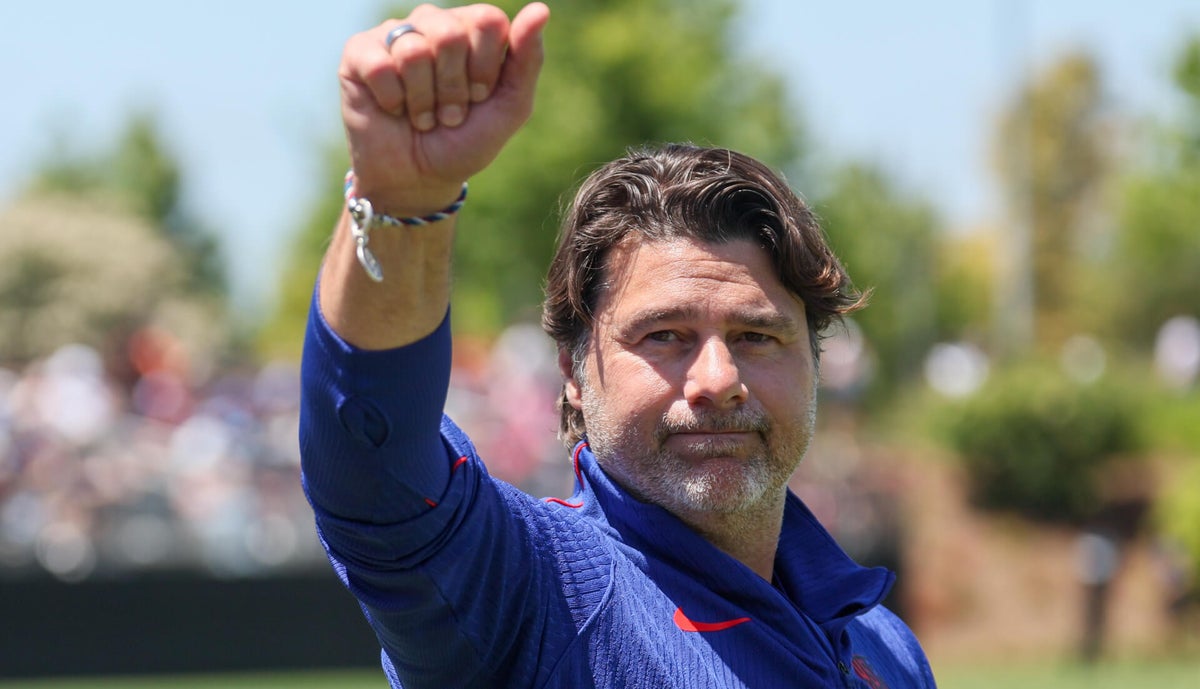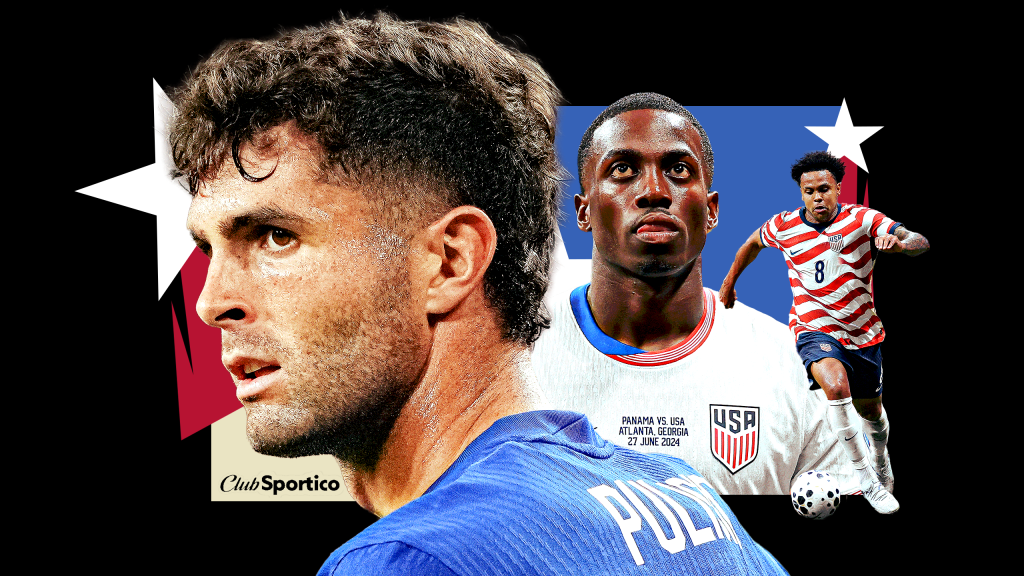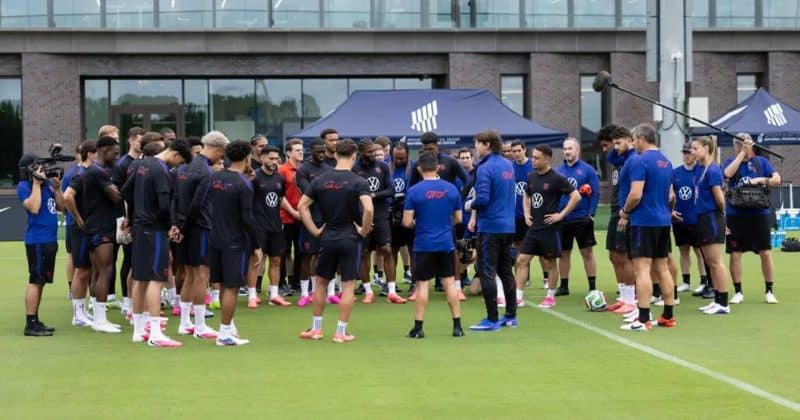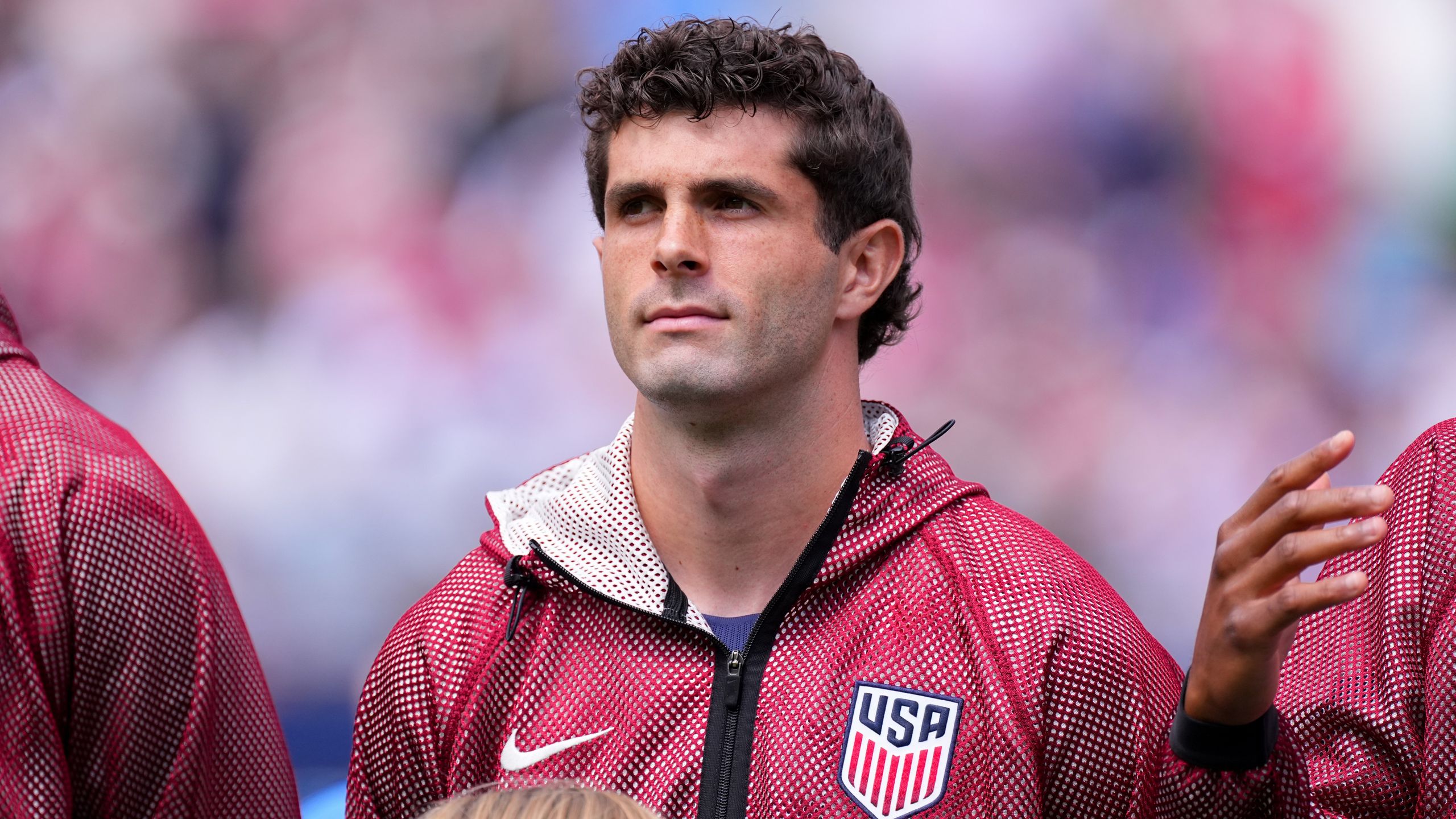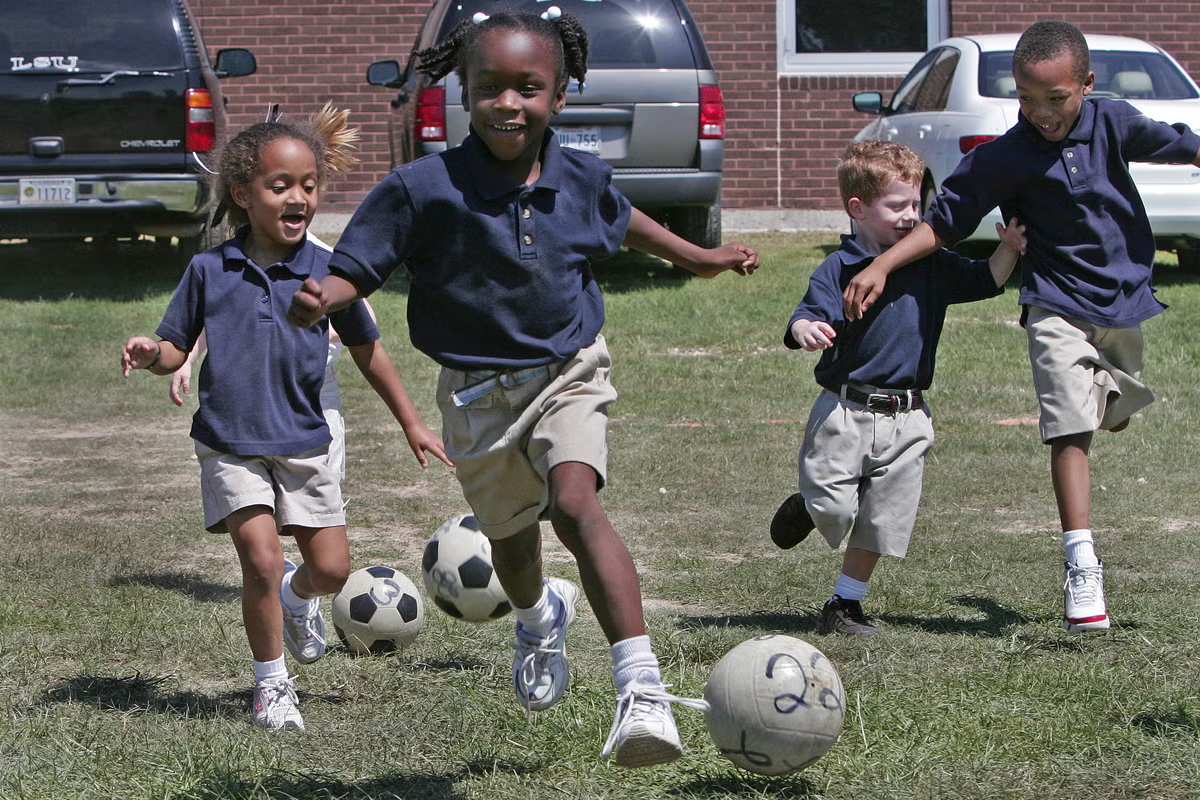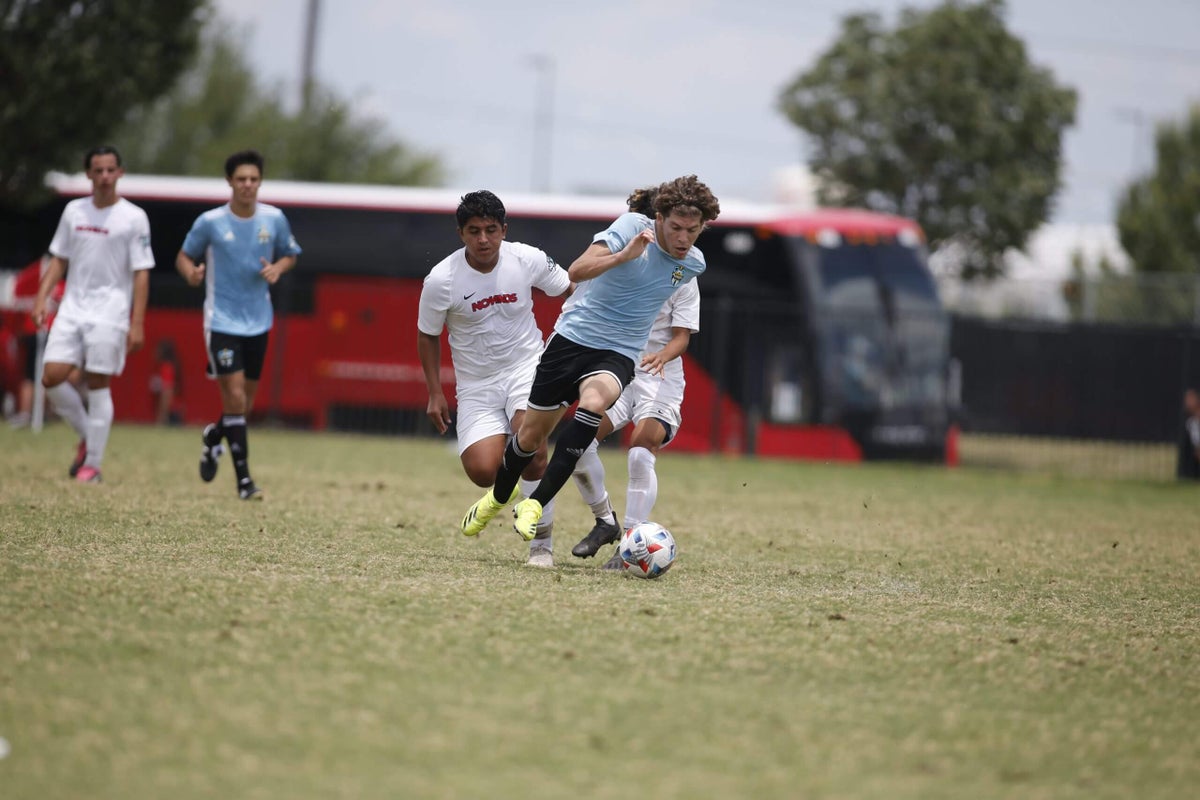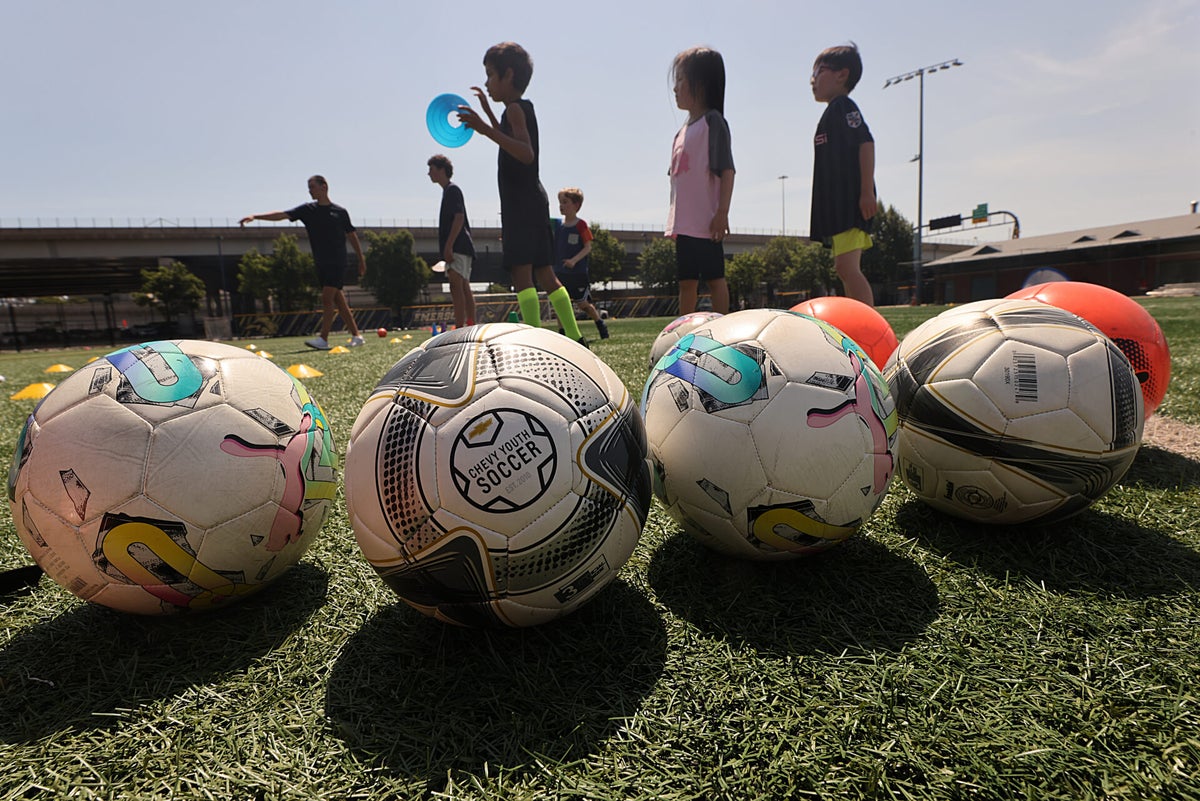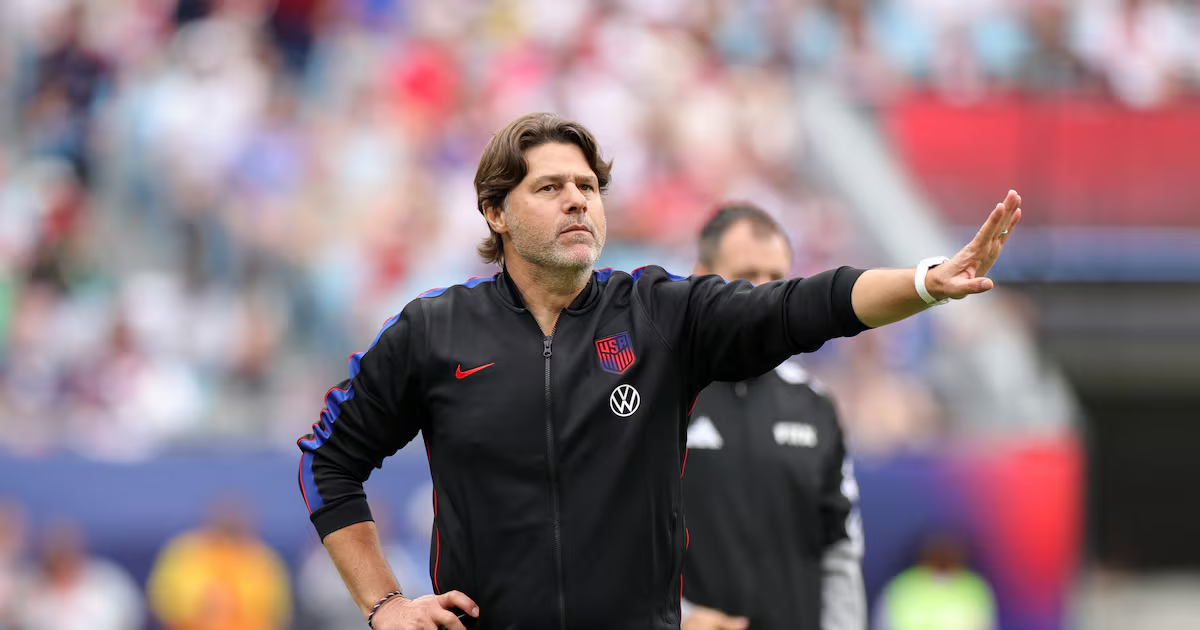
Parents of most youngsters taking up soccer in the US are well placed to afford the high sums it takes to put them in competitive arenasMauricio Pochettino, head coach of Team USA, gestures during the international friendly against Senegal at Bank of America Stadium in Charlotte, North Carolina, in May. Photograph: John Dorton/USSF/Getty Tue Jun 09 2026 - 06:00 • 6 MIN READA youth club on Long Island is advertising the opportunity to register kids for Under-three soccer training. For a mere $165 (€140), your boy or girl, fresh out of nappies presumably, can work on their first touch. The same outfit offers Under-14s eight training sessions and one tournament over the course of the summer for a measly $400. That fee is separate from the $2,200 every child needs to find to play in the fall and spring leagues. Welcome to the United States of America and the soccer-industrial complex – a suitably lucrative location for Fifa to pitch its bloated World Cup tent for some supersized grifting.There has been a Paris St Germain superstore on Fifth Avenue, the most coveted retail real estate in Manhattan, for a while now. Across two storeys and laid out more like a chic boutique than a club shop, well-heeled customers sift through elegant racks of jerseys and leisure-wear before sauntering further along the main drag to eyeball Cartier watches, Christian Louboutin shoes and Prada blouses. Its presence among such high-end couture underlines that PSG is a global brand, and the US has long been identified as fecund terrain for its sportswashing project.At the cosy Tavern on Jane down in the West Village, one of the few remaining, authentic neighbourhood bars in New York, an incongruous sign on a wall reads Dean Court. An AFC Bournemouth scarf hangs nearby, confirming the link to The Cherries. It turns out the pub owner is friends with one of the Americans who has a piece of the sixth-best team in England. In a city where watching live soccer from Europe used to require extraordinary effort, the all-powerful Premier League has infiltrated shebeens on every block.Farther downtown, Classic Football Shirts, another thriving English export, has planted its flag in Soho, hawking vintage exotica from every league on earth. The clientele on Canal Street ranges from hipster kids to Asian tourists to Wall Street types, demographics that don’t flinch at an AC Milan number from decades back retailing for $500. Serious money is being made peddling football nostalgia in a country still perversely regarded by some ill-informed commentators as new to the sport’s top table. Which it isn’t, and hasn’t been for a long time.Regardless of what happens once Team USA kicks off its campaign against Paraguay next Friday night, this World Cup can’t be about growing the game in a nation already suffused with soccer culture, a place where 17 million people play regularly. At last count, 47 Americans have featured in the modern iteration of the Champions League, 16 more than Ireland can boast in the same period. Christian Pulisic is one of the best players in Serie A (admittedly not the flex it once was), and has team-mates plying their trade in Mexico, Germany, France, Spain, England, Scotland, the Netherlands, and of course, Major League Soccer (MLS). A firework show prior to the MLS match between Inter Miami CF and Austin FC at Nu Stadium in Miami, Florida, in April. Photograph: Leonardo Fernandez/MLS/Getty For keeping tabs on the 25 Americans regularly starting across the top five European leagues, Mauricio Pochettino earns $6 million a year, roughly what Thomas Tuchel gets for helming England, and more than France pays Didier Deschamps. Everything about the US’s commercial approach points to a seriousness of purpose, properly resourcing the operation with no expense spared. Yet, they enter this tournament with low expectations. Thirty-two years after hosting its first World Cup, 24 years after being very unlucky to lose a quarter-final, most pundits think reaching the round of 16 in this elongated format is the summit of their ambition. “Our college system isn’t competitive enough to feed into professional soccer,” said Landon Donovan, when asked why the US has failed to push on since his own era. “So basically, if you’re 16, 17, you haven’t made it. You’re not on an MLS roster, you kind of fall into this abyss. But the bigger problem is, our youth soccer in this country is a disaster. And so, you have all these youth clubs charging you crazy fees. It’s all about winning. The kids get left behind because the clubs want to make money. The coaches want to make money. They want to win. And the kids don’t develop. And now we’re seeing sort of the fruits of that, sadly.”As long as the price of admission to kids’ teams is prohibitive for most blue-collar families, an outbreak of national soccer hysteria would be nothing more than a passionate summer flingArguably the most instinctive American player ever, Donovan has repeatedly called for an end to the pay-to-play culture that creates barriers to entry for too many kids, making the sport here almost exclusively middle-class. One in three of those who play come from households with an annual income of more than $100,000. Of the 48 nations participating in this shindig, the US is the only one where children kicking a ball is a country club sport costing a family a minimum of $5,000 a year. Just a short kickout from MetLife Stadium, there is a New Jersey youth outfit that brings in revenues exceeding $8 million a year. Not exactly Alf Garnett’s working-class ballet. Lionel Messi of Inter Miami CF during the MLS match between Inter Miami and Philadelphia Union at Nu Stadium in Miami, Florida, in May. Photograph: Megan Briggs/Getty All of which explains too why Pochettino’s squad includes the child of two prominent research scientists, the scion of an NFL superstar who earned tens of millions of dollars, and the son of the former president of Liberia. Half a dozen others had parents who were successful professional athletes or coaches – the kind of people uniquely placed to afford to pay exorbitant sums to put their children in the most competitive arenas to develop their skills over a long period of time. This is surely the only dressing-room in this tournament peppered with lads who attended private high schools costing $30-$40,000 a year. The sheer numbers playing the game here ensure that enough decent players will still percolate through the flawed system. When you add in crucial pick-ups from the children of the diaspora, the team will usually be just good enough to allow troglodytes like Alexi Lalas to defend the outmoded pay-to-play model to the death. By now, it shouldn’t even be a debate. With all the millions playing the game, it says something about the quality that six of the 23 outfield players picked by Pochettino either grew up or spent large chunks of their formative years outside the US. Christian Pulisic of USA celebrates after scoring his team's second goal during the international friendly against Senegal at Bank of America Stadium in Charlotte, North Carolina, in May. Photograph: Omar Vega/USSF/Getty In 1996, MLS was established to build on the success of USA 94, and in its inaugural season, American-born players made up two-thirds of the squads. Thirty years on, MLS will send a record 44 representatives to this World Cup, but only six will be involved with the home team. While this is partly because the best Americans, such as Pulisic, Weston McKennie and Tyler Adams, now move to Europe early, it’s also because there are less natives than ever (just over 40 per cent) togging out in the domestic competition.When Inter Miami won the MLS Cup final last December, they started two American-born players; one of them plays for Jamaica, the other has declared for Greece. In the days of Pele and the ill-fated NASL of the 70s, the hope was that eventually enough locals would be of the required standard to populate pro teams. Half a century later, it’s difficult to see how the Messi experiment (like the Beckham cash-in in Los Angeles before it) helps the game here. Aside from generating social media traffic, he’s merely leading a collection of lads from other countries, some on the way down, some on the way up, on a glorified jolly, selling truckloads of shirts for Adidas, and making $70 million a year for himself.If Pulisic catches fire over the next few weeks and leads the US deep into the tournament, the long-term impact on the sport here, despite what visiting media might tell us, will still be negligible. As long as the price of admission to kids’ teams is prohibitive for most blue-collar and immigrant families around the country, an outbreak of national soccer hysteria would be nothing more than a passionate summer fling. Not to mention that while attention is focused on the World Cup, the grassroots are under attack.Workers at SoFi Stadium protest outside the Fifa World Cup 26 Los Angeles office calling for Immigration and Customs Enforcement (Ice) personnel to be banned from the World Cup on May 1st, 2026. Photograph: Frederic J Brown/AFP/Getty The Latino leagues across Long Island, some of the most vibrant competitions in the state for decades, are struggling to stay afloat now. With the crackdown on immigration, teams are unable to fulfil fixtures because players are afraid to take the field. They are scared that Ice personnel will target these matches that draw hundreds of spectators in Hispanic communities. This is an appalling threat to the sport that the carnival barkers at Gianni Infantino’s circus should care about – except it doesn’t quite fit their product placement. Some games are more beautiful than others.IN THIS SECTION
Of the 48 World Cup nations, the US is the only one where soccer is a middle-class country club sport
Parents of most youngsters taking up soccer in the US are well placed to afford the high sums it takes to put them in competitive arenas
1,627 words~7 min read