The Interactive Dashboard Bottleneck
Modern enterprise platforms at Smart Tech Devs demand high-density data visualizations. We build tracking spaces containing high-frequency financial charts, real-time server cluster heatmaps, or interactive collaborative mapping spaces. When rendering these tools on the web, developers look to the HTML5 <canvas> element to bypass DOM bloat overheads.
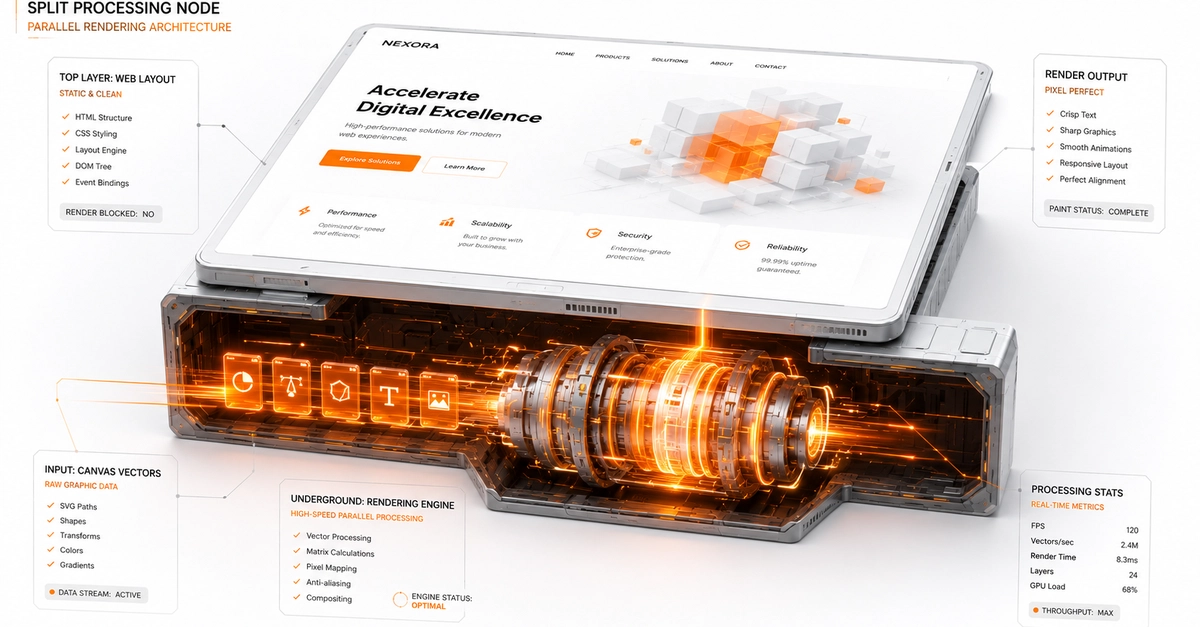
However, as your real-time data input streams scale to thousands of metrics per second, standard Canvas architectures hit a rigid browser wall. Because standard canvas drawing commands run directly on JavaScript's **Main UI Thread**, your rendering loops are competing with user clicks, layout text measurements, and React component state calculations. If the data calculation loop spikes, the Main Thread locks up for a fraction of a second. Frame rates drop, input typing lags, and the entire web application stutters. To achieve true 60fps performance, you must move rendering off the thread via OffscreenCanvas.
The Architectural Shift: Parallel Decoupled Painting
The OffscreenCanvas API is a game-changing browser specification that allows developers to completely decouple a canvas element from the main DOM workspace window.