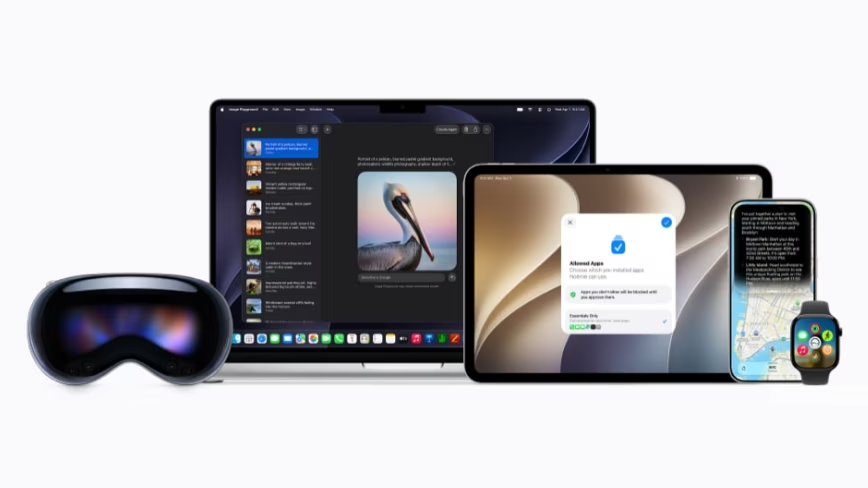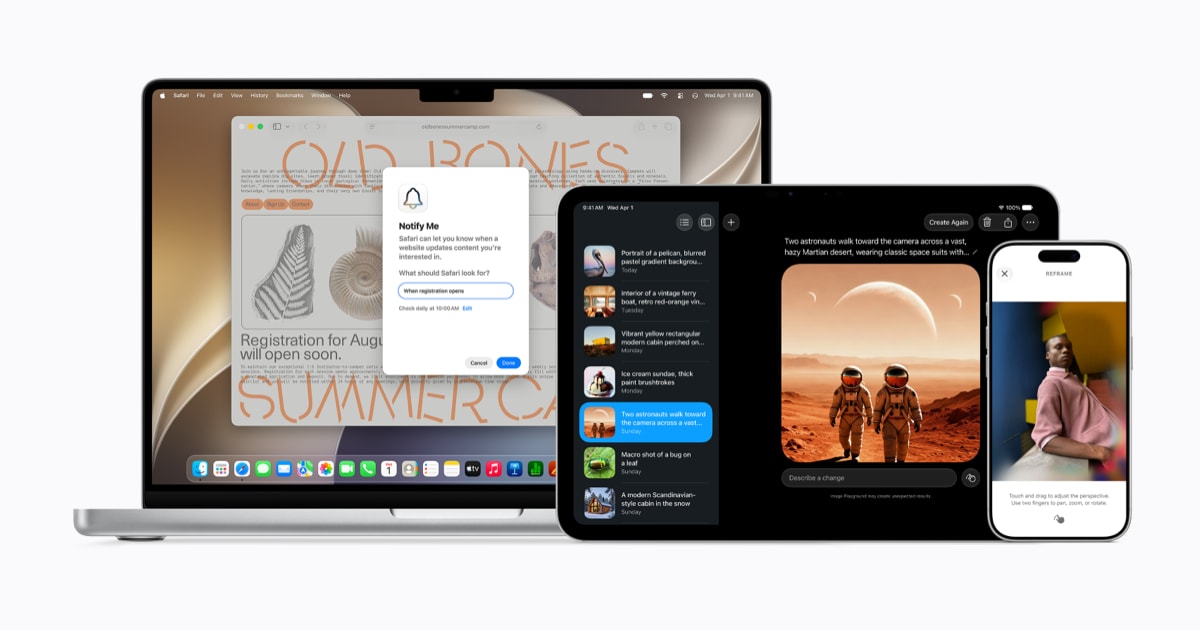
At its 2026 Worldwide Developers Conference, Apple offered a vision of how to integrate AI with its products that stands out for its sobriety, responsibility, and plausibility. In contrast to the job-killing, security-breaking, human-replacing hype promulgated by the likes of Anthropic and OpenAI, company execs dialed down their usual superlative-laden effusiveness to convey how AI tools can actually help software developers, as well as those using Apple products.Capabilities like Safari's Notify Me – website change notification – and the browser's low-code extension creation service called Describe an Extension look like solid uses for machine learning technology.
Part of Cupertino's more modest marketing may be attributable to the crow that the company has eaten as a result of underperforming AI. But it also fits with the lack of sizzle in the company's three areas of focus: platform improvements, child safety enhancements, and Apple Intelligence.
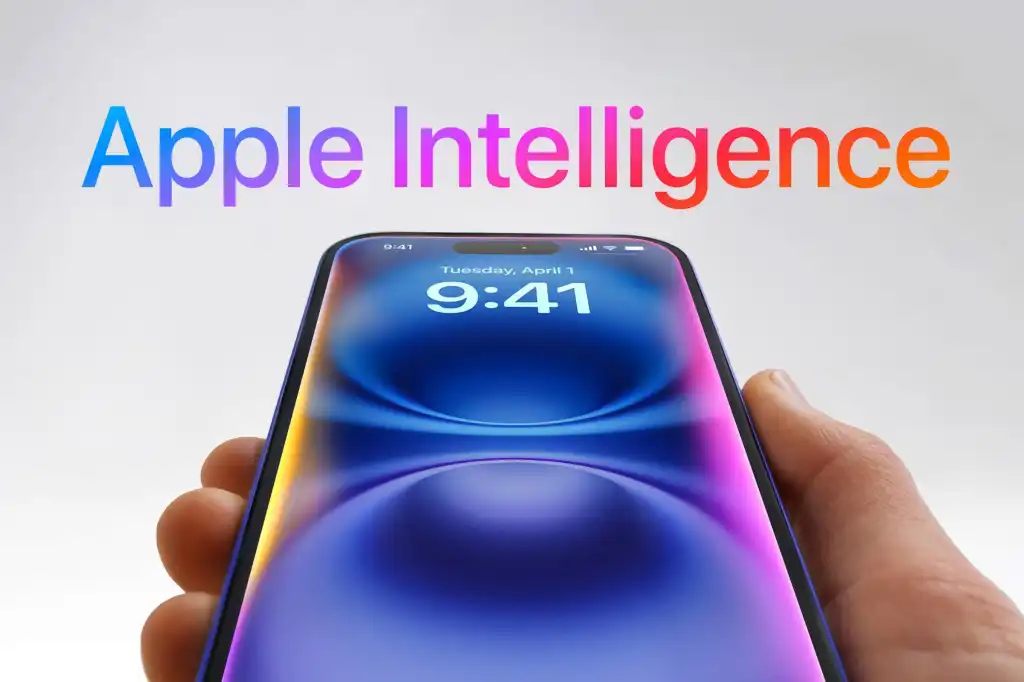
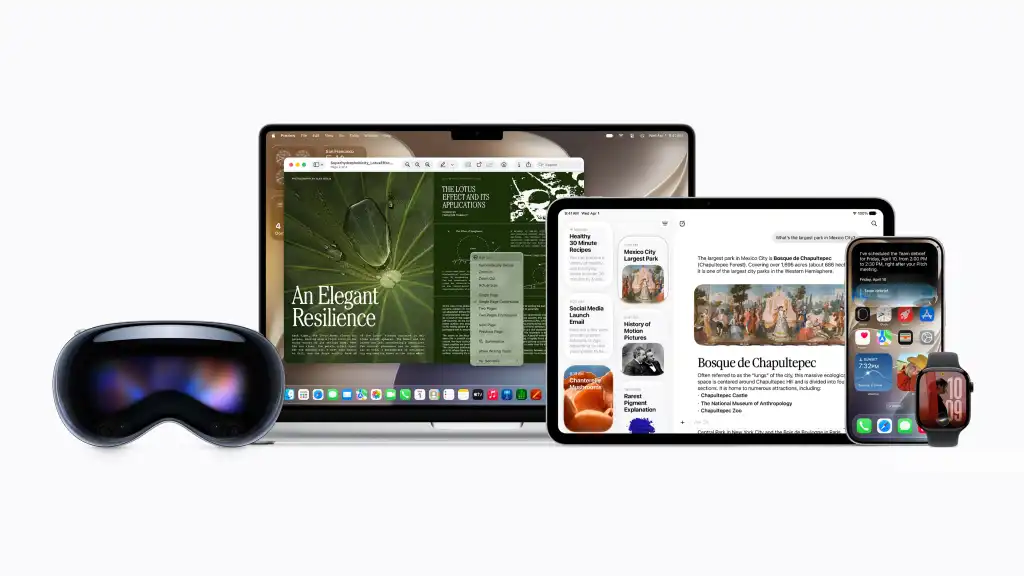
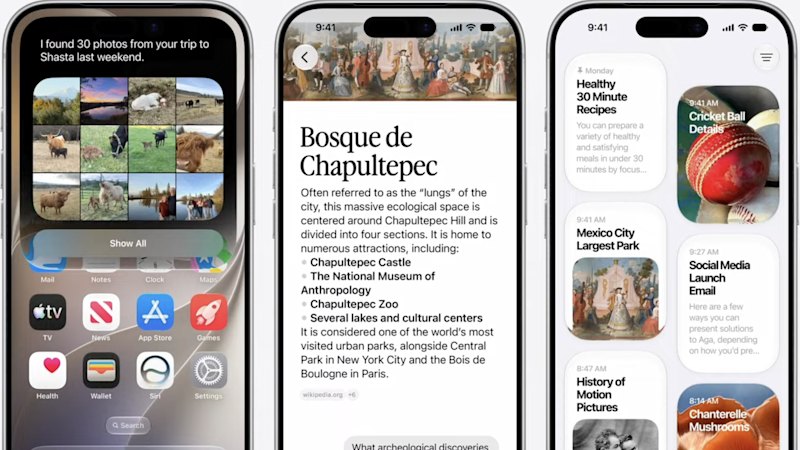
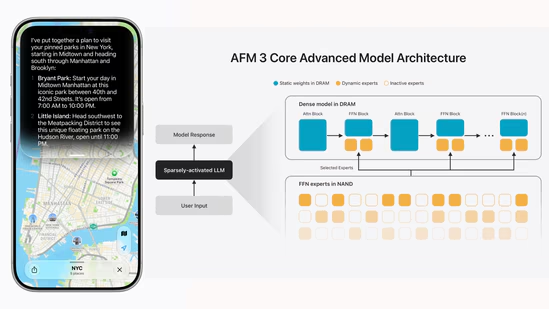
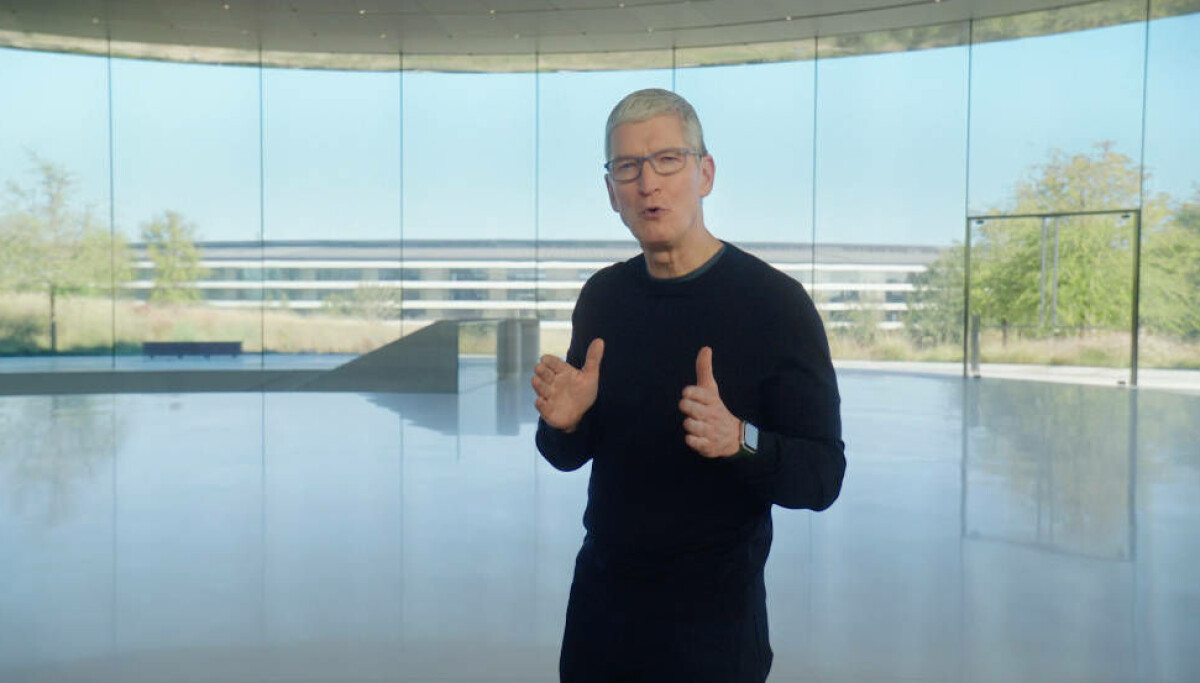
Platform improvements like 30 percent faster app launches, Photos loading that occurs 70 percent faster, and a more efficient CPU Scheduler aren't exactly the sorts of features that marketing departments know what to do with, even if they deliver noticeable user experience improvements. And Child Safety, while welcomed by some and politically expedient at this moment in time, is fundamentally about limiting the use of Apple products rather than expanding it.That leaves Apple Intelligence, which has underdelivered since its introduction in 2024."Rebuilt from the ground up, Apple is trying to make AI feel native, useful, and invisible across the devices people already use every day," said Francisco Jeronimo, IDC VP of client devices, in an email to The Register. "This matters because the winning AI experience for consumers will not be the loudest or most technically complex. It will be the one that understands context, respects privacy, works reliably across apps, and reduces friction without forcing users to change behaviour."Much of the developer keynote focused on improvements to Siri, now rebranded Siri AI, which will reach the general public when the v27 of Apple's various platforms drop this fall. Apple developers can now access better versions of these releases.But beyond the claim that Siri is now fit for purpose, the presenting Apple execs managed to highlight the company's substantive advantages in terms of privacy, integration, and cost. And they made a good pitch for developing AI applications on Apple platforms, and for using the Swift programming language to do so."Today, many AI providers talk about privacy, but by default, most of them retain your personal interactions, leaving the onus on you to defend your privacy," explained Craig Federighi, Apple's SVP of software engineering. "Like using temporary chats, deleting conversations, or even turning off entire features. At Apple, we believe privacy in AI is non-negotiable."While Apple has overpromised on privacy in the past – describing privacy as a human right and then treating it as a government-granted perk – the company's AI privacy story, centered around Private Cloud Compute, has been compelling enough to prompt Google to copy it.