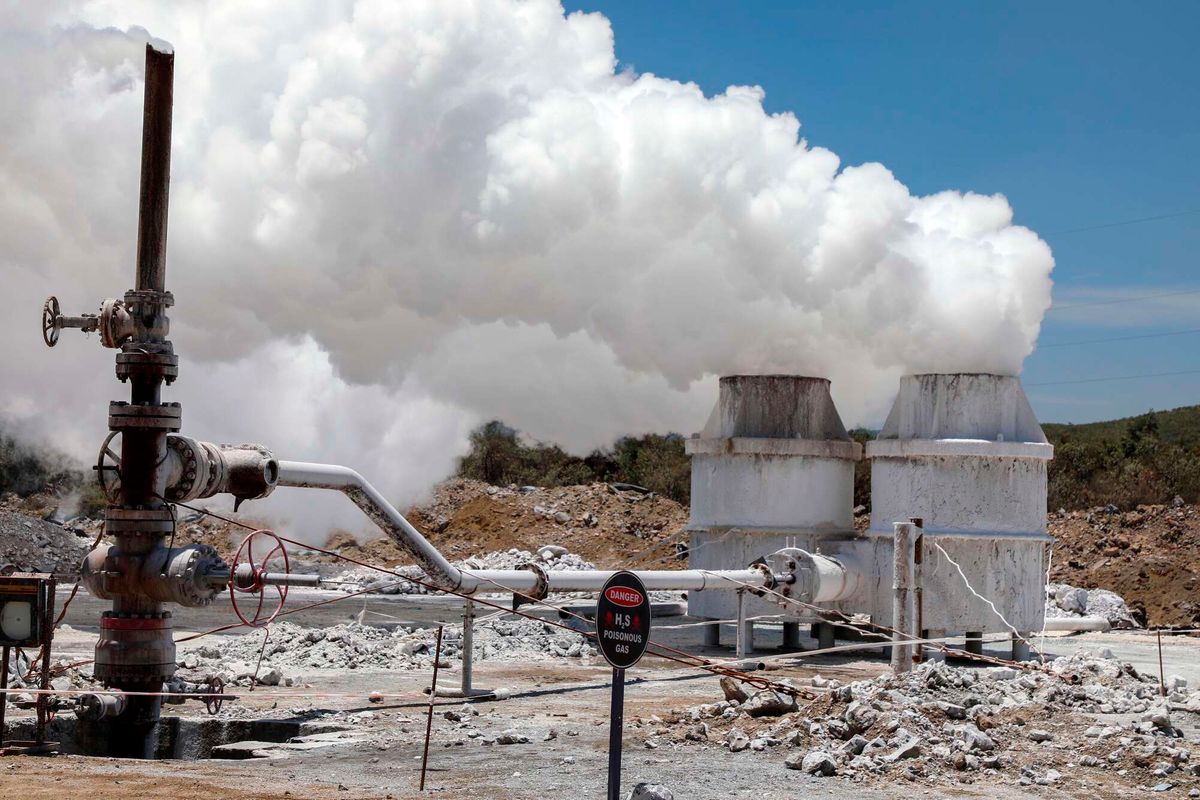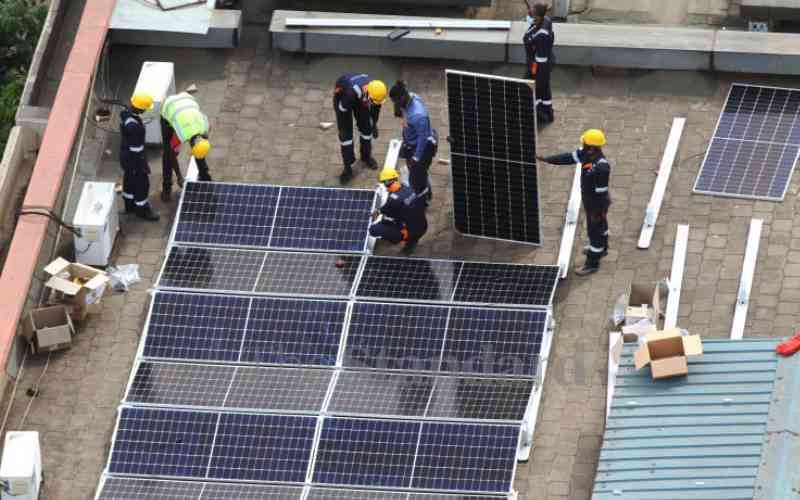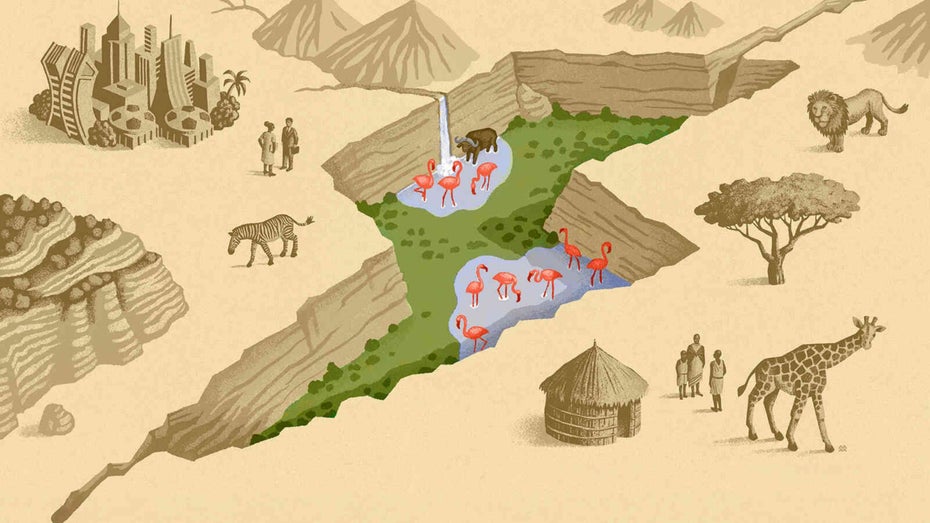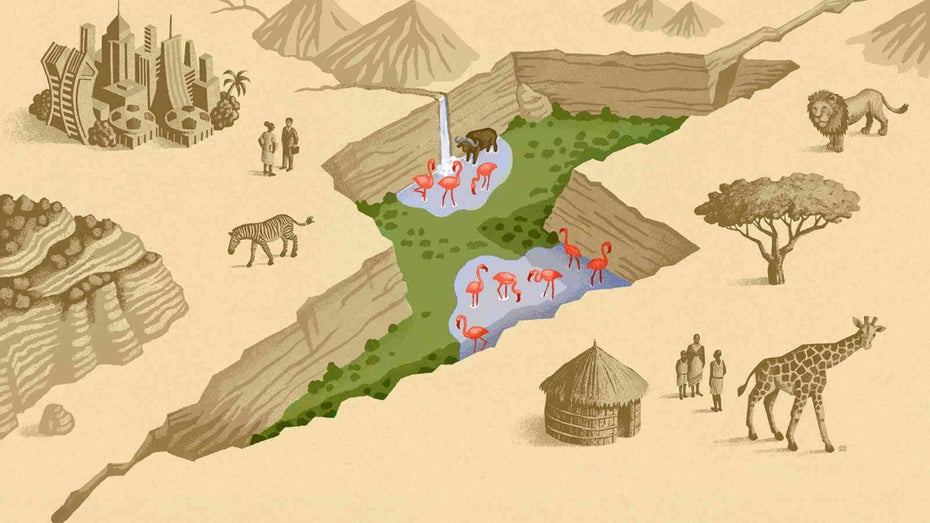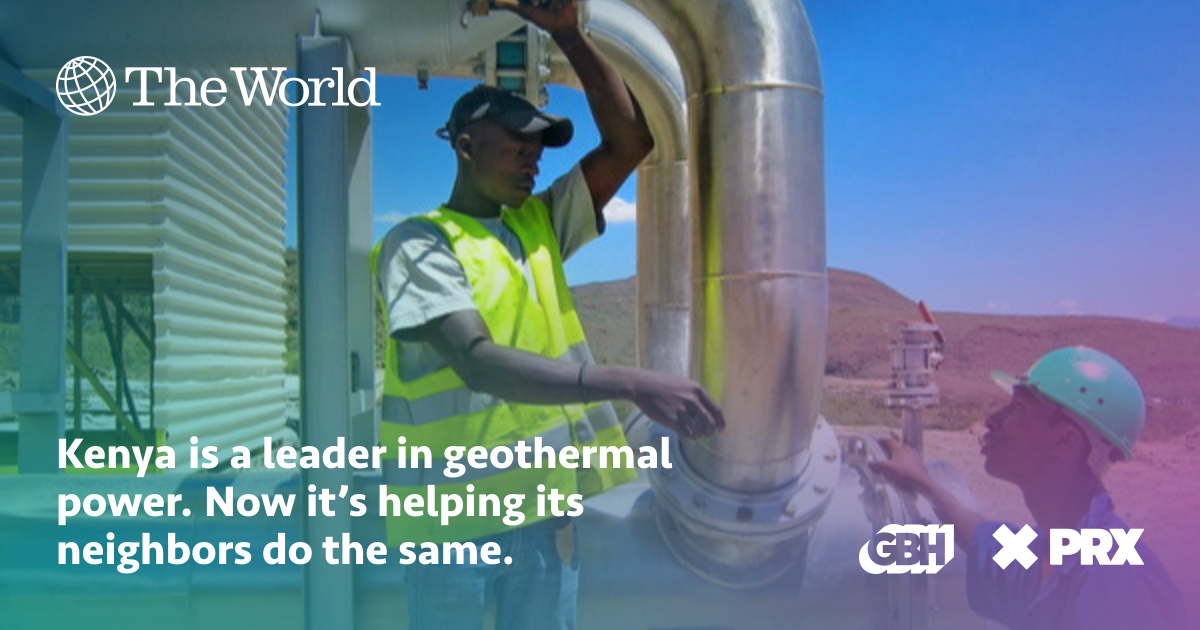
Public radio’s longest-running daily global news program.AboutContactDonateMeet the TeamPrivacyTerms of use©2026 The World from PRXPRX is a 501(c)(3) organization recognized by the IRS: #263347402.Kenya is a leader in geothermal power. Now it’s helping its neighbors do the same.Kenya generates about half of its electricity by harnessing the Earth’s heat. Its neighboring countries have the same underground resources, but almost no geothermal power. Now that is starting to change. For The Big Fix, Host Carolyn Beeler speaks with Anderson Kehbila, an expert on climate and energy with the Stockholm Environment Institute’s Africa Center, based in Nairobi. The Big FixJune 8, 2026Updated: June 8, 20268:16In this file photo, workers are seen at Olkaria Geothermal Power Plant, Kenya, Jan. 28, 2011.Kenya is a powerhouse when it comes to geothermal energy. It gets about half of its electricity by harnessing the Earth’s heat. Its neighbors have the same underground resources but almost no geothermal power. Now, that is starting to change. Anderson Kehbila is an expert on climate and energy with the Stockholm Environment Institute’s Africa Center. He began by explaining why Kenya had access to geothermal in the first place.“Kenya, Ethiopia, Rwanda, Tanzania, they fall along the Rift Valley system where there’s a lot of seismic activity, thereby creating this massive amount of heat that is stored beneath the Earth’s surface in the Rift Valley.”People use a boat to cross floodwaters as residential buildings remain submerged after Lake Naivasha swelled and inundated homes, displacing people in Kihoto Village, in Naivasha, Kenya’s Rift Valley region, Nov. 11, 2025. Andrew Kasuku/AP PhotoMark Munyua, CP solar’s technician, examines solar panels on the roof of a company in Nairobi, Kenya, Sept. 1, 2023. Brian Inganga, AP File PhotoWell, what I know is that for sure in Kenya, we really had fuel shortages, and even they were going about fuel rationing. So, that’s something that is now becoming like a reckoning, not only for Kenya, but also for other neighboring countries to see how they can start developing their own resource to have this stability of supply. So, I believe that’s something that governments are now taking into consideration, you know, by developing the renewable and geothermal energy, especially for the East African countries in the Rift Valley.There’s always this issue of informed consent. Definitely, the government has to work together with the local communities in terms of participatory decision-making and getting the consent of the local community. At times, that process is never followed through, but generally that’s what we recommend as a research institute, to actually engage the communities, get their feedback, the challenges that they face, and really co-develop the solution with them. And also, in the Kenyan Constitution, there’s also this aspect of, you know, the right of people to decide their social and economic well-being. So, that’s also something that the Constitution requires the government to do. But at times it’s not quite clear if they’re actually following that process.Maasai children run past a zebra that local residents said died due to drought, as they graze their cattle at Ilangeruani village, near Lake Magadi, in Kenya, on Nov. 9, 2022.Brian Inganga/AP File PhotoParts of this interview have been lightly edited for length and clarity.
Kenya is a leader in geothermal power. Now it’s helping its neighbors do the same. - The World from PRX
Kenya generates about half of its electricity by harnessing the Earth’s heat. Its neighboring countries have the same underground resources, but almost no geothermal power. Now that is starting to change. For The Big Fix, Host Carolyn Beeler speaks with Anderson Kehbila, an expert on climate and energy with the Stockholm Environment Institute’s Africa Center, based in Nairobi.
531 words~2 min read