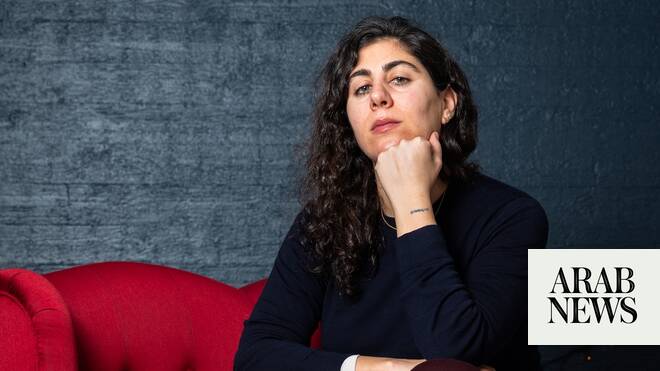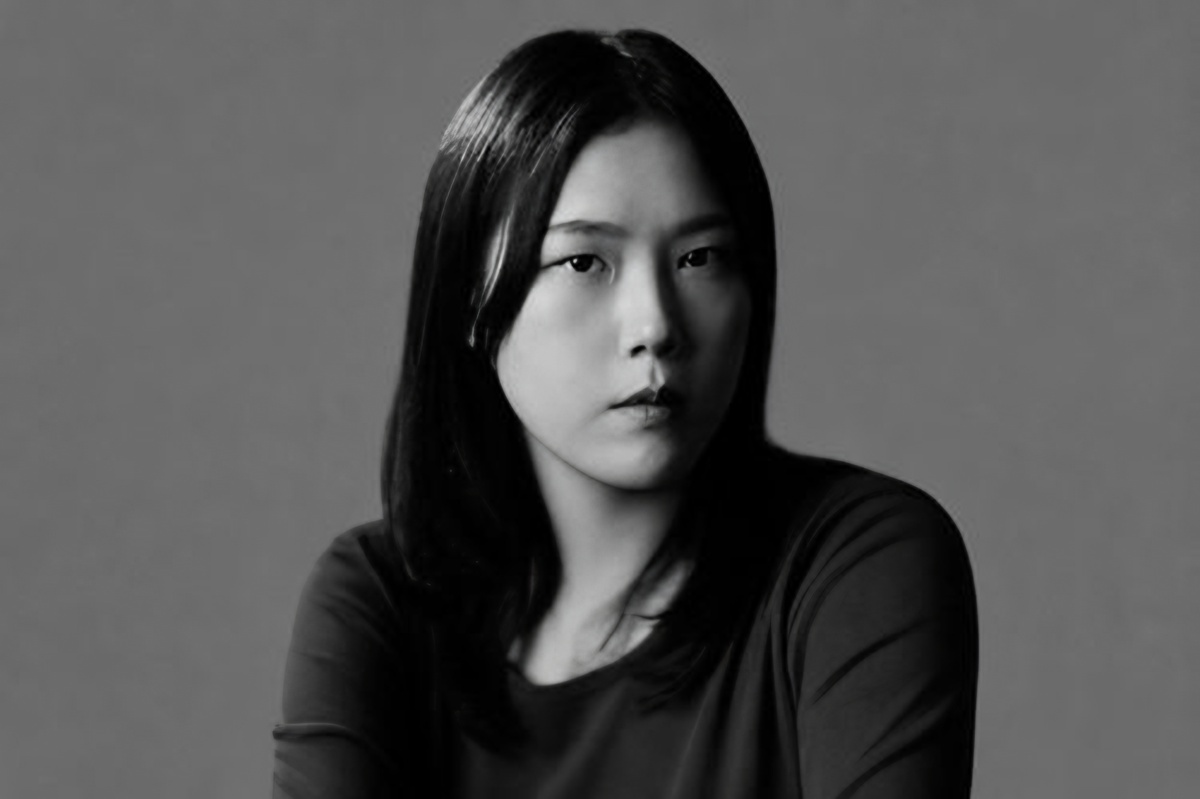
Director Lee Min-sook gives voice to her mother in a deeply personal documentary Film director Lee Min-sook poses for The Korea Herald at Herald Square in Seoul, May 11. (Im Se-jun/The Korea Herald) For Korean Canadian film director Lee Min-sook, the COVID pandemic was the big push behind her documentary “There Are No Words,” a deeply personal and political film.“There Are No Words” is Lee’s ninth film in a career that spans 25 years. The film appears to be a departure from her previous works that have dealt with issues such as migrant farmers in Canada and city politics.“It’s taken me a while to approach this story because it’s the central story of my life,” Lee said during an interview with The Korea Herald in Jeonju on May 4, ahead of a screening of her film that afternoon as part of the 27th Jeonju International Film Festival.“There was a long lead up, like a long runway, and then a big push,” she said.“Over the years, I have used the documentary form to spend time with people, to have them trust me, the practice, the medium, and tell their stories,” she said. “I’ve come to value and respect those relationships, but also to understand that there’s a lot that goes into that trust,” she continued.Along the way, she thought a lot about representation.“As a filmmaker, you are very aware of how what you do establishes the narrative of someone else’s story. So, there's a lot of ethical considerations and you have to be accountable to that process,” she said.Her mother’s death by suicide when she was 12 was also part of the journey.“I always knew that what happened to her and her death would be something that I wanted to make sure wasn’t forgotten, wasn’t erased, that her life wasn’t dismissed as unimportant,” she said.Not knowing how to approach such a daunting task, Lee placed it in her bucket list.Then the COVID-19 pandemic hit.“The push, for me, was COVID. Being aware of imminent death,” Lee recalled.She realized that her father, who was in his late 80s, might die.While she had thought they had had a challenging relationship, the thought of his imminent passing sent her into anticipatory grief.The grief perhaps was not only directed toward her father.“There were two questions that came to my mind. If he goes, will I need to be Korean?” she said. “He’s my primary highway to Korean culture,” she said.A deeper question involved her mother. “When he passes, what will I ever know about my mother? Because I know that he is the one person who fully holds the stories of my mother as a young woman. If he goes, then it is like losing her twice, but in a more permanent way. I was heartbroken. That’s when the film became much more urgent,” she said.However, she wondered if her skillset as a filmmaker would be difficult to apply to this project. The two were not only emotionally distant, but also separated by the lack of a shared language.Lee, who is not fluent in Korean, said, “That tilted conversational space that I’m trapped in with my father has always prevented me from asking some more thoughtful, reflective questions.”She hired an interpreter for the film.The title of the film, “There Are No Words,” speaks to this literal lack of language. It also speaks to the silences in families even when they speak the same language.“People talk around the things that are the most important. And that heavy weight of silence is even much more intractable when you are trying to live through a traumatic event like my mother’s suicide,” she said.She decided to confront her family’s silence with the film. Lee Min-sook (left) sits across from her father, Lee Chung-beum, on the set of "There Are No Words." (National Film Board of Canada) Was her father ever reticent to talk?Quite the opposite.“He’s a storyteller. He encouraged me to make the film,” she said.Who gets to tell?During the filming, he would comment that he didn’t know why Lee was making a film about her mother, implying he was much more interesting.“He actually wanted to be the center of the story,” she said, recalling having to remind him that the film was about her mother.“I think my father also understood that this would be an opportunity to tell a story that he felt remorseful about in some ways,” she said“Deciding whose story matters, who gets to tell the story, those are questions that I grapple with, and to me, history from below is what matters, history that is written in conversation with people who are often determined or considered unimportant or marginal,” she said. “And that’s my mother.”In the story of her mother, Lee Song-ji, she found a parallel between the personal and the public.“This is an experience of many women of my mother’s generation,” she said.Born in Nagasaki, Japan, during Japanese colonial rule of Korea (1910-1945), Song-ji’s family returned to Korea when she was 8 or 10, settling in Hwasun, South Jeolla Province. Song-ji’s father died when she was young and she had to work.Talking to her relatives and residents in Hwasun who remembered her, Lee discovered that her mother was a survivor, a resourceful person who was always busy working.Song-ji married Lee Chung-beum, a man from the neighboring Gwangju who worked for Korea's Counter Intelligence Corps. By the time she discovered that she was a second wife — he had a family in Gwangju — it was too late; she already had a child.Lee’s family moved to Canada in 1973 when she was 3 years old.“I didn’t grow up with any sense of my mother, who she was or the life she lived,” she said, attributing this to the general experience of immigrants who focus on survival and securing a solid future for their children in the new country.“When she died, it was in many ways a sudden traumatic departure, but it was also the death of someone whom I had never known to the full depth of who she could be,” she said. Lee Min-sook (left) and her mother, Song Ji Lee, are seen in this photo taken July 16, 1980. The photo is shown in the documentary film "There Are No Words." (National Film Board of Canada) Documentary genre“The film deals with the afterlife of the Cold War, the Korean War. I’m someone who has absolutely grown up in the shadow of that. And this is a film of post memory, but it’s also a film that tries to, in a very tangible, concrete way, contend with memory,” she said.Her father is an unreliable narrator and the elderly people she met in Hwasun, Lee knows, are telling her a sanitized story.“You are in proximity to truth but it’s never a whole truth,” she said, explaining that in the documentary genre, you are always working with the partiality of truth.“The memory of my own memory, I don’t trust because I was 12. And so the film contends with that,” she said.Meeting in Seoul on May 11, after “There Are No Words” was shown three times at the Jeonju International Film Festival, Lee notes how the screenings in Korea have completed the film.“It wasn’t an experience I was prepared for. The film is completed in a substantive way because Korean audiences understood the film, they recognized the story,” she said.“It’s a kind of film that breaks many silences, many taboos,” she said, recalling how audiences in Jeonju shared their personal stories, although there was no invitation to do so.“The film is very much an important commemoration of women like (my) mother and some of the challenges that they face, and I refuse to be silent about it,” she said about her commitment to promoting the film.“I think documentary filmmaking is absolutely a form of activism but it’s not just that. It’s a form of community building,” she said. “It can be a deeply unifying experience to share a story but then also think together about how what you learned and saw can be addressed through material action.”Lee thought she might have three films left in her — she is almost 60 and each film takes about five years to complete. “So, I want to make sure that the next films I make add to the line of exploration and critical thought that I have been consumed with my whole life,” she said.“And one of those is about what it means to be Korean, to navigate Korean identity in a time in which many geopolitical forces attempt to constrain all the possibilities of Korean liberation,” she said, adding that she hopes that her next film is in Korea.“I want to use my role as an overseas Korean to think about stories that are innately Korean from this perspective that we hold, and we hold this bicultural perspective to be able to contribute in some ways to the conversation about what Korea has gone through historically and what Korea could be moving forward into the future,” she said. Film director Lee Min-sook (right) speaks with Kim Hoo-ran, editor-at-large at The Korea Herald, at Herald Square in Seoul, May 11. (Lim Se-jun/The Korea Herald) Lee observed that the documentary genre is being reformulated.“Today’s documentary filmmakers are deeply conscious of the role that media can play and recognize that the idea of objectivity that prevailed in the old school of documentary storytelling is not palatable, not defensible and bias is constant,” Lee said.This embrace of subjectivity in documentary filmmaking has allowed filmmakers to recognize and acknowledge their perspective and relationship to the story, she said.“It’s about how we connect with each other. And, in fact, most of the conversations that you have after the camera turns off are much more important than the conversations you have when the camera’s on because those are the ones that build trust,” she said."There Are No Words" is currently playing at festival circuits. Since the Jeonju screenings, "There Are No Words" has screened at Montreal Asian International Film Festival and San Francisco Indie Doc Fest, among others. The film will also screen at more film festivals in Korea later this year.This is one of a series of interviews in which Kim Hoo-ran, editor-at-large at The Korea Herald, speaks with leaders, trailblazers, unsung heroes, and both well- and lesser-known figures who share the stories of their lives and their visions for a better world — Ed.
'There Are No Words' airs the unspoken
For Korean Canadian film director Lee Min-sook, the COVID pandemic was the big push behind her documentary “There Are No Words,” a deeply personal and political
1,731 words~8 min read