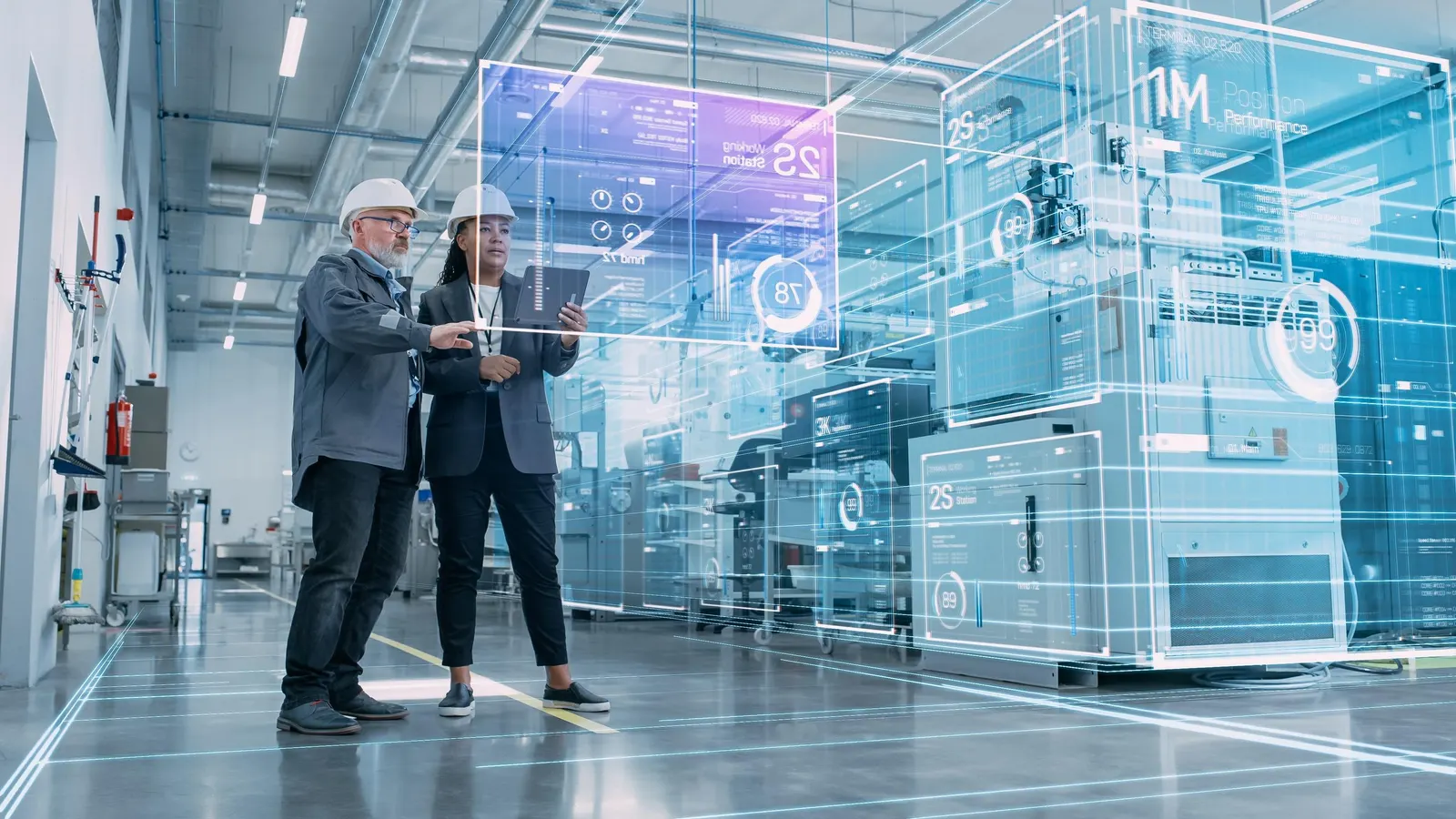
Yes, AI can improve your writing, analyze your data, help you determine strategy, or mock up designs for a new customer website. But it can also help your manufacturing run more smoothly, prevent defective products from leaving your facility, and figure out the most time and energy efficient ways to move goods. A recent study from Strategy& predicted that in the next three to five years, physical AI will transition from early pilots to scaled commercial development worldwide—and the global market for the technology will be worth nearly $500 billion by 2030.I talked about physical AI in the enterprise, how it works and how to get started with HCLTech’s CTO Vijay Guntur. He works with companies worldwide to add physical AI features into their facilities to help improve efficiency, safety and cost. An excerpt from our conversation is later in this newsletter.Until next time.This is the published version of Forbes’ CEO newsletter, which offers the latest news for today’s and tomorrow’s business leaders and decision makers. Click here to get it delivered to your inbox every week.Economic IndicatorsgettyEmployment was stronger than expected in May, according to BLS data released last week. The country added 172,000 nonfarm jobs last month, far exceeding expectations of 105,000. But fewer people are working than in years past. The unemployment rate remained steady at 4.3%. Data from ADP showed that small businesses drove the growth last month, as companies with 50 employees or fewer added 67,000 of those new jobs. While these figures look great for the economy and job market, they translated to a bad day on Wall Street. On Friday, all of the major indexes fell more than 1%, with the tech-heavy Nasdaq falling more than 4%, because investors feared the positive job numbers will make the Federal Reserve less likely to lower baseline interest rates at its meeting next week. Tech stocks had an especially rough day because higher interest rates could mean higher prices for infrastructure investments. Analysis from TS Lombard last week put the expense of the AI buildout in perspective: The U.S. is expected to spend nearly 2% of its GDP on AI infrastructure this year—nearly all by private companies and investors.Despite the wavering on Wall Street—not to mention sticky inflation and high energy prices due to the ongoing war with Iran—consumer spending remains strong. Last week at the Forbes Iconoclast Summit, Bank of America CEO Brian Moynihan said data from its research institute showed spending was up 5% in May compared to a year ago. Higher spending rates are especially coming from older generations, Moynihan said.From The HeadlinesThe (really) big day is almost here: SpaceX is set to make its IPO on Friday. Elon Musk’s space exploration, AI and satellite internet company is aiming to raise $75 billion on its first day of trading, which would value the company at roughly $1.77 trillion. This would set several different records, including two notable ones: It would be the biggest IPO ever on the market, and it would make Musk the world’s first trillionaire.The IPO share price is currently estimated at $135, but will not be set until Thursday, and could shift based on investor demand and other market conditions. Many analysts caution that SpaceX is currently “significantly overvalued” and may be more affordable for investors after the IPO. University of Florida finance professor Jay Ritter told Forbes’ Ty Roush that long-term investing in SpaceX could also bring risk considering that Musk controls so much of the company—42% of its common stock, plus stock options. SpaceX is the first of a trifecta of mega-IPOs most likely coming in 2026. Last week, AI powerhouse Anthropic confidentially filed initial paperwork with the SEC to go public late this year. The filing came less than a week after the company overtook OpenAI as the most valuable AI startup, with a $900 billion valuation following a Series H fundraise of $65 billion. OpenAI also plans to make its market debut this year.CEO StrategyAlthough the economy and geopolitical situation is relatively unstable, the EY-Parthenon Deal Barometer projects this year will see 11% volume growth in M&A deals—including 8% growth for deals worth more than $100 million. That growth is expected to originate entirely from companies—the private equity deal volume should remain flat.“Disruption is not a reason to pause—it is a catalyst to act, as leading executives use deals to build technology advantage, protect margins and secure critical capabilities in AI, talent, products and markets to fundamentally rewire their enterprises and outperform peers,” Mitch Berlin, EY Americas vice chair, said in a statement.Tomorrow’s TrendsWhat The C-Suite Needs To Know About Physical AIHCLTech CTO Vijay Guntur.HCLTechEverybody is familiar with text-based, generative AI: Using words to get a tool like ChatGPT, Gemini or Claude to do research, write code or create an image or video. Physical AI, which uses sensors and other devices to perceive and act in the real world, is less familiar to the general public because it’s not something they likely see or experience—aside from autonomous vehicles, which is a form of the technology.HCLTech works with companies around the globe on implementing physical AI in their workspaces where physical products are created and moved. I talked to CTO Vijay Guntur about what CEOs should know about physical AI and what it can do for your work facilities. This conversation has been edited for length, clarity and continuity.Where do you see physical AI making the biggest difference in the world of work and industry first?Guntur: Manufacturing. Autonomous quality inspection is the biggest use case for physical AI. In discrete manufacturing, how can you improve the quality of product that is being manufactured and sold? Think about downstream costs. If there’s a product recall or defective manufacturing—think about toys, medicine—they don’t get out of your factory. It’s not just making the product quality good. Failure costs are very high. Reputational damage is high. Making sure all of that can work well for enterprises is a big use case.Associated with that is supply chain efficiencies. With one of our customers, we do some work with them in R&D and drug research for healthcare—that’s generative AI, figuring out which drug will go through your clinical trial process. But once you decide this is the drug, to manufacture it and get it to the place it’s supposed to get to, you can build a supply chain with intelligence. You can make sure once the quality product is available, where to shift it to, how to ship it, and get it to the place where it needs to be.With data, you can create a lot of simulations. AI needs a lot of data, and gathering that data is very expensive, so you gather some, but you simulate a lot more. You can create more cases ahead of time, you can simulate. Prior to having any physical AI, people would design something, try it out. If it doesn't work, then make some incremental changes or rethink the whole thing. With physical AI, you can actually simulate the entire plant, you can change it within a few hours, figure out the yield and whether the product will get to the quality that you want. Data simulation is going to be a big difference because in physical AI, [there are more] variables. If you can simulate the real world as much as possible, you can do physical AI simulations for manufacturing plants. Before even building a plant, you can figure out what’s most optimal. If you put a query into an AI chatbot right now, the answer might be mostly right, but you can’t necessarily believe that it’s 100% correct, at least at the very beginning. Is that dynamic there for physical AI?It’s maturing. Physical AI simulations are getting better, and both the hardware and the software for simulations are getting better. They’re at a point where you actually [have to] get real data. That is expensive, time consuming. Simulations are less expensive [and the] accuracy is getting there. Even if you do real data gathering, tomorrow morning something changes. It’s accurate, but it does not capture everything.What advice would you give a CEO who wants to start bringing physical AI to their processes?The advice is not very different from what you think about regular AI.The tech is available. Don’t spend a lot of time thinking about the tech. You will have enough solutions to solve your problems. Prioritize what you want to really solve for, which will be impactful to your business. Don’t underestimate the change management in deploying the technology and getting it adopted. Don’t worry about what the technology can do. What you should think about is how will you get it adopted? How will you manage the change? How will you think about what future process is going to be in your organization and spend your energy and time there?Comings + GoingsContainer shipping company ZIM appointed Dr. Chen Lichtenstein as its next president and chief executive officer, effective July 1. Lichtenstein steps into the role from Syngenta Group where he worked as chief financial officer, and he will succeed Eli Glickman.Telecommunications company Liberty Global appointed Stephen van Rooyen as its new chief executive officer for its Ziggo Group, effective September 1. Van Rooyen steps into the role from VodafoneZiggo where he worked as chief executive officer, and he has also worked in leadership for Sky Group.Energy infrastructure firm Sempra Infrastructure named Bhavesh “Bob” Patel as its chief executive officer, effective following the pending acquisition of a majority stake by KKR. Patel steps into the role from Standard Industries where he served as president, and he will succeed Justin Bird.Strategies + AdviceYou already have trusted legal counsel, either working directly for you or at a firm you call whenever you need expertise. Keep talking to them with your legal questions—and not an AI chatbot. Unlike a discussion with a human lawyer, your conversations with a chatbot are not legally privileged and can be used against you in court.You want to hire for AI fluency, but it’s difficult. A report from skills-based hiring platform TestGorilla found 59% of organizations made a bad AI hire in the past year, defined as someone who talked about knowing how to use the technology, but could not. How to make better hires? Change your criteria and process, talking to candidates about their specific use of AI tools, or giving them a practical evaluation.QuizThe Trump administration has proposed new tariffs for 60 U.S. trading partners. What would these tariffs be based on?A. Number of immigrants to the U.S. from that countryB. How much renewable energy the country usesC. Whether the country enforces the prohibition of imports made with forced laborD. How the country fares against the U.S. team in the World CupSee if you got the answer right here.
Physical AI: What Companies Need To Know
Also in the Forbes CEO newsletter: Strong jobs numbers not good news on Wall Street, SpaceX IPO set to blast off Friday, M&A seen as a growth strategy in uncertain times.
1,792 words~8 min read