Getting on to the shortlist for a Lion has always been difficult, but the work that makes it into the live judging sessions at le Palais des Festivals et des Congrès de Cannes later this month will have cleared the additional hurdle of tighter administrative rules, as part of wholesale changes introduced after last year’s fakery scandal.Ahead of the 2026 festival, Cannes Lions chief executive Simon Cook and Marian Brannelly, global director of awards at Lions, took Campaign through the changes and their rationale, as well as how they have been received by the industry. There has been a lot of work to be done, and the Informa-owned organisation increased its Cannes Lions operational staff by 60% to meet it.“Over the last 10 months,” Cook says, “we've invested a lot of time and thought and energy and investment in bringing that pledge that we made back in July to life, not as a temporary measure, not as a one-and-done, certainly not as a one-off reactive initiative, but because we fundamentally believe that the credibility of the work and the festival and the industry is absolutely paramount, especially given the current climate. “So this is a reset, and it hasn't been easy, but it has been necessary, and we stand by the standards that we put in place back in July.”One of the most significant new requirements was the need for “proof of impact” for all claims included in entries. The case study for DM9’s “Efficient ways to pay” for Consul (pictured below), which ignited the furore last year, included footage that had been doctored using AI and a fake news report, leading to its Creative Data Grand Prix Lion, and two other entries from the now-rebranded DDB shop, being “mutually withdrawn”. “One of the core pillars of the new measures is legitimacy,” Brannelly says. “So every entry should represent real work created for real clients with real results. And so we're asking for that verification that every result or outcome included in the entry is backed up with evidence. “The aim with this step is really to ensure that when the jury see their work, they can be reassured that the information they're looking at has sufficient evidence for them to judge fairly. And we want to ensure that there's nothing included that might be inflated or enhanced or tweaked in any way to win the hearts and minds of jurors.”For example, to prove that a campaign led to a 25% increase in website visitors, entrants could upload a screenshot of a Google Analytics dashboard. Official letters from the brand organisation were also accepted to corroborate baseline figures and subsequent growth. Cannes Lions provided a template for entrants when the awards launched in January and updated it in March. Entrants are no longer allowed to mock up news coverage for “illustrative purposes”, a widely used practice which led to a Brazilian Grand Prix-winning campaign by Gut featuring a shot from a Sainsbury’s Christmas ad in 2024.This year, all entries had to be personally endorsed through the Cannes Lions platform by both the agency's chief executive (or the person with P&L responsibility for the business) and the chief marketing officer (or equivalent) with overall responsibility for the brand’s positioning and reputation as well as its budget. These people are held directly accountable for the claims within entries.“That's quite a significant change from previous years,” Brannelly says. “This new step really ensures that both the creative partners and the commissioning brand actively verify those submissions.” Previously, Cannes Lions required a representative from both organisations, but did not specify the seniority, meaning entries could be submitted by the people behind the work without broader oversight. Last year, DM9’s president and chief creative officer Icaro Doria took full responsibility for the agency’s withdrawn entries and left his post by “mutual agreement”. Then DDB global chief executive Alex Lubar described the case as an “isolated incident”. Bad actorsWhen Campaign asks whether this change will be enough to discourage “bad actors” who set out to play the system, Cook describes the move as a “big step”. He continues: “Asking both the CEO and CMO, or their equivalents, to essentially put their name to this is a big step in and of itself. We're asking them to be directly accountable for the work that's going to be put in front of our global jury. And have reiterated and made very clear that there will be consequences associated with any of those, as you call them, bad actors.”Cannes Lions has always been able to ban people from its awards for violating entry rules, but was unable to provide Campaign with details of how many times it had exercised that power in its 73-year history beyond saying that Lions had been withdrawn. In the future, the new annual integrity audit will provide transparency into the awards process and be a vehicle to push for continuous improvement.Under the new rules, entrants can be banned for up to three years, and Cook reiterates Cannes Lions’ willingness to act. There will be an additional trained observer in the live judging rooms, who will be aware of the interests in the room and monitor the flow of conversation to ensure it is fair and balanced and non-political. Cannes Lions already monitored judges’ voting patterns for irregularities (such as favouring regions or countries), although it was unable to provide Campaign with details of how often it had deployed those real-time powers in the past. A dedicated email address (awardsintegrity@canneslions.com) will help streamline processes and address any concerns from 2026.“I think in the very nature of setting all of this up and putting it in place, if we were to not use it as a result, it would kind of be falling at the last hurdle,” Cook says. “So we want to be consistent from the point of entry and before through to the judging process itself, and including everything that comes after that; a consistent integrity edge has to flow through absolutely everything we do.”The Friday night award ceremony will also have one fewer special award, as Cannes Lions will not name a Creative Company of the Year, the gong previously described as Holding Company of the Year (pictured above). In addition, Cannes Lions has reconfigured how it calculates the Network of the Year award, which DDB won last year, so that it will be weighted towards Lions won ahead of shortlists. Cook said these changes follow “commentary around the fact that sometimes these awards can be seen as an incentive that encourages the unsavoury behaviours”.One thing Cannes Lions is not intending to do is to re-legislate the past. “The new integrity standards apply from 2026 onwards,” Cook says. “And our focus is upholding the integrity of the benchmark under these evolved and strengthened standards.”In 2025, Cannes Lions received 26,900 submissions for its awards, a rise of 0.5% year on year. When asked if all this extra work for brands and agencies hoping to win a Lion had contributed to a decline in entries this year, Cook says: “Given the seismic shifts we’re witnessing in the industry right now, 2026 feels like it will be remembered as a reset year for many reasons – especially following mass disruption. “Although we’re not in a position to call a final number at this stage, history tells us that the festival, and the awards in turn, mirror that disruption. It naturally has an impact – on the industry at large, and on the institutions that serve it. “We will provide a full outline on the ebbs and flows closer to the festival. If consistent with previous years, I imagine we'll see the pattern of greater participation from brands continue.”'A necessary step-change'A few weeks out from Cannes Lions 2026, with the first part of the job done, Cook is in a positive mood. “People have been really supportive,” Cook says. “They're on board with the overarching necessity. I think when it comes down to actually making it happen and applying these changes, like it's a change, and it's a significant one. So that's why we've really tried to hand-hold as much as we possibly can. But on the whole, people recognise that this is a necessary step-change.”Whether this change delivers on its promise, and the hard work of those concerned, will be revealed, along with the winners, at the festival itself.This story first appeared on Campaign UK.
Cannes Lions boss on new awards rules: ‘If we were to not use them, it would be falling at the last hurdle’
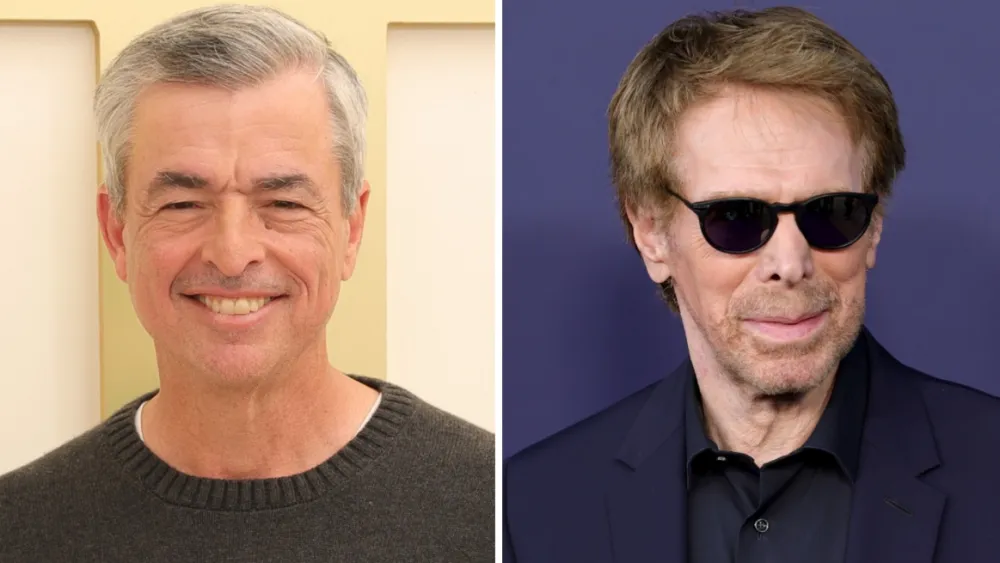
Cannes Lions chief executive Simon Cook and Marian Brannelly, global director of awards at Lions, reflect on the new stricter awards process ahead of the 2026 festival.
1,399 words~6 min read